Algeria Recipes
1 - Chorba Beïda
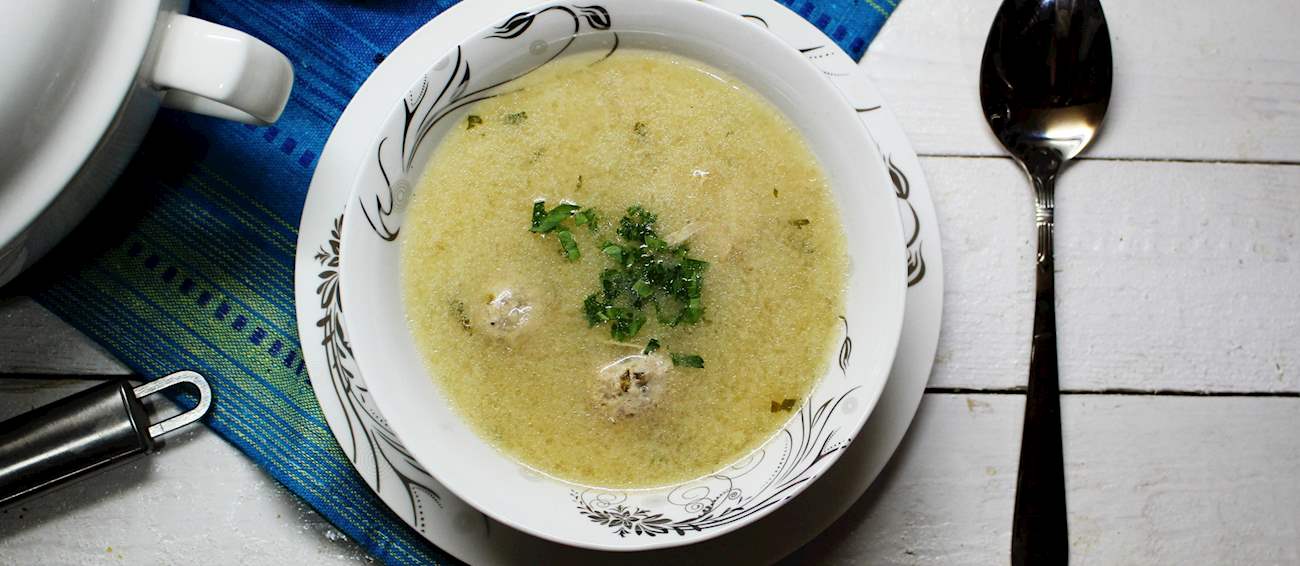
Recipe Score :
0.25
Details of the Ingredients:
- Black pepper: Quantité: 4g
Allergenicity: respiratory symptoms, contact dermatitis
HypoAllergenic Traitement : Eviction: the only way to manage allergens is by complete abstinence from the food
Score: 0.17 - Chicken: Quantité: 28.1g
Allergenicity: ND
HypoAllergenic Traitement : heat, homogenization and freeze-drying
Score: 0.17 - Chickpeas: Quantité: 12g
Allergenicity: The symptoms of chickpea allergic individuals are similar to those of other food allergies with urticaria (hives) and other reactions of the skin as the most common symptoms. Allergy to chickpea is associated with allergy to other legumes with allergy to lentil being the most frequently reported cross-reaction.
HypoAllergenic Traitement : The overall immunoreactivity of lentils was strongly reduced after autoclaving at 2.6 atm for 30 min
Score: 0.17 - Chilli Flakes: Quantité: 2g
Allergenicity: Respiratory symptoms rather than reactions of the mouth or skin (most commonly rhinoconjunctivitis but also asthma) which is slightly unusual.; Headaches were also reported which are sometimes associated with allergic rhinitis but are otherwise rarely reported as a symptom of food allergy.; Allergy to bell pepper is often associated with the celery-birch-mugwort-spice syndrome.
HypoAllergenic Traitement : the reactivity is lowered when cooked
Score: 0.17 - Cinammon stick: Quantité: 4g
Allergenicity: respiratory symptoms, rhinoconjunctivitis, contact dermatitis, stomatitis, delayed type allergy
HypoAllergenic Traitement : NT
Score: 0.17 - Coriander: Quantité: 1.6g
Allergenicity: asthma, contact allergy, anaphylaxis
HypoAllergenic Traitement : NT
Score: 0.17 - Egg: Quantité: 0.8g
Allergenicity: Eggs from birds contain several proteins capable of inducing an immune response in man most of these are present in the egg white. Allergenic proteins in the yolk only contribute to a minor degree and isolated allergy to egg yolk proteins are rare (see cross reactions). Most of the allergenic proteins present in the egg white are both heat- and digestion resistant and may also be found in the house dust in normal households. Although not thoroughly investigated, sensitization is believed to take place by ingestion of egg proteins in the diet even the minute quantities present in human milk can sensitize the infant in some cases, where a reaction is elicited the very first time the infant eats a meal containing egg. Ingestion of egg will in sensitized individuals elicit an immediate allergic reaction starting with itching of the mouth and pharynx, followed by nettle rash (urticaria), vomiting, rhinoconjunctivitis, asthma and in rare cases anaphylaxis. Exacerbation of atopic eczema may be seen also, but isolated reactions taking place hours to days after intake, without a previous immediate reaction, are rare.
HypoAllergenic Traitement : gastric enzyme supplementation/ Dry heating with mannose, heating for 15 minutes at 95 °C
Score: 0.87 - Garlic: Quantité: 1.6g
Allergenicity: Garlic allergy is relatively rare although one case of severe symptoms has been reported after eating garlic. The individual suffered exercise induced anaphylaxis and on a subsequent occasion anaphylaxis without exercise.
HypoAllergenic Traitement : the reactivity is lowered when cooked
Score: 0.17 - Lemon: Quantité: 16.1g
Allergenicity: laryngeal edema, generalized urticaria, and asthma symptoms, anaphylactic reactions
HypoAllergenic Traitement : remove seed
Score: 0.17 - Olive Oil: Quantité: 0.8g
Allergenicity: contact dermatitis
HypoAllergenic Traitement : ND
Score: 0.17 - Onion: Quantité: 4g
Allergenicity: contact allergy, anaphylaxis, asthma, rhinoconjunctivitis
HypoAllergenic Traitement : the reactivity is lowered when cooked
Score: 0.17
Scientifique Name of the ingredients :
- Black pepper: Piper nigrum L.
- Chicken: Gallus gallus domesticus
- Chickpeas: Cicer arietinum
- Chilli Flakes: Capsicum annuum
- Cinammon stick: Cinnamomum verum J.
- Coriander: Coriandrum sativum
- Egg: Gallus gallus
- Garlic: Allium sativum
- Lemon: Citrus limon
- Olive Oil: Olea europaea
- Onion: Allium cepa var. aggregatum
Molecular Allergens of Ingredients :
- Black pepper: Pip n 28kD (UniProt: Pip n - 13216) - Superfamille: Germin, Germin-like Protein
- Black pepper: Pip n 14kD (UniProt: Pip n - 13216)
- Chicken: Gal d 10 (UniProt: R4GM10) - Superfamille: Aldolase
- Chicken: Gal d 7.0101 (UniProt: P02604) - Superfamille: EF-hand
- Chicken: Gal d 8 (UniProt: P80026) - Superfamille: EF-hand
- Chicken: Gal d 8.0101 (UniProt: C1L370) - Superfamille: EF-hand
- Chicken: Gal d GPI (UniProt: Q5ZMU3) - Superfamille: SIS domain
- Chicken: Gal d HG (UniProt: P02112) - Superfamille: Globin-like
- Chicken: Gal d TM (UniProt: P04268) - Superfamille: Tropomyosin
- Chickpeas: Cic a 4 (UniProt: Q39450) - Superfamille: Bet v1-like
- Chickpeas: Cic a 6 (UniProt: Q9SMJ4) - Superfamille: RmlC-like cupins
- Chickpeas: Cic a 3 (UniProt: O23758) - Superfamille: Bifunctional inhibitor/lipid-transfer protein/seed storage 2S albumin
- Chickpeas: Cic a 1 (UniProt: Q304D4) - Superfamille: RmlC-like cupins
- Chilli Flakes: Cap a 1.0101 (UniProt: Q9ARG0) - Superfamille: Osmotin, thaumatin-like protein
- Chilli Flakes: Cap a 2 (UniProt: Q6RG01) - Superfamille: Profilin (actin-binding protein)
- Chilli Flakes: Cap a 2.0101 (UniProt: Q93YI9) - Superfamille: Profilin (actin-binding protein)
- Chilli Flakes: Cap a 30kD (UniProt: Q42661) - Superfamille: Heme-dependent peroxidases
- Chilli Flakes: Cap a 4 (UniProt: B2CZJ6) - Superfamille: Bet v1-like
- Chilli Flakes: Cap a Glucanase (UniProt: Q9M5L5) - Superfamille: (Trans)glycosidases
- Cinammon stick: Cin v (UniProt: Cin v - 128608)
- Coriander: Cor s [Leaf] (UniProt: Cor s - 4047)
- Coriander: Cor s 11kD (UniProt: not given)
- Coriander: Cor s 1 (UniProt: Cor s - 4047) - Superfamille: Bet v 1-like (PR-Proteins)
- Coriander: Cor s 2 (UniProt: Cor s - 4047) - Superfamille: Profilin (actin-binding protein)
- Egg: Gal d Phosvitin (UniProt: P67869) - Superfamille: Casein kinase II beta subunit
- Egg: Gal d L-PGDS (UniProt: Q8QFM7) - Superfamille: Lipocalins
- Egg: Gal d 3 (UniProt: Q4ADG4) - Superfamille: Periplasmic binding protein-like II
- Egg: Gal d 6.0101 (UniProt: P87498) - Superfamille: Lipovitellin-phosvitin complex, superhelical domain
- Egg: Gal d 5.0101 (UniProt: P19121) - Superfamille: Serum albumin-like
- Egg: Gal d OIH (UniProt: P10184) - Superfamille: Kazal-type serine protease inhibitors
- Egg: Gal d 3.0101 (UniProt: P02789) - Superfamille: Periplasmic binding protein-like II
- Egg: Gal d 2.0101 (UniProt: P01012) - Superfamille: Serpins
- Egg: Gal d 1.0101 (UniProt: P01005) - Superfamille: Kazal-type serine protease inhibitors
- Egg: Gal d 4.0101 (UniProt: P00698) - Superfamille: Lysozyme-like
- Egg: Gal d 1 (UniProt: B6V1G0) - Superfamille: Kazal-type serine protease inhibitors
- Garlic: All s Alliin lyase (UniProt: Q01594) - Superfamille: PLP-dependent transferases
- Lemon: Cit l 1 (UniProt: I6UVE3) - Superfamille: RmlC-like cupins
- Lemon: Cit l 3 (UniProt: P84160) - Superfamille: Lipid Transfer Proteins
- Olive Oil: Ole e 13.0101 (UniProt: E3SU11) - Superfamille: Osmotin, thaumatin-like protein
- Onion: All a Alliin lyase (UniProt: P31756) - Superfamille: PLP-dependent transferases
- Onion: All c Alliin lyase (UniProt: P31757) - Superfamille: PLP-dependent transferases
- Ingredients used :
- Ingredient 1 : 4g of Black pepper
- Ingredient 2 : 28.1g of Chicken
- Ingredient 3 : 12g of Chickpeas
- Ingredient 4 : 2g of Chilli Flakes
- Ingredient 5 : 4g of Cinammon stick
- Ingredient 6 : 1.6g of Coriander
- Ingredient 7 : 0.8g of Egg
- Ingredient 8 : 1.6g of Garlic
- Ingredient 9 : 16.1g of Lemon
- Ingredient 10 : 0.8g of Olive Oil
- Ingredient 11 : 4g of Onion
- Steps of preparation
- Step 1 : Heat the butter and olive oil in a large heavy-based casserole over medium heat. Add the chicken and fry until golden, then remove and set aside.
- Step 2 : Add the onion and cook until soft and translucent, about 15 minutes.
- Step 3 : Add the garlic, pepper, chilli, cinnamon and salt, and stir for 1 minute.
- Step 4 : Return the chicken, add 4 cups of water, bring to the boil, then cover and simmer for 30 minutes.
- Step 5 : Add the chickpeas and vermicelli, and simmer for 15 more minutes. Turn off the heat.
- Step 6 : Slowly add the lemon and egg mixture into the saucepan, whisking briskly to avoid curdling. The soup should turn a creamy white.
2 - Couscous with beans (feva) and olive oil
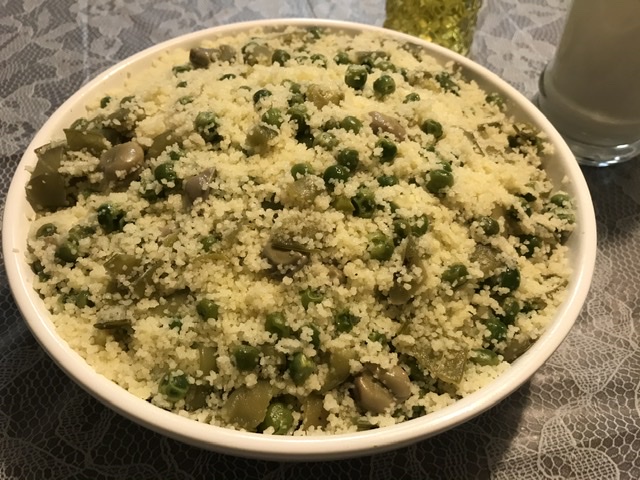
Recipe Score :
0.17
Details of the Ingredients:
- Beans: Quantité: 34.8g
Allergenicity: nasobronchial and allergic rhinitis
HypoAllergenic Traitement : Cooking at 100 °C for 30 min could completely inactivate the hemagglutinin activity of lectins
Score: 0.17 - Olive Oil: Quantité: 8.7g
Allergenicity: contact dermatitis
HypoAllergenic Traitement : ND
Score: 0.17 - Semolina: Quantité: 43.5g
Allergenicity: Adverse reactions to wheat have been more frequently reported than to other cereal-based foods. The best defined of these are coeliac disease and IgE-dependent wheat allergy, both of which result from malfunctioning of the immune system. Allergies to other cereals such as maize, sorghum and millet, are not common and are not related to reactions triggered by wheat, rye, barley and oats. As a consequence individuals with wheat allergy, including coeliac disease, can usually eat maize-based foods such as polenta. However, allergic reactions to maize can result from the fruit allergies found in the South of Europe which often start with reactions to peach. The gut reacts to the gluten and becomes smooth, loosing its ability to absorb nutrients; symptoms including diarrhoea as well as deficiencies in nutrients like vitamins. However, coeliac disease does not cause the potentially fatal reaction of anaphylaxis if gluten is accidentally eaten. In contrast IgE-mediated cereal allergies can be caused by the antibody molecule IgE binding to many proteins, not just gluten. Sometimes the reactions (often severe) only develop if an individual takes exercise within a few hours of eating wheat or related cereals, in a condition called exercise-induced anaphylaxis. Individuals with wheat allergy often react to closely related cereals like barley and rye, less frequently to the more distant relative, oats. Diagnosis of cereal allergies can be complicated by the fact that some of the blood tests for cereal food allergy can accidentally detect allergy to grass pollens instead. As a consequence of these adverse reactions, cereals containing gluten, (i.e. wheat, rye, barley, oats, spelt or their hybridized strains) have been included in Annex IIIa of the food labelling directive along with derived products. Temporary exceptions to the labelling rule (derogations) have been granted for wheat based glucose syrups including dextrose, wheat based maltodextrins, glucose syrups based on barley and cereals used in distillates for spirits.
HypoAllergenic Traitement : Yusing young cereal grains
Score: 0.17
Scientifique Name of the ingredients :
- Beans: Phaseolus vulgaris
- Olive Oil: Olea europaea
- Semolina: Triticum turgidum subsp. durum
Molecular Allergens of Ingredients :
- Beans: Pha v 3.0101 (UniProt: D3W146) - Superfamille: Bifunctional inhibitor/lipid-transfer protein/seed storage 2S albumin
- Beans: Pha v 3.0201 (UniProt: D3W147) - Superfamille: Bifunctional inhibitor/lipid-transfer protein/seed storage 2S albumin
- Beans: Pha v 5 (UniProt: P49231) - Superfamille: Profilin (actin-binding protein)
- Beans: Pha v 6 (UniProt: P25985) - Superfamille: Bet v1-like
- Beans: Pha v aAI.0101 (UniProt: P02873) - Superfamille: Concanavalin A-like lectins/glucanases
- Beans: Pha v PHA (UniProt: P05088) - Superfamille: Concanavalin A-like lectins/glucanases
- Beans: Pha v Phaseolin (UniProt: P02853) - Superfamille: RmlC-like cupins
- Olive Oil: Ole e 13.0101 (UniProt: E3SU11) - Superfamille: Osmotin, thaumatin-like protein
- Semolina: Tri tu 14 (UniProt: Q5NE26) - Superfamille: Bifunctional inhibitor/lipid-transfer protein/seed storage 2S albumin
- Semolina: Tri tu 14.0101 (UniProt: F6MEX1) - Superfamille: Bifunctional inhibitor/lipid-transfer protein/seed storage 2S albumin
- Semolina: Tri tu 28 (UniProt: L7P0Z8) - Superfamille: Bifunctional inhibitor/lipid-transfer protein/seed storage 2S albumin
- Semolina: Tri tu 30 (UniProt: Q6S5B1) - Superfamille: Bifunctional inhibitor/lipid-transfer protein/seed storage 2S albumin
- Semolina: Tri tu 7k (UniProt: Q9FEK9) - Superfamille: Bifunctional inhibitor/lipid-transfer protein/seed storage 2S albumin
- Semolina: Tri tu GBSS_I (UniProt: I7H0T0) - Superfamille: UDP-Glycosyltransferase/glycogen phosphorylase
- Ingredients used :
- Ingredient 1 : 34.8g of Beans
- Ingredient 2 : 8.7g of Olive Oil
- Ingredient 3 : 43.5g of Semolina
- Steps of preparation
- Step 1 : First, take the couscous and wet it with water (until it is completely wet), then leave it for 10 minutes. Add salt and a spoonful of olive oil, mix well, then cook in a steamer (cook and add water two times).
- Step 2 : In a second steamer, put the cut and salted fava beans and cook them.
- Step 3 : Once cooked, take the couscous, add 2 spoonfuls of olive oil, then add the fava beans (instead of or with the fava beans, you can also put a mixture of vegetables like carrots, potatoes, courgettes, peas...).
- Step 4 : This dish is often served with fermented milk.
3 - Dobara
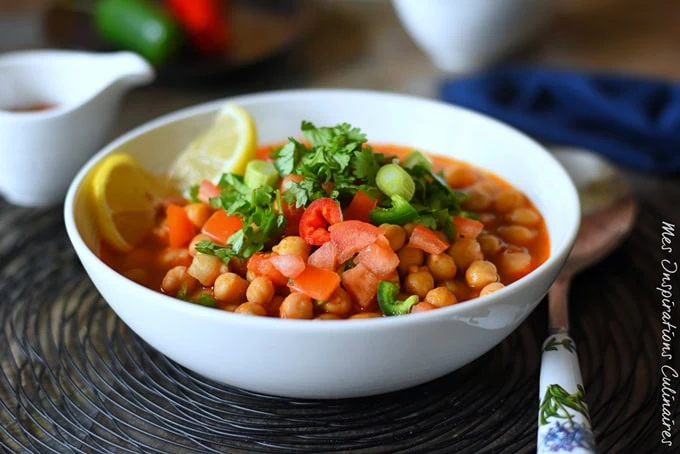
Recipe Score :
0.17
Details of the Ingredients:
- Bay Leaf: Quantité: 0.4g
Allergenicity: perioral dermatitis, contact dermatitis, asthma
HypoAllergenic Traitement : Eviction: the only way to manage allergens is by complete abstinence from the food
Score: 0.17 - Black pepper: Quantité: 1g
Allergenicity: respiratory symptoms, contact dermatitis
HypoAllergenic Traitement : Eviction: the only way to manage allergens is by complete abstinence from the food
Score: 0.17 - Chickpeas: Quantité: 21.5g
Allergenicity: The symptoms of chickpea allergic individuals are similar to those of other food allergies with urticaria (hives) and other reactions of the skin as the most common symptoms. Allergy to chickpea is associated with allergy to other legumes with allergy to lentil being the most frequently reported cross-reaction.
HypoAllergenic Traitement : The overall immunoreactivity of lentils was strongly reduced after autoclaving at 2.6 atm for 30 min
Score: 0.17 - Cilantro: Quantité: 1.3g
Allergenicity: asthma, contact allergy, anaphylaxis
HypoAllergenic Traitement : NT
Score: 0.17 - Coriander: Quantité: 2.6g
Allergenicity: asthma, contact allergy, anaphylaxis
HypoAllergenic Traitement : NT
Score: 0.17 - Cumin: Quantité: 8.5g
Allergenicity: anaphylaxis, contact dermatitis
HypoAllergenic Traitement : NT
Score: 0.17 - Garlic: Quantité: 27.9g
Allergenicity: Garlic allergy is relatively rare although one case of severe symptoms has been reported after eating garlic. The individual suffered exercise induced anaphylaxis and on a subsequent occasion anaphylaxis without exercise.
HypoAllergenic Traitement : the reactivity is lowered when cooked
Score: 0.17 - Harissa: Quantité: 3.2g
Allergenicity: Allergy to bell pepper is commonly reported with respiratory symptoms rather than reactions of the mouth or skin (most commonly rhinoconjunctivitis but also asthma) which is slightly unusual. Headaches were also reported which are sometimes associated with allergic rhinitis but are otherwise rarely reported as a symptom of food allergy. Allergy to bell pepper is often associated with the celery-birch-mugwort-spice syndrome.
HypoAllergenic Traitement : the reactivity is lowered when cooked
Score: 0.17 - Olive Oil: Quantité: 6.4g
Allergenicity: contact dermatitis
HypoAllergenic Traitement : ND
Score: 0.17 - Onion: Quantité: 2.1g
Allergenicity: contact allergy, anaphylaxis, asthma, rhinoconjunctivitis
HypoAllergenic Traitement : the reactivity is lowered when cooked
Score: 0.17 - Paprika: Quantité: 6.4g
Allergenicity: contact urticaria, rhinoconjunctivitis
HypoAllergenic Traitement : the reactivity is lowered when cooked
Score: 0.17 - Serrano Pepper (Seeded): Quantité: 4.3g
Allergenicity: respiratory symptoms rather than reactions of the mouth or skin (most commonly rhinoconjunctivitis but also asthma) which is slightly unusual. Headaches were also reported which are sometimes associated with allergic rhinitis but are otherwise rarely reported as a symptom of food allergy. Allergy to bell pepper is often associated with the celery-birch-mugwort-spice syndrome.
HypoAllergenic Traitement : the reactivity is lowered when cooked
Score: 0.17 - Tomato: Quantité: 10.7g
Allergenicity: tomato allergy is associated with allergy to either latex or pollen. The symptoms reported were rather different in the two groups. The patients with no latex allergy reported mostly the oral allergy syndrome with some skin reactions such as urticaria (hives). Patients with latex allergy reported urticaria as the most common reaction but 20% suffered anaphylaxis. Allergy to tomato is also linked to allergy to potato since they are related plants.
HypoAllergenic Traitement : TT: ThermalTreatment
Score: 0.17
Scientifique Name of the ingredients :
- Bay Leaf: Laurus nobilis
- Black pepper: Piper nigrum L.
- Chickpeas: Cicer arietinum
- Cilantro: Coriandrum sativum
- Coriander: Coriandrum sativum
- Cumin: Cuminum cyminum L.
- Garlic: Allium sativum
- Harissa: Capsicum annuum
- Olive Oil: Olea europaea
- Onion: Allium cepa var. aggregatum
- Paprika: Capsicum annuum
- Serrano Pepper (Seeded): Capsicum annuum
- Tomato: Solanum lycopersicum
Molecular Allergens of Ingredients :
- Bay Leaf: Lau no (UniProt: 85223)
- Black pepper: Pip n 14kD (UniProt: Pip n - 13216)
- Black pepper: Pip n 28kD (UniProt: Pip n - 13216) - Superfamille: Germin, Germin-like Protein
- Chickpeas: Cic a 1 (UniProt: Q304D4) - Superfamille: RmlC-like cupins
- Chickpeas: Cic a 3 (UniProt: O23758) - Superfamille: Bifunctional inhibitor/lipid-transfer protein/seed storage 2S albumin
- Chickpeas: Cic a 4 (UniProt: Q39450) - Superfamille: Bet v1-like
- Chickpeas: Cic a 6 (UniProt: Q9SMJ4) - Superfamille: RmlC-like cupins
- Cilantro: Cor s [Leaf] (UniProt: Cor s - 4047)
- Cilantro: Cor s 1 (UniProt: Cor s - 4047) - Superfamille: Bet v 1-like (PR-Proteins)
- Cilantro: Cor s 2 (UniProt: Cor s - 4047) - Superfamille: Profilin (actin-binding protein)
- Cilantro: Cor s 11kD (UniProt: not given)
- Coriander: Cor s [Leaf] (UniProt: Cor s - 4047)
- Coriander: Cor s 1 (UniProt: Cor s - 4047) - Superfamille: Bet v 1-like (PR-Proteins)
- Coriander: Cor s 2 (UniProt: Cor s - 4047) - Superfamille: Profilin (actin-binding protein)
- Coriander: Cor s 11kD (UniProt: not given)
- Garlic: All s Alliin lyase (UniProt: Q01594) - Superfamille: PLP-dependent transferases
- Harissa: Cap a 1.0101 (UniProt: Q9ARG0) - Superfamille: Osmotin, thaumatin-like protein
- Harissa: Cap a 2 (UniProt: Q6RG01) - Superfamille: Profilin (actin-binding protein)
- Harissa: Cap a 2.0101 (UniProt: Q93YI9) - Superfamille: Profilin (actin-binding protein)
- Harissa: Cap a 30kD (UniProt: Q42661) - Superfamille: Heme-dependent peroxidases
- Harissa: Cap a 4 (UniProt: B2CZJ6) - Superfamille: Bet v1-like
- Harissa: Cap a Glucanase (UniProt: Q9M5L5) - Superfamille: (Trans)glycosidases
- Olive Oil: Ole e 13.0101 (UniProt: E3SU11) - Superfamille: Osmotin, thaumatin-like protein
- Onion: All a Alliin lyase (UniProt: P31756) - Superfamille: PLP-dependent transferases
- Onion: All c Alliin lyase (UniProt: P31757) - Superfamille: PLP-dependent transferases
- Paprika: Cap a Glucanase (UniProt: Q9M5L5) - Superfamille: (Trans)glycosidases
- Paprika: Cap a 4 (UniProt: B2CZJ6) - Superfamille: Bet v1-like
- Paprika: Cap a 2.0101 (UniProt: Q93YI9) - Superfamille: Profilin (actin-binding protein)
- Paprika: Cap a 2 (UniProt: Q6RG01) - Superfamille: Profilin (actin-binding protein)
- Paprika: Cap a 1.0101 (UniProt: Q9ARG0) - Superfamille: Osmotin, thaumatin-like protein
- Paprika: Cap a 30kD (UniProt: Q42661) - Superfamille: Heme-dependent peroxidases
- Serrano Pepper (Seeded): Cap a Glucanase (UniProt: Q9M5L5) - Superfamille: (Trans)glycosidases
- Serrano Pepper (Seeded): Cap a 4 (UniProt: B2CZJ6) - Superfamille: Bet v1-like
- Serrano Pepper (Seeded): Cap a 30kD (UniProt: Q42661) - Superfamille: Heme-dependent peroxidases
- Serrano Pepper (Seeded): Cap a 2.0101 (UniProt: Q93YI9) - Superfamille: Profilin (actin-binding protein)
- Serrano Pepper (Seeded): Cap a 2 (UniProt: Q6RG01) - Superfamille: Profilin (actin-binding protein)
- Serrano Pepper (Seeded): Cap a 1.0101 (UniProt: Q9ARG0) - Superfamille: Osmotin, thaumatin-like protein
- Tomato: Sola l Vicilin (UniProt: B0JEU3) - Superfamille: RmlC-like cupins
- Tomato: Sola l TLP (UniProt: P12670) - Superfamille: Osmotin, thaumatin-like protein
- Tomato: Sola l SOD (UniProt: P14831) - Superfamille: Cu,Zn superoxide dismutase-like
- Tomato: Sola l PG (UniProt: P05117) - Superfamille: Pectin lyase-like
- Tomato: Sola l Peroxidase (UniProt: P15003) - Superfamille: Heme-dependent peroxidases
- Tomato: Sola l Glucanase (UniProt: Q01413) - Superfamille: (Trans)glycosidases
- Tomato: Sola l Chitinase (UniProt: Q05539) - Superfamille: Lysozyme-like
- Tomato: Sola l 7 (UniProt: K4AYX7) - Superfamille: Bifunctional inhibitor/lipid-transfer protein/seed storage 2S albumin
- Tomato: Sola l 5.0101 (UniProt: P21568) - Superfamille: Cyclophilin-like
- Tomato: Sola l 5 (UniProt: K4D184) - Superfamille: Cyclophilin-like
- Tomato: Sola l 4.0201 (UniProt: K4CWC4) - Superfamille: Bet v1-like
- Tomato: Sola l 4.0101 (UniProt: O49881) - Superfamille: Bet v1-like
- Tomato: Sola l 4 (UniProt: K4CWC5) - Superfamille: Bet v1-like
- Tomato: Sola l 3.0101 (UniProt: P93224) - Superfamille: Bifunctional inhibitor/lipid-transfer protein/seed storage 2S albumin
- Tomato: Sola l 3 (UniProt: P27056) - Superfamille: Bifunctional inhibitor/lipid-transfer protein/seed storage 2S albumin
- Tomato: Sola l 1.0101 (UniProt: Q93YG7) - Superfamille: Profilin (actin-binding protein)
- Tomato: Sola l 1 (UniProt: Q41344) - Superfamille: Profilin (actin-binding protein)
- Ingredients used :
- Ingredient 1 : 0.4g of Bay Leaf
- Ingredient 2 : 1g of Black pepper
- Ingredient 3 : 21.5g of Chickpeas
- Ingredient 4 : 1.3g of Cilantro
- Ingredient 5 : 2.6g of Coriander
- Ingredient 6 : 8.5g of Cumin
- Ingredient 7 : 27.9g of Garlic
- Ingredient 8 : 3.2g of Harissa
- Ingredient 9 : 6.4g of Olive Oil
- Ingredient 10 : 2.1g of Onion
- Ingredient 11 : 6.4g of Paprika
- Ingredient 12 : 4.3g of Serrano Pepper (Seeded)
- Ingredient 13 : 10.7g of Tomato
- Steps of preparation
- Step 1 : In a saucepan over medium-high heat, put the chopped onion with minced garlic, bay leaf and chickpeas.
- Step 2 : Add salt, pepper, cumin powder, coriander and olive oil.
- Step 3 : Let cook for about a minute, then add boiled water.
- Step 4 : Bring to a boil then reduce the heat to medium-low and let cook for about 30 to 45 minutes or until the chickpeas are cooked. You may need to add boiled water during cooking.
- Step 5 : In the meantime, prepare the salsa. In a food processor, put the grated tomato, Serrano pepper, chopped cilantro and garlic. Process everything for a few seconds.
- Step 6 : Put this mixture in a bowl. Add tomato paste, Harissa, paprika, salt, coriander, cumin, black pepper and mix well.
- Step 7 : Add about 4 to 5 tablespoons olive oil and mix it all together. Set aside.
- Step 8 : Once the chickpeas are cooked and the liquid is reduced, put 2 or 3 ladles of chickpeas with its liquid in a serving dish. Add 1 tablespoon or more of the salsa and mix well. Add some of the Serrano pepper, chopped cilantro, lemon slices, and drizzle some olive oil to your liking. Enjoy!
4 - Ej Jaouzia
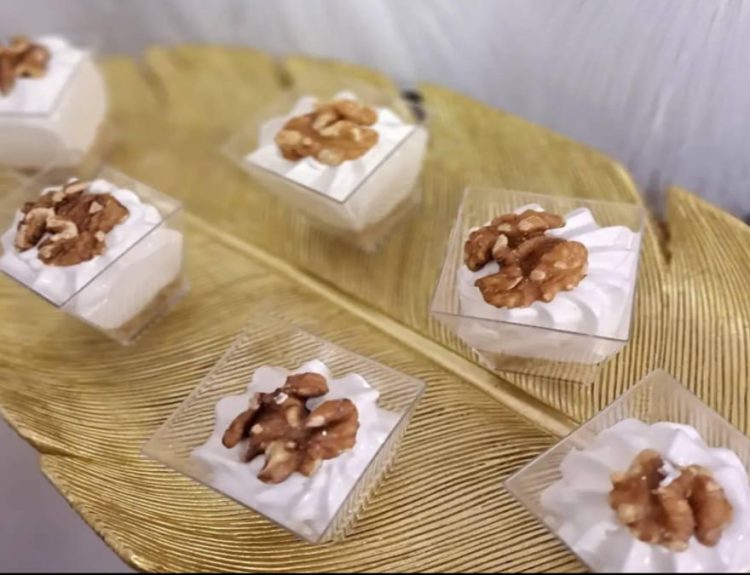
Recipe Score :
0.25
Details of the Ingredients:
- Chilli Flakes: Quantité: 4.5g
Allergenicity: Respiratory symptoms rather than reactions of the mouth or skin (most commonly rhinoconjunctivitis but also asthma) which is slightly unusual.; Headaches were also reported which are sometimes associated with allergic rhinitis but are otherwise rarely reported as a symptom of food allergy.; Allergy to bell pepper is often associated with the celery-birch-mugwort-spice syndrome.
HypoAllergenic Traitement : the reactivity is lowered when cooked
Score: 0.17 - Cumin: Quantité: 4.5g
Allergenicity: anaphylaxis, contact dermatitis
HypoAllergenic Traitement : NT
Score: 0.17 - Egg: Quantité: 13.6g
Allergenicity: Eggs from birds contain several proteins capable of inducing an immune response in man most of these are present in the egg white. Allergenic proteins in the yolk only contribute to a minor degree and isolated allergy to egg yolk proteins are rare (see cross reactions). Most of the allergenic proteins present in the egg white are both heat- and digestion resistant and may also be found in the house dust in normal households. Although not thoroughly investigated, sensitization is believed to take place by ingestion of egg proteins in the diet even the minute quantities present in human milk can sensitize the infant in some cases, where a reaction is elicited the very first time the infant eats a meal containing egg. Ingestion of egg will in sensitized individuals elicit an immediate allergic reaction starting with itching of the mouth and pharynx, followed by nettle rash (urticaria), vomiting, rhinoconjunctivitis, asthma and in rare cases anaphylaxis. Exacerbation of atopic eczema may be seen also, but isolated reactions taking place hours to days after intake, without a previous immediate reaction, are rare.
HypoAllergenic Traitement : gastric enzyme supplementation/ Dry heating with mannose, heating for 15 minutes at 95 °C
Score: 0.87 - Garlic: Quantité: 9.1g
Allergenicity: Garlic allergy is relatively rare although one case of severe symptoms has been reported after eating garlic. The individual suffered exercise induced anaphylaxis and on a subsequent occasion anaphylaxis without exercise.
HypoAllergenic Traitement : the reactivity is lowered when cooked
Score: 0.17 - Onion: Quantité: 27.3g
Allergenicity: contact allergy, anaphylaxis, asthma, rhinoconjunctivitis
HypoAllergenic Traitement : the reactivity is lowered when cooked
Score: 0.17 - Paprika: Quantité: 4.5g
Allergenicity: contact urticaria, rhinoconjunctivitis
HypoAllergenic Traitement : the reactivity is lowered when cooked
Score: 0.17 - Red Pepper: Quantité: 9.1g
Allergenicity: contact urticaria, rhinocon junctivitis
HypoAllergenic Traitement : the reactivity is lowered when cooked
Score: 0.17 - Tomato: Quantité: 27.3g
Allergenicity: tomato allergy is associated with allergy to either latex or pollen. The symptoms reported were rather different in the two groups. The patients with no latex allergy reported mostly the oral allergy syndrome with some skin reactions such as urticaria (hives). Patients with latex allergy reported urticaria as the most common reaction but 20% suffered anaphylaxis. Allergy to tomato is also linked to allergy to potato since they are related plants.
HypoAllergenic Traitement : TT: ThermalTreatment
Score: 0.17
Scientifique Name of the ingredients :
- Chilli Flakes: Capsicum annuum
- Cumin: Cuminum cyminum L.
- Egg: Gallus gallus
- Garlic: Allium sativum
- Onion: Allium cepa var. aggregatum
- Paprika: Capsicum annuum
- Red Pepper: Capsicum annuum
- Tomato: Solanum lycopersicum
Molecular Allergens of Ingredients :
- Chilli Flakes: Cap a 2 (UniProt: Q6RG01) - Superfamille: Profilin (actin-binding protein)
- Chilli Flakes: Cap a 2.0101 (UniProt: Q93YI9) - Superfamille: Profilin (actin-binding protein)
- Chilli Flakes: Cap a 30kD (UniProt: Q42661) - Superfamille: Heme-dependent peroxidases
- Chilli Flakes: Cap a 4 (UniProt: B2CZJ6) - Superfamille: Bet v1-like
- Chilli Flakes: Cap a Glucanase (UniProt: Q9M5L5) - Superfamille: (Trans)glycosidases
- Chilli Flakes: Cap a 1.0101 (UniProt: Q9ARG0) - Superfamille: Osmotin, thaumatin-like protein
- Egg: Gal d OIH (UniProt: P10184) - Superfamille: Kazal-type serine protease inhibitors
- Egg: Gal d L-PGDS (UniProt: Q8QFM7) - Superfamille: Lipocalins
- Egg: Gal d 3 (UniProt: Q4ADG4) - Superfamille: Periplasmic binding protein-like II
- Egg: Gal d 6.0101 (UniProt: P87498) - Superfamille: Lipovitellin-phosvitin complex, superhelical domain
- Egg: Gal d Phosvitin (UniProt: P67869) - Superfamille: Casein kinase II beta subunit
- Egg: Gal d 5.0101 (UniProt: P19121) - Superfamille: Serum albumin-like
- Egg: Gal d 3.0101 (UniProt: P02789) - Superfamille: Periplasmic binding protein-like II
- Egg: Gal d 2.0101 (UniProt: P01012) - Superfamille: Serpins
- Egg: Gal d 1.0101 (UniProt: P01005) - Superfamille: Kazal-type serine protease inhibitors
- Egg: Gal d 4.0101 (UniProt: P00698) - Superfamille: Lysozyme-like
- Egg: Gal d 1 (UniProt: B6V1G0) - Superfamille: Kazal-type serine protease inhibitors
- Garlic: All s Alliin lyase (UniProt: Q01594) - Superfamille: PLP-dependent transferases
- Onion: All a Alliin lyase (UniProt: P31756) - Superfamille: PLP-dependent transferases
- Onion: All c Alliin lyase (UniProt: P31757) - Superfamille: PLP-dependent transferases
- Paprika: Cap a 4 (UniProt: B2CZJ6) - Superfamille: Bet v1-like
- Paprika: Cap a Glucanase (UniProt: Q9M5L5) - Superfamille: (Trans)glycosidases
- Paprika: Cap a 30kD (UniProt: Q42661) - Superfamille: Heme-dependent peroxidases
- Paprika: Cap a 2 (UniProt: Q6RG01) - Superfamille: Profilin (actin-binding protein)
- Paprika: Cap a 1.0101 (UniProt: Q9ARG0) - Superfamille: Osmotin, thaumatin-like protein
- Paprika: Cap a 2.0101 (UniProt: Q93YI9) - Superfamille: Profilin (actin-binding protein)
- Red Pepper: Cap a Glucanase (UniProt: Q9M5L5) - Superfamille: (Trans)glycosidases
- Red Pepper: Cap a 4 (UniProt: B2CZJ6) - Superfamille: Bet v1-like
- Red Pepper: Cap a 30kD (UniProt: Q42661) - Superfamille: Heme-dependent peroxidases
- Red Pepper: Cap a 2.0101 (UniProt: Q93YI9) - Superfamille: Profilin (actin-binding protein)
- Red Pepper: Cap a 2 (UniProt: Q6RG01) - Superfamille: Profilin (actin-binding protein)
- Red Pepper: Cap a 1.0101 (UniProt: Q9ARG0) - Superfamille: Osmotin, thaumatin-like protein
- Tomato: Sola l Vicilin (UniProt: B0JEU3) - Superfamille: RmlC-like cupins
- Tomato: Sola l TLP (UniProt: P12670) - Superfamille: Osmotin, thaumatin-like protein
- Tomato: Sola l SOD (UniProt: P14831) - Superfamille: Cu,Zn superoxide dismutase-like
- Tomato: Sola l PG (UniProt: P05117) - Superfamille: Pectin lyase-like
- Tomato: Sola l Peroxidase (UniProt: P15003) - Superfamille: Heme-dependent peroxidases
- Tomato: Sola l Glucanase (UniProt: Q01413) - Superfamille: (Trans)glycosidases
- Tomato: Sola l Chitinase (UniProt: Q05539) - Superfamille: Lysozyme-like
- Tomato: Sola l 7 (UniProt: K4AYX7) - Superfamille: Bifunctional inhibitor/lipid-transfer protein/seed storage 2S albumin
- Tomato: Sola l 5.0101 (UniProt: P21568) - Superfamille: Cyclophilin-like
- Tomato: Sola l 5 (UniProt: K4D184) - Superfamille: Cyclophilin-like
- Tomato: Sola l 4.0201 (UniProt: K4CWC4) - Superfamille: Bet v1-like
- Tomato: Sola l 4.0101 (UniProt: O49881) - Superfamille: Bet v1-like
- Tomato: Sola l 4 (UniProt: K4CWC5) - Superfamille: Bet v1-like
- Tomato: Sola l 3.0101 (UniProt: P93224) - Superfamille: Bifunctional inhibitor/lipid-transfer protein/seed storage 2S albumin
- Tomato: Sola l 3 (UniProt: P27056) - Superfamille: Bifunctional inhibitor/lipid-transfer protein/seed storage 2S albumin
- Tomato: Sola l 1.0101 (UniProt: Q93YG7) - Superfamille: Profilin (actin-binding protein)
- Tomato: Sola l 1 (UniProt: Q41344) - Superfamille: Profilin (actin-binding protein)
- Ingredients used :
- Ingredient 1 : 4.5g of Chilli Flakes
- Ingredient 2 : 4.5g of Cumin
- Ingredient 3 : 13.6g of Egg
- Ingredient 4 : 9.1g of Garlic
- Ingredient 5 : 27.3g of Onion
- Ingredient 6 : 4.5g of Paprika
- Ingredient 7 : 9.1g of Red Pepper
- Ingredient 8 : 27.3g of Tomato
- Steps of preparation
- Step 1 : Mix the ingredients (almonds, sugar, eggs, butter) to form a dough.
- Step 2 : Shape the dough into small balls or ovals.
- Step 3 : Fry the dough pieces until golden.
- Step 4 : Prepare the syrup: Mix sugar and water in a pan, bring to a boil, and cook until syrupy.
- Step 5 : Pour the syrup over the fried pieces and garnish with crushed almonds and sesame seeds. Let it cool before serving.
5 - Lham Lahlou
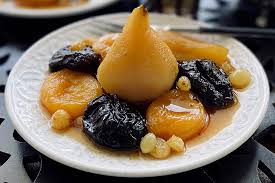
Recipe Score :
0.17
Details of the Ingredients:
- Almonds: Quantité: 11g
Allergenicity: severe anaphylaxis
HypoAllergenic Traitement : Eviction: the only way to manage allergens is by complete abstinence from the food
Score: 0.17 - Apricots: Quantité: 2.2g
Allergenicity: local reactions in the mouth and throat with itching and inflammation (called oral allergy syndrome, OAS). The molecule, known as an allergen, involved in this kind of allergy does not survive cooking and pasteurisation.
HypoAllergenic Traitement : the chemical peeling
Score: 0.17 - Cinammon stick: Quantité: 0.7g
Allergenicity: respiratory symptoms, rhinoconjunctivitis, contact dermatitis, stomatitis, delayed type allergy
HypoAllergenic Traitement : NT
Score: 0.17 - Ginger: Quantité: 0.4g
Allergenicity: contact dermatitis, respiratory symptoms
HypoAllergenic Traitement : NT
Score: 0.17 - Lamb: Quantité: 5.9g
Allergenicity: respiratory symptoms, and anaphylaxis
HypoAllergenic Traitement : heat, homogenization and freeze-drying
Score: 0.17 - Olive Oil: Quantité: 1.1g
Allergenicity: contact dermatitis
HypoAllergenic Traitement : ND
Score: 0.17 - Onion: Quantité: 0.4g
Allergenicity: contact allergy, anaphylaxis, asthma, rhinoconjunctivitis
HypoAllergenic Traitement : the reactivity is lowered when cooked
Score: 0.17 - Prunes: Quantité: 1.5g
Allergenicity: itching and inflammation (called oral allergy syndrome, OAS).
HypoAllergenic Traitement : the reactivity is lowered when cooked (somme allergens)
Score: 0.17 - Raisins / grape/ wine: Quantité: 2.2g
Allergenicity: airway reactions (rhinitis and asthma)
HypoAllergenic Traitement : NT
Score: 0.17
Scientifique Name of the ingredients :
- Almonds: Prunus dulcis
- Apricots: Prunus armeniaca
- Cinammon stick: Cinnamomum verum J.
- Ginger: Zingiber officinale
- Lamb: Ovis aries
- Olive Oil: Olea europaea
- Onion: Allium cepa var. aggregatum
- Prunes: Prunus domestica
- Raisins / grape/ wine: Vitis vinifera
Molecular Allergens of Ingredients :
- Almonds: Pru du 3.0101 (UniProt: C0L0I5) - Superfamille: Bifunctional inhibitor/lipid-transfer protein/seed storage 2S albumin
- Almonds: Pru du 4.0101 (UniProt: Q8GSL5) - Superfamille: Profilin (actin-binding protein)
- Almonds: Pru du 6 (UniProt: Q43607) - Superfamille: RmlC-like cupins
- Almonds: Pru du 6.0101 (UniProt: E3SH28) - Superfamille: RmlC-like cupins
- Almonds: Pru du 6.0201 (UniProt: E3SH29) - Superfamille: RmlC-like cupins
- Almonds: Pru du Conglutin (UniProt: P82952) - Superfamille: Acid proteases
- Almonds: Pru du 3 (UniProt: Q43017) - Superfamille: Bifunctional inhibitor/lipid-transfer protein/seed storage 2S albumin
- Apricots: Pru ar 1 (UniProt: O22521) - Superfamille: Bet v1-like
- Apricots: Pru ar 1.0101 (UniProt: O50001) - Superfamille: Bet v1-like
- Apricots: Pru ar 3 (UniProt: E7CLQ4) - Superfamille: Bifunctional inhibitor/lipid-transfer protein/seed storage 2S albumin
- Apricots: Pru ar 3.0101 (UniProt: P81651) - Superfamille: Bifunctional inhibitor/lipid-transfer protein/seed storage 2S albumin
- Apricots: Pru ar 7k-LTP (UniProt: P82353) - Superfamille: Bifunctional inhibitor/lipid-transfer protein/seed storage 2S albumin
- Cinammon stick: Cin v (UniProt: Cin v - 128608)
- Lamb: Ovi a GAPDH (UniProt: W5PDG3) - Superfamille: Glyceraldehyde-3-phosphate dehydrogenases
- Olive Oil: Ole e 13.0101 (UniProt: E3SU11) - Superfamille: Osmotin, thaumatin-like protein
- Onion: All a Alliin lyase (UniProt: P31756) - Superfamille: PLP-dependent transferases
- Onion: All c Alliin lyase (UniProt: P31757) - Superfamille: PLP-dependent transferases
- Prunes: Pru d 1 (UniProt: B5KVN9) - Superfamille: Bet v1-like
- Prunes: Pru d 2 (UniProt: F8RNZ5) - Superfamille: Osmotin, thaumatin-like protein
- Prunes: Pru d 3.0101 (UniProt: P82534) - Superfamille: Bifunctional inhibitor/lipid-transfer protein/seed storage 2S albumin
- Raisins / grape/ wine: Vit v 1 (UniProt: Q850K6) - Superfamille: Bifunctional inhibitor/lipid-transfer protein/seed storage 2S albumin
- Raisins / grape/ wine: Vit v 1.0101 (UniProt: P80274) - Superfamille: Bifunctional inhibitor/lipid-transfer protein/seed storage 2S albumin
- Raisins / grape/ wine: Vit v 4 (UniProt: A5BLM8) - Superfamille: Profilin (actin-binding protein)
- Raisins / grape/ wine: Vit v 8 (UniProt: Q9FS42) - Superfamille: Bet v1-like
- Raisins / grape/ wine: Vit v Glucanase (UniProt: Q9M563) - Superfamille: (Trans)glycosidases
- Raisins / grape/ wine: Vit v TLP (UniProt: Q9LLB7) - Superfamille: Osmotin, thaumatin-like protein
- Ingredients used :
- Ingredient 1 : 11g of Almonds
- Ingredient 2 : 2.2g of Apricots
- Ingredient 3 : 0.7g of Cinammon stick
- Ingredient 4 : 0.4g of Ginger
- Ingredient 5 : 5.9g of Lamb
- Ingredient 6 : 1.1g of Olive Oil
- Ingredient 7 : 0.4g of Onion
- Ingredient 8 : 1.5g of Prunes
- Ingredient 9 : 2.2g of Raisins / grape/ wine
- Steps of preparation
- Step 1 : Mix the lamb with cinnamon, turmeric, and ginger.
- Step 2 : Heat the butter in a large pot and brown the lamb.
- Step 3 : Add water and saffron to the browned meat. Bring to a boil, then reduce the heat to medium-low and simmer for about 45 minutes, or until the meat starts to get tender.
- Step 4 : While the meat is simmering, cover the prunes and raisins with hot water and set aside to let them plump up for at least 30 minutes.
- Step 5 : After the meat has simmered for 45 minutes, drain the fruit and add it to the meat along with the sugar and orange blossom water. Add a little more water if needed and simmer for another 30 to 40 minutes.
6 - Mtewem
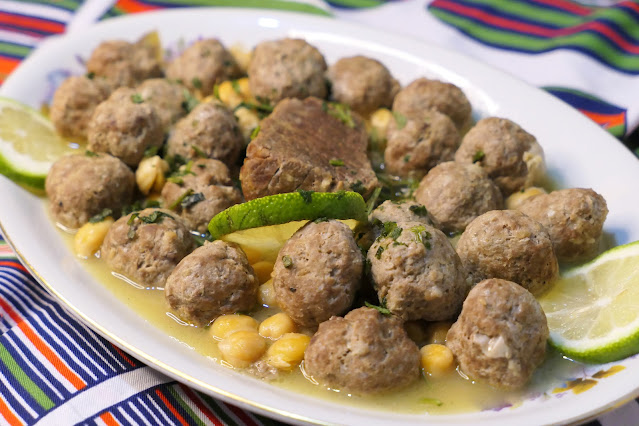
Recipe Score :
0.24
Details of the Ingredients:
- Beef: Quantité: 35.5g
Allergenicity: respiratory symptoms, and anaphylaxis
HypoAllergenic Traitement : cooking alters the reactivity of beef +freeze-drying and homogenization
Score: 0.17 - Black pepper: Quantité: 2.5g
Allergenicity: respiratory symptoms, contact dermatitis
HypoAllergenic Traitement : Eviction: the only way to manage allergens is by complete abstinence from the food
Score: 0.17 - Chickpeas: Quantité: 12.7g
Allergenicity: The symptoms of chickpea allergic individuals are similar to those of other food allergies with urticaria (hives) and other reactions of the skin as the most common symptoms. Allergy to chickpea is associated with allergy to other legumes with allergy to lentil being the most frequently reported cross-reaction.
HypoAllergenic Traitement : The overall immunoreactivity of lentils was strongly reduced after autoclaving at 2.6 atm for 30 min
Score: 0.17 - Cumin: Quantité: 1.2g
Allergenicity: anaphylaxis, contact dermatitis
HypoAllergenic Traitement : NT
Score: 0.17 - Garlic: Quantité: 17.3g
Allergenicity: Garlic allergy is relatively rare although one case of severe symptoms has been reported after eating garlic. The individual suffered exercise induced anaphylaxis and on a subsequent occasion anaphylaxis without exercise.
HypoAllergenic Traitement : the reactivity is lowered when cooked
Score: 0.17 - Onion: Quantité: 2.5g
Allergenicity: contact allergy, anaphylaxis, asthma, rhinoconjunctivitis
HypoAllergenic Traitement : the reactivity is lowered when cooked
Score: 0.17 - Turmeric: Quantité: 1.3g
Deprecated: htmlspecialchars(): Passing null to parameter #1 ($string) of type string is deprecated in /var/www/foodallergy/public_html/page2.php on line 700
Allergenicity:
HypoAllergenic Traitement : ND
Score: 0.17
Scientifique Name of the ingredients :
- Beef: Bos taurus Linnaeus
- Black pepper: Piper nigrum L.
- Chickpeas: Cicer arietinum
- Cumin: Cuminum cyminum L.
- Garlic: Allium sativum
- Onion: Allium cepa var. aggregatum
- Turmeric: Curcuma aromatica
Molecular Allergens of Ingredients :
- Beef: Bos d 6 (UniProt: B0JYQ0) - Superfamille: Serum albumin-like
- Beef: Bos d 6.0101 (UniProt: P02769) - Superfamille: Serum albumin-like
- Black pepper: Pip n 14kD (UniProt: Pip n - 13216)
- Black pepper: Pip n 28kD (UniProt: Pip n - 13216) - Superfamille: Germin, Germin-like Protein
- Chickpeas: Cic a 1 (UniProt: Q304D4) - Superfamille: RmlC-like cupins
- Chickpeas: Cic a 3 (UniProt: O23758) - Superfamille: Bifunctional inhibitor/lipid-transfer protein/seed storage 2S albumin
- Chickpeas: Cic a 4 (UniProt: Q39450) - Superfamille: Bet v1-like
- Chickpeas: Cic a 6 (UniProt: Q9SMJ4) - Superfamille: RmlC-like cupins
- Garlic: All s Alliin lyase (UniProt: Q01594) - Superfamille: PLP-dependent transferases
- Onion: All a Alliin lyase (UniProt: P31756) - Superfamille: PLP-dependent transferases
- Onion: All c Alliin lyase (UniProt: P31757) - Superfamille: PLP-dependent transferases
- Ingredients used :
- Ingredient 1 : 35.5g of Beef
- Ingredient 2 : 2.5g of Black pepper
- Ingredient 3 : 12.7g of Chickpeas
- Ingredient 4 : 1.2g of Cumin
- Ingredient 5 : 17.3g of Garlic
- Ingredient 6 : 2.5g of Onion
- Ingredient 7 : 1.3g of Turmeric
- Steps of preparation
- Step 1 : First, mix the meatballs ingredients (you may not need to use the whole egg white but the mixture should be very soft) and form walnut-sized meatballs. Set aside.
- Step 2 : Put oil and ghee in a large saucepan over medium heat.
- Step 3 : Add the meat pieces, the minced onion, garlic, chickpeas, cumin, turmeric, salt and pepper.
- Step 4 : Let cook for a good 10 minutes then cover the meat with boiled water.
- Step 5 : Let cook covered until the chickpeas and meat are cooked.
- Step 6 : Reduce the heat to low and add the meatballs.
- Step 7 : Let cook for about 15 to 20 minutes on low. Adjust the seasoning and add salt if needed. The sauce should be reduced and thickened.
- Step 8 : Garnish with chopped parsley.
7 - Rechta
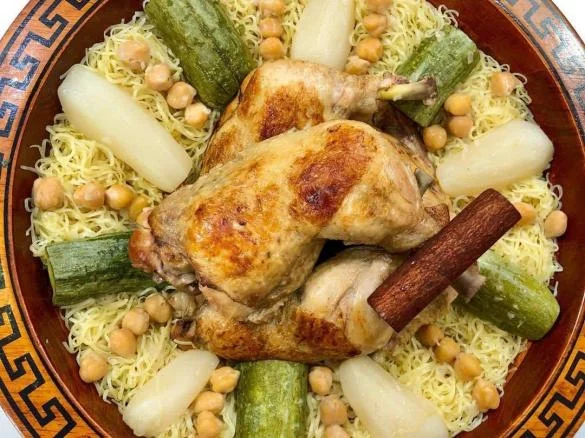
Recipe Score :
0.20
Details of the Ingredients:
- Chicken: Quantité: 23.7g
Allergenicity: ND
HypoAllergenic Traitement : heat, homogenization and freeze-drying
Score: 0.17 - Chickpeas: Quantité: 4g
Allergenicity: The symptoms of chickpea allergic individuals are similar to those of other food allergies with urticaria (hives) and other reactions of the skin as the most common symptoms. Allergy to chickpea is associated with allergy to other legumes with allergy to lentil being the most frequently reported cross-reaction.
HypoAllergenic Traitement : The overall immunoreactivity of lentils was strongly reduced after autoclaving at 2.6 atm for 30 min
Score: 0.17 - Cinammon stick: Quantité: 3.2g
Allergenicity: respiratory symptoms, rhinoconjunctivitis, contact dermatitis, stomatitis, delayed type allergy
HypoAllergenic Traitement : NT
Score: 0.17 - Olive Oil: Quantité: 15.8g
Allergenicity: contact dermatitis
HypoAllergenic Traitement : ND
Score: 0.17 - Onion: Quantité: 2.4g
Allergenicity: contact allergy, anaphylaxis, asthma, rhinoconjunctivitis
HypoAllergenic Traitement : the reactivity is lowered when cooked
Score: 0.17 - Plain four/ weat: Quantité: 7.9g
Allergenicity: Adverse reactions to wheat have been more frequently reported than to other cereal-based foods. The best defined of these are coeliac disease and IgE-dependent wheat allergy, both of which result from malfunctioning of the immune system. Allergies to other cereals such as maize, sorghum and millet, are not common and are not related to reactions triggered by wheat, rye, barley and oats. As a consequence individuals with wheat allergy, including coeliac disease, can usually eat maize-based foods such as polenta. However, allergic reactions to maize can result from the fruit allergies found in the South of Europe which often start with reactions to peach. Coeliac disease is triggered by the gluten fraction of wheat or by the gluten-like proteins found in other closely related cereals such as rye, barley. Some sensitive individuals may also react to oats. The gut reacts to the gluten and becomes smooth, loosing its ability to absorb nutrients; symptoms including diarrhoea as well as deficiencies in nutrients like vitamins. It can manifest itself in childhood, affecting childrens growth and development, or in adult hood. As there is no cure individuals with coeliac disease have to avoid eating gluten for life. However, coeliac disease does not cause the potentially fatal reaction of anaphylaxis if gluten is accidentally eaten. In contrast IgE-mediated cereal allergies can be caused by the antibody molecule IgE binding to many proteins, not just gluten. Sometimes the reactions (often severe) only develop if an individual takes exercise within a few hours of eating wheat or related cereals, in a condition called exercise-induced anaphylaxis. Individuals with wheat allergy often react to closely related cereals like barley and rye, less frequently to the more distant relative, oats. Diagnosis of cereal allergies can be complicated by the fact that some of the blood tests for cereal food allergy can accidentally detect allergy to grass pollens instead. As a consequence of these adverse reactions, cereals containing gluten, (i.e. wheat, rye, barley, oats, spelt or their hybridized strains) have been included in Annex IIIa of the food labelling directive along with derived products. Temporary exceptions to the labelling rule (derogations) have been granted for wheat based glucose syrups including dextrose, wheat based maltodextrins, glucose syrups based on barley and cereals used in distillates for spirits.
HypoAllergenic Traitement : Yusing young cereal grains
Score: 0.48 - Potato: Quantité: 4g
Allergenicity: Potato is considered a rarely allergenic food and is frequently used in elimination diets and as part of the placebo in challenge protocols. However, many cases of food allergy after eating cooked potato have been reported and skin prick tests suggest that sensitization to raw potato is relatively common. Cases of contact allergy to raw potatoes have also been reported. The symptoms reported include reactions of the skin such as urticaria (hives), angioedema (wheals) and eczema, respiratory symptoms such as rhinitis, cough and wheezing and gastrointestinal symptoms such as vomiting and diarrhoea. Most reactions occurred within 2 hours (immediate reactions) but delayed reactions have also been reported. Allergy to cooked potato is related to tomato allergy and to latex allergy. Sensitization to raw potato may also be related to pollen allergies.
HypoAllergenic Traitement : the reactivity is lowered when cooked
Score: 0.17 - Semolina: Quantité: 31.6g
Allergenicity: Adverse reactions to wheat have been more frequently reported than to other cereal-based foods. The best defined of these are coeliac disease and IgE-dependent wheat allergy, both of which result from malfunctioning of the immune system. Allergies to other cereals such as maize, sorghum and millet, are not common and are not related to reactions triggered by wheat, rye, barley and oats. As a consequence individuals with wheat allergy, including coeliac disease, can usually eat maize-based foods such as polenta. However, allergic reactions to maize can result from the fruit allergies found in the South of Europe which often start with reactions to peach. The gut reacts to the gluten and becomes smooth, loosing its ability to absorb nutrients; symptoms including diarrhoea as well as deficiencies in nutrients like vitamins. However, coeliac disease does not cause the potentially fatal reaction of anaphylaxis if gluten is accidentally eaten. In contrast IgE-mediated cereal allergies can be caused by the antibody molecule IgE binding to many proteins, not just gluten. Sometimes the reactions (often severe) only develop if an individual takes exercise within a few hours of eating wheat or related cereals, in a condition called exercise-induced anaphylaxis. Individuals with wheat allergy often react to closely related cereals like barley and rye, less frequently to the more distant relative, oats. Diagnosis of cereal allergies can be complicated by the fact that some of the blood tests for cereal food allergy can accidentally detect allergy to grass pollens instead. As a consequence of these adverse reactions, cereals containing gluten, (i.e. wheat, rye, barley, oats, spelt or their hybridized strains) have been included in Annex IIIa of the food labelling directive along with derived products. Temporary exceptions to the labelling rule (derogations) have been granted for wheat based glucose syrups including dextrose, wheat based maltodextrins, glucose syrups based on barley and cereals used in distillates for spirits.
HypoAllergenic Traitement : Yusing young cereal grains
Score: 0.17 - Zucchini: Quantité: 4g
Allergenicity: The following symptoms have been reported after ingestion of cougette: Oral allergy syndrome, urticaria, angioedema, nausea, diarrhoea, pruritus
HypoAllergenic Traitement : the reactivity is lowered when cooked
Score: 0.17
Scientifique Name of the ingredients :
- Chicken: Gallus gallus domesticus
- Chickpeas: Cicer arietinum
- Cinammon stick: Cinnamomum verum J.
- Olive Oil: Olea europaea
- Onion: Allium cepa var. aggregatum
- Plain four/ weat: Triticum aestivum
- Potato: Solanum tuberosum
- Semolina: Triticum turgidum subsp. durum
- Zucchini: Cucurbita pepo
Molecular Allergens of Ingredients :
- Chicken: Gal d 7.0101 (UniProt: P02604) - Superfamille: EF-hand
- Chicken: Gal d 8 (UniProt: P80026) - Superfamille: EF-hand
- Chicken: Gal d 8.0101 (UniProt: C1L370) - Superfamille: EF-hand
- Chicken: Gal d GPI (UniProt: Q5ZMU3) - Superfamille: SIS domain
- Chicken: Gal d HG (UniProt: P02112) - Superfamille: Globin-like
- Chicken: Gal d TM (UniProt: P04268) - Superfamille: Tropomyosin
- Chicken: Gal d 10 (UniProt: R4GM10) - Superfamille: Aldolase
- Chickpeas: Cic a 1 (UniProt: Q304D4) - Superfamille: RmlC-like cupins
- Chickpeas: Cic a 3 (UniProt: O23758) - Superfamille: Bifunctional inhibitor/lipid-transfer protein/seed storage 2S albumin
- Chickpeas: Cic a 4 (UniProt: Q39450) - Superfamille: Bet v1-like
- Chickpeas: Cic a 6 (UniProt: Q9SMJ4) - Superfamille: RmlC-like cupins
- Cinammon stick: Cin v (UniProt: Cin v - 128608)
- Olive Oil: Ole e 13.0101 (UniProt: E3SU11) - Superfamille: Osmotin, thaumatin-like protein
- Onion: All a Alliin lyase (UniProt: P31756) - Superfamille: PLP-dependent transferases
- Onion: All c Alliin lyase (UniProt: P31757) - Superfamille: PLP-dependent transferases
- Plain four/ weat: Tri a 37 (UniProt: P32032) - Superfamille: Crambin-like
- Plain four/ weat: Tri a 36.0101 (UniProt: B2Y2Q7) - Superfamille: Bifunctional inhibitor/lipid-transfer protein/seed storage 2S albumin
- Plain four/ weat: Tri a 37.0101 (UniProt: Q9T0P1) - Superfamille: Crambin-like
- Plain four/ weat: Tri a 41.0101 (UniProt: A0A0G3F2P1) - Superfamille: RING/U-box
- Plain four/ weat: Tri a 44 (UniProt: B2C4K0) - Superfamille: Bifunctional inhibitor/lipid-transfer protein/seed storage 2S albumin
- Plain four/ weat: Tri a 44.0101 (UniProt: A0A0G3F720) - Superfamille: Bifunctional inhibitor/lipid-transfer protein/seed storage 2S albumin
- Plain four/ weat: Tri a 45 (UniProt: W5HIH8) - Superfamille: Zinc beta-ribbon
- Plain four/ weat: Tri a 45.0101 (UniProt: A0A0G3F715) - Superfamille: Zinc beta-ribbon
- Plain four/ weat: Tri a 7kLTP (UniProt: P82900) - Superfamille: Bifunctional inhibitor/lipid-transfer protein/seed storage 2S albumin
- Plain four/ weat: Tri a aA_SI (UniProt: P16347) - Superfamille: STI-like
- Plain four/ weat: Tri a alpha_Gliadin (UniProt: Q1WA40) - Superfamille: Bifunctional inhibitor/lipid-transfer protein/seed storage 2S albumin
- Plain four/ weat: Tri a Chitinase (UniProt: Q8W429) - Superfamille: Lysozyme-like
- Plain four/ weat: Tri a CMX (UniProt: Q43691) - Superfamille: Bifunctional inhibitor/lipid-transfer protein/seed storage 2S albumin
- Plain four/ weat: Tri a GBSS_I (UniProt: P27736) - Superfamille: UDP-Glycosyltransferase/glycogen phosphorylase
- Plain four/ weat: Tri a Peroxidase (UniProt: Q05855) - Superfamille: Heme-dependent peroxidases
- Plain four/ weat: Tri a Peroxidase 1 (UniProt: Q8LK23) - Superfamille: Heme-dependent peroxidases
- Plain four/ weat: Tri a TLP (UniProt: P27357) - Superfamille: Osmotin, thaumatin-like protein
- Plain four/ weat: Tri a Tritin (UniProt: Q07810) - Superfamille: Ribosome inactivating proteins (RIP)
- Plain four/ weat: Tri a XI (UniProt: Q8L5C6) - Superfamille: (Trans)glycosidases
- Plain four/ weat: Tri a 33.0101 (UniProt: Q9ST57) - Superfamille: Serpins
- Plain four/ weat: Tri a 10kD (UniProt: Q4W1F9) - Superfamille: Bifunctional inhibitor/lipid-transfer protein/seed storage 2S albumin
- Plain four/ weat: Tri a 12 (UniProt: P49233) - Superfamille: Profilin (actin-binding protein)
- Plain four/ weat: Tri a 14 (UniProt: P24296) - Superfamille: Bifunctional inhibitor/lipid-transfer protein/seed storage 2S albumin
- Plain four/ weat: Tri a 17.0101 (UniProt: P93594) - Superfamille: (Trans)glycosidases
- Plain four/ weat: Tri a 18 (UniProt: P10969) - Superfamille: Plant lectins/antimicrobial peptides
- Plain four/ weat: Tri a 18.0101 (UniProt: P10968) - Superfamille: Plant lectins/antimicrobial peptides
- Plain four/ weat: Tri a 20 (UniProt: P21292) - Superfamille: Bifunctional inhibitor/lipid-transfer protein/seed storage 2S albumin
- Plain four/ weat: Tri a 20.0101 (UniProt: A0A060N479) - Superfamille: Bifunctional inhibitor/lipid-transfer protein/seed storage 2S albumin
- Plain four/ weat: Tri a 23kD (UniProt: Q4W1G0) - Superfamille: L domain-like
- Plain four/ weat: Tri a 26 (UniProt: P08489) - Superfamille: Bifunctional inhibitor/lipid-transfer protein/seed storage 2S albumin
- Plain four/ weat: Tri a 26.0101 (UniProt: P10388) - Superfamille: Bifunctional inhibitor/lipid-transfer protein/seed storage 2S albumin
- Plain four/ weat: Tri a 26.0201 (UniProt: Q45R38) - Superfamille: Bifunctional inhibitor/lipid-transfer protein/seed storage 2S albumin
- Plain four/ weat: Tri a 28 (UniProt: P01085) - Superfamille: Bifunctional inhibitor/lipid-transfer protein/seed storage 2S albumin
- Plain four/ weat: Tri a 28.0101 (UniProt: Q4W0V7) - Superfamille: Bifunctional inhibitor/lipid-transfer protein/seed storage 2S albumin
- Plain four/ weat: Tri a 30 (UniProt: Q53YX8) - Superfamille: Bifunctional inhibitor/lipid-transfer protein/seed storage 2S albumin
- Plain four/ weat: Tri a 30.0101 (UniProt: P17314) - Superfamille: Bifunctional inhibitor/lipid-transfer protein/seed storage 2S albumin
- Plain four/ weat: Tri a 33 (UniProt: P93692) - Superfamille: Serpins
- Plain four/ weat: Tri a 36 (UniProt: P10385) - Superfamille: Bifunctional inhibitor/lipid-transfer protein/seed storage 2S albumin
- Plain four/ weat: Tri a 25.0101 (UniProt: Q9LDX4) - Superfamille: Thioredoxin-like
- Potato: Sola t 3.0101 (UniProt: O24383) - Superfamille: STI-like
- Potato: Sola t Glucanase (UniProt: P52401) - Superfamille: (Trans)glycosidases
- Potato: Sola t 8 (UniProt: M1BLC8) - Superfamille: Profilin (actin-binding protein)
- Potato: Sola t 7k (UniProt: M1CHX3) - Superfamille: Bifunctional inhibitor/lipid-transfer protein/seed storage 2S albumin
- Potato: Sola t 4.0101 (UniProt: P30941) - Superfamille: STI-like
- Potato: Sola t 3.0102 (UniProt: P20347) - Superfamille: STI-like
- Potato: Sola t 3 (UniProt: Q6PMR6) - Superfamille: STI-like
- Potato: Sola t 2.0101 (UniProt: P16348) - Superfamille: STI-like
- Potato: Sola t 1.0101 (UniProt: P15476)
- Potato: Sola t 1 (UniProt: P07745)
- Semolina: Tri tu 14 (UniProt: Q5NE26) - Superfamille: Bifunctional inhibitor/lipid-transfer protein/seed storage 2S albumin
- Semolina: Tri tu 14.0101 (UniProt: F6MEX1) - Superfamille: Bifunctional inhibitor/lipid-transfer protein/seed storage 2S albumin
- Semolina: Tri tu 28 (UniProt: L7P0Z8) - Superfamille: Bifunctional inhibitor/lipid-transfer protein/seed storage 2S albumin
- Semolina: Tri tu 30 (UniProt: Q6S5B1) - Superfamille: Bifunctional inhibitor/lipid-transfer protein/seed storage 2S albumin
- Semolina: Tri tu 7k (UniProt: Q9FEK9) - Superfamille: Bifunctional inhibitor/lipid-transfer protein/seed storage 2S albumin
- Semolina: Tri tu GBSS_I (UniProt: I7H0T0) - Superfamille: UDP-Glycosyltransferase/glycogen phosphorylase
- Zucchini: Cuc p AscO (UniProt: P37064) - Superfamille: Peroxidase
- Zucchini: Cuc p 2 - Superfamille: Profilin (actin-binding protein)
- Ingredients used :
- Ingredient 1 : 23.7g of Chicken
- Ingredient 2 : 4g of Chickpeas
- Ingredient 3 : 3.2g of Cinammon stick
- Ingredient 4 : 15.8g of Olive Oil
- Ingredient 5 : 2.4g of Onion
- Ingredient 6 : 7.9g of Plain four/ weat
- Ingredient 7 : 4g of Potato
- Ingredient 8 : 31.6g of Semolina
- Ingredient 9 : 4g of Zucchini
- Steps of preparation
- Step 1 : Nodules preparation: In a large bowl, mix semolina, flour and salt.
- Step 2 : Add water and mix with hand then cover the dough with plastic wrap and let rest about 30 minutes.
- Step 3 : Dust the working board with flour and roll a piece of dough into thin long strip. Pass each pasta sheet in the pasta machine to get a thin sheet.
- Step 4 : Place your thinnest sheets on a clean kitchen towel and let them dry for about 15 to 20 minutes.
- Step 5 : Pass each pasta sheet in the part of the machine that makes thin noodles.
- Step 6 : Steam rechta for about 10 minutes.
- Step 7 : Dump the steamed rechta.
- Step 8 : Place rechta in a large shallow dish then drizzle with olive oil and start separating the noodles with hands. Repeat this operation 2 more times.
- Step 9 : Sauce preparation: Put olive oil in a large saucepan over medium heat then add the minced onion, chicken pieces and let cook for about 5 minutes.
- Step 10 : Add salt, pepper, and cinnamon stick. Reduce the heat to medium-low then add turnips (or zucchini) pieces and chickpeas. Let cook for 2 minutes. Add hot water to cover the chicken. Increase the heat to medium and cook covered for about 30 minutes.
- Step 11 : Serve the rechta in a dish, garnished with chicken and vegetables. The garnished rechta should be served with a bowl of the white sauce.
8 - Tajine Zitoune
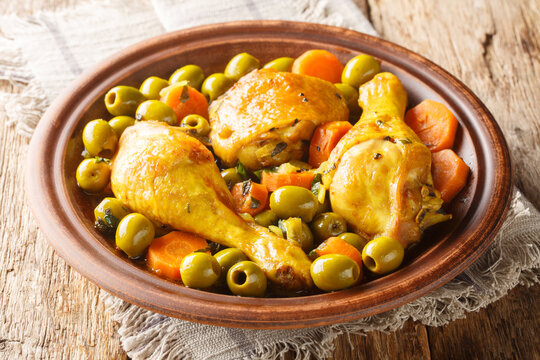
Recipe Score :
0.17
Details of the Ingredients:
- Black pepper: Quantité: 1.9g
Allergenicity: respiratory symptoms, contact dermatitis
HypoAllergenic Traitement : Eviction: the only way to manage allergens is by complete abstinence from the food
Score: 0.17 - Carrot: Quantité: 7.6g
Allergenicity: The symptoms include oral allergy syndrome (OAS), angioedema, urticaria, dyspnea, vertigo, tightness of throat or chest, dysphagia, hoarseness, cough, rhinitis and conjunctivitis, Carrot allergy is generally associated with allergy to birch pollen or with the celery-carrot-mugwort-spice syndrome.
HypoAllergenic Traitement : the reactivity is lowered when cooked
Score: 0.17 - Chicken: Quantité: 15.2g
Allergenicity: ND
HypoAllergenic Traitement : heat, homogenization and freeze-drying
Score: 0.17 - Garlic: Quantité: 7.6g
Allergenicity: Garlic allergy is relatively rare although one case of severe symptoms has been reported after eating garlic. The individual suffered exercise induced anaphylaxis and on a subsequent occasion anaphylaxis without exercise.
HypoAllergenic Traitement : the reactivity is lowered when cooked
Score: 0.17 - Nocellara del Belice DOP olive: Quantité: 38.1g
Allergenicity: itching and generalised urticaria after the ingestion of olive fruit
HypoAllergenic Traitement : the reactivity is lowered when cooked
Score: 0.17 - Olive Oil: Quantité: 11.4g
Allergenicity: contact dermatitis
HypoAllergenic Traitement : ND
Score: 0.17 - Onion: Quantité: 1.9g
Allergenicity: contact allergy, anaphylaxis, asthma, rhinoconjunctivitis
HypoAllergenic Traitement : the reactivity is lowered when cooked
Score: 0.17 - Parsley: Quantité: 5.7g
Allergenicity: angioedema, urticaria
HypoAllergenic Traitement : the reactivity is lowered when cooked
Score: 0.17
Scientifique Name of the ingredients :
- Black pepper: Piper nigrum L.
- Carrot: Daucus carota L.
- Chicken: Gallus gallus domesticus
- Garlic: Allium sativum
- Nocellara del Belice DOP olive: Nom scientifique non disponible
- Olive Oil: Olea europaea
- Onion: Allium cepa var. aggregatum
- Parsley: Petroselinum crispum
Molecular Allergens of Ingredients :
- Black pepper: Pip n 28kD (UniProt: Pip n - 13216) - Superfamille: Germin, Germin-like Protein
- Black pepper: Pip n 14kD (UniProt: Pip n - 13216)
- Carrot: Dau c 1 (UniProt: Q75T31) - Superfamille: Bet v1-like
- Carrot: Dau c 1.0101 (UniProt: O04298) - Superfamille: Bet v1-like
- Carrot: Dau c 1.0201 (UniProt: Q8SAE7) - Superfamille: Bet v1-like
- Carrot: Dau c 1.0301 (UniProt: D9ZHN9) - Superfamille: Bet v1-like
- Carrot: Dau c 3 (UniProt: P27631) - Superfamille: Bifunctional inhibitor/lipid-transfer protein/seed storage 2S albumin
- Carrot: Dau c 4.0101 (UniProt: Q8SAE6) - Superfamille: Profilin (actin-binding protein)
- Carrot: Dau c 5.0101 (UniProt: H2DF86) - Superfamille: NAD(P)-binding Rossmann-fold domains
- Carrot: Dau c 5.0102 (UniProt: H2DF85) - Superfamille: NAD(P)-binding Rossmann-fold domains
- Carrot: Dau c CyP (UniProt: H2DF84) - Superfamille: Cyclophilin-like
- Chicken: Gal d 7.0101 (UniProt: P02604) - Superfamille: EF-hand
- Chicken: Gal d TM (UniProt: P04268) - Superfamille: Tropomyosin
- Chicken: Gal d HG (UniProt: P02112) - Superfamille: Globin-like
- Chicken: Gal d GPI (UniProt: Q5ZMU3) - Superfamille: SIS domain
- Chicken: Gal d 8.0101 (UniProt: C1L370) - Superfamille: EF-hand
- Chicken: Gal d 8 (UniProt: P80026) - Superfamille: EF-hand
- Chicken: Gal d 10 (UniProt: R4GM10) - Superfamille: Aldolase
- Garlic: All s Alliin lyase (UniProt: Q01594) - Superfamille: PLP-dependent transferases
- Olive Oil: Ole e 13.0101 (UniProt: E3SU11) - Superfamille: Osmotin, thaumatin-like protein
- Onion: All a Alliin lyase (UniProt: P31756) - Superfamille: PLP-dependent transferases
- Onion: All c Alliin lyase (UniProt: P31757) - Superfamille: PLP-dependent transferases
- Parsley: Pet c 1 (UniProt: P19417) - Superfamille: Bet v1-like
- Parsley: Pet c 2 (UniProt: Q5EEP5) - Superfamille: Profilin (actin-binding protein)
- Ingredients used :
- Ingredient 1 : 1.9g of Black pepper
- Ingredient 2 : 7.6g of Carrot
- Ingredient 3 : 15.2g of Chicken
- Ingredient 4 : 7.6g of Garlic
- Ingredient 5 : 38.1g of Nocellara del Belice DOP olive
- Ingredient 6 : 11.4g of Olive Oil
- Ingredient 7 : 1.9g of Onion
- Ingredient 8 : 5.7g of Parsley
- Steps of preparation
- Step 1 : Remove the bone from the chicken breast and make thin slices.
- Step 2 : Put the vegetable oil, chopped onion, carrots, salt, black pepper, and green olives in a pot and stir very well on low heat for about 3 minutes.
- Step 3 : Then add 3 glasses of water and let it boil until the olives are cooked.
- Step 4 : In a pan, put one tablespoon of butter, add the slices of chicken, salt, half a teaspoon of black pepper, 2 cloves of garlic, and 2 tablespoons of parsley, and stir until the chicken turns golden.
- Step 5 : After that, put the mixture from the pot into the pan with the chicken and let them boil for about 5 minutes.
- Step 6 : When the Tajine is ready, add some parsley and serve.
Morocco Recipes
1 - Beef Tagine with Apricots, Prunes and Almonds
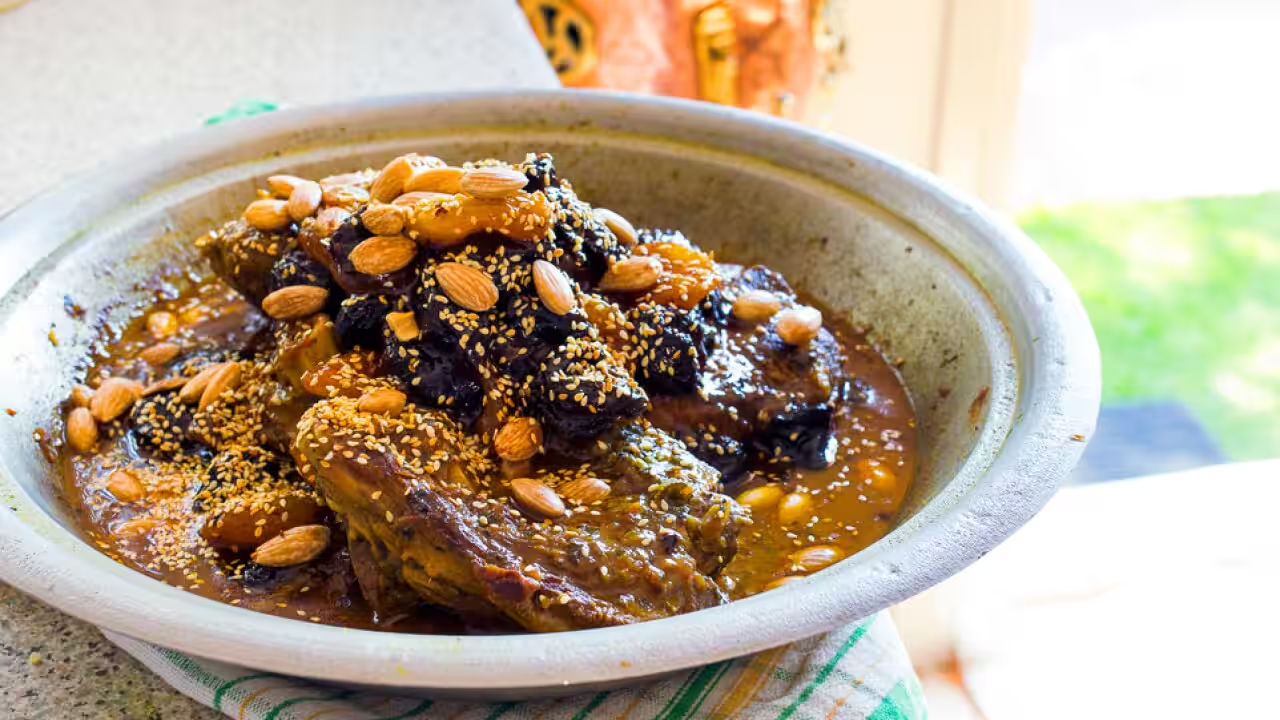
Recipe Score :
0.17
Details of the Ingredients:
- Almonds: Quantité: 5.9g
Allergenicity: severe anaphylaxis
HypoAllergenic Traitement : Eviction: the only way to manage allergens is by complete abstinence from the food
Score: 0.17 - Apricots: Quantité: 5g
Allergenicity: local reactions in the mouth and throat with itching and inflammation (called oral allergy syndrome, OAS). The molecule, known as an allergen, involved in this kind of allergy does not survive cooking and pasteurisation.
HypoAllergenic Traitement : the chemical peeling
Score: 0.17 - Beef: Quantité: 42g
Allergenicity: respiratory symptoms, and anaphylaxis
HypoAllergenic Traitement : cooking alters the reactivity of beef +freeze-drying and homogenization
Score: 0.17 - Black pepper: Quantité: 2g
Allergenicity: respiratory symptoms, contact dermatitis
HypoAllergenic Traitement : Eviction: the only way to manage allergens is by complete abstinence from the food
Score: 0.17 - Cinammon stick: Quantité: 1g
Allergenicity: respiratory symptoms, rhinoconjunctivitis, contact dermatitis, stomatitis, delayed type allergy
HypoAllergenic Traitement : NT
Score: 0.17 - Coriander: Quantité: 2g
Allergenicity: asthma, contact allergy, anaphylaxis
HypoAllergenic Traitement : NT
Score: 0.17 - Garlic: Quantité: 1.7g
Allergenicity: Garlic allergy is relatively rare although one case of severe symptoms has been reported after eating garlic. The individual suffered exercise induced anaphylaxis and on a subsequent occasion anaphylaxis without exercise.
HypoAllergenic Traitement : the reactivity is lowered when cooked
Score: 0.17 - Ginger: Quantité: 2g
Allergenicity: contact dermatitis, respiratory symptoms
HypoAllergenic Traitement : NT
Score: 0.17 - Honey: Quantité: 5.9g
Allergenicity: ND
HypoAllergenic Traitement : NT
Score: 0.17 - Olive Oil: Quantité: 5.9g
Allergenicity: contact dermatitis
HypoAllergenic Traitement : ND
Score: 0.17 - Onion: Quantité: 16.8g
Allergenicity: contact allergy, anaphylaxis, asthma, rhinoconjunctivitis
HypoAllergenic Traitement : the reactivity is lowered when cooked
Score: 0.17 - Orange: Quantité: 10.1g
Allergenicity: laryngeal edema, generalized urticaria, and asthma symptoms, anaphylactic reactions
HypoAllergenic Traitement : Eviction: the only way to manage allergens is by complete abstinence from the food
Score: 0.17
Scientifique Name of the ingredients :
- Almonds: Prunus dulcis
- Apricots: Prunus armeniaca
- Beef: Bos taurus Linnaeus
- Black pepper: Piper nigrum L.
- Cinammon stick: Cinnamomum verum J.
- Coriander: Coriandrum sativum
- Garlic: Allium sativum
- Ginger: Zingiber officinale
- Honey: Apis sp
- Honey: Apis mellifera
- Olive Oil: Olea europaea
- Onion: Allium cepa var. aggregatum
- Orange: Citrus sinensis
Molecular Allergens of Ingredients :
- Almonds: Pru du 3.0101 (UniProt: C0L0I5) - Superfamille: Bifunctional inhibitor/lipid-transfer protein/seed storage 2S albumin
- Almonds: Pru du 4.0101 (UniProt: Q8GSL5) - Superfamille: Profilin (actin-binding protein)
- Almonds: Pru du 6 (UniProt: Q43607) - Superfamille: RmlC-like cupins
- Almonds: Pru du 6.0101 (UniProt: E3SH28) - Superfamille: RmlC-like cupins
- Almonds: Pru du 6.0201 (UniProt: E3SH29) - Superfamille: RmlC-like cupins
- Almonds: Pru du Conglutin (UniProt: P82952) - Superfamille: Acid proteases
- Almonds: Pru du 3 (UniProt: Q43017) - Superfamille: Bifunctional inhibitor/lipid-transfer protein/seed storage 2S albumin
- Apricots: Pru ar 3 (UniProt: E7CLQ4) - Superfamille: Bifunctional inhibitor/lipid-transfer protein/seed storage 2S albumin
- Apricots: Pru ar 7k-LTP (UniProt: P82353) - Superfamille: Bifunctional inhibitor/lipid-transfer protein/seed storage 2S albumin
- Apricots: Pru ar 3.0101 (UniProt: P81651) - Superfamille: Bifunctional inhibitor/lipid-transfer protein/seed storage 2S albumin
- Apricots: Pru ar 1.0101 (UniProt: O50001) - Superfamille: Bet v1-like
- Apricots: Pru ar 1 (UniProt: O22521) - Superfamille: Bet v1-like
- Beef: Bos d 6 (UniProt: B0JYQ0) - Superfamille: Serum albumin-like
- Beef: Bos d 6.0101 (UniProt: P02769) - Superfamille: Serum albumin-like
- Black pepper: Pip n 14kD (UniProt: Pip n - 13216)
- Black pepper: Pip n 28kD (UniProt: Pip n - 13216) - Superfamille: Germin, Germin-like Protein
- Cinammon stick: Cin v (UniProt: Cin v - 128608)
- Coriander: Cor s [Leaf] (UniProt: Cor s - 4047)
- Coriander: Cor s 11kD (UniProt: not given)
- Coriander: Cor s 2 (UniProt: Cor s - 4047) - Superfamille: Profilin (actin-binding protein)
- Coriander: Cor s 1 (UniProt: Cor s - 4047) - Superfamille: Bet v 1-like (PR-Proteins)
- Garlic: All s Alliin lyase (UniProt: Q01594) - Superfamille: PLP-dependent transferases
- Honey: Api m 11.0101 (UniProt: B3GM12) - Superfamille: NHL repeat
- Honey: Api m 11.0201 (UniProt: Q4ZJX1) - Superfamille: NHL repeat
- Honey: Api m Apalbumin 1 (UniProt: O18330) - Superfamille: NHL repeat
- Honey: Api m Apalbumin 2 (UniProt: O77061) - Superfamille: NHL repeat
- Olive Oil: Ole e 13.0101 (UniProt: E3SU11) - Superfamille: Osmotin, thaumatin-like protein
- Onion: All a Alliin lyase (UniProt: P31756) - Superfamille: PLP-dependent transferases
- Onion: All c Alliin lyase (UniProt: P31757) - Superfamille: PLP-dependent transferases
- Orange: Cit s 1.0101 (UniProt: P84159) - Superfamille: Germin, Germin-like Protein
- Orange: Cit s 7.0101 (UniProt: A0A067GPB8) - Superfamille: Anti-Microbial Peptides
- Orange: Cit r 3.0101 (UniProt: not given) - Superfamille: Lipid Transfer Proteins
- Orange: Cit s 2.0101 (UniProt: P84177) - Superfamille: Profilin (actin-binding protein)
- Orange: Cit s 3 (UniProt: Q8L5S8) - Superfamille: Bifunctional inhibitor/lipid-transfer protein/seed storage 2S albumin
- Orange: Cit s 3.0102 (UniProt: Q6EV47) - Superfamille: Bifunctional inhibitor/lipid-transfer protein/seed storage 2S albumin
- Ingredients used :
- Ingredient 1 : 5.9g of Almonds
- Ingredient 2 : 5g of Apricots
- Ingredient 3 : 42g of Beef
- Ingredient 4 : 2g of Black pepper
- Ingredient 5 : 1g of Cinammon stick
- Ingredient 6 : 2g of Coriander
- Ingredient 7 : 1.7g of Garlic
- Ingredient 8 : 2g of Ginger
- Ingredient 9 : 5.9g of Honey
- Ingredient 10 : 5.9g of Olive Oil
- Ingredient 11 : 16.8g of Onion
- Ingredient 12 : 10.1g of Orange
- Steps of preparation
- Step 1 : Heat oil in the base of a flameproof casserole. Add the almonds and cook stirring, until they turn golden. Add the onions and garlic and fry until they begin to colour. Stir in the ginger, saffron, cinnamon sticks and coriander seeds. Add the lamb to the casserole and cook for about 1-2 minutes, stirring to make sure it is coated in the onion and spices. Pour in enough water to just cover the meat.
- Step 2 : Allow the tagine to reach a simmer (this may take a long time), and then reduce the heat to the lowest temperature necessary to maintain the simmer. About two hours into the cooking, remove and reserve 1/2 cup of the liquids. Allow the tagine to cook for about three hours, or until the meat is tender and the liquids are reduced.
- Step 3 : For the apricots and prunes. While the meat is cooking, put them in a small pot and just cover with water. Simmer over medium heat, partially covered, for 10 to 15 minutes, or until tender.
- Step 4 : Drain them and add the honey, cinnamon and the 1/2 cup of reserved liquid from the meat. Simmer them for about 5 to 10 minutes, or until they are sitting in a thick syrup.
- Step 5 : Spoon the apricots and syrup on top of the meat. Garnish with fried almonds and sesame seeds.
2 - Bissara
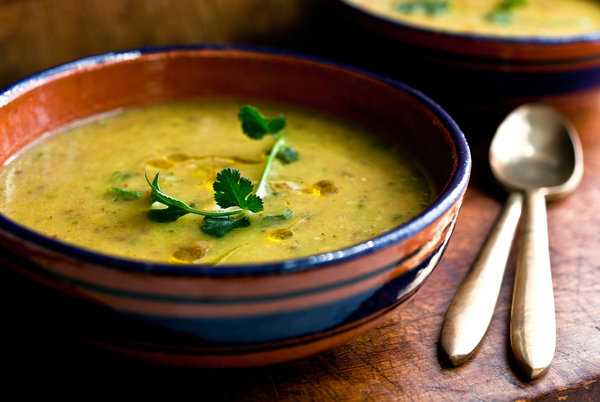
Recipe Score :
0.17
Details of the Ingredients:
- Cumin: Quantité: 0.4g
Allergenicity: anaphylaxis, contact dermatitis
HypoAllergenic Traitement : NT
Score: 0.17 - Fava beans: Quantité: 5.8g
Allergenicity: oral allergy syndrome, to severe symptoms requiring emergency treatment such as anaphylaxis or asthma. As for most allergenic foods, urticaria (hives) and other reactions of the skin are the most common symptoms. gastro-intestinalsymptoms
HypoAllergenic Traitement : the reactivity is lowered when cooked
Score: 0.17 - Garlic: Quantité: 1g
Allergenicity: Garlic allergy is relatively rare although one case of severe symptoms has been reported after eating garlic. The individual suffered exercise induced anaphylaxis and on a subsequent occasion anaphylaxis without exercise.
HypoAllergenic Traitement : the reactivity is lowered when cooked
Score: 0.17 - Olive Oil: Quantité: 5.8g
Allergenicity: contact dermatitis
HypoAllergenic Traitement : ND
Score: 0.17 - Peas: Quantité: 5.8g
Allergenicity: urticaria, emesis, angioedema or rhinitis) severity, severe reactions with wheezing and dyspnoea.
HypoAllergenic Traitement : the reactivity is lowered when cooked
Score: 0.17
Scientifique Name of the ingredients :
- Cumin: Cuminum cyminum L.
- Fava beans: Vicia faba
- Garlic: Allium sativum
- Olive Oil: Olea europaea
- Peas: Pisum sativum
Molecular Allergens of Ingredients :
- Fava beans: Vic f 6 (UniProt: H9BPH6) - Superfamille: Bet v1-like
- Garlic: All s Alliin lyase (UniProt: Q01594) - Superfamille: PLP-dependent transferases
- Olive Oil: Ole e 13.0101 (UniProt: E3SU11) - Superfamille: Osmotin, thaumatin-like protein
- Peas: Pis s 1 (UniProt: P02854) - Superfamille: RmlC-like cupins
- Peas: Pis s 1.0101 (UniProt: Q702P1) - Superfamille: RmlC-like cupins
- Peas: Pis s 1.0102 (UniProt: Q702P0) - Superfamille: RmlC-like cupins
- Peas: Pis s 2 (UniProt: P13915) - Superfamille: RmlC-like cupins
- Peas: Pis s 3 (UniProt: A0A158V755) - Superfamille: Bifunctional inhibitor/lipid-transfer protein/seed storage 2S albumin
- Peas: Pis s 3.0101 (UniProt: A0A161AT60) - Superfamille: Bifunctional inhibitor/lipid-transfer protein/seed storage 2S albumin
- Peas: Pis s 6 (UniProt: P13239) - Superfamille: Bet v1-like
- Peas: Pis s Agglutinin (UniProt: P02867) - Superfamille: Concanavalin A-like lectins/glucanases
- Peas: Pis s Albumin (UniProt: P08688) - Superfamille: Hemopexin-like domain
- Ingredients used :
- Ingredient 1 : 0.4g of Cumin
- Ingredient 2 : 5.8g of Fava beans
- Ingredient 3 : 1g of Garlic
- Ingredient 4 : 5.8g of Olive Oil
- Ingredient 5 : 5.8g of Peas
- Steps of preparation
- Step 1 : Place the following ingredients in a large saucepan over medium-high heat: dried green peas, dried fava beans, garlic, water and two tablespoons of olive oil.
- Step 2 : Once the water starts to boil, skim the whitish foam from the surface.
- Step 3 : Reduce the heat to medium and continue cooking for another 45 minutes, until the green peas and beans soften and begin to form a paste. Note: while cooking, check the water level and add more if necessary, until the peas and beans are cooked.
- Step 4 : Turn off the heat. Using a hand mixer, blend the peas and beans until creamy and smooth. Add water to adjust the texture to your taste.
- Step 5 : Add the cumin and three tablespoons of olive oil. Turn the heat back to medium, stir and cook for 5 minutes.
- Step 6 : Serve immediately, hot, with bread, olive oil and cayenne pepper (optional).
3 - Harira (Traditional Moroccan Soup)
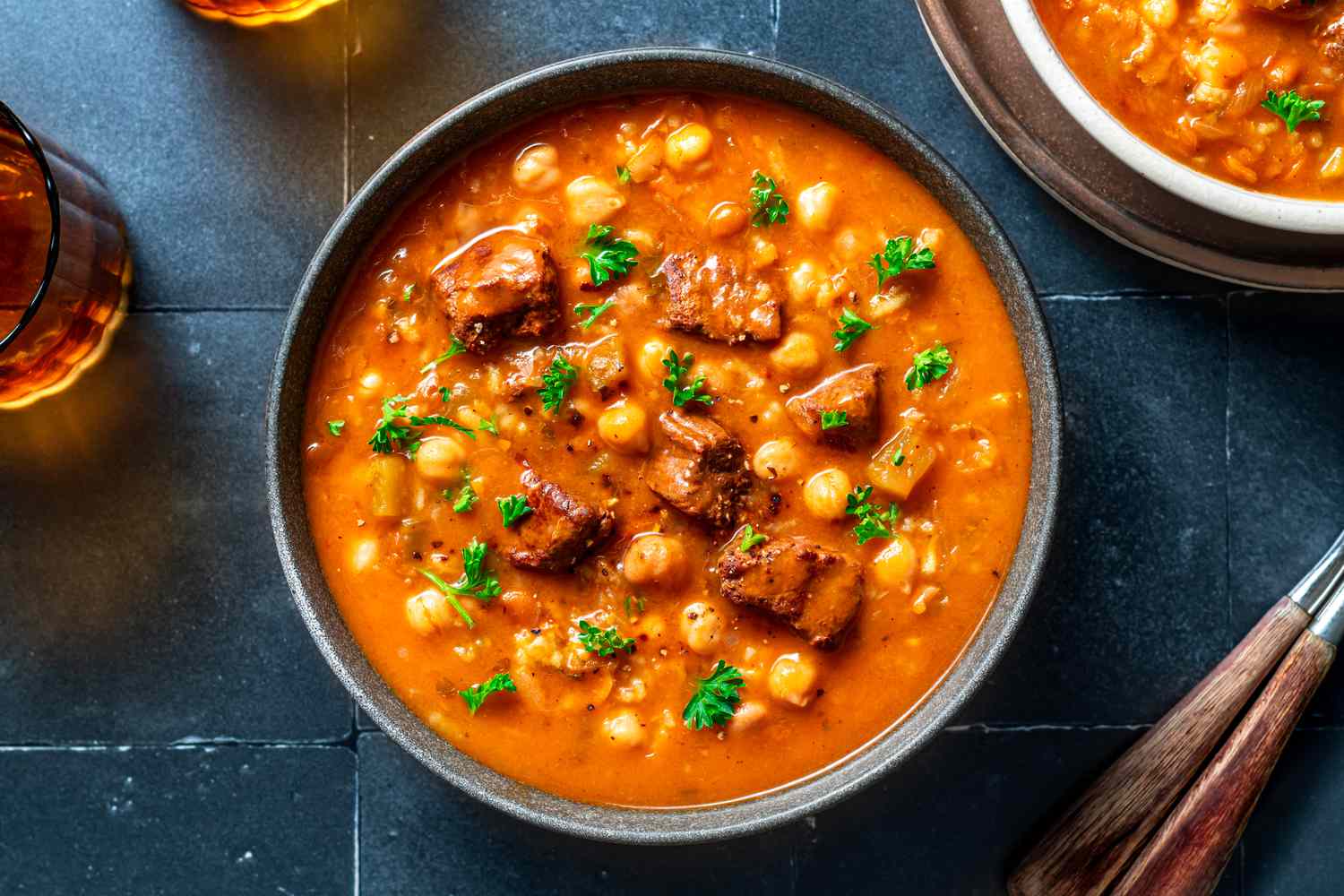
Recipe Score :
0.22
Details of the Ingredients:
- Celery: Quantité: 5g
Allergenicity: Allergy to celery is associated with allergy to birch pollen and also allergy to mugwort pollen. The most common symptom is oral allergy syndrome as for several other pollen related food allergies. However, serious reactions to celery such as anaphylaxis have been reported. Raw celery, cooked celery and celery spice have all caused reactions although some individuals may not react to cooked celery. Thus celery and products thereof are listed in annex IIIa of the EU directive on labelling of pre-packaged foods.
HypoAllergenic Traitement : HPP: High-PressureProcessing
Score: 0.50 - Chickpeas: Quantité: 15g
Allergenicity: The symptoms of chickpea allergic individuals are similar to those of other food allergies with urticaria (hives) and other reactions of the skin as the most common symptoms. Allergy to chickpea is associated with allergy to other legumes with allergy to lentil being the most frequently reported cross-reaction.
HypoAllergenic Traitement : The overall immunoreactivity of lentils was strongly reduced after autoclaving at 2.6 atm for 30 min
Score: 0.17 - Cilantro: Quantité: 5g
Allergenicity: asthma, contact allergy, anaphylaxis
HypoAllergenic Traitement : NT
Score: 0.17 - Garlic: Quantité: 5g
Allergenicity: Garlic allergy is relatively rare although one case of severe symptoms has been reported after eating garlic. The individual suffered exercise induced anaphylaxis and on a subsequent occasion anaphylaxis without exercise.
HypoAllergenic Traitement : the reactivity is lowered when cooked
Score: 0.17 - Ginger: Quantité: 2g
Allergenicity: contact dermatitis, respiratory symptoms
HypoAllergenic Traitement : NT
Score: 0.17 - Lentils: Quantité: 10g
Allergenicity: The symptoms of allergic individuals after eating lentil range from relatively mild symptoms, such as the oral allergy syndrome, to severe symptoms requiring emergency treatment such as anaphylaxis or asthma. As for most allergenic foods, urticaria (hives) and other reactions of the skin are the most common symptoms. Allergy to lentil is associated with allergy to other legumes with allergy to chickpea and pea reported for over 50% of individuals allergic to lentil.
HypoAllergenic Traitement : The overall immunoreactivity of lentils was strongly reduced after autoclaving at 2.6 atm for 30 min
Score: 0.17 - Olive Oil: Quantité: 15g
Allergenicity: contact dermatitis
HypoAllergenic Traitement : ND
Score: 0.17 - Onion: Quantité: 9g
Allergenicity: contact allergy, anaphylaxis, asthma, rhinoconjunctivitis
HypoAllergenic Traitement : the reactivity is lowered when cooked
Score: 0.17 - Parsley: Quantité: 5g
Allergenicity: angioedema, urticaria
HypoAllergenic Traitement : the reactivity is lowered when cooked
Score: 0.17 - Plain four/ weat: Quantité: 2g
Allergenicity: Adverse reactions to wheat have been more frequently reported than to other cereal-based foods. The best defined of these are coeliac disease and IgE-dependent wheat allergy, both of which result from malfunctioning of the immune system. Allergies to other cereals such as maize, sorghum and millet, are not common and are not related to reactions triggered by wheat, rye, barley and oats. As a consequence individuals with wheat allergy, including coeliac disease, can usually eat maize-based foods such as polenta. However, allergic reactions to maize can result from the fruit allergies found in the South of Europe which often start with reactions to peach. Coeliac disease is triggered by the gluten fraction of wheat or by the gluten-like proteins found in other closely related cereals such as rye, barley. Some sensitive individuals may also react to oats. The gut reacts to the gluten and becomes smooth, loosing its ability to absorb nutrients; symptoms including diarrhoea as well as deficiencies in nutrients like vitamins. It can manifest itself in childhood, affecting childrens growth and development, or in adult hood. As there is no cure individuals with coeliac disease have to avoid eating gluten for life. However, coeliac disease does not cause the potentially fatal reaction of anaphylaxis if gluten is accidentally eaten. In contrast IgE-mediated cereal allergies can be caused by the antibody molecule IgE binding to many proteins, not just gluten. Sometimes the reactions (often severe) only develop if an individual takes exercise within a few hours of eating wheat or related cereals, in a condition called exercise-induced anaphylaxis. Individuals with wheat allergy often react to closely related cereals like barley and rye, less frequently to the more distant relative, oats. Diagnosis of cereal allergies can be complicated by the fact that some of the blood tests for cereal food allergy can accidentally detect allergy to grass pollens instead. As a consequence of these adverse reactions, cereals containing gluten, (i.e. wheat, rye, barley, oats, spelt or their hybridized strains) have been included in Annex IIIa of the food labelling directive along with derived products. Temporary exceptions to the labelling rule (derogations) have been granted for wheat based glucose syrups including dextrose, wheat based maltodextrins, glucose syrups based on barley and cereals used in distillates for spirits.
HypoAllergenic Traitement : Yusing young cereal grains
Score: 0.48 - Tomato: Quantité: 24g
Allergenicity: tomato allergy is associated with allergy to either latex or pollen. The symptoms reported were rather different in the two groups. The patients with no latex allergy reported mostly the oral allergy syndrome with some skin reactions such as urticaria (hives). Patients with latex allergy reported urticaria as the most common reaction but 20% suffered anaphylaxis. Allergy to tomato is also linked to allergy to potato since they are related plants.
HypoAllergenic Traitement : TT: ThermalTreatment
Score: 0.17
Scientifique Name of the ingredients :
- Celery: Apium graveolens L.
- Chickpeas: Cicer arietinum
- Cilantro: Coriandrum sativum
- Garlic: Allium sativum
- Ginger: Zingiber officinale
- Lentils: Lens culinaris
- Olive Oil: Olea europaea
- Onion: Allium cepa var. aggregatum
- Parsley: Petroselinum crispum
- Plain four/ weat: Triticum aestivum
- Tomato: Solanum lycopersicum
Molecular Allergens of Ingredients :
- Celery: Api g 1.0201 (UniProt: P92918) - Superfamille: Bet v1-like
- Celery: Api g 1.0101 (UniProt: P49372) - Superfamille: Bet v1-like
- Celery: Api g 4.0101 (UniProt: Q9XF37) - Superfamille: Profilin (actin-binding protein)
- Celery: Api g 2.0101 (UniProt: E6Y8S8) - Superfamille: Bifunctional inhibitor/lipid-transfer protein/seed storage 2S albumin
- Celery: Api g 3.0101 (UniProt: P92919) - Superfamille: Chlorophyll a-b binding protein
- Chickpeas: Cic a 1 (UniProt: Q304D4) - Superfamille: RmlC-like cupins
- Chickpeas: Cic a 3 (UniProt: O23758) - Superfamille: Bifunctional inhibitor/lipid-transfer protein/seed storage 2S albumin
- Chickpeas: Cic a 4 (UniProt: Q39450) - Superfamille: Bet v1-like
- Chickpeas: Cic a 6 (UniProt: Q9SMJ4) - Superfamille: RmlC-like cupins
- Cilantro: Cor s [Leaf] (UniProt: Cor s - 4047)
- Cilantro: Cor s 1 (UniProt: Cor s - 4047) - Superfamille: Bet v 1-like (PR-Proteins)
- Cilantro: Cor s 2 (UniProt: Cor s - 4047) - Superfamille: Profilin (actin-binding protein)
- Cilantro: Cor s 11kD (UniProt: not given)
- Garlic: All s Alliin lyase (UniProt: Q01594) - Superfamille: PLP-dependent transferases
- Lentils: Len c 1.0101 (UniProt: Q84UI1) - Superfamille: RmlC-like cupins
- Lentils: Len c 1.0102 (UniProt: Q84UI0) - Superfamille: RmlC-like cupins
- Lentils: Len c 3 (UniProt: A0AT28) - Superfamille: Bifunctional inhibitor/lipid-transfer protein/seed storage 2S albumin
- Lentils: Len c 3.0101 (UniProt: A0AT29) - Superfamille: Bifunctional inhibitor/lipid-transfer protein/seed storage 2S albumin
- Lentils: Len c Agglutinin (UniProt: P02870) - Superfamille: Concanavalin A-like lectins/glucanases
- Olive Oil: Ole e 13.0101 (UniProt: E3SU11) - Superfamille: Osmotin, thaumatin-like protein
- Onion: All a Alliin lyase (UniProt: P31756) - Superfamille: PLP-dependent transferases
- Onion: All c Alliin lyase (UniProt: P31757) - Superfamille: PLP-dependent transferases
- Parsley: Pet c 1 (UniProt: P19417) - Superfamille: Bet v1-like
- Parsley: Pet c 2 (UniProt: Q5EEP5) - Superfamille: Profilin (actin-binding protein)
- Plain four/ weat: Tri a aA_SI (UniProt: P16347) - Superfamille: STI-like
- Plain four/ weat: Tri a 36.0101 (UniProt: B2Y2Q7) - Superfamille: Bifunctional inhibitor/lipid-transfer protein/seed storage 2S albumin
- Plain four/ weat: Tri a 37 (UniProt: P32032) - Superfamille: Crambin-like
- Plain four/ weat: Tri a 37.0101 (UniProt: Q9T0P1) - Superfamille: Crambin-like
- Plain four/ weat: Tri a 30.0101 (UniProt: P17314) - Superfamille: Bifunctional inhibitor/lipid-transfer protein/seed storage 2S albumin
- Plain four/ weat: Tri a 41.0101 (UniProt: A0A0G3F2P1) - Superfamille: RING/U-box
- Plain four/ weat: Tri a 44 (UniProt: B2C4K0) - Superfamille: Bifunctional inhibitor/lipid-transfer protein/seed storage 2S albumin
- Plain four/ weat: Tri a 44.0101 (UniProt: A0A0G3F720) - Superfamille: Bifunctional inhibitor/lipid-transfer protein/seed storage 2S albumin
- Plain four/ weat: Tri a 45 (UniProt: W5HIH8) - Superfamille: Zinc beta-ribbon
- Plain four/ weat: Tri a 45.0101 (UniProt: A0A0G3F715) - Superfamille: Zinc beta-ribbon
- Plain four/ weat: Tri a 7kLTP (UniProt: P82900) - Superfamille: Bifunctional inhibitor/lipid-transfer protein/seed storage 2S albumin
- Plain four/ weat: Tri a alpha_Gliadin (UniProt: Q1WA40) - Superfamille: Bifunctional inhibitor/lipid-transfer protein/seed storage 2S albumin
- Plain four/ weat: Tri a Chitinase (UniProt: Q8W429) - Superfamille: Lysozyme-like
- Plain four/ weat: Tri a CMX (UniProt: Q43691) - Superfamille: Bifunctional inhibitor/lipid-transfer protein/seed storage 2S albumin
- Plain four/ weat: Tri a GBSS_I (UniProt: P27736) - Superfamille: UDP-Glycosyltransferase/glycogen phosphorylase
- Plain four/ weat: Tri a Peroxidase (UniProt: Q05855) - Superfamille: Heme-dependent peroxidases
- Plain four/ weat: Tri a Peroxidase 1 (UniProt: Q8LK23) - Superfamille: Heme-dependent peroxidases
- Plain four/ weat: Tri a TLP (UniProt: P27357) - Superfamille: Osmotin, thaumatin-like protein
- Plain four/ weat: Tri a Tritin (UniProt: Q07810) - Superfamille: Ribosome inactivating proteins (RIP)
- Plain four/ weat: Tri a XI (UniProt: Q8L5C6) - Superfamille: (Trans)glycosidases
- Plain four/ weat: Tri a 33.0101 (UniProt: Q9ST57) - Superfamille: Serpins
- Plain four/ weat: Tri a 10kD (UniProt: Q4W1F9) - Superfamille: Bifunctional inhibitor/lipid-transfer protein/seed storage 2S albumin
- Plain four/ weat: Tri a 12 (UniProt: P49233) - Superfamille: Profilin (actin-binding protein)
- Plain four/ weat: Tri a 14 (UniProt: P24296) - Superfamille: Bifunctional inhibitor/lipid-transfer protein/seed storage 2S albumin
- Plain four/ weat: Tri a 17.0101 (UniProt: P93594) - Superfamille: (Trans)glycosidases
- Plain four/ weat: Tri a 18 (UniProt: P10969) - Superfamille: Plant lectins/antimicrobial peptides
- Plain four/ weat: Tri a 18.0101 (UniProt: P10968) - Superfamille: Plant lectins/antimicrobial peptides
- Plain four/ weat: Tri a 20 (UniProt: P21292) - Superfamille: Bifunctional inhibitor/lipid-transfer protein/seed storage 2S albumin
- Plain four/ weat: Tri a 20.0101 (UniProt: A0A060N479) - Superfamille: Bifunctional inhibitor/lipid-transfer protein/seed storage 2S albumin
- Plain four/ weat: Tri a 23kD (UniProt: Q4W1G0) - Superfamille: L domain-like
- Plain four/ weat: Tri a 26 (UniProt: P08489) - Superfamille: Bifunctional inhibitor/lipid-transfer protein/seed storage 2S albumin
- Plain four/ weat: Tri a 25.0101 (UniProt: Q9LDX4) - Superfamille: Thioredoxin-like
- Plain four/ weat: Tri a 36 (UniProt: P10385) - Superfamille: Bifunctional inhibitor/lipid-transfer protein/seed storage 2S albumin
- Plain four/ weat: Tri a 33 (UniProt: P93692) - Superfamille: Serpins
- Plain four/ weat: Tri a 30 (UniProt: Q53YX8) - Superfamille: Bifunctional inhibitor/lipid-transfer protein/seed storage 2S albumin
- Plain four/ weat: Tri a 28.0101 (UniProt: Q4W0V7) - Superfamille: Bifunctional inhibitor/lipid-transfer protein/seed storage 2S albumin
- Plain four/ weat: Tri a 28 (UniProt: P01085) - Superfamille: Bifunctional inhibitor/lipid-transfer protein/seed storage 2S albumin
- Plain four/ weat: Tri a 26.0201 (UniProt: Q45R38) - Superfamille: Bifunctional inhibitor/lipid-transfer protein/seed storage 2S albumin
- Plain four/ weat: Tri a 26.0101 (UniProt: P10388) - Superfamille: Bifunctional inhibitor/lipid-transfer protein/seed storage 2S albumin
- Tomato: Sola l Vicilin (UniProt: B0JEU3) - Superfamille: RmlC-like cupins
- Tomato: Sola l TLP (UniProt: P12670) - Superfamille: Osmotin, thaumatin-like protein
- Tomato: Sola l SOD (UniProt: P14831) - Superfamille: Cu,Zn superoxide dismutase-like
- Tomato: Sola l PG (UniProt: P05117) - Superfamille: Pectin lyase-like
- Tomato: Sola l Peroxidase (UniProt: P15003) - Superfamille: Heme-dependent peroxidases
- Tomato: Sola l Glucanase (UniProt: Q01413) - Superfamille: (Trans)glycosidases
- Tomato: Sola l Chitinase (UniProt: Q05539) - Superfamille: Lysozyme-like
- Tomato: Sola l 7 (UniProt: K4AYX7) - Superfamille: Bifunctional inhibitor/lipid-transfer protein/seed storage 2S albumin
- Tomato: Sola l 5.0101 (UniProt: P21568) - Superfamille: Cyclophilin-like
- Tomato: Sola l 5 (UniProt: K4D184) - Superfamille: Cyclophilin-like
- Tomato: Sola l 4.0201 (UniProt: K4CWC4) - Superfamille: Bet v1-like
- Tomato: Sola l 4.0101 (UniProt: O49881) - Superfamille: Bet v1-like
- Tomato: Sola l 4 (UniProt: K4CWC5) - Superfamille: Bet v1-like
- Tomato: Sola l 3.0101 (UniProt: P93224) - Superfamille: Bifunctional inhibitor/lipid-transfer protein/seed storage 2S albumin
- Tomato: Sola l 3 (UniProt: P27056) - Superfamille: Bifunctional inhibitor/lipid-transfer protein/seed storage 2S albumin
- Tomato: Sola l 1.0101 (UniProt: Q93YG7) - Superfamille: Profilin (actin-binding protein)
- Tomato: Sola l 1 (UniProt: Q41344) - Superfamille: Profilin (actin-binding protein)
- Ingredients used :
- Ingredient 1 : 5g of Celery
- Ingredient 2 : 15g of Chickpeas
- Ingredient 3 : 5g of Cilantro
- Ingredient 4 : 5g of Garlic
- Ingredient 5 : 2g of Ginger
- Ingredient 6 : 10g of Lentils
- Ingredient 7 : 15g of Olive Oil
- Ingredient 8 : 9g of Onion
- Ingredient 9 : 5g of Parsley
- Ingredient 10 : 2g of Plain four/ weat
- Ingredient 11 : 24g of Tomato
- Steps of preparation
- Step 1 : Add the tomatoes, onion, cilantro, parsley, celery, butter, salt, pepper, ginger powder, lentils, and water in your cooking pan. Cover the cooking pan and let all the ingredients cook for 45 minutes on medium heat. Stir from time to time. Note: If you are using dry chickpeas, add them to the other ingredients in step 1. Otherwise, if you are using canned chickpeas, add them towards the end. Also, if you would like to add meat.
- Step 2 : After 45 minutes, add the canned chickpeas and the tomato paste.
- Step 3 : Dilute the flour with some water. Slowly pour the flour mixture to the harira while stirring.
- Step 4 : Add the vermicelli. Cover and let the harira cook for another 10 minutes.
4 - Moroccan chicken vermicelli
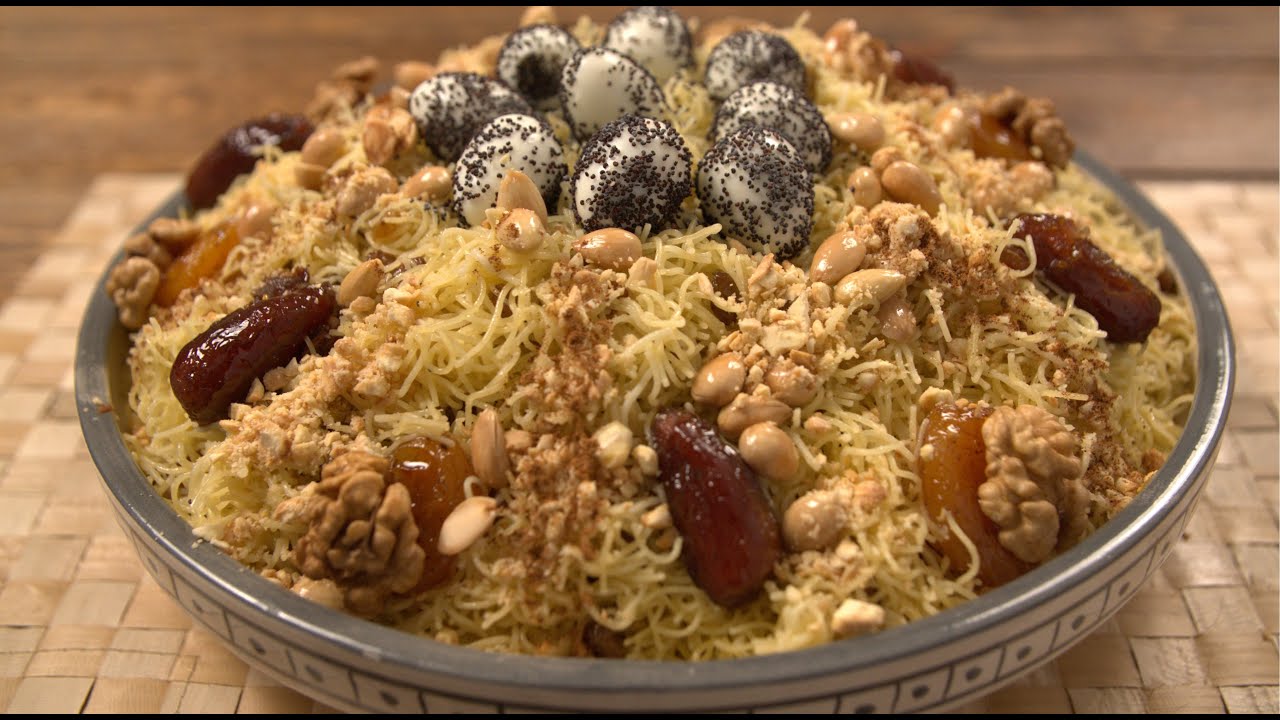
Recipe Score :
0.19
Details of the Ingredients:
- Almonds: Quantité: 5g
Allergenicity: severe anaphylaxis
HypoAllergenic Traitement : Eviction: the only way to manage allergens is by complete abstinence from the food
Score: 0.17 - Black pepper: Quantité: 0.13g
Allergenicity: respiratory symptoms, contact dermatitis
HypoAllergenic Traitement : Eviction: the only way to manage allergens is by complete abstinence from the food
Score: 0.17 - Chicken: Quantité: 30g
Allergenicity: ND
HypoAllergenic Traitement : heat, homogenization and freeze-drying
Score: 0.17 - Cinammon stick: Quantité: 0.13g
Allergenicity: respiratory symptoms, rhinoconjunctivitis, contact dermatitis, stomatitis, delayed type allergy
HypoAllergenic Traitement : NT
Score: 0.17 - Garlic: Quantité: 0.5g
Allergenicity: Garlic allergy is relatively rare although one case of severe symptoms has been reported after eating garlic. The individual suffered exercise induced anaphylaxis and on a subsequent occasion anaphylaxis without exercise.
HypoAllergenic Traitement : the reactivity is lowered when cooked
Score: 0.17 - Ginger: Quantité: 0.13g
Allergenicity: contact dermatitis, respiratory symptoms
HypoAllergenic Traitement : NT
Score: 0.17 - Olive Oil: Quantité: 5.5g
Allergenicity: contact dermatitis
HypoAllergenic Traitement : ND
Score: 0.17 - Onion: Quantité: 10g
Allergenicity: contact allergy, anaphylaxis, asthma, rhinoconjunctivitis
HypoAllergenic Traitement : the reactivity is lowered when cooked
Score: 0.17 - Raisins / grape/ wine: Quantité: 10g
Allergenicity: airway reactions (rhinitis and asthma)
HypoAllergenic Traitement : NT
Score: 0.17 - Saffron: Quantité: 0.1g
Allergenicity: anaphylaxis, asthma, rhinoconjunctivitis
HypoAllergenic Traitement : ND
Score: 0.17 - Turmeric: Quantité: 0.13g
Deprecated: htmlspecialchars(): Passing null to parameter #1 ($string) of type string is deprecated in /var/www/foodallergy/public_html/page2.php on line 700
Allergenicity:
HypoAllergenic Traitement : ND
Score: 0.17 - Walnuts: Quantité: 5g
Allergenicity: Allergies to tree nuts and seeds tend to be of a more severe nature, causing life-threatening and sometimes fatal reactions. People with tree nut allergies also often suffer from reactions triggered by a number of different types of nuts, even though they do not come from closely related plant species. In general these allergies are triggered by the major proteins found in nuts and seeds which are resist processes such as cooking. Reactions to nuts and seeds can also occur as a consequence of hidden nut ingredients or traces of nuts and certain seeds introduced as a consequence of food handling or manufacturing. As a result tree nuts and seeds have been included in Annex IIIa of the EU food labelling directive.
HypoAllergenic Traitement : pressure treatment at 256 kPa and 138 °C effectively reduced the IgE-binding capacity of walnut proteins
Score: 0.17
Scientifique Name of the ingredients :
- Almonds: Prunus dulcis
- Black pepper: Piper nigrum L.
- Chicken: Gallus gallus domesticus
- Cinammon stick: Cinnamomum verum J.
- Garlic: Allium sativum
- Ginger: Zingiber officinale
- Olive Oil: Olea europaea
- Onion: Allium cepa var. aggregatum
- Raisins / grape/ wine: Vitis vinifera
- Saffron: Crocus sativus
- Turmeric: Curcuma aromatica
- Walnuts: Juglans nigra
- Walnuts: Juglans spp
- Walnuts: Juglans regia
Molecular Allergens of Ingredients :
- Almonds: Pru du 3.0101 (UniProt: C0L0I5) - Superfamille: Bifunctional inhibitor/lipid-transfer protein/seed storage 2S albumin
- Almonds: Pru du 3 (UniProt: Q43017) - Superfamille: Bifunctional inhibitor/lipid-transfer protein/seed storage 2S albumin
- Almonds: Pru du Conglutin (UniProt: P82952) - Superfamille: Acid proteases
- Almonds: Pru du 6.0201 (UniProt: E3SH29) - Superfamille: RmlC-like cupins
- Almonds: Pru du 6.0101 (UniProt: E3SH28) - Superfamille: RmlC-like cupins
- Almonds: Pru du 6 (UniProt: Q43607) - Superfamille: RmlC-like cupins
- Almonds: Pru du 4.0101 (UniProt: Q8GSL5) - Superfamille: Profilin (actin-binding protein)
- Black pepper: Pip n 14kD (UniProt: Pip n - 13216)
- Black pepper: Pip n 28kD (UniProt: Pip n - 13216) - Superfamille: Germin, Germin-like Protein
- Chicken: Gal d 10 (UniProt: R4GM10) - Superfamille: Aldolase
- Chicken: Gal d 7.0101 (UniProt: P02604) - Superfamille: EF-hand
- Chicken: Gal d 8 (UniProt: P80026) - Superfamille: EF-hand
- Chicken: Gal d 8.0101 (UniProt: C1L370) - Superfamille: EF-hand
- Chicken: Gal d GPI (UniProt: Q5ZMU3) - Superfamille: SIS domain
- Chicken: Gal d HG (UniProt: P02112) - Superfamille: Globin-like
- Chicken: Gal d TM (UniProt: P04268) - Superfamille: Tropomyosin
- Cinammon stick: Cin v (UniProt: Cin v - 128608)
- Garlic: All s Alliin lyase (UniProt: Q01594) - Superfamille: PLP-dependent transferases
- Olive Oil: Ole e 13.0101 (UniProt: E3SU11) - Superfamille: Osmotin, thaumatin-like protein
- Onion: All c Alliin lyase (UniProt: P31757) - Superfamille: PLP-dependent transferases
- Onion: All a Alliin lyase (UniProt: P31756) - Superfamille: PLP-dependent transferases
- Raisins / grape/ wine: Vit v 1 (UniProt: Q850K6) - Superfamille: Bifunctional inhibitor/lipid-transfer protein/seed storage 2S albumin
- Raisins / grape/ wine: Vit v 1.0101 (UniProt: P80274) - Superfamille: Bifunctional inhibitor/lipid-transfer protein/seed storage 2S albumin
- Raisins / grape/ wine: Vit v 4 (UniProt: A5BLM8) - Superfamille: Profilin (actin-binding protein)
- Raisins / grape/ wine: Vit v 8 (UniProt: Q9FS42) - Superfamille: Bet v1-like
- Raisins / grape/ wine: Vit v Glucanase (UniProt: Q9M563) - Superfamille: (Trans)glycosidases
- Raisins / grape/ wine: Vit v TLP (UniProt: Q9LLB7) - Superfamille: Osmotin, thaumatin-like protein
- Saffron: Cro s 3.02 (UniProt: D2T0A6) - Superfamille: Bifunctional inhibitor/lipid-transfer protein/seed storage 2S albumin
- Walnuts: Jug r 8.0201 (UniProt: A0A2I4GT96) - Superfamille: Bifunctional inhibitor/lipid-transfer protein/seed storage 2S albumin
- Walnuts: Jug r 8.0101 (UniProt: A0A2I4EB91) - Superfamille: Bifunctional inhibitor/lipid-transfer protein/seed storage 2S albumin
- Walnuts: Jug r 7.0101 (UniProt: A0A2I4DNN6) - Superfamille: Profilin (actin-binding protein)
- Walnuts: Jug r 7 (UniProt: A0A2I4GR46) - Superfamille: Profilin (actin-binding protein)
- Walnuts: Jug r 6.0101 (UniProt: A0A2I4E5L6) - Superfamille: RmlC-like cupins
- Walnuts: Jug r 5.0101 (UniProt: A0A1J0RET5) - Superfamille: Bet v1-like
- Walnuts: Jug r 4.0101 (UniProt: Q2TPW5) - Superfamille: RmlC-like cupins
- Walnuts: Jug r 3 (UniProt: C5H617) - Superfamille: Bifunctional inhibitor/lipid-transfer protein/seed storage 2S albumin
- Walnuts: Jug r 2.0101 (UniProt: Q9SEW4) - Superfamille: RmlC-like cupins
- Walnuts: Jug r 1.0101 (UniProt: P93198) - Superfamille: Bifunctional inhibitor/lipid-transfer protein/seed storage 2S albumin
- Walnuts: Jug n 4.0101 (UniProt: A0A1L6K371) - Superfamille: RmlC-like cupins
- Walnuts: Jug n 2.0101 (UniProt: Q7Y1C1) - Superfamille: RmlC-like cupins
- Walnuts: Jug n 1.0101 (UniProt: Q7Y1C2) - Superfamille: Bifunctional inhibitor/lipid-transfer protein/seed storage 2S albumin
- Ingredients used :
- Ingredient 1 : 5g of Almonds
- Ingredient 2 : 0.13g of Black pepper
- Ingredient 3 : 30g of Chicken
- Ingredient 4 : 0.13g of Cinammon stick
- Ingredient 5 : 0.5g of Garlic
- Ingredient 6 : 0.13g of Ginger
- Ingredient 7 : 5.5g of Olive Oil
- Ingredient 8 : 10g of Onion
- Ingredient 9 : 10g of Raisins / grape/ wine
- Ingredient 10 : 0.1g of Saffron
- Ingredient 11 : 0.13g of Turmeric
- Ingredient 12 : 5g of Walnuts
- Steps of preparation
- Step 1 : In a pot, drizzle the olive oil and vegetable oil. Add the sliced onions, chicken spices, racid butter, cinnamon sticks, garlic, and the chicken. Mix all the ingredients together using a wooden spoon.
- Step 2 : After 5 minutes, add the water, increase the heat to medium-high, cover the pot and cook the chicken for 45 minutes or until it is done. Make sure to check on the chicken and stir from time to time. Adjust the seasoning if needed.
- Step 3 : Remove the chicken from the pot. Add the cinnamon to the sauce and cook uncovered on high heat for 10 minutes stirring from time to time with a wooden spoon until the sauce reduces and becomes thick.
- Step 4 : Once the sauce has reduced, turn off the heat, bring back the chicken to the pot, cover and keep it there until ready to serve the dish.
- Step 5 : Put a steamer over medium heat, and fill the pot bottom with water and add 2 lemon slices.
- Step 6 : In a large plate, add the vermicelli, the vegetable oil and gently mix with hands until it is completely coated with oil.
- Step 7 : Place the vermicelli in the top part of the couscous pot, cover and steam over medium heat for about 20 minutes or until you see the first steam coming out from the vermicelli.
- Step 8 : Remove the vermicelli from the top part of the pot and place it in a large plate. Add the salt and 1 cup of water (or more if the vermicelli is too dry), and mix the vermicelli with hands or a wooden spoon until well combined. Let rest for 5 minutes. Return the vermicelli to the pot, cover and steam once again for 15 minutes or until the steam comes out from the vermicelli.
- Step 9 : Check the vermicelli. If it is not ready, you may have to steam it for a 3rd time.
- Step 10 : When the vermicelli is soft and tender, transfer it to a large plate, add the butter and gently mix it using a fork until well combined.
- Step 11 : In a large plate, place a layer of vermicelli. Put the chicken mixture on top of the vermicelli and cover it with the rest of the vermicelli into a dome shape.
- Step 12 : Decorate with the almonds, raisins, and walnuts.
5 - Moroccan Kefta Tagine with Tomato Sauce
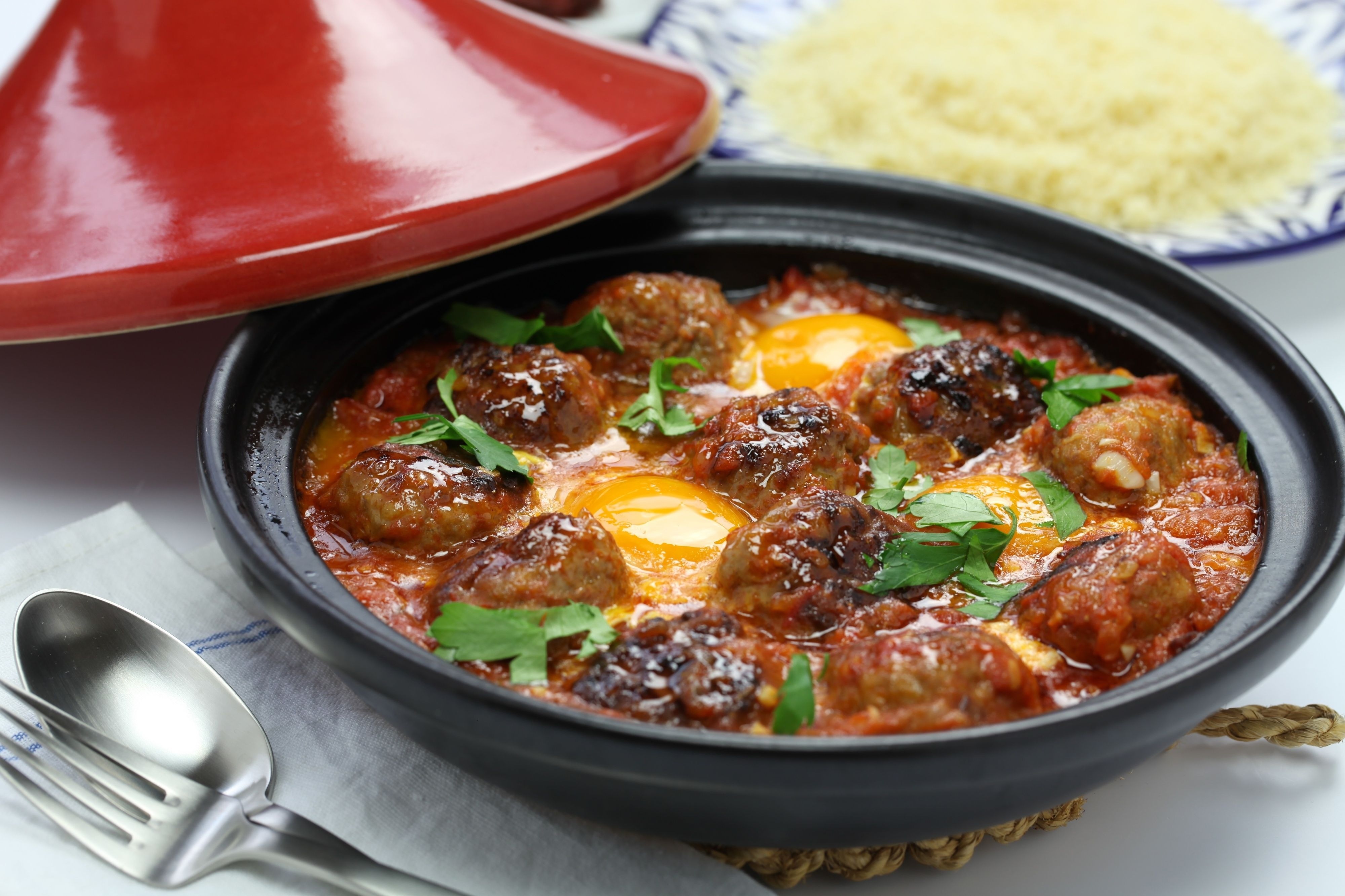
Recipe Score :
0.22
Details of the Ingredients:
- Beef: Quantité: 50g
Allergenicity: respiratory symptoms, and anaphylaxis
HypoAllergenic Traitement : cooking alters the reactivity of beef +freeze-drying and homogenization
Score: 0.17 - Black pepper: Quantité: 0.5g
Allergenicity: respiratory symptoms, contact dermatitis
HypoAllergenic Traitement : Eviction: the only way to manage allergens is by complete abstinence from the food
Score: 0.17 - Cilantro: Quantité: 2g
Allergenicity: asthma, contact allergy, anaphylaxis
HypoAllergenic Traitement : NT
Score: 0.17 - Cumin: Quantité: 0.5g
Allergenicity: anaphylaxis, contact dermatitis
HypoAllergenic Traitement : NT
Score: 0.17 - Egg: Quantité: 60g
Allergenicity: Eggs from birds contain several proteins capable of inducing an immune response in man most of these are present in the egg white. Allergenic proteins in the yolk only contribute to a minor degree and isolated allergy to egg yolk proteins are rare (see cross reactions). Most of the allergenic proteins present in the egg white are both heat- and digestion resistant and may also be found in the house dust in normal households. Although not thoroughly investigated, sensitization is believed to take place by ingestion of egg proteins in the diet even the minute quantities present in human milk can sensitize the infant in some cases, where a reaction is elicited the very first time the infant eats a meal containing egg. Ingestion of egg will in sensitized individuals elicit an immediate allergic reaction starting with itching of the mouth and pharynx, followed by nettle rash (urticaria), vomiting, rhinoconjunctivitis, asthma and in rare cases anaphylaxis. Exacerbation of atopic eczema may be seen also, but isolated reactions taking place hours to days after intake, without a previous immediate reaction, are rare.
HypoAllergenic Traitement : gastric enzyme supplementation/ Dry heating with mannose, heating for 15 minutes at 95 °C
Score: 0.87 - Garlic: Quantité: 1g
Allergenicity: Garlic allergy is relatively rare although one case of severe symptoms has been reported after eating garlic. The individual suffered exercise induced anaphylaxis and on a subsequent occasion anaphylaxis without exercise.
HypoAllergenic Traitement : the reactivity is lowered when cooked
Score: 0.17 - Ginger: Quantité: 0.1g
Allergenicity: contact dermatitis, respiratory symptoms
HypoAllergenic Traitement : NT
Score: 0.17 - Olive Oil: Quantité: 10g
Allergenicity: contact dermatitis
HypoAllergenic Traitement : ND
Score: 0.17 - Onion: Quantité: 25g
Allergenicity: contact allergy, anaphylaxis, asthma, rhinoconjunctivitis
HypoAllergenic Traitement : the reactivity is lowered when cooked
Score: 0.17 - Paprika: Quantité: 0.5g
Allergenicity: contact urticaria, rhinoconjunctivitis
HypoAllergenic Traitement : the reactivity is lowered when cooked
Score: 0.17 - Parsley: Quantité: 2g
Allergenicity: angioedema, urticaria
HypoAllergenic Traitement : the reactivity is lowered when cooked
Score: 0.17 - Tomato: Quantité: 10g
Allergenicity: tomato allergy is associated with allergy to either latex or pollen. The symptoms reported were rather different in the two groups. The patients with no latex allergy reported mostly the oral allergy syndrome with some skin reactions such as urticaria (hives). Patients with latex allergy reported urticaria as the most common reaction but 20% suffered anaphylaxis. Allergy to tomato is also linked to allergy to potato since they are related plants.
HypoAllergenic Traitement : TT: ThermalTreatment
Score: 0.17
Scientifique Name of the ingredients :
- Beef: Bos taurus Linnaeus
- Black pepper: Piper nigrum L.
- Cilantro: Coriandrum sativum
- Cumin: Cuminum cyminum L.
- Egg: Gallus gallus
- Garlic: Allium sativum
- Ginger: Zingiber officinale
- Olive Oil: Olea europaea
- Onion: Allium cepa var. aggregatum
- Paprika: Capsicum annuum
- Parsley: Petroselinum crispum
- Tomato: Solanum lycopersicum
Molecular Allergens of Ingredients :
- Beef: Bos d 6.0101 (UniProt: P02769) - Superfamille: Serum albumin-like
- Beef: Bos d 6 (UniProt: B0JYQ0) - Superfamille: Serum albumin-like
- Black pepper: Pip n 14kD (UniProt: Pip n - 13216)
- Black pepper: Pip n 28kD (UniProt: Pip n - 13216) - Superfamille: Germin, Germin-like Protein
- Cilantro: Cor s [Leaf] (UniProt: Cor s - 4047)
- Cilantro: Cor s 1 (UniProt: Cor s - 4047) - Superfamille: Bet v 1-like (PR-Proteins)
- Cilantro: Cor s 2 (UniProt: Cor s - 4047) - Superfamille: Profilin (actin-binding protein)
- Cilantro: Cor s 11kD (UniProt: not given)
- Egg: Gal d OIH (UniProt: P10184) - Superfamille: Kazal-type serine protease inhibitors
- Egg: Gal d L-PGDS (UniProt: Q8QFM7) - Superfamille: Lipocalins
- Egg: Gal d 3 (UniProt: Q4ADG4) - Superfamille: Periplasmic binding protein-like II
- Egg: Gal d 6.0101 (UniProt: P87498) - Superfamille: Lipovitellin-phosvitin complex, superhelical domain
- Egg: Gal d Phosvitin (UniProt: P67869) - Superfamille: Casein kinase II beta subunit
- Egg: Gal d 5.0101 (UniProt: P19121) - Superfamille: Serum albumin-like
- Egg: Gal d 3.0101 (UniProt: P02789) - Superfamille: Periplasmic binding protein-like II
- Egg: Gal d 2.0101 (UniProt: P01012) - Superfamille: Serpins
- Egg: Gal d 1.0101 (UniProt: P01005) - Superfamille: Kazal-type serine protease inhibitors
- Egg: Gal d 4.0101 (UniProt: P00698) - Superfamille: Lysozyme-like
- Egg: Gal d 1 (UniProt: B6V1G0) - Superfamille: Kazal-type serine protease inhibitors
- Garlic: All s Alliin lyase (UniProt: Q01594) - Superfamille: PLP-dependent transferases
- Olive Oil: Ole e 13.0101 (UniProt: E3SU11) - Superfamille: Osmotin, thaumatin-like protein
- Onion: All a Alliin lyase (UniProt: P31756) - Superfamille: PLP-dependent transferases
- Onion: All c Alliin lyase (UniProt: P31757) - Superfamille: PLP-dependent transferases
- Paprika: Cap a 2 (UniProt: Q6RG01) - Superfamille: Profilin (actin-binding protein)
- Paprika: Cap a Glucanase (UniProt: Q9M5L5) - Superfamille: (Trans)glycosidases
- Paprika: Cap a 4 (UniProt: B2CZJ6) - Superfamille: Bet v1-like
- Paprika: Cap a 2.0101 (UniProt: Q93YI9) - Superfamille: Profilin (actin-binding protein)
- Paprika: Cap a 1.0101 (UniProt: Q9ARG0) - Superfamille: Osmotin, thaumatin-like protein
- Paprika: Cap a 30kD (UniProt: Q42661) - Superfamille: Heme-dependent peroxidases
- Parsley: Pet c 1 (UniProt: P19417) - Superfamille: Bet v1-like
- Parsley: Pet c 2 (UniProt: Q5EEP5) - Superfamille: Profilin (actin-binding protein)
- Tomato: Sola l Vicilin (UniProt: B0JEU3) - Superfamille: RmlC-like cupins
- Tomato: Sola l TLP (UniProt: P12670) - Superfamille: Osmotin, thaumatin-like protein
- Tomato: Sola l SOD (UniProt: P14831) - Superfamille: Cu,Zn superoxide dismutase-like
- Tomato: Sola l PG (UniProt: P05117) - Superfamille: Pectin lyase-like
- Tomato: Sola l Peroxidase (UniProt: P15003) - Superfamille: Heme-dependent peroxidases
- Tomato: Sola l Glucanase (UniProt: Q01413) - Superfamille: (Trans)glycosidases
- Tomato: Sola l Chitinase (UniProt: Q05539) - Superfamille: Lysozyme-like
- Tomato: Sola l 7 (UniProt: K4AYX7) - Superfamille: Bifunctional inhibitor/lipid-transfer protein/seed storage 2S albumin
- Tomato: Sola l 5.0101 (UniProt: P21568) - Superfamille: Cyclophilin-like
- Tomato: Sola l 5 (UniProt: K4D184) - Superfamille: Cyclophilin-like
- Tomato: Sola l 4.0201 (UniProt: K4CWC4) - Superfamille: Bet v1-like
- Tomato: Sola l 4.0101 (UniProt: O49881) - Superfamille: Bet v1-like
- Tomato: Sola l 4 (UniProt: K4CWC5) - Superfamille: Bet v1-like
- Tomato: Sola l 3.0101 (UniProt: P93224) - Superfamille: Bifunctional inhibitor/lipid-transfer protein/seed storage 2S albumin
- Tomato: Sola l 3 (UniProt: P27056) - Superfamille: Bifunctional inhibitor/lipid-transfer protein/seed storage 2S albumin
- Tomato: Sola l 1.0101 (UniProt: Q93YG7) - Superfamille: Profilin (actin-binding protein)
- Tomato: Sola l 1 (UniProt: Q41344) - Superfamille: Profilin (actin-binding protein)
- Ingredients used :
- Ingredient 1 : 50g of Beef
- Ingredient 2 : 0.5g of Black pepper
- Ingredient 3 : 2g of Cilantro
- Ingredient 4 : 0.5g of Cumin
- Ingredient 5 : 60g of Egg
- Ingredient 6 : 1g of Garlic
- Ingredient 7 : 0.1g of Ginger
- Ingredient 8 : 10g of Olive Oil
- Ingredient 9 : 25g of Onion
- Ingredient 10 : 0.5g of Paprika
- Ingredient 11 : 2g of Parsley
- Ingredient 12 : 10g of Tomato
- Steps of preparation
- Step 1 : Mix all the meat ingredients together: Onion, 1 teaspoon Paprika, 1/2 teaspoon cumin, 1/2 teaspoon salt, 1/2 teaspoon ground cinnamon, 1/2 teaspoon chili powder (to taste), 1/4 cup finely chopped fresh cilantro and parsley, and mix well.
- Step 2 : Roll the meat into small meatballs.
- Step 3 : Prepare the sauce: -Cut the tomatoes in half and grate them. Disregard the tomato skin. -In a large and deep saucepan, drizzle the olive oil and heat on medium heat for 30 seconds. -Add the minced garlic, chopped onion, spices, grated tomatoes, 2 tablespoons of chopped cilantro, and tomato paste. -Mix and cook on medium heat for around 5 minutes.
- Step 4 : Add the meatballs and let cook for another 20-25 minutes.
- Step 5 : Add the eggs to the meat and sauce, cover the flat pan and let it cook for 5 minutes.
6 - Moroccan Lamb or Beef Tagine with Peas and Artichokes
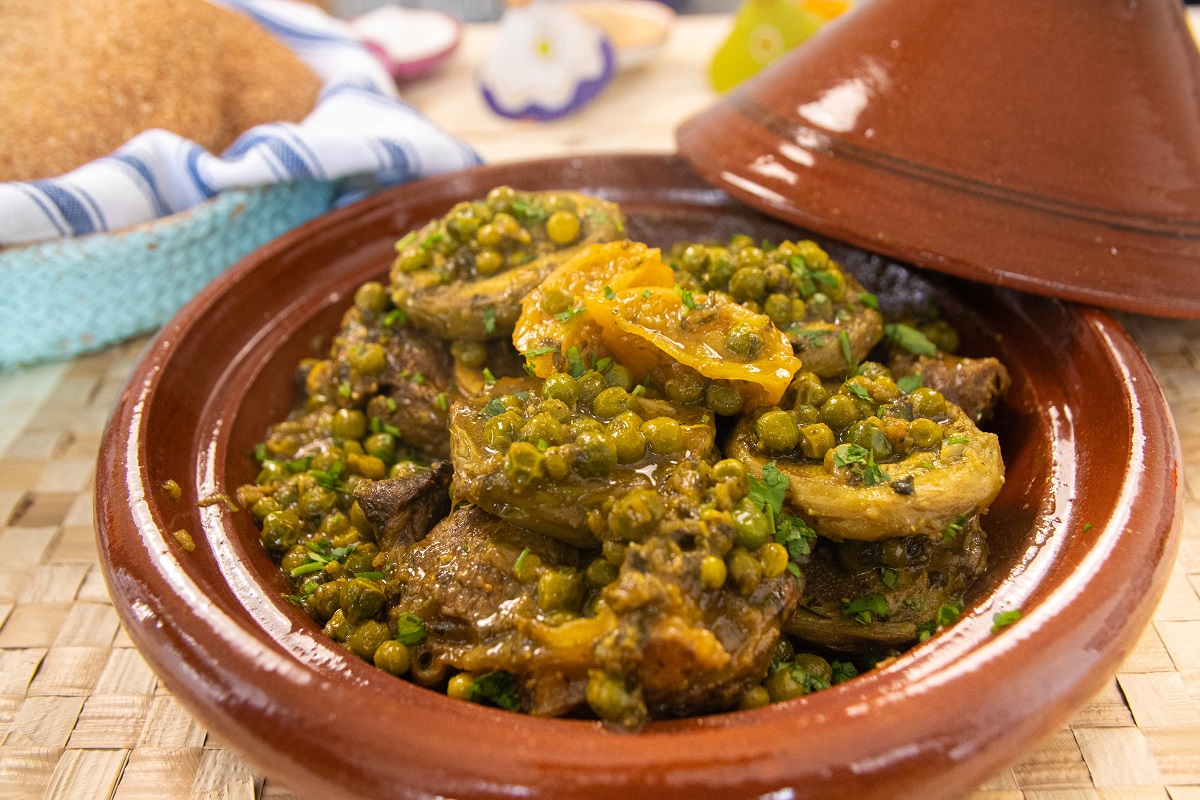
Recipe Score :
0.17
Details of the Ingredients:
- Artichokes: Quantité: 32.7g
Allergenicity: severe anaphylaxis, characterized by generalized urticaria with lip and eyelid angioedema and dyspnea
HypoAllergenic Traitement : the reactivity is lowered when cooked
Score: 0.17 - Cilantro: Quantité: 0.6g
Allergenicity: asthma, contact allergy, anaphylaxis
HypoAllergenic Traitement : NT
Score: 0.17 - Garlic: Quantité: 0.4g
Allergenicity: Garlic allergy is relatively rare although one case of severe symptoms has been reported after eating garlic. The individual suffered exercise induced anaphylaxis and on a subsequent occasion anaphylaxis without exercise.
HypoAllergenic Traitement : the reactivity is lowered when cooked
Score: 0.17 - Ginger: Quantité: 0.1g
Allergenicity: contact dermatitis, respiratory symptoms
HypoAllergenic Traitement : NT
Score: 0.17 - Lamb: Quantité: 17.3g
Allergenicity: respiratory symptoms, and anaphylaxis
HypoAllergenic Traitement : heat, homogenization and freeze-drying
Score: 0.17 - Olive Oil: Quantité: 8.6g
Allergenicity: contact dermatitis
HypoAllergenic Traitement : ND
Score: 0.17 - Onion: Quantité: 2.3g
Allergenicity: contact allergy, anaphylaxis, asthma, rhinoconjunctivitis
HypoAllergenic Traitement : the reactivity is lowered when cooked
Score: 0.17 - Parsley: Quantité: 0.6g
Allergenicity: angioedema, urticaria
HypoAllergenic Traitement : the reactivity is lowered when cooked
Score: 0.17 - Peas: Quantité: 32.7g
Allergenicity: urticaria, emesis, angioedema or rhinitis) severity, severe reactions with wheezing and dyspnoea.
HypoAllergenic Traitement : the reactivity is lowered when cooked
Score: 0.17 - Preserved lemon: Quantité: 4.3g
Allergenicity: ND
HypoAllergenic Traitement : NT
Score: 0.17 - Saffron: Quantité: 0.1g
Allergenicity: anaphylaxis, asthma, rhinoconjunctivitis
HypoAllergenic Traitement : ND
Score: 0.17 - Turmeric: Quantité: 0.1g
Deprecated: htmlspecialchars(): Passing null to parameter #1 ($string) of type string is deprecated in /var/www/foodallergy/public_html/page2.php on line 700
Allergenicity:
HypoAllergenic Traitement : ND
Score: 0.17
Scientifique Name of the ingredients :
- Artichokes: Cynara cardunculus L.
- Cilantro: Coriandrum sativum
- Garlic: Allium sativum
- Ginger: Zingiber officinale
- Lamb: Ovis aries
- Olive Oil: Olea europaea
- Onion: Allium cepa var. aggregatum
- Parsley: Petroselinum crispum
- Peas: Pisum sativum
- Preserved lemon: Citrus limon
- Saffron: Crocus sativus
- Turmeric: Curcuma aromatica
Molecular Allergens of Ingredients :
- Artichokes: Cyn s (UniProt: Cyn s - 59895)
- Artichokes: Cyn c (UniProt: Cyn c - 4265)
- Cilantro: Cor s [Leaf] (UniProt: Cor s - 4047)
- Cilantro: Cor s 1 (UniProt: Cor s - 4047) - Superfamille: Bet v 1-like (PR-Proteins)
- Cilantro: Cor s 2 (UniProt: Cor s - 4047) - Superfamille: Profilin (actin-binding protein)
- Cilantro: Cor s 11kD (UniProt: not given)
- Garlic: All s Alliin lyase (UniProt: Q01594) - Superfamille: PLP-dependent transferases
- Lamb: Ovi a GAPDH (UniProt: W5PDG3) - Superfamille: Glyceraldehyde-3-phosphate dehydrogenases
- Olive Oil: Ole e 13.0101 (UniProt: E3SU11) - Superfamille: Osmotin, thaumatin-like protein
- Onion: All a Alliin lyase (UniProt: P31756) - Superfamille: PLP-dependent transferases
- Onion: All c Alliin lyase (UniProt: P31757) - Superfamille: PLP-dependent transferases
- Parsley: Pet c 2 (UniProt: Q5EEP5) - Superfamille: Profilin (actin-binding protein)
- Parsley: Pet c 1 (UniProt: P19417) - Superfamille: Bet v1-like
- Peas: Pis s 1 (UniProt: P02854) - Superfamille: RmlC-like cupins
- Peas: Pis s 1.0101 (UniProt: Q702P1) - Superfamille: RmlC-like cupins
- Peas: Pis s 1.0102 (UniProt: Q702P0) - Superfamille: RmlC-like cupins
- Peas: Pis s 2 (UniProt: P13915) - Superfamille: RmlC-like cupins
- Peas: Pis s 3 (UniProt: A0A158V755) - Superfamille: Bifunctional inhibitor/lipid-transfer protein/seed storage 2S albumin
- Peas: Pis s 3.0101 (UniProt: A0A161AT60) - Superfamille: Bifunctional inhibitor/lipid-transfer protein/seed storage 2S albumin
- Peas: Pis s 6 (UniProt: P13239) - Superfamille: Bet v1-like
- Peas: Pis s Agglutinin (UniProt: P02867) - Superfamille: Concanavalin A-like lectins/glucanases
- Peas: Pis s Albumin (UniProt: P08688) - Superfamille: Hemopexin-like domain
- Preserved lemon: Cit l 1 (UniProt: I6UVE3) - Superfamille: RmlC-like cupins
- Saffron: Cro s 3.02 (UniProt: D2T0A6) - Superfamille: Bifunctional inhibitor/lipid-transfer protein/seed storage 2S albumin
- Ingredients used :
- Ingredient 1 : 32.7g of Artichokes
- Ingredient 2 : 0.6g of Cilantro
- Ingredient 3 : 0.4g of Garlic
- Ingredient 4 : 0.1g of Ginger
- Ingredient 5 : 17.3g of Lamb
- Ingredient 6 : 8.6g of Olive Oil
- Ingredient 7 : 2.3g of Onion
- Ingredient 8 : 0.6g of Parsley
- Ingredient 9 : 32.7g of Peas
- Ingredient 10 : 4.3g of Preserved lemon
- Ingredient 11 : 0.1g of Saffron
- Ingredient 12 : 0.1g of Turmeric
- Steps of preparation
- Step 1 : If using freshly shelled peas, parboil for several minutes; drain, and set aside.
- Step 2 : Coat base of tagine (clay or ceramic tagine) with a little olive oil. Slice an additional onion into rings and distribute rings on bottom of tagine.
- Step 3 : In a bowl, mix meat with remaining olive oil, chopped onion, garlic, spices, and chopped cilantro and place over sliced onions. Add mixture to the tagine, taking care to arrange meat in middle.
- Step 4 : Surround meat with peas, then arrange artichokes all around.
- Step 5 : Swirl about 111.5 g water in bowl used for meat to "rinse" spices from sides of bowl, and add to tagine. Add a little more water if necessary to barely cover the peas.
- Step 6 : Close tagine and place over medium-low heat. The tagine is done when you can easily break meat apart with fingers. If necessary, continue simmering uncovered to reduce sauce.
- Step 7 : Garnish as desired with strips of preserved lemon. Serve dish directly from tagine with bread.
7 - Moroccan Tagine with Quinces and Honey
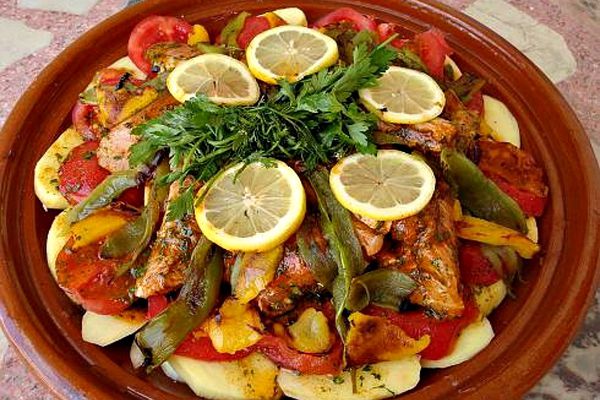
Recipe Score :
0.17
Details of the Ingredients:
- Beef: Quantité: 57.5g
Allergenicity: respiratory symptoms, and anaphylaxis
HypoAllergenic Traitement : cooking alters the reactivity of beef +freeze-drying and homogenization
Score: 0.17 - Black pepper: Quantité: 0.1g
Allergenicity: respiratory symptoms, contact dermatitis
HypoAllergenic Traitement : Eviction: the only way to manage allergens is by complete abstinence from the food
Score: 0.17 - Cayenne pepper: Quantité: 0.1g
Allergenicity: respiratory symptoms rather than reactions of the mouth or skin (most commonly rhinoconjunctivitis but also asthma) which is slightly unusual.; Headaches were also reported which are sometimes associated with allergic rhinitis but are otherwise rarely reported as a symptom of food allergy.; Allergy to bell pepper is often associated with the celery-birch-mugwort-spice syndrome.
HypoAllergenic Traitement : the reactivity is lowered when cooked
Score: 0.17 - Cilantro:
Allergenicity: asthma, contact allergy, anaphylaxis
HypoAllergenic Traitement : NT
Score: 0.17 - Cinammon stick: Quantité: 0.8g
Allergenicity: respiratory symptoms, rhinoconjunctivitis, contact dermatitis, stomatitis, delayed type allergy
HypoAllergenic Traitement : NT
Score: 0.17 - Garlic: Quantité: 2.5g
Allergenicity: Garlic allergy is relatively rare although one case of severe symptoms has been reported after eating garlic. The individual suffered exercise induced anaphylaxis and on a subsequent occasion anaphylaxis without exercise.
HypoAllergenic Traitement : the reactivity is lowered when cooked
Score: 0.17 - Ginger: Quantité: 0.3g
Allergenicity: contact dermatitis, respiratory symptoms
HypoAllergenic Traitement : NT
Score: 0.17 - Honey: Quantité: 0.3g
Allergenicity: ND
HypoAllergenic Traitement : NT
Score: 0.17 - Olive Oil: Quantité: 1.7g
Allergenicity: contact dermatitis
HypoAllergenic Traitement : ND
Score: 0.17 - Onion: Quantité: 1.7g
Allergenicity: contact allergy, anaphylaxis, asthma, rhinoconjunctivitis
HypoAllergenic Traitement : the reactivity is lowered when cooked
Score: 0.17 - Quinces: Quantité: 25.4g
Allergenicity: ND
HypoAllergenic Traitement : NT
Score: 0.17 - Saffron: Quantité: 0.1g
Allergenicity: anaphylaxis, asthma, rhinoconjunctivitis
HypoAllergenic Traitement : ND
Score: 0.17 - Turmeric: Quantité: 0.2g
Deprecated: htmlspecialchars(): Passing null to parameter #1 ($string) of type string is deprecated in /var/www/foodallergy/public_html/page2.php on line 700
Allergenicity:
HypoAllergenic Traitement : ND
Score: 0.17
Scientifique Name of the ingredients :
- Beef: Bos taurus Linnaeus
- Black pepper: Piper nigrum L.
- Cayenne pepper: Capsicum frutescens
- Cayenne pepper: Capsicum annuum
- Cilantro: Coriandrum sativum
- Cinammon stick: Cinnamomum verum J.
- Garlic: Allium sativum
- Ginger: Zingiber officinale
- Honey: Apis sp
- Honey: Apis mellifera
- Olive Oil: Olea europaea
- Onion: Allium cepa var. aggregatum
- Quinces: Cydonia oblonga
- Saffron: Crocus sativus
- Turmeric: Curcuma aromatica
Molecular Allergens of Ingredients :
- Beef: Bos d 6.0101 (UniProt: P02769) - Superfamille: Serum albumin-like
- Beef: Bos d 6 (UniProt: B0JYQ0) - Superfamille: Serum albumin-like
- Black pepper: Pip n 14kD (UniProt: Pip n - 13216)
- Black pepper: Pip n 28kD (UniProt: Pip n - 13216) - Superfamille: Germin, Germin-like Protein
- Cayenne pepper: Cap a 1.0101 (2) (UniProt: Q9ARG0) - Superfamille: Osmotin, thaumatin-like protein
- Cayenne pepper: Cap a 2 (2) (UniProt: Q6RG01) - Superfamille: Profilin (actin-binding protein)
- Cayenne pepper: Cap a 2.0101 (2) (UniProt: Q93YI9) - Superfamille: Profilin (actin-binding protein)
- Cayenne pepper: Cap a 30kD (2) (UniProt: Q42661) - Superfamille: Heme-dependent peroxidases
- Cayenne pepper: Cap a 4 (2) (UniProt: B2CZJ6) - Superfamille: Bet v1-like
- Cayenne pepper: Cap a Glucanase (2) (UniProt: Q9M5L5) - Superfamille: (Trans)glycosidases
- Cilantro: Cor s 2 (UniProt: Cor s - 4047) - Superfamille: Profilin (actin-binding protein)
- Cilantro: Cor s 11kD (UniProt: not given)
- Cilantro: Cor s 1 (UniProt: Cor s - 4047) - Superfamille: Bet v 1-like (PR-Proteins)
- Cilantro: Cor s [Leaf] (UniProt: Cor s - 4047)
- Cinammon stick: Cin v (UniProt: Cin v - 128608)
- Garlic: All s Alliin lyase (UniProt: Q01594) - Superfamille: PLP-dependent transferases
- Honey: Api m 11.0101 (UniProt: B3GM12) - Superfamille: NHL repeat
- Honey: Api m 11.0201 (UniProt: Q4ZJX1) - Superfamille: NHL repeat
- Honey: Api m Apalbumin 1 (UniProt: O18330) - Superfamille: NHL repeat
- Honey: Api m Apalbumin 2 (UniProt: O77061) - Superfamille: NHL repeat
- Olive Oil: Ole e 13.0101 (UniProt: E3SU11) - Superfamille: Osmotin, thaumatin-like protein
- Onion: All a Alliin lyase (UniProt: P31756) - Superfamille: PLP-dependent transferases
- Onion: All c Alliin lyase (UniProt: P31757) - Superfamille: PLP-dependent transferases
- Quinces: Cyd ob
- Saffron: Cro s 3.02 (UniProt: D2T0A6) - Superfamille: Bifunctional inhibitor/lipid-transfer protein/seed storage 2S albumin
- Ingredients used :
- Ingredient 1 : 57.5g of Beef
- Ingredient 2 : 0.1g of Black pepper
- Ingredient 3 : 0.1g of Cayenne pepper
- Ingredient 4 : Cilantro
- Ingredient 5 : 0.8g of Cinammon stick
- Ingredient 6 : 2.5g of Garlic
- Ingredient 7 : 0.3g of Ginger
- Ingredient 8 : 0.3g of Honey
- Ingredient 9 : 1.7g of Olive Oil
- Ingredient 10 : 1.7g of Onion
- Ingredient 11 : 25.4g of Quinces
- Ingredient 12 : 0.1g of Saffron
- Ingredient 13 : 0.2g of Turmeric
- Steps of preparation
- Step 1 : Set the saffron and cilantro aside.
- Step 2 : Place the meat, onions, garlic, remaining spices, oil, and butter in a clay or ceramic tagine. Stir to mix well, then brown the meat over medium-high heat. Add the saffron, cilantro, and about 15 g cups of water.
- Step 3 : Cover and cook for about an hour and a half, or until the meat is very tender. Reserve 1.5 g of the broth, then reduce the remaining liquids until the sauce is thick.
- Step 4 : While the meat is cooking, prepare the quinces. Peel and cut them into quarters or eighths (small quinces may be cut only in half), then core them.
- Step 5 : Put the finished sections of quince into a bowl of water as you work to avoid them turning brown. Drain the quinces and transfer them to a skillet or pot. Cover with fresh water, add sugar and bring to a boil.
- Step 6 : Simmer gently for 15 to 20 minutes, or until the quinces are tender but still firm enough to hold their shape. Drain the quinces, reserving 1.5 g of the poaching liquid in the pot.
- Step 7 : Add the reserved broth, remaining butter, cinnamon, sugar, honey, and salt. Bring to a simmer and cook until thick syrup forms.
- Step 8 : Discard the cilantro. Place the meat and sauce on a serving platter. Arrange the quinces all around, spooning the syrup over the meat and fruit.
- Step 9 : Garnish as desired with sesame or preserved lemon.
8 - Orange with Cinnamon
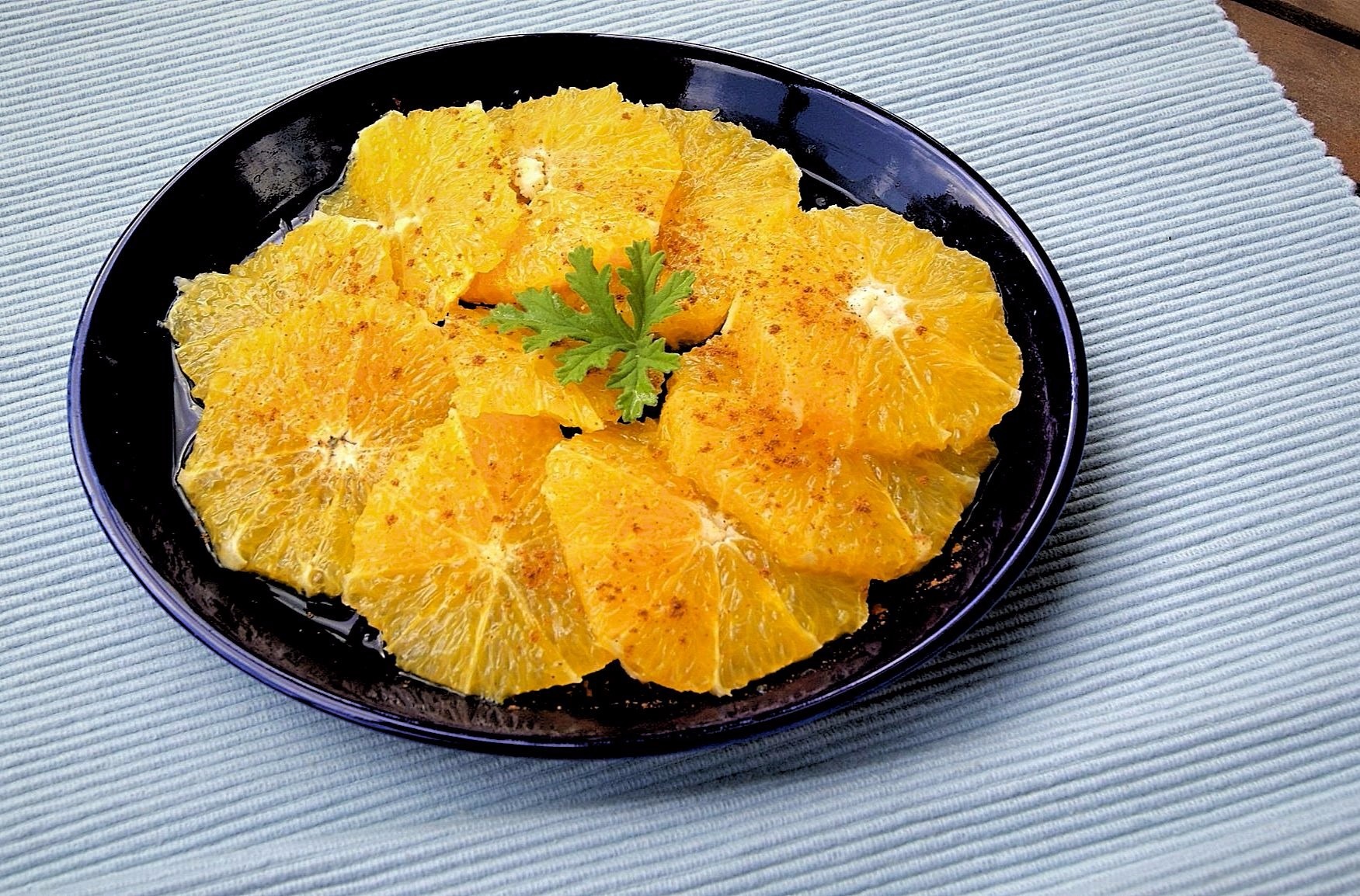
Recipe Score :
0.17
Details of the Ingredients:
- Cinammon stick: Quantité: 2.5g
Allergenicity: respiratory symptoms, rhinoconjunctivitis, contact dermatitis, stomatitis, delayed type allergy
HypoAllergenic Traitement : NT
Score: 0.17 - Orange: Quantité: 90g
Allergenicity: laryngeal edema, generalized urticaria, and asthma symptoms, anaphylactic reactions
HypoAllergenic Traitement : Eviction: the only way to manage allergens is by complete abstinence from the food
Score: 0.17
Scientifique Name of the ingredients :
- Cinammon stick: Cinnamomum verum J.
- Orange: Citrus sinensis
Molecular Allergens of Ingredients :
- Cinammon stick: Cin v (UniProt: Cin v - 128608)
- Orange: Cit s 1.0101 (UniProt: P84159) - Superfamille: Germin, Germin-like Protein
- Orange: Cit s 7.0101 (UniProt: A0A067GPB8) - Superfamille: Anti-Microbial Peptides
- Orange: Cit r 3.0101 (UniProt: not given) - Superfamille: Lipid Transfer Proteins
- Orange: Cit s 2.0101 (UniProt: P84177) - Superfamille: Profilin (actin-binding protein)
- Orange: Cit s 3 (UniProt: Q8L5S8) - Superfamille: Bifunctional inhibitor/lipid-transfer protein/seed storage 2S albumin
- Orange: Cit s 3.0102 (UniProt: Q6EV47) - Superfamille: Bifunctional inhibitor/lipid-transfer protein/seed storage 2S albumin
- Ingredients used :
- Ingredient 1 : 2.5g of Cinammon stick
- Ingredient 2 : 90g of Orange
- Steps of preparation
- Step 1 : Peel the oranges and remove the pith. Slice the peeled oranges anywhere between 0.2" (5 mm) to 0.4" (1 cm) thick.
- Step 2 : Add the other ingredients and toss the oranges delicately around.
- Step 3 : Let the oranges marinate in the fridge for at least 15 minutes before serving.
Tunisia Recipes
1 - Assidat Zgougou
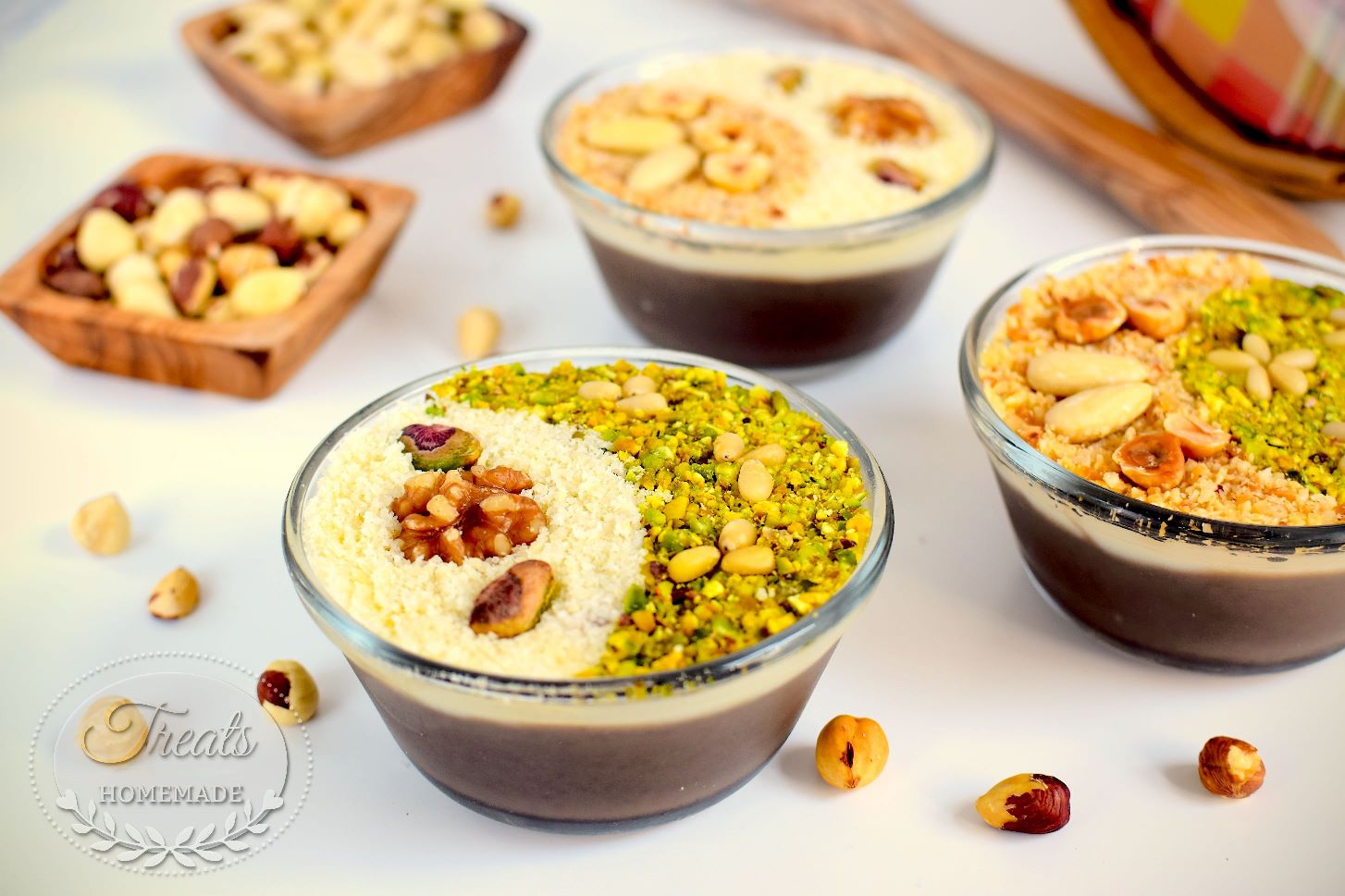
Recipe Score :
0.51
Details of the Ingredients:
- Aleppo: Quantité: 9.3g
Allergenicity: severe anaphylaxis
HypoAllergenic Traitement : Eviction: the only way to manage allergens is by complete abstinence from the food
Score: 0.17 - Almonds:
Allergenicity: severe anaphylaxis
HypoAllergenic Traitement : Eviction: the only way to manage allergens is by complete abstinence from the food
Score: 0.17 - Egg: Quantité: 1.3g
Allergenicity: Eggs from birds contain several proteins capable of inducing an immune response in man most of these are present in the egg white. Allergenic proteins in the yolk only contribute to a minor degree and isolated allergy to egg yolk proteins are rare (see cross reactions). Most of the allergenic proteins present in the egg white are both heat- and digestion resistant and may also be found in the house dust in normal households. Although not thoroughly investigated, sensitization is believed to take place by ingestion of egg proteins in the diet even the minute quantities present in human milk can sensitize the infant in some cases, where a reaction is elicited the very first time the infant eats a meal containing egg. Ingestion of egg will in sensitized individuals elicit an immediate allergic reaction starting with itching of the mouth and pharynx, followed by nettle rash (urticaria), vomiting, rhinoconjunctivitis, asthma and in rare cases anaphylaxis. Exacerbation of atopic eczema may be seen also, but isolated reactions taking place hours to days after intake, without a previous immediate reaction, are rare.
HypoAllergenic Traitement : gastric enzyme supplementation/ Dry heating with mannose, heating for 15 minutes at 95 °C
Score: 0.87 - hazelnuts:
Allergenicity: Allergies to tree nuts and seeds tend to be of a more severe nature, causing life-threatening and sometimes fatal reactions. People with tree nut allergies also often suffer from reactions triggered by a number of different types of nuts, even though they do not come from closely related plant species. In general these allergies are triggered by the major proteins found in nuts and seeds which are resist processes such as cooking.
HypoAllergenic Traitement : Eviction: the only way to manage allergens is by complete abstinence from the food
Score: 0.87 - Milk: Quantité: 1.3g
Allergenicity: Systemic reactions: anaphylaxis, exercise induced anaphylaxis (including fatal reactions). Cutaneous symptoms: angioedema, atopic dermatitis, contact urticaria, dermatitis, eczema, erythema, exanthema, lips oedema, pruritus, redness, swelling of eyelids, urticaria, chronic urticaria. Gastrointestinal symptoms: abdominal cramps, abdominal distention, abdominal pain, colic, infantile colic syndrome, colitis, constipation, chronic constipation, diarrhoea, chronic diarrhoea, eosinophilic colitis, eosinophilic gastroenteritis, gastroenteritis, gastro- oesophageal reflux, morphologic lesion, nausea, proctitis, progressive small bowel mucosal damage, occult intestinal bleeding, oropharyngeal itching / swelling, oropharyngeal pruritus, oedema of tongue, acute pancreatitis, loose stools, vomiting as well as general gastrointestinal symptoms. Food protein-induced enterocolitis syndrome was also listed but probably does not involve specific IgE to cow's milk. Respiratory symptoms: allergic alveolitis, asthma, bronchospasm, bronchitis, conjunctivitis, coughing, dyspnoea, nasal blockade, allergic rhinitis, rhinitis, rhinoconjunctivitis, serous rhinorrea, sneezing and wheeze.
HypoAllergenic Traitement : heat, homogenization and freeze-drying
Score: 0.87 - pistachio:
Allergenicity: Allergies to tree nuts and seeds tend to be of a more severe nature, causing life-threatening and sometimes fatal reactions. People with tree nut allergies also often suffer from reactions triggered by a number of different types of nuts, even though they do not come from closely related plant species. In general these allergies are triggered by the major proteins found in nuts and seeds which are resist processes such as cooking. Reactions to nuts and seeds can also occur as a consequence of hidden nut ingredients or traces of nuts and certain seeds introduced as a consequence of food handling or manufacturing. As a result tree nuts and seeds have been included in Annex IIIa of the EU food labelling directive.
HypoAllergenic Traitement : enzymatic hydrolysis has a greater effect on autoclaved pistachio
Score: 0.50 - Plain four/ weat: Quantité: 1.3g
Allergenicity: Adverse reactions to wheat have been more frequently reported than to other cereal-based foods. The best defined of these are coeliac disease and IgE-dependent wheat allergy, both of which result from malfunctioning of the immune system. Allergies to other cereals such as maize, sorghum and millet, are not common and are not related to reactions triggered by wheat, rye, barley and oats. As a consequence individuals with wheat allergy, including coeliac disease, can usually eat maize-based foods such as polenta. However, allergic reactions to maize can result from the fruit allergies found in the South of Europe which often start with reactions to peach. Coeliac disease is triggered by the gluten fraction of wheat or by the gluten-like proteins found in other closely related cereals such as rye, barley. Some sensitive individuals may also react to oats. The gut reacts to the gluten and becomes smooth, loosing its ability to absorb nutrients; symptoms including diarrhoea as well as deficiencies in nutrients like vitamins. It can manifest itself in childhood, affecting childrens growth and development, or in adult hood. As there is no cure individuals with coeliac disease have to avoid eating gluten for life. However, coeliac disease does not cause the potentially fatal reaction of anaphylaxis if gluten is accidentally eaten. In contrast IgE-mediated cereal allergies can be caused by the antibody molecule IgE binding to many proteins, not just gluten. Sometimes the reactions (often severe) only develop if an individual takes exercise within a few hours of eating wheat or related cereals, in a condition called exercise-induced anaphylaxis. Individuals with wheat allergy often react to closely related cereals like barley and rye, less frequently to the more distant relative, oats. Diagnosis of cereal allergies can be complicated by the fact that some of the blood tests for cereal food allergy can accidentally detect allergy to grass pollens instead. As a consequence of these adverse reactions, cereals containing gluten, (i.e. wheat, rye, barley, oats, spelt or their hybridized strains) have been included in Annex IIIa of the food labelling directive along with derived products. Temporary exceptions to the labelling rule (derogations) have been granted for wheat based glucose syrups including dextrose, wheat based maltodextrins, glucose syrups based on barley and cereals used in distillates for spirits.
HypoAllergenic Traitement : Yusing young cereal grains
Score: 0.48 - Rosemary: Quantité: 3.3g
Allergenicity: asthma, contact dermatitis
HypoAllergenic Traitement : ND
Score: 0.17 - Sauce thickener: Quantité: 2g
Allergenicity: Adverse reactions to wheat have been more frequently reported than to other cereal-based foods. The best defined of these are coeliac disease and IgE-dependent wheat allergy, both of which result from malfunctioning of the immune system. Allergies to other cereals such as maize, sorghum and millet, are not common and are not related to reactions triggered by wheat, rye, barley and oats. As a consequence individuals with wheat allergy, including coeliac disease, can usually eat maize-based foods such as polenta. However, allergic reactions to maize can result from the fruit allergies found in the South of Europe which often start with reactions to peach. Coeliac disease is triggered by the gluten fraction of wheat or by the gluten-like proteins found in other closely related cereals such as rye, barley. Some sensitive individuals may also react to oats. The gut reacts to the gluten and becomes smooth, loosing its ability to absorb nutrients; symptoms including diarrhoea as well as deficiencies in nutrients like vitamins. It can manifest itself in childhood, affecting childrens growth and development, or in adult hood. As there is no cure individuals with coeliac disease have to avoid eating gluten for life. However, coeliac disease does not cause the potentially fatal reaction of anaphylaxis if gluten is accidentally eaten. In contrast IgE-mediated cereal allergies can be caused by the antibody molecule IgE binding to many proteins, not just gluten. Sometimes the reactions (often severe) only develop if an individual takes exercise within a few hours of eating wheat or related cereals, in a condition called exercise-induced anaphylaxis. Individuals with wheat allergy often react to closely related cereals like barley and rye, less frequently to the more distant relative, oats. Diagnosis of cereal allergies can be complicated by the fact that some of the blood tests for cereal food allergy can accidentally detect allergy to grass pollens instead. As a consequence of these adverse reactions, cereals containing gluten, (i.e. wheat, rye, barley, oats, spelt or their hybridized strains) have been included in Annex IIIa of the food labelling directive along with derived products. Temporary exceptions to the labelling rule (derogations) have been granted for wheat based glucose syrups including dextrose, wheat based maltodextrins, glucose syrups based on barley and cereals used in distillates for spirits.
HypoAllergenic Traitement : Yusing young cereal grains
Score: 0.48
Scientifique Name of the ingredients :
- Aleppo: Pinus halepensis
- Almonds: Prunus dulcis
- Egg: Gallus gallus
- hazelnuts: Corylus avellana L.
- hazelnuts: Juglans nigra
- Milk: Bos taurus
- pistachio: Pistacia vera
- Plain four/ weat: Triticum aestivum
- Rosemary: Rosmarinus officinalis
- Sauce thickener: Triticum aestivum
Molecular Allergens of Ingredients :
- Aleppo: Pin p 1 (UniProt: A0A0B6XK84) - Superfamille: Bifunctional inhibitor/lipid-transfer protein/seed storage 2S albumin
- Aleppo: Pin p 1.0101 (UniProt: A0A0K3AVY3) - Superfamille: Bifunctional inhibitor/lipid-transfer protein/seed storage 2S albumin
- Almonds: Pru du 3 (UniProt: Q43017) - Superfamille: Bifunctional inhibitor/lipid-transfer protein/seed storage 2S albumin
- Almonds: Pru du 3.0101 (UniProt: C0L0I5) - Superfamille: Bifunctional inhibitor/lipid-transfer protein/seed storage 2S albumin
- Almonds: Pru du 4.0101 (UniProt: Q8GSL5) - Superfamille: Profilin (actin-binding protein)
- Almonds: Pru du 6 (UniProt: Q43607) - Superfamille: RmlC-like cupins
- Almonds: Pru du 6.0101 (UniProt: E3SH28) - Superfamille: RmlC-like cupins
- Almonds: Pru du 6.0201 (UniProt: E3SH29) - Superfamille: RmlC-like cupins
- Almonds: Pru du Conglutin (UniProt: P82952) - Superfamille: Acid proteases
- Egg: Gal d 1 (UniProt: B6V1G0) - Superfamille: Kazal-type serine protease inhibitors
- Egg: Gal d 4.0101 (UniProt: P00698) - Superfamille: Lysozyme-like
- Egg: Gal d 1.0101 (UniProt: P01005) - Superfamille: Kazal-type serine protease inhibitors
- Egg: Gal d 2.0101 (UniProt: P01012) - Superfamille: Serpins
- Egg: Gal d 3.0101 (UniProt: P02789) - Superfamille: Periplasmic binding protein-like II
- Egg: Gal d OIH (UniProt: P10184) - Superfamille: Kazal-type serine protease inhibitors
- Egg: Gal d 5.0101 (UniProt: P19121) - Superfamille: Serum albumin-like
- Egg: Gal d Phosvitin (UniProt: P67869) - Superfamille: Casein kinase II beta subunit
- Egg: Gal d 6.0101 (UniProt: P87498) - Superfamille: Lipovitellin-phosvitin complex, superhelical domain
- Egg: Gal d 3 (UniProt: Q4ADG4) - Superfamille: Periplasmic binding protein-like II
- Egg: Gal d L-PGDS (UniProt: Q8QFM7) - Superfamille: Lipocalins
- hazelnuts: Jug n 1.0101 (UniProt: Q7Y1C2) - Superfamille: Bifunctional inhibitor/lipid-transfer protein/seed storage 2S albumin
- hazelnuts: Jug n 2.0101 (UniProt: Q7Y1C1) - Superfamille: RmlC-like cupins
- hazelnuts: Jug n 4.0101 (UniProt: A0A1L6K371) - Superfamille: RmlC-like cupins
- hazelnuts: Jug r 1.0101 (UniProt: P93198) - Superfamille: Bifunctional inhibitor/lipid-transfer protein/seed storage 2S albumin
- hazelnuts: Jug r 2.0101 (UniProt: Q9SEW4) - Superfamille: RmlC-like cupins
- hazelnuts: Jug r 3 (UniProt: C5H617) - Superfamille: Bifunctional inhibitor/lipid-transfer protein/seed storage 2S albumin
- hazelnuts: Jug r 4.0101 (UniProt: Q2TPW5) - Superfamille: RmlC-like cupins
- hazelnuts: Jug r 5.0101 (UniProt: A0A1J0RET5) - Superfamille: Bet v1-like
- hazelnuts: Jug r 6.0101 (UniProt: A0A2I4E5L6) - Superfamille: RmlC-like cupins
- hazelnuts: Jug r 7 (UniProt: A0A2I4GR46) - Superfamille: Profilin (actin-binding protein)
- hazelnuts: Jug r 7.0101 (UniProt: A0A2I4DNN6) - Superfamille: Profilin (actin-binding protein)
- hazelnuts: Jug r 8.0101 (UniProt: A0A2I4EB91) - Superfamille: Bifunctional inhibitor/lipid-transfer protein/seed storage 2S albumin
- hazelnuts: Jug r 8.0201 (UniProt: A0A2I4GT96) - Superfamille: Bifunctional inhibitor/lipid-transfer protein/seed storage 2S albumin
- Milk: Bos d 4 (UniProt: A1YQB2) - Superfamille: Lysozyme-like
- Milk: Bos d 4.0101 (UniProt: P00711) - Superfamille: Lysozyme-like
- Milk: Bos d 5 (UniProt: O77777) - Superfamille: Lipocalins
- Milk: Bos d 5.0101 (UniProt: P02754) - Superfamille: Lipocalins
- Milk: Bos d 5.0102 (UniProt: B5B0D4) - Superfamille: Lipocalins
- Milk: Bos d Lactoperoxidase (UniProt: P80025) - Superfamille: Heme-dependent peroxidases
- Milk: Bos d LF (UniProt: P24627) - Superfamille: Periplasmic binding protein-like II
- pistachio: Pis v 1.0101 (UniProt: B7P072) - Superfamille: Bifunctional inhibitor/lipid-transfer protein/seed storage 2S albumin
- pistachio: Pis v 2 (UniProt: B2KN55) - Superfamille: RmlC-like cupins
- pistachio: Pis v 2.0101 (UniProt: B7P073) - Superfamille: RmlC-like cupins
- pistachio: Pis v 2.0201 (UniProt: B7P074) - Superfamille: RmlC-like cupins
- pistachio: Pis v 3.0101 (UniProt: B4X640) - Superfamille: RmlC-like cupins
- pistachio: Pis v 5.0101 (UniProt: B7SLJ1) - Superfamille: RmlC-like cupins
- Plain four/ weat: Tri a 10kD (UniProt: Q4W1F9) - Superfamille: Bifunctional inhibitor/lipid-transfer protein/seed storage 2S albumin
- Plain four/ weat: Tri a 12 (UniProt: P49233) - Superfamille: Profilin (actin-binding protein)
- Plain four/ weat: Tri a 14 (UniProt: P24296) - Superfamille: Bifunctional inhibitor/lipid-transfer protein/seed storage 2S albumin
- Plain four/ weat: Tri a 17.0101 (UniProt: P93594) - Superfamille: (Trans)glycosidases
- Plain four/ weat: Tri a 18 (UniProt: P10969) - Superfamille: Plant lectins/antimicrobial peptides
- Plain four/ weat: Tri a 18.0101 (UniProt: P10968) - Superfamille: Plant lectins/antimicrobial peptides
- Plain four/ weat: Tri a 20 (UniProt: P21292) - Superfamille: Bifunctional inhibitor/lipid-transfer protein/seed storage 2S albumin
- Plain four/ weat: Tri a 20.0101 (UniProt: A0A060N479) - Superfamille: Bifunctional inhibitor/lipid-transfer protein/seed storage 2S albumin
- Plain four/ weat: Tri a 23kD (UniProt: Q4W1G0) - Superfamille: L domain-like
- Plain four/ weat: Tri a 25.0101 (UniProt: Q9LDX4) - Superfamille: Thioredoxin-like
- Plain four/ weat: Tri a 26 (UniProt: P08489) - Superfamille: Bifunctional inhibitor/lipid-transfer protein/seed storage 2S albumin
- Plain four/ weat: Tri a 26.0101 (UniProt: P10388) - Superfamille: Bifunctional inhibitor/lipid-transfer protein/seed storage 2S albumin
- Plain four/ weat: Tri a 26.0201 (UniProt: Q45R38) - Superfamille: Bifunctional inhibitor/lipid-transfer protein/seed storage 2S albumin
- Plain four/ weat: Tri a 28 (UniProt: P01085) - Superfamille: Bifunctional inhibitor/lipid-transfer protein/seed storage 2S albumin
- Plain four/ weat: Tri a 28.0101 (UniProt: Q4W0V7) - Superfamille: Bifunctional inhibitor/lipid-transfer protein/seed storage 2S albumin
- Plain four/ weat: Tri a 30 (UniProt: Q53YX8) - Superfamille: Bifunctional inhibitor/lipid-transfer protein/seed storage 2S albumin
- Plain four/ weat: Tri a 30.0101 (UniProt: P17314) - Superfamille: Bifunctional inhibitor/lipid-transfer protein/seed storage 2S albumin
- Plain four/ weat: Tri a 33 (UniProt: P93692) - Superfamille: Serpins
- Plain four/ weat: Tri a 33.0101 (UniProt: Q9ST57) - Superfamille: Serpins
- Plain four/ weat: Tri a 36 (UniProt: P10385) - Superfamille: Bifunctional inhibitor/lipid-transfer protein/seed storage 2S albumin
- Plain four/ weat: Tri a 36.0101 (UniProt: B2Y2Q7) - Superfamille: Bifunctional inhibitor/lipid-transfer protein/seed storage 2S albumin
- Plain four/ weat: Tri a 37 (UniProt: P32032) - Superfamille: Crambin-like
- Plain four/ weat: Tri a 37.0101 (UniProt: Q9T0P1) - Superfamille: Crambin-like
- Plain four/ weat: Tri a 41.0101 (UniProt: A0A0G3F2P1) - Superfamille: RING/U-box
- Plain four/ weat: Tri a 44 (UniProt: B2C4K0) - Superfamille: Bifunctional inhibitor/lipid-transfer protein/seed storage 2S albumin
- Plain four/ weat: Tri a 44.0101 (UniProt: A0A0G3F720) - Superfamille: Bifunctional inhibitor/lipid-transfer protein/seed storage 2S albumin
- Plain four/ weat: Tri a 45 (UniProt: W5HIH8) - Superfamille: Zinc beta-ribbon
- Plain four/ weat: Tri a 45.0101 (UniProt: A0A0G3F715) - Superfamille: Zinc beta-ribbon
- Plain four/ weat: Tri a 7kLTP (UniProt: P82900) - Superfamille: Bifunctional inhibitor/lipid-transfer protein/seed storage 2S albumin
- Plain four/ weat: Tri a aA_SI (UniProt: P16347) - Superfamille: STI-like
- Plain four/ weat: Tri a alpha_Gliadin (UniProt: Q1WA40) - Superfamille: Bifunctional inhibitor/lipid-transfer protein/seed storage 2S albumin
- Plain four/ weat: Tri a Chitinase (UniProt: Q8W429) - Superfamille: Lysozyme-like
- Plain four/ weat: Tri a CMX (UniProt: Q43691) - Superfamille: Bifunctional inhibitor/lipid-transfer protein/seed storage 2S albumin
- Plain four/ weat: Tri a GBSS_I (UniProt: P27736) - Superfamille: UDP-Glycosyltransferase/glycogen phosphorylase
- Plain four/ weat: Tri a Peroxidase (UniProt: Q05855) - Superfamille: Heme-dependent peroxidases
- Plain four/ weat: Tri a Peroxidase 1 (UniProt: Q8LK23) - Superfamille: Heme-dependent peroxidases
- Plain four/ weat: Tri a TLP (UniProt: P27357) - Superfamille: Osmotin, thaumatin-like protein
- Plain four/ weat: Tri a Tritin (UniProt: Q07810) - Superfamille: Ribosome inactivating proteins (RIP)
- Plain four/ weat: Tri a XI (UniProt: Q8L5C6) - Superfamille: (Trans)glycosidases
- Sauce thickener: Tri a 10kD (UniProt: Q4W1F9) - Superfamille: Bifunctional inhibitor/lipid-transfer protein/seed storage 2S albumin
- Sauce thickener: Tri a 12 (UniProt: P49233) - Superfamille: Profilin (actin-binding protein)
- Sauce thickener: Tri a 14 (UniProt: P24296) - Superfamille: Bifunctional inhibitor/lipid-transfer protein/seed storage 2S albumin
- Sauce thickener: Tri a 17.0101 (UniProt: P93594) - Superfamille: (Trans)glycosidases
- Sauce thickener: Tri a 18 (UniProt: P10969) - Superfamille: Plant lectins/antimicrobial peptides
- Sauce thickener: Tri a 18.0101 (UniProt: P10968) - Superfamille: Plant lectins/antimicrobial peptides
- Sauce thickener: Tri a 20 (UniProt: P21292) - Superfamille: Bifunctional inhibitor/lipid-transfer protein/seed storage 2S albumin
- Sauce thickener: Tri a 20.0101 (UniProt: A0A060N479) - Superfamille: Bifunctional inhibitor/lipid-transfer protein/seed storage 2S albumin
- Sauce thickener: Tri a 23kD (UniProt: Q4W1G0) - Superfamille: L domain-like
- Sauce thickener: Tri a 25.0101 (UniProt: Q9LDX4) - Superfamille: Thioredoxin-like
- Sauce thickener: Tri a 26 (UniProt: P08489) - Superfamille: Bifunctional inhibitor/lipid-transfer protein/seed storage 2S albumin
- Sauce thickener: Tri a 26.0101 (UniProt: P10388) - Superfamille: Bifunctional inhibitor/lipid-transfer protein/seed storage 2S albumin
- Sauce thickener: Tri a 26.0201 (UniProt: Q45R38) - Superfamille: Bifunctional inhibitor/lipid-transfer protein/seed storage 2S albumin
- Sauce thickener: Tri a 28 (UniProt: P01085) - Superfamille: Bifunctional inhibitor/lipid-transfer protein/seed storage 2S albumin
- Sauce thickener: Tri a 28.0101 (UniProt: Q4W0V7) - Superfamille: Bifunctional inhibitor/lipid-transfer protein/seed storage 2S albumin
- Sauce thickener: Tri a 30 (UniProt: Q53YX8) - Superfamille: Bifunctional inhibitor/lipid-transfer protein/seed storage 2S albumin
- Sauce thickener: Tri a 30.0101 (UniProt: P17314) - Superfamille: Bifunctional inhibitor/lipid-transfer protein/seed storage 2S albumin
- Sauce thickener: Tri a 33 (UniProt: P93692) - Superfamille: Serpins
- Sauce thickener: Tri a 33.0101 (UniProt: Q9ST57) - Superfamille: Serpins
- Sauce thickener: Tri a 36 (UniProt: P10385) - Superfamille: Bifunctional inhibitor/lipid-transfer protein/seed storage 2S albumin
- Sauce thickener: Tri a 36.0101 (UniProt: B2Y2Q7) - Superfamille: Bifunctional inhibitor/lipid-transfer protein/seed storage 2S albumin
- Sauce thickener: Tri a 37 (UniProt: P32032) - Superfamille: Crambin-like
- Sauce thickener: Tri a 37.0101 (UniProt: Q9T0P1) - Superfamille: Crambin-like
- Sauce thickener: Tri a 41.0101 (UniProt: A0A0G3F2P1) - Superfamille: RING/U-box
- Sauce thickener: Tri a 44 (UniProt: B2C4K0) - Superfamille: Bifunctional inhibitor/lipid-transfer protein/seed storage 2S albumin
- Sauce thickener: Tri a 44.0101 (UniProt: A0A0G3F720) - Superfamille: Bifunctional inhibitor/lipid-transfer protein/seed storage 2S albumin
- Sauce thickener: Tri a 45 (UniProt: W5HIH8) - Superfamille: Zinc beta-ribbon
- Sauce thickener: Tri a 45.0101 (UniProt: A0A0G3F715) - Superfamille: Zinc beta-ribbon
- Sauce thickener: Tri a 7kLTP (UniProt: P82900) - Superfamille: Bifunctional inhibitor/lipid-transfer protein/seed storage 2S albumin
- Sauce thickener: Tri a aA_SI (UniProt: P16347) - Superfamille: STI-like
- Sauce thickener: Tri a alpha_Gliadin (UniProt: Q1WA40) - Superfamille: Bifunctional inhibitor/lipid-transfer protein/seed storage 2S albumin
- Sauce thickener: Tri a Chitinase (UniProt: Q8W429) - Superfamille: Lysozyme-like
- Sauce thickener: Tri a CMX (UniProt: Q43691) - Superfamille: Bifunctional inhibitor/lipid-transfer protein/seed storage 2S albumin
- Sauce thickener: Tri a GBSS_I (UniProt: P27736) - Superfamille: UDP-Glycosyltransferase/glycogen phosphorylase
- Sauce thickener: Tri a Peroxidase (UniProt: Q05855) - Superfamille: Heme-dependent peroxidases
- Sauce thickener: Tri a Peroxidase 1 (UniProt: Q8LK23) - Superfamille: Heme-dependent peroxidases
- Sauce thickener: Tri a TLP (UniProt: P27357) - Superfamille: Osmotin, thaumatin-like protein
- Sauce thickener: Tri a Tritin (UniProt: Q07810) - Superfamille: Ribosome inactivating proteins (RIP)
- Sauce thickener: Tri a XI (UniProt: Q8L5C6) - Superfamille: (Trans)glycosidases
- Ingredients used :
- Ingredient 1 : 9.3g of Aleppo
- Ingredient 2 : Almonds
- Ingredient 3 : 1.3g of Egg
- Ingredient 4 : hazelnuts
- Ingredient 5 : 1.3g of Milk
- Ingredient 6 : pistachio
- Ingredient 7 : 1.3g of Plain four/ weat
- Ingredient 8 : 3.3g of Rosemary
- Ingredient 9 : 2g of Sauce thickener
- Steps of preparation
- Step 1 : Finely ground the Aleppo tree's grains. It should look like a paste but a bit grainy. Dilute the zgougou paste in half of the quantity of the water, then filter in a sieve twice to get rid of the remaining grains and obtain a very smooth liquid.
- Step 2 : Add the flour and the rest of the water and dilute with the zgougou. Filter the final mixture in a sieve.
- Step 3 : Put the zgougou mixture in a large pan and cook on medium fire. Stir with a wooden spoon. Once the cream starts to harden, reduce the fire and add the sweetened condensed milk and keep stirring with the back of the wooden spoon.
- Step 4 : Add the sugar and the water of the geranium flower. Now the cream will look shinier and darker in color.
- Step 5 : Keep stirring with the back of the wooden spoon for some minutes. While still warm, pour it in the bowls or containers of your choice.
- Step 6 : Mix the egg yolks with sugar and corn starch until it whitens. In the meanwhile, heat the milk. Pour the milk over the egg mixture and put it on the fire while stirring until the cream hardens.
- Step 7 : Add the water of the geranium flower and stir. Pour the pastry cream on top of the zgougou cream while still warm.
- Step 8 : Decorate your assida with the nuts of your choice.
2 - Djerbian rice
Recipe Score :
0.17
Details of the Ingredients:
- Bell Peppers: Quantité: 12.6g
Allergenicity: respiratory symptoms rather than reactions of the mouth or skin (most commonly rhinoconjunctivitis but also asthma) which is slightly unusual.; Headaches were also reported which are sometimes associated with allergic rhinitis but are otherwise rarely reported as a symptom of food allergy.; Allergy to bell pepper is often associated with the celery-birch-mugwort-spice syndrome.
HypoAllergenic Traitement : the reactivity is lowered when cooked
Score: 0.17 - Bomba rice: Quantité: 20.9g
Allergenicity: Rice allergy seems uncommon in Europe or America but the reported symptoms have involved the skin (urticaria), respiratory symptoms (asthma), gastrointestinal symptoms (nausea) and anaphylatic shock, sometimes induced by exercise.; Rice allergy is reported as more common in Japan and has been associated with atopic ezcema.
HypoAllergenic Traitement : Yusing young cereal grains
Score: 0.17 - Carrot: Quantité: 12.6g
Allergenicity: The symptoms include oral allergy syndrome (OAS), angioedema, urticaria, dyspnea, vertigo, tightness of throat or chest, dysphagia, hoarseness, cough, rhinitis and conjunctivitis, Carrot allergy is generally associated with allergy to birch pollen or with the celery-carrot-mugwort-spice syndrome.
HypoAllergenic Traitement : the reactivity is lowered when cooked
Score: 0.17 - Garlic: Quantité: 0.8g
Allergenicity: Garlic allergy is relatively rare although one case of severe symptoms has been reported after eating garlic. The individual suffered exercise induced anaphylaxis and on a subsequent occasion anaphylaxis without exercise.
HypoAllergenic Traitement : the reactivity is lowered when cooked
Score: 0.17 - Olive Oil: Quantité: 2.1g
Allergenicity: contact dermatitis
HypoAllergenic Traitement : ND
Score: 0.17 - Onion: Quantité: 15.9g
Allergenicity: contact allergy, anaphylaxis, asthma, rhinoconjunctivitis
HypoAllergenic Traitement : the reactivity is lowered when cooked
Score: 0.17 - Peas: Quantité: 5.9g
Allergenicity: urticaria, emesis, angioedema or rhinitis) severity, severe reactions with wheezing and dyspnoea.
HypoAllergenic Traitement : the reactivity is lowered when cooked
Score: 0.17 - Saffron: Quantité: 0.8g
Allergenicity: anaphylaxis, asthma, rhinoconjunctivitis
HypoAllergenic Traitement : ND
Score: 0.17 - Tomato: Quantité: 27.2g
Allergenicity: tomato allergy is associated with allergy to either latex or pollen. The symptoms reported were rather different in the two groups. The patients with no latex allergy reported mostly the oral allergy syndrome with some skin reactions such as urticaria (hives). Patients with latex allergy reported urticaria as the most common reaction but 20% suffered anaphylaxis. Allergy to tomato is also linked to allergy to potato since they are related plants.
HypoAllergenic Traitement : TT: ThermalTreatment
Score: 0.17
Scientifique Name of the ingredients :
- Bell Peppers: Capsicum annuum L.
- Bomba rice: Oryza sativa L.
- Carrot: Daucus carota L.
- Garlic: Allium sativum
- Olive Oil: Olea europaea
- Onion: Allium cepa var. aggregatum
- Peas: Pisum sativum
- Saffron: Crocus sativus
- Tomato: Solanum lycopersicum
Molecular Allergens of Ingredients :
- Bell Peppers: Cap a 2 (UniProt: Q6RG01) - Superfamille: Profilin (actin-binding protein)
- Bell Peppers: Cap a 2.0101 (UniProt: Q93YI9) - Superfamille: Profilin (actin-binding protein)
- Bell Peppers: Cap a 30kD (UniProt: Q42661) - Superfamille: Heme-dependent peroxidases
- Bell Peppers: Cap a 4 (UniProt: B2CZJ6) - Superfamille: Bet v1-like
- Bell Peppers: Cap a Glucanase (UniProt: Q9M5L5) - Superfamille: (Trans)glycosidases
- Bell Peppers: Cap a 1.0101 (UniProt: Q9ARG0) - Superfamille: Osmotin, thaumatin-like protein
- Bomba rice: Ory s Glyoxalase I (UniProt: Q948T6) - Superfamille: Glyoxalase/Bleomycin resistance protein/Dihydroxybiphenyl dioxygenase
- Bomba rice: Ory s 32 (UniProt: P0C5C9) - Superfamille: Thioredoxin-like
- Bomba rice: Ory s NRA (UniProt: Q852L2) - Superfamille: RmlC-like cupins
- Bomba rice: Ory s GLP63 (UniProt: Q75GX9) - Superfamille: RmlC-like cupins
- Bomba rice: Ory s aA_TI (UniProt: Q01882) - Superfamille: Bifunctional inhibitor/lipid-transfer protein/seed storage 2S albumin
- Bomba rice: Ory s 19kD (UniProt: P29835) - Superfamille: Bifunctional inhibitor/lipid-transfer protein/seed storage 2S albumin
- Bomba rice: Ory s 17kD (UniProt: Q7X8H9) - Superfamille: Bifunctional inhibitor/lipid-transfer protein/seed storage 2S albumin
- Carrot: Dau c 1.0201 (UniProt: Q8SAE7) - Superfamille: Bet v1-like
- Carrot: Dau c CyP (UniProt: H2DF84) - Superfamille: Cyclophilin-like
- Carrot: Dau c 5.0102 (UniProt: H2DF85) - Superfamille: NAD(P)-binding Rossmann-fold domains
- Carrot: Dau c 5.0101 (UniProt: H2DF86) - Superfamille: NAD(P)-binding Rossmann-fold domains
- Carrot: Dau c 4.0101 (UniProt: Q8SAE6) - Superfamille: Profilin (actin-binding protein)
- Carrot: Dau c 3 (UniProt: P27631) - Superfamille: Bifunctional inhibitor/lipid-transfer protein/seed storage 2S albumin
- Carrot: Dau c 1.0301 (UniProt: D9ZHN9) - Superfamille: Bet v1-like
- Carrot: Dau c 1.0101 (UniProt: O04298) - Superfamille: Bet v1-like
- Carrot: Dau c 1 (UniProt: Q75T31) - Superfamille: Bet v1-like
- Garlic: All s Alliin lyase (UniProt: Q01594) - Superfamille: PLP-dependent transferases
- Olive Oil: Ole e 13.0101 (UniProt: E3SU11) - Superfamille: Osmotin, thaumatin-like protein
- Onion: All a Alliin lyase (UniProt: P31756) - Superfamille: PLP-dependent transferases
- Onion: All c Alliin lyase (UniProt: P31757) - Superfamille: PLP-dependent transferases
- Peas: Pis s 1 (UniProt: P02854) - Superfamille: RmlC-like cupins
- Peas: Pis s Albumin (UniProt: P08688) - Superfamille: Hemopexin-like domain
- Peas: Pis s Agglutinin (UniProt: P02867) - Superfamille: Concanavalin A-like lectins/glucanases
- Peas: Pis s 6 (UniProt: P13239) - Superfamille: Bet v1-like
- Peas: Pis s 3.0101 (UniProt: A0A161AT60) - Superfamille: Bifunctional inhibitor/lipid-transfer protein/seed storage 2S albumin
- Peas: Pis s 2 (UniProt: P13915) - Superfamille: RmlC-like cupins
- Peas: Pis s 1.0102 (UniProt: Q702P0) - Superfamille: RmlC-like cupins
- Peas: Pis s 1.0101 (UniProt: Q702P1) - Superfamille: RmlC-like cupins
- Peas: Pis s 3 (UniProt: A0A158V755) - Superfamille: Bifunctional inhibitor/lipid-transfer protein/seed storage 2S albumin
- Saffron: Cro s 3.02 (UniProt: D2T0A6) - Superfamille: Bifunctional inhibitor/lipid-transfer protein/seed storage 2S albumin
- Tomato: Sola l Vicilin (UniProt: B0JEU3) - Superfamille: RmlC-like cupins
- Tomato: Sola l TLP (UniProt: P12670) - Superfamille: Osmotin, thaumatin-like protein
- Tomato: Sola l SOD (UniProt: P14831) - Superfamille: Cu,Zn superoxide dismutase-like
- Tomato: Sola l PG (UniProt: P05117) - Superfamille: Pectin lyase-like
- Tomato: Sola l Peroxidase (UniProt: P15003) - Superfamille: Heme-dependent peroxidases
- Tomato: Sola l Glucanase (UniProt: Q01413) - Superfamille: (Trans)glycosidases
- Tomato: Sola l Chitinase (UniProt: Q05539) - Superfamille: Lysozyme-like
- Tomato: Sola l 7 (UniProt: K4AYX7) - Superfamille: Bifunctional inhibitor/lipid-transfer protein/seed storage 2S albumin
- Tomato: Sola l 5.0101 (UniProt: P21568) - Superfamille: Cyclophilin-like
- Tomato: Sola l 5 (UniProt: K4D184) - Superfamille: Cyclophilin-like
- Tomato: Sola l 4.0201 (UniProt: K4CWC4) - Superfamille: Bet v1-like
- Tomato: Sola l 4.0101 (UniProt: O49881) - Superfamille: Bet v1-like
- Tomato: Sola l 4 (UniProt: K4CWC5) - Superfamille: Bet v1-like
- Tomato: Sola l 3.0101 (UniProt: P93224) - Superfamille: Bifunctional inhibitor/lipid-transfer protein/seed storage 2S albumin
- Tomato: Sola l 3 (UniProt: P27056) - Superfamille: Bifunctional inhibitor/lipid-transfer protein/seed storage 2S albumin
- Tomato: Sola l 1.0101 (UniProt: Q93YG7) - Superfamille: Profilin (actin-binding protein)
- Tomato: Sola l 1 (UniProt: Q41344) - Superfamille: Profilin (actin-binding protein)
- Ingredients used :
- Ingredient 1 : 12.6g of Bell Peppers
- Ingredient 2 : 20.9g of Bomba rice
- Ingredient 3 : 12.6g of Carrot
- Ingredient 4 : 0.8g of Garlic
- Ingredient 5 : 2.1g of Olive Oil
- Ingredient 6 : 15.9g of Onion
- Ingredient 7 : 5.9g of Peas
- Ingredient 8 : 0.8g of Saffron
- Ingredient 9 : 27.2g of Tomato
- Steps of preparation
- Step 1 : Place a large pan over medium heat and add the oil. Once heated, add the previously chopped onion and cook over low heat for 7 minutes.
- Step 2 : Next, add the chopped bell pepper. Season with salt and pepper, mix, and cook for 10 minutes.
- Step 3 : Meanwhile, place the tomato, the chopped carrots, and the peas in a pot with boiling water for 6 minutes. Next, remove, drain, and set aside.
- Step 4 : Blend the tomato, pour over the cooked vegetables, and bring to a boil over medium heat. Stir and cook for 5 minutes.
- Step 5 : Add the paprika, saffron, and cook for 5 more minutes.
- Step 6 : Add the rice and mix well. Add water or broth and bring to a boil. For one cup of rice, add double the volume of water or broth.
- Step 7 : Once boiling, lower the heat to medium-low and let cook for 20 minutes.
- Step 8 : Once done, add the peas, carrot, and mix.
- Step 9 : Season to taste and serve.
3 - Kafteji
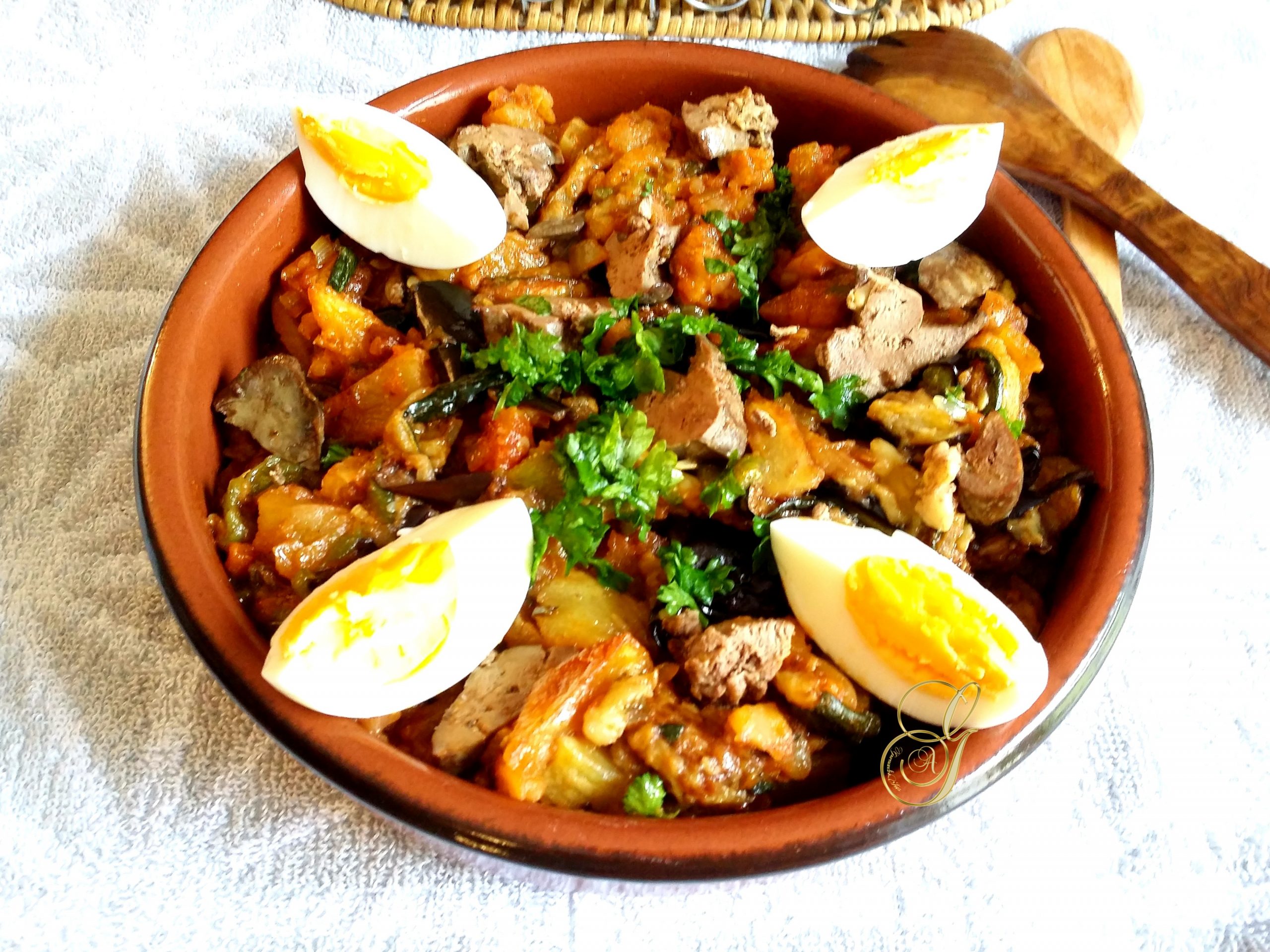
Recipe Score :
0.27
Details of the Ingredients:
- Black pepper: Quantité: 0.6g
Allergenicity: respiratory symptoms, contact dermatitis
HypoAllergenic Traitement : Eviction: the only way to manage allergens is by complete abstinence from the food
Score: 0.17 - Butternut Squash: Quantité: 1.3g
Allergenicity: ND
HypoAllergenic Traitement : Eviction: the only way to manage allergens is by complete abstinence from the food
Score: 0.17 - Egg: Quantité: 0.6g
Allergenicity: Eggs from birds contain several proteins capable of inducing an immune response in man most of these are present in the egg white. Allergenic proteins in the yolk only contribute to a minor degree and isolated allergy to egg yolk proteins are rare (see cross reactions). Most of the allergenic proteins present in the egg white are both heat- and digestion resistant and may also be found in the house dust in normal households. Although not thoroughly investigated, sensitization is believed to take place by ingestion of egg proteins in the diet even the minute quantities present in human milk can sensitize the infant in some cases, where a reaction is elicited the very first time the infant eats a meal containing egg. Ingestion of egg will in sensitized individuals elicit an immediate allergic reaction starting with itching of the mouth and pharynx, followed by nettle rash (urticaria), vomiting, rhinoconjunctivitis, asthma and in rare cases anaphylaxis. Exacerbation of atopic eczema may be seen also, but isolated reactions taking place hours to days after intake, without a previous immediate reaction, are rare.
HypoAllergenic Traitement : gastric enzyme supplementation/ Dry heating with mannose, heating for 15 minutes at 95 °C
Score: 0.87 - Olive Oil: Quantité: 11.9g
Allergenicity: contact dermatitis
HypoAllergenic Traitement : ND
Score: 0.17 - Onion: Quantité: 8.9g
Allergenicity: contact allergy, anaphylaxis, asthma, rhinoconjunctivitis
HypoAllergenic Traitement : the reactivity is lowered when cooked
Score: 0.17 - Potato: Quantité: 29.8g
Allergenicity: Potato is considered a rarely allergenic food and is frequently used in elimination diets and as part of the placebo in challenge protocols. However, many cases of food allergy after eating cooked potato have been reported and skin prick tests suggest that sensitization to raw potato is relatively common. Cases of contact allergy to raw potatoes have also been reported. The symptoms reported include reactions of the skin such as urticaria (hives), angioedema (wheals) and eczema, respiratory symptoms such as rhinitis, cough and wheezing and gastrointestinal symptoms such as vomiting and diarrhoea. Most reactions occurred within 2 hours (immediate reactions) but delayed reactions have also been reported. Allergy to cooked potato is related to tomato allergy and to latex allergy. Sensitization to raw potato may also be related to pollen allergies.
HypoAllergenic Traitement : the reactivity is lowered when cooked
Score: 0.17 - Red Pepper: Quantité: 11.9g
Allergenicity: contact urticaria, rhinocon junctivitis
HypoAllergenic Traitement : the reactivity is lowered when cooked
Score: 0.17 - Tomato: Quantité: 17.9g
Allergenicity: tomato allergy is associated with allergy to either latex or pollen. The symptoms reported were rather different in the two groups. The patients with no latex allergy reported mostly the oral allergy syndrome with some skin reactions such as urticaria (hives). Patients with latex allergy reported urticaria as the most common reaction but 20% suffered anaphylaxis. Allergy to tomato is also linked to allergy to potato since they are related plants.
HypoAllergenic Traitement : TT: ThermalTreatment
Score: 0.17 - Zucchini: Quantité: 17.9g
Allergenicity: The following symptoms have been reported after ingestion of cougette: Oral allergy syndrome, urticaria, angioedema, nausea, diarrhoea, pruritus
HypoAllergenic Traitement : the reactivity is lowered when cooked
Score: 0.17
Scientifique Name of the ingredients :
- Black pepper: Piper nigrum L.
- Butternut Squash: Cucurbita moschata
- Egg: Gallus gallus
- Olive Oil: Olea europaea
- Onion: Allium cepa var. aggregatum
- Potato: Solanum tuberosum
- Red Pepper: Capsicum annuum
- Tomato: Solanum lycopersicum
- Zucchini: Cucurbita pepo
Molecular Allergens of Ingredients :
- Black pepper: Pip n 28kD (UniProt: Pip n - 13216) - Superfamille: Germin, Germin-like Protein
- Black pepper: Pip n 14kD (UniProt: Pip n - 13216)
- Butternut Squash: Cuc ma CyP (UniProt: Cuc ma - 3661) - Superfamille: Cyclophilin
- Butternut Squash: Cuc ma 2 (UniProt: Cuc ma - 3661) - Superfamille: Profilin (actin-binding protein)
- Butternut Squash: Cuc ma 4 (UniProt: P13744) - Superfamille: 11S Globulin-Legumin-like Proteins, Trypsin Inhibitors
- Butternut Squash: Cuc ma 4.0101 (UniProt: P13744) - Superfamille: 11S Globulin-Legumin-like Proteins, Trypsin Inhibitors
- Butternut Squash: Cuc ma 5 (UniProt: A0A6J1JVR2) - Superfamille: 2S Albumin
- Butternut Squash: Cuc ma 5.0101 (UniProt: Q39649) - Superfamille: 2S Albumin
- Egg: Gal d OIH (UniProt: P10184) - Superfamille: Kazal-type serine protease inhibitors
- Egg: Gal d L-PGDS (UniProt: Q8QFM7) - Superfamille: Lipocalins
- Egg: Gal d 3 (UniProt: Q4ADG4) - Superfamille: Periplasmic binding protein-like II
- Egg: Gal d 6.0101 (UniProt: P87498) - Superfamille: Lipovitellin-phosvitin complex, superhelical domain
- Egg: Gal d Phosvitin (UniProt: P67869) - Superfamille: Casein kinase II beta subunit
- Egg: Gal d 5.0101 (UniProt: P19121) - Superfamille: Serum albumin-like
- Egg: Gal d 3.0101 (UniProt: P02789) - Superfamille: Periplasmic binding protein-like II
- Egg: Gal d 2.0101 (UniProt: P01012) - Superfamille: Serpins
- Egg: Gal d 1.0101 (UniProt: P01005) - Superfamille: Kazal-type serine protease inhibitors
- Egg: Gal d 4.0101 (UniProt: P00698) - Superfamille: Lysozyme-like
- Egg: Gal d 1 (UniProt: B6V1G0) - Superfamille: Kazal-type serine protease inhibitors
- Olive Oil: Ole e 13.0101 (UniProt: E3SU11) - Superfamille: Osmotin, thaumatin-like protein
- Onion: All a Alliin lyase (UniProt: P31756) - Superfamille: PLP-dependent transferases
- Onion: All c Alliin lyase (UniProt: P31757) - Superfamille: PLP-dependent transferases
- Potato: Sola t 4.0101 (UniProt: P30941) - Superfamille: STI-like
- Potato: Sola t Glucanase (UniProt: P52401) - Superfamille: (Trans)glycosidases
- Potato: Sola t 8 (UniProt: M1BLC8) - Superfamille: Profilin (actin-binding protein)
- Potato: Sola t 7k (UniProt: M1CHX3) - Superfamille: Bifunctional inhibitor/lipid-transfer protein/seed storage 2S albumin
- Potato: Sola t 3.0102 (UniProt: P20347) - Superfamille: STI-like
- Potato: Sola t 3 (UniProt: Q6PMR6) - Superfamille: STI-like
- Potato: Sola t 2.0101 (UniProt: P16348) - Superfamille: STI-like
- Potato: Sola t 1.0101 (UniProt: P15476)
- Potato: Sola t 1 (UniProt: P07745)
- Potato: Sola t 3.0101 (UniProt: O24383) - Superfamille: STI-like
- Red Pepper: Cap a Glucanase (UniProt: Q9M5L5) - Superfamille: (Trans)glycosidases
- Red Pepper: Cap a 4 (UniProt: B2CZJ6) - Superfamille: Bet v1-like
- Red Pepper: Cap a 30kD (UniProt: Q42661) - Superfamille: Heme-dependent peroxidases
- Red Pepper: Cap a 2.0101 (UniProt: Q93YI9) - Superfamille: Profilin (actin-binding protein)
- Red Pepper: Cap a 2 (UniProt: Q6RG01) - Superfamille: Profilin (actin-binding protein)
- Red Pepper: Cap a 1.0101 (UniProt: Q9ARG0) - Superfamille: Osmotin, thaumatin-like protein
- Tomato: Sola l 4 (UniProt: K4CWC5) - Superfamille: Bet v1-like
- Tomato: Sola l Vicilin (UniProt: B0JEU3) - Superfamille: RmlC-like cupins
- Tomato: Sola l TLP (UniProt: P12670) - Superfamille: Osmotin, thaumatin-like protein
- Tomato: Sola l SOD (UniProt: P14831) - Superfamille: Cu,Zn superoxide dismutase-like
- Tomato: Sola l PG (UniProt: P05117) - Superfamille: Pectin lyase-like
- Tomato: Sola l Peroxidase (UniProt: P15003) - Superfamille: Heme-dependent peroxidases
- Tomato: Sola l Glucanase (UniProt: Q01413) - Superfamille: (Trans)glycosidases
- Tomato: Sola l Chitinase (UniProt: Q05539) - Superfamille: Lysozyme-like
- Tomato: Sola l 7 (UniProt: K4AYX7) - Superfamille: Bifunctional inhibitor/lipid-transfer protein/seed storage 2S albumin
- Tomato: Sola l 5.0101 (UniProt: P21568) - Superfamille: Cyclophilin-like
- Tomato: Sola l 5 (UniProt: K4D184) - Superfamille: Cyclophilin-like
- Tomato: Sola l 4.0201 (UniProt: K4CWC4) - Superfamille: Bet v1-like
- Tomato: Sola l 4.0101 (UniProt: O49881) - Superfamille: Bet v1-like
- Tomato: Sola l 3.0101 (UniProt: P93224) - Superfamille: Bifunctional inhibitor/lipid-transfer protein/seed storage 2S albumin
- Tomato: Sola l 3 (UniProt: P27056) - Superfamille: Bifunctional inhibitor/lipid-transfer protein/seed storage 2S albumin
- Tomato: Sola l 1.0101 (UniProt: Q93YG7) - Superfamille: Profilin (actin-binding protein)
- Tomato: Sola l 1 (UniProt: Q41344) - Superfamille: Profilin (actin-binding protein)
- Zucchini: Cuc p AscO (UniProt: P37064) - Superfamille: Peroxidase
- Zucchini: Cuc p 2 - Superfamille: Profilin (actin-binding protein)
- Ingredients used :
- Ingredient 1 : 0.6g of Black pepper
- Ingredient 2 : 1.3g of Butternut Squash
- Ingredient 3 : 0.6g of Egg
- Ingredient 4 : 11.9g of Olive Oil
- Ingredient 5 : 8.9g of Onion
- Ingredient 6 : 29.8g of Potato
- Ingredient 7 : 11.9g of Red Pepper
- Ingredient 8 : 17.9g of Tomato
- Ingredient 9 : 17.9g of Zucchini
- Steps of preparation
- Step 1 : Heat the oven to 200 degrees C.
- Step 2 : Peel potatoes and butternut squash and cut in pieces. Place the vegetables on the baking tray that is covered with parchment paper. Season the vegetables with vegetable oil and a pinch of salt.
- Step 3 : Wash the green peppers and wrap the garlic cloves in foil. Add these to the same tray with the other vegetables. Bake in the oven at 200 degrees C for 30-40 minutes until the vegetables are softened. Transfer the cooked vegetables and squeeze garlic cloves into the bowl.
- Step 4 : Meanwhile, cut the tomato into 6 pieces. Add vegetable oil and the cut tomato into the frying pan. Cook the tomato until softened and looks like tomato sauce with big chunks. Add 1 tsp of harissa and mix. Then transfer the mixture into the bowl with other vegetables. Add to the same frying pan some vegetable oil and crack 3 eggs. Fry until the egg white becomes firm but still the yolk is slightly runny. Transfer the eggs into the bowl with other vegetables.
- Step 5 : Season the vegetable and egg mixture with olive oil and harissa. Then take two long knives and use those as scissors to cut the vegetables. Basically, you are pulling the knives in opposite directions. Cut until the mixture becomes quite mushy.
- Step 6 : Check the seasoning. Add salt, harissa, olive oil, and caraway if needed.
- Step 7 : Garnish with chopped parsley and red onion.
4 - Mloukhia
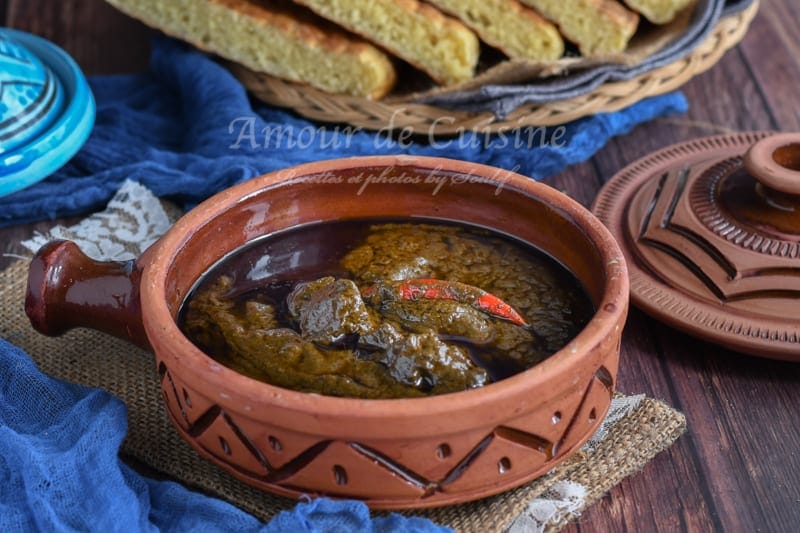
Recipe Score :
0.17
Details of the Ingredients:
- Bay Leaf: Quantité: 1.3g
Allergenicity: perioral dermatitis, contact dermatitis, asthma
HypoAllergenic Traitement : Eviction: the only way to manage allergens is by complete abstinence from the food
Score: 0.17 - Beef: Quantité: 74.8g
Allergenicity: respiratory symptoms, and anaphylaxis
HypoAllergenic Traitement : cooking alters the reactivity of beef +freeze-drying and homogenization
Score: 0.17 - Caraway: Quantité: 0.7g
Allergenicity: rhinoconjunctivitis, gastrointestinal syndromes
HypoAllergenic Traitement : ND
Score: 0.17 - Cilantro: Quantité: 1.3g
Allergenicity: asthma, contact allergy, anaphylaxis
HypoAllergenic Traitement : NT
Score: 0.17 - Coriander: Quantité: 0.7g
Allergenicity: asthma, contact allergy, anaphylaxis
HypoAllergenic Traitement : NT
Score: 0.17 - Garlic: Quantité: 2g
Allergenicity: Garlic allergy is relatively rare although one case of severe symptoms has been reported after eating garlic. The individual suffered exercise induced anaphylaxis and on a subsequent occasion anaphylaxis without exercise.
HypoAllergenic Traitement : the reactivity is lowered when cooked
Score: 0.17 - Harissa: Quantité: 3.3g
Allergenicity: Allergy to bell pepper is commonly reported with respiratory symptoms rather than reactions of the mouth or skin (most commonly rhinoconjunctivitis but also asthma) which is slightly unusual. Headaches were also reported which are sometimes associated with allergic rhinitis but are otherwise rarely reported as a symptom of food allergy. Allergy to bell pepper is often associated with the celery-birch-mugwort-spice syndrome.
HypoAllergenic Traitement : the reactivity is lowered when cooked
Score: 0.17 - Mloukhia: Quantité: 9.3g
Allergenicity: IN PROGRES
HypoAllergenic Traitement : ND
Score: 0.17 - Olive Oil: Quantité: 1.3g
Allergenicity: contact dermatitis
HypoAllergenic Traitement : ND
Score: 0.17 - Onion: Quantité: 1.3g
Allergenicity: contact allergy, anaphylaxis, asthma, rhinoconjunctivitis
HypoAllergenic Traitement : the reactivity is lowered when cooked
Score: 0.17 - Tabel: Quantité: 0.7g
Allergenicity: mix
HypoAllergenic Traitement : NC
Score: 0.17 - Tomato: Quantité: 1.3g
Allergenicity: tomato allergy is associated with allergy to either latex or pollen. The symptoms reported were rather different in the two groups. The patients with no latex allergy reported mostly the oral allergy syndrome with some skin reactions such as urticaria (hives). Patients with latex allergy reported urticaria as the most common reaction but 20% suffered anaphylaxis. Allergy to tomato is also linked to allergy to potato since they are related plants.
HypoAllergenic Traitement : TT: ThermalTreatment
Score: 0.17
Scientifique Name of the ingredients :
- Bay Leaf: Laurus nobilis
- Beef: Bos taurus Linnaeus
- Caraway: Carum carvi
- Cilantro: Coriandrum sativum
- Coriander: Coriandrum sativum
- Garlic: Allium sativum
- Harissa: Capsicum annuum
- Mloukhia: Corchorus olitorius
- Mloukhia: Malva sylvestris
- Olive Oil: Olea europaea
- Onion: Allium cepa var. aggregatum
- Tabel: Nom scientifique non disponible
- Tomato: Solanum lycopersicum
Molecular Allergens of Ingredients :
- Bay Leaf: Lau no (UniProt: 85223)
- Beef: Bos d 6 (UniProt: B0JYQ0) - Superfamille: Serum albumin-like
- Beef: Bos d 6.0101 (UniProt: P02769) - Superfamille: Serum albumin-like
- Caraway: Car c (UniProt: Car c - 48032 - UniProt)
- Cilantro: Cor s [Leaf] (UniProt: Cor s - 4047)
- Cilantro: Cor s 1 (UniProt: Cor s - 4047) - Superfamille: Bet v 1-like (PR-Proteins)
- Cilantro: Cor s 2 (UniProt: Cor s - 4047) - Superfamille: Profilin (actin-binding protein)
- Cilantro: Cor s 11kD (UniProt: not given)
- Coriander: Cor s 11kD (UniProt: not given)
- Coriander: Cor s 2 (UniProt: Cor s - 4047) - Superfamille: Profilin (actin-binding protein)
- Coriander: Cor s 1 (UniProt: Cor s - 4047) - Superfamille: Bet v 1-like (PR-Proteins)
- Coriander: Cor s [Leaf] (UniProt: Cor s - 4047)
- Garlic: All s Alliin lyase (UniProt: Q01594) - Superfamille: PLP-dependent transferases
- Harissa: Cap a 1.0101 (UniProt: Q9ARG0) - Superfamille: Osmotin, thaumatin-like protein
- Harissa: Cap a 2 (UniProt: Q6RG01) - Superfamille: Profilin (actin-binding protein)
- Harissa: Cap a 2.0101 (UniProt: Q93YI9) - Superfamille: Profilin (actin-binding protein)
- Harissa: Cap a 30kD (UniProt: Q42661) - Superfamille: Heme-dependent peroxidases
- Harissa: Cap a 4 (UniProt: B2CZJ6) - Superfamille: Bet v1-like
- Harissa: Cap a Glucanase (UniProt: Q9M5L5) - Superfamille: (Trans)glycosidases
- Olive Oil: Ole e 13.0101 (UniProt: E3SU11) - Superfamille: Osmotin, thaumatin-like protein
- Onion: All a Alliin lyase (UniProt: P31756) - Superfamille: PLP-dependent transferases
- Onion: All c Alliin lyase (UniProt: P31757) - Superfamille: PLP-dependent transferases
- Tabel: Lol b 1.0101 (UniProt: F1ADN3) - Superfamille: Tropomyosin family
- Tabel: Omm b 1.0101 (UniProt: Q2V0V1) - Superfamille: Tropomyosin family
- Tomato: Sola l Vicilin (UniProt: B0JEU3) - Superfamille: RmlC-like cupins
- Tomato: Sola l TLP (UniProt: P12670) - Superfamille: Osmotin, thaumatin-like protein
- Tomato: Sola l SOD (UniProt: P14831) - Superfamille: Cu,Zn superoxide dismutase-like
- Tomato: Sola l PG (UniProt: P05117) - Superfamille: Pectin lyase-like
- Tomato: Sola l Peroxidase (UniProt: P15003) - Superfamille: Heme-dependent peroxidases
- Tomato: Sola l Glucanase (UniProt: Q01413) - Superfamille: (Trans)glycosidases
- Tomato: Sola l Chitinase (UniProt: Q05539) - Superfamille: Lysozyme-like
- Tomato: Sola l 7 (UniProt: K4AYX7) - Superfamille: Bifunctional inhibitor/lipid-transfer protein/seed storage 2S albumin
- Tomato: Sola l 5.0101 (UniProt: P21568) - Superfamille: Cyclophilin-like
- Tomato: Sola l 5 (UniProt: K4D184) - Superfamille: Cyclophilin-like
- Tomato: Sola l 4.0201 (UniProt: K4CWC4) - Superfamille: Bet v1-like
- Tomato: Sola l 4.0101 (UniProt: O49881) - Superfamille: Bet v1-like
- Tomato: Sola l 4 (UniProt: K4CWC5) - Superfamille: Bet v1-like
- Tomato: Sola l 3.0101 (UniProt: P93224) - Superfamille: Bifunctional inhibitor/lipid-transfer protein/seed storage 2S albumin
- Tomato: Sola l 3 (UniProt: P27056) - Superfamille: Bifunctional inhibitor/lipid-transfer protein/seed storage 2S albumin
- Tomato: Sola l 1.0101 (UniProt: Q93YG7) - Superfamille: Profilin (actin-binding protein)
- Tomato: Sola l 1 (UniProt: Q41344) - Superfamille: Profilin (actin-binding protein)
- Ingredients used :
- Ingredient 1 : 1.3g of Bay Leaf
- Ingredient 2 : 74.8g of Beef
- Ingredient 3 : 0.7g of Caraway
- Ingredient 4 : 1.3g of Cilantro
- Ingredient 5 : 0.7g of Coriander
- Ingredient 6 : 2g of Garlic
- Ingredient 7 : 3.3g of Harissa
- Ingredient 8 : 9.3g of Mloukhia
- Ingredient 9 : 1.3g of Olive Oil
- Ingredient 10 : 1.3g of Onion
- Ingredient 11 : 0.7g of Tabel
- Ingredient 12 : 1.3g of Tomato
- Steps of preparation
- Step 1 : In a heavy bottom non-stick stock pot, pour 4 tablespoons of oil and heat.
- Step 2 : Sauté the onion, garlic and meat over medium heat.
- Step 3 : Add the spices and salt, and fry over medium heat for 10 minutes, turning the pieces of meat regularly.
- Step 4 : Add the tomato and tomato paste and the bay leaves. Mix well.
- Step 5 : In a bowl, mix the Jew mallow's powder with the remaining oil, until obtaining a homogeneous paste.
- Step 6 : Pour this mixture over the meat and let it simmer for a few minutes over low to medium heat, being careful to stir well with a spatula so that it does not stick to the bottom.
- Step 7 : Add the boiling water in 4 or 5 times, being careful to stir in between additions.
- Step 8 : Cook for 15 minutes over medium-high heat, making sure it does not overflow.
- Step 9 : Add the chopped cilantro and mix well.
- Step 10 : Reduce heat, and cook over low heat, covered, for 5 to 6 hours.
- Step 11 : Uncover and let the sauce reduce, until the oil begins to appear on the surface.
5 - Ojja with Merguez
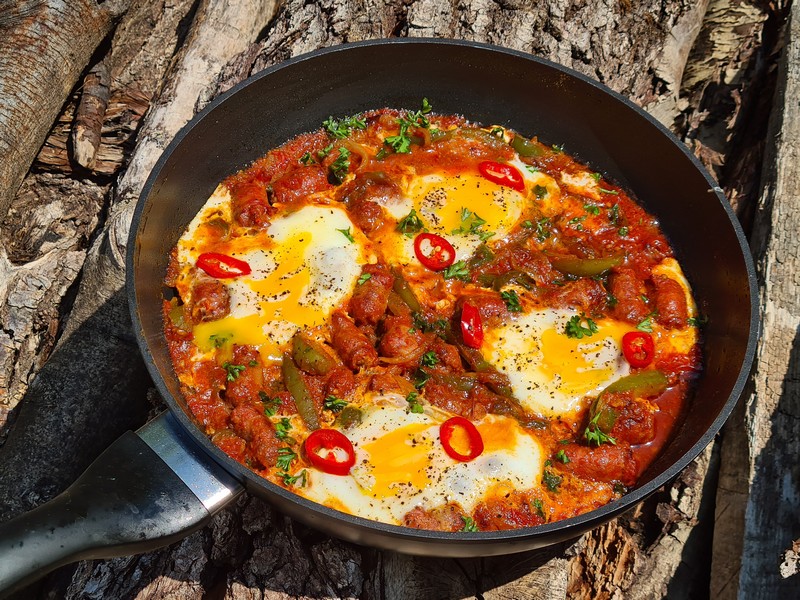
Recipe Score :
0.22
Details of the Ingredients:
- Black pepper: Quantité: 0.5g
Allergenicity: respiratory symptoms, contact dermatitis
HypoAllergenic Traitement : Eviction: the only way to manage allergens is by complete abstinence from the food
Score: 0.17 - Caraway: Quantité: 0.5g
Allergenicity: rhinoconjunctivitis, gastrointestinal syndromes
HypoAllergenic Traitement : ND
Score: 0.17 - Coriander: Quantité: 0.5g
Allergenicity: asthma, contact allergy, anaphylaxis
HypoAllergenic Traitement : NT
Score: 0.17 - Cumin: Quantité: 0.2g
Allergenicity: anaphylaxis, contact dermatitis
HypoAllergenic Traitement : NT
Score: 0.17 - Egg: Quantité: 0.6g
Allergenicity: Eggs from birds contain several proteins capable of inducing an immune response in man most of these are present in the egg white. Allergenic proteins in the yolk only contribute to a minor degree and isolated allergy to egg yolk proteins are rare (see cross reactions). Most of the allergenic proteins present in the egg white are both heat- and digestion resistant and may also be found in the house dust in normal households. Although not thoroughly investigated, sensitization is believed to take place by ingestion of egg proteins in the diet even the minute quantities present in human milk can sensitize the infant in some cases, where a reaction is elicited the very first time the infant eats a meal containing egg. Ingestion of egg will in sensitized individuals elicit an immediate allergic reaction starting with itching of the mouth and pharynx, followed by nettle rash (urticaria), vomiting, rhinoconjunctivitis, asthma and in rare cases anaphylaxis. Exacerbation of atopic eczema may be seen also, but isolated reactions taking place hours to days after intake, without a previous immediate reaction, are rare.
HypoAllergenic Traitement : gastric enzyme supplementation/ Dry heating with mannose, heating for 15 minutes at 95 °C
Score: 0.87 - Garlic: Quantité: 0.6g
Allergenicity: Garlic allergy is relatively rare although one case of severe symptoms has been reported after eating garlic. The individual suffered exercise induced anaphylaxis and on a subsequent occasion anaphylaxis without exercise.
HypoAllergenic Traitement : the reactivity is lowered when cooked
Score: 0.17 - Harissa: Quantité: 0.9g
Allergenicity: Allergy to bell pepper is commonly reported with respiratory symptoms rather than reactions of the mouth or skin (most commonly rhinoconjunctivitis but also asthma) which is slightly unusual. Headaches were also reported which are sometimes associated with allergic rhinitis but are otherwise rarely reported as a symptom of food allergy. Allergy to bell pepper is often associated with the celery-birch-mugwort-spice syndrome.
HypoAllergenic Traitement : the reactivity is lowered when cooked
Score: 0.17 - hazelnuts: Quantité: 0.9g
Allergenicity: Allergies to tree nuts and seeds tend to be of a more severe nature, causing life-threatening and sometimes fatal reactions. People with tree nut allergies also often suffer from reactions triggered by a number of different types of nuts, even though they do not come from closely related plant species. In general these allergies are triggered by the major proteins found in nuts and seeds which are resist processes such as cooking.
HypoAllergenic Traitement : Eviction: the only way to manage allergens is by complete abstinence from the food
Score: 0.87 - Muscat De Frontignan: Quantité: 25.9g
Allergenicity: ND
HypoAllergenic Traitement : ND
Score: 0.17 - Olive Oil: Quantité: 1.4g
Allergenicity: contact dermatitis
HypoAllergenic Traitement : ND
Score: 0.17 - Onion: Quantité: 0.9g
Allergenicity: contact allergy, anaphylaxis, asthma, rhinoconjunctivitis
HypoAllergenic Traitement : the reactivity is lowered when cooked
Score: 0.17 - Red Pepper: Quantité: 0.9g
Allergenicity: contact urticaria, rhinocon junctivitis
HypoAllergenic Traitement : the reactivity is lowered when cooked
Score: 0.17 - Tomato: Quantité: 56.8g
Allergenicity: tomato allergy is associated with allergy to either latex or pollen. The symptoms reported were rather different in the two groups. The patients with no latex allergy reported mostly the oral allergy syndrome with some skin reactions such as urticaria (hives). Patients with latex allergy reported urticaria as the most common reaction but 20% suffered anaphylaxis. Allergy to tomato is also linked to allergy to potato since they are related plants.
HypoAllergenic Traitement : TT: ThermalTreatment
Score: 0.17
Scientifique Name of the ingredients :
- Black pepper: Piper nigrum L.
- Caraway: Carum carvi
- Coriander: Coriandrum sativum
- Cumin: Cuminum cyminum L.
- Egg: Gallus gallus
- Garlic: Allium sativum
- Harissa: Capsicum annuum
- hazelnuts: Corylus avellana L.
- hazelnuts: Juglans nigra
- Muscat De Frontignan: Vitis vinifera
- Olive Oil: Olea europaea
- Onion: Allium cepa var. aggregatum
- Red Pepper: Capsicum annuum
- Tomato: Solanum lycopersicum
Molecular Allergens of Ingredients :
- Black pepper: Pip n 28kD (UniProt: Pip n - 13216) - Superfamille: Germin, Germin-like Protein
- Black pepper: Pip n 14kD (UniProt: Pip n - 13216)
- Caraway: Car c (UniProt: Car c - 48032 - UniProt)
- Coriander: Cor s [Leaf] (UniProt: Cor s - 4047)
- Coriander: Cor s 1 (UniProt: Cor s - 4047) - Superfamille: Bet v 1-like (PR-Proteins)
- Coriander: Cor s 2 (UniProt: Cor s - 4047) - Superfamille: Profilin (actin-binding protein)
- Coriander: Cor s 11kD (UniProt: not given)
- Egg: Gal d 6.0101 (UniProt: P87498) - Superfamille: Lipovitellin-phosvitin complex, superhelical domain
- Egg: Gal d L-PGDS (UniProt: Q8QFM7) - Superfamille: Lipocalins
- Egg: Gal d 3 (UniProt: Q4ADG4) - Superfamille: Periplasmic binding protein-like II
- Egg: Gal d Phosvitin (UniProt: P67869) - Superfamille: Casein kinase II beta subunit
- Egg: Gal d 5.0101 (UniProt: P19121) - Superfamille: Serum albumin-like
- Egg: Gal d 3.0101 (UniProt: P02789) - Superfamille: Periplasmic binding protein-like II
- Egg: Gal d 2.0101 (UniProt: P01012) - Superfamille: Serpins
- Egg: Gal d 1 (UniProt: B6V1G0) - Superfamille: Kazal-type serine protease inhibitors
- Egg: Gal d 1.0101 (UniProt: P01005) - Superfamille: Kazal-type serine protease inhibitors
- Egg: Gal d 4.0101 (UniProt: P00698) - Superfamille: Lysozyme-like
- Egg: Gal d OIH (UniProt: P10184) - Superfamille: Kazal-type serine protease inhibitors
- Garlic: All s Alliin lyase (UniProt: Q01594) - Superfamille: PLP-dependent transferases
- Harissa: Cap a 2.0101 (UniProt: Q93YI9) - Superfamille: Profilin (actin-binding protein)
- Harissa: Cap a Glucanase (UniProt: Q9M5L5) - Superfamille: (Trans)glycosidases
- Harissa: Cap a 4 (UniProt: B2CZJ6) - Superfamille: Bet v1-like
- Harissa: Cap a 30kD (UniProt: Q42661) - Superfamille: Heme-dependent peroxidases
- Harissa: Cap a 2 (UniProt: Q6RG01) - Superfamille: Profilin (actin-binding protein)
- Harissa: Cap a 1.0101 (UniProt: Q9ARG0) - Superfamille: Osmotin, thaumatin-like protein
- hazelnuts: Jug r 8.0201 (UniProt: A0A2I4GT96) - Superfamille: Bifunctional inhibitor/lipid-transfer protein/seed storage 2S albumin
- hazelnuts: Jug r 8.0101 (UniProt: A0A2I4EB91) - Superfamille: Bifunctional inhibitor/lipid-transfer protein/seed storage 2S albumin
- hazelnuts: Jug r 7.0101 (UniProt: A0A2I4DNN6) - Superfamille: Profilin (actin-binding protein)
- hazelnuts: Jug r 7 (UniProt: A0A2I4GR46) - Superfamille: Profilin (actin-binding protein)
- hazelnuts: Jug r 6.0101 (UniProt: A0A2I4E5L6) - Superfamille: RmlC-like cupins
- hazelnuts: Jug r 5.0101 (UniProt: A0A1J0RET5) - Superfamille: Bet v1-like
- hazelnuts: Jug r 3 (UniProt: C5H617) - Superfamille: Bifunctional inhibitor/lipid-transfer protein/seed storage 2S albumin
- hazelnuts: Jug r 4.0101 (UniProt: Q2TPW5) - Superfamille: RmlC-like cupins
- hazelnuts: Jug n 1.0101 (UniProt: Q7Y1C2) - Superfamille: Bifunctional inhibitor/lipid-transfer protein/seed storage 2S albumin
- hazelnuts: Jug n 2.0101 (UniProt: Q7Y1C1) - Superfamille: RmlC-like cupins
- hazelnuts: Jug n 4.0101 (UniProt: A0A1L6K371) - Superfamille: RmlC-like cupins
- hazelnuts: Jug r 1.0101 (UniProt: P93198) - Superfamille: Bifunctional inhibitor/lipid-transfer protein/seed storage 2S albumin
- hazelnuts: Jug r 2.0101 (UniProt: Q9SEW4) - Superfamille: RmlC-like cupins
- Muscat De Frontignan: Vit v 1 (UniProt: Q850K6) - Superfamille: Bifunctional inhibitor/lipid-transfer protein/seed storage 2S albumin
- Muscat De Frontignan: Vit v 1.0101 (UniProt: P80274) - Superfamille: Bifunctional inhibitor/lipid-transfer protein/seed storage 2S albumin
- Muscat De Frontignan: Vit v 4 (UniProt: A5BLM8) - Superfamille: Profilin (actin-binding protein)
- Muscat De Frontignan: Vit v 8 (UniProt: Q9FS42) - Superfamille: Bet v1-like
- Muscat De Frontignan: Vit v Glucanase (UniProt: Q9M563) - Superfamille: (Trans)glycosidases
- Muscat De Frontignan: Vit v TLP (UniProt: Q9LLB7) - Superfamille: Osmotin, thaumatin-like protein
- Olive Oil: Ole e 13.0101 (UniProt: E3SU11) - Superfamille: Osmotin, thaumatin-like protein
- Onion: All a Alliin lyase (UniProt: P31756) - Superfamille: PLP-dependent transferases
- Onion: All c Alliin lyase (UniProt: P31757) - Superfamille: PLP-dependent transferases
- Red Pepper: Cap a Glucanase (UniProt: Q9M5L5) - Superfamille: (Trans)glycosidases
- Red Pepper: Cap a 4 (UniProt: B2CZJ6) - Superfamille: Bet v1-like
- Red Pepper: Cap a 30kD (UniProt: Q42661) - Superfamille: Heme-dependent peroxidases
- Red Pepper: Cap a 2 (UniProt: Q6RG01) - Superfamille: Profilin (actin-binding protein)
- Red Pepper: Cap a 1.0101 (UniProt: Q9ARG0) - Superfamille: Osmotin, thaumatin-like protein
- Red Pepper: Cap a 2.0101 (UniProt: Q93YI9) - Superfamille: Profilin (actin-binding protein)
- Tomato: Sola l Vicilin (UniProt: B0JEU3) - Superfamille: RmlC-like cupins
- Tomato: Sola l TLP (UniProt: P12670) - Superfamille: Osmotin, thaumatin-like protein
- Tomato: Sola l SOD (UniProt: P14831) - Superfamille: Cu,Zn superoxide dismutase-like
- Tomato: Sola l PG (UniProt: P05117) - Superfamille: Pectin lyase-like
- Tomato: Sola l Peroxidase (UniProt: P15003) - Superfamille: Heme-dependent peroxidases
- Tomato: Sola l Glucanase (UniProt: Q01413) - Superfamille: (Trans)glycosidases
- Tomato: Sola l Chitinase (UniProt: Q05539) - Superfamille: Lysozyme-like
- Tomato: Sola l 7 (UniProt: K4AYX7) - Superfamille: Bifunctional inhibitor/lipid-transfer protein/seed storage 2S albumin
- Tomato: Sola l 5.0101 (UniProt: P21568) - Superfamille: Cyclophilin-like
- Tomato: Sola l 5 (UniProt: K4D184) - Superfamille: Cyclophilin-like
- Tomato: Sola l 4.0201 (UniProt: K4CWC4) - Superfamille: Bet v1-like
- Tomato: Sola l 4.0101 (UniProt: O49881) - Superfamille: Bet v1-like
- Tomato: Sola l 4 (UniProt: K4CWC5) - Superfamille: Bet v1-like
- Tomato: Sola l 3.0101 (UniProt: P93224) - Superfamille: Bifunctional inhibitor/lipid-transfer protein/seed storage 2S albumin
- Tomato: Sola l 3 (UniProt: P27056) - Superfamille: Bifunctional inhibitor/lipid-transfer protein/seed storage 2S albumin
- Tomato: Sola l 1.0101 (UniProt: Q93YG7) - Superfamille: Profilin (actin-binding protein)
- Tomato: Sola l 1 (UniProt: Q41344) - Superfamille: Profilin (actin-binding protein)
- Ingredients used :
- Ingredient 1 : 0.5g of Black pepper
- Ingredient 2 : 0.5g of Caraway
- Ingredient 3 : 0.5g of Coriander
- Ingredient 4 : 0.2g of Cumin
- Ingredient 5 : 0.6g of Egg
- Ingredient 6 : 0.6g of Garlic
- Ingredient 7 : 0.9g of Harissa
- Ingredient 8 : 0.9g of hazelnuts
- Ingredient 9 : 25.9g of Muscat De Frontignan
- Ingredient 10 : 1.4g of Olive Oil
- Ingredient 11 : 0.9g of Onion
- Ingredient 12 : 0.9g of Red Pepper
- Ingredient 13 : 56.8g of Tomato
- Steps of preparation
- Step 1 : In a heavy-bottomed skillet, heat the olive oil without smoking, and fry the onion for 2 minutes over medium heat.
- Step 2 : Add the garlic, mix well, and cook for 3 minutes on low/medium heat, stirring regularly.
- Step 3 : Add the tomatoes, chili pepper, and bell peppers. Add water, spices, harissa, salt, and pepper, and mix.
- Step 4 : Cover and cook for 15 minutes over low heat.
- Step 5 : Place the merguez in the tomato mixture, cover, and cook for 25 minutes over low/medium heat.
- Step 6 : When the merguez is cooked, break the eggs directly into the pan over the entire surface of the sauce.
- Step 7 : Cover and cook until the egg white is cooked to the desired texture.
6 - Tunisian Couscous with Meat and Vegetables
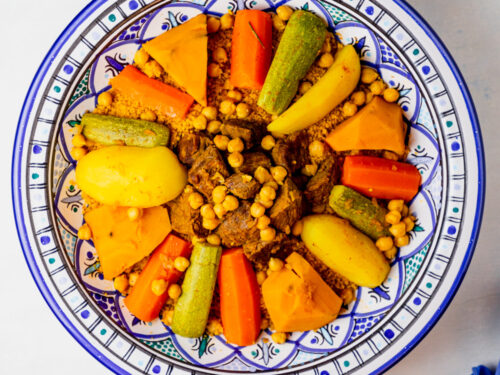
Recipe Score :
0.17
Details of the Ingredients:
- Beef: Quantité: 33.6g
Allergenicity: respiratory symptoms, and anaphylaxis
HypoAllergenic Traitement : cooking alters the reactivity of beef +freeze-drying and homogenization
Score: 0.17 - Black pepper: Quantité: 0.6g
Allergenicity: respiratory symptoms, contact dermatitis
HypoAllergenic Traitement : Eviction: the only way to manage allergens is by complete abstinence from the food
Score: 0.17 - Carrot: Quantité: 2.5g
Allergenicity: The symptoms include oral allergy syndrome (OAS), angioedema, urticaria, dyspnea, vertigo, tightness of throat or chest, dysphagia, hoarseness, cough, rhinitis and conjunctivitis, Carrot allergy is generally associated with allergy to birch pollen or with the celery-carrot-mugwort-spice syndrome.
HypoAllergenic Traitement : the reactivity is lowered when cooked
Score: 0.17 - Chickpeas: Quantité: 0.6g
Allergenicity: The symptoms of chickpea allergic individuals are similar to those of other food allergies with urticaria (hives) and other reactions of the skin as the most common symptoms. Allergy to chickpea is associated with allergy to other legumes with allergy to lentil being the most frequently reported cross-reaction.
HypoAllergenic Traitement : The overall immunoreactivity of lentils was strongly reduced after autoclaving at 2.6 atm for 30 min
Score: 0.17 - Coriander: Quantité: 0.6g
Allergenicity: asthma, contact allergy, anaphylaxis
HypoAllergenic Traitement : NT
Score: 0.17 - Garlic: Quantité: 0.2g
Allergenicity: Garlic allergy is relatively rare although one case of severe symptoms has been reported after eating garlic. The individual suffered exercise induced anaphylaxis and on a subsequent occasion anaphylaxis without exercise.
HypoAllergenic Traitement : the reactivity is lowered when cooked
Score: 0.17 - Ginger: Quantité: 0.2g
Allergenicity: contact dermatitis, respiratory symptoms
HypoAllergenic Traitement : NT
Score: 0.17 - Olive Oil: Quantité: 6.3g
Allergenicity: contact dermatitis
HypoAllergenic Traitement : ND
Score: 0.17 - Onion: Quantité: 0.2g
Allergenicity: contact allergy, anaphylaxis, asthma, rhinoconjunctivitis
HypoAllergenic Traitement : the reactivity is lowered when cooked
Score: 0.17 - Paprika: Quantité: 0.6g
Allergenicity: contact urticaria, rhinoconjunctivitis
HypoAllergenic Traitement : the reactivity is lowered when cooked
Score: 0.17 - Potato: Quantité: 2.5g
Allergenicity: Potato is considered a rarely allergenic food and is frequently used in elimination diets and as part of the placebo in challenge protocols. However, many cases of food allergy after eating cooked potato have been reported and skin prick tests suggest that sensitization to raw potato is relatively common. Cases of contact allergy to raw potatoes have also been reported. The symptoms reported include reactions of the skin such as urticaria (hives), angioedema (wheals) and eczema, respiratory symptoms such as rhinitis, cough and wheezing and gastrointestinal symptoms such as vomiting and diarrhoea. Most reactions occurred within 2 hours (immediate reactions) but delayed reactions have also been reported. Allergy to cooked potato is related to tomato allergy and to latex allergy. Sensitization to raw potato may also be related to pollen allergies.
HypoAllergenic Traitement : the reactivity is lowered when cooked
Score: 0.17 - Semolina: Quantité: 42g
Allergenicity: Adverse reactions to wheat have been more frequently reported than to other cereal-based foods. The best defined of these are coeliac disease and IgE-dependent wheat allergy, both of which result from malfunctioning of the immune system. Allergies to other cereals such as maize, sorghum and millet, are not common and are not related to reactions triggered by wheat, rye, barley and oats. As a consequence individuals with wheat allergy, including coeliac disease, can usually eat maize-based foods such as polenta. However, allergic reactions to maize can result from the fruit allergies found in the South of Europe which often start with reactions to peach. The gut reacts to the gluten and becomes smooth, loosing its ability to absorb nutrients; symptoms including diarrhoea as well as deficiencies in nutrients like vitamins. However, coeliac disease does not cause the potentially fatal reaction of anaphylaxis if gluten is accidentally eaten. In contrast IgE-mediated cereal allergies can be caused by the antibody molecule IgE binding to many proteins, not just gluten. Sometimes the reactions (often severe) only develop if an individual takes exercise within a few hours of eating wheat or related cereals, in a condition called exercise-induced anaphylaxis. Individuals with wheat allergy often react to closely related cereals like barley and rye, less frequently to the more distant relative, oats. Diagnosis of cereal allergies can be complicated by the fact that some of the blood tests for cereal food allergy can accidentally detect allergy to grass pollens instead. As a consequence of these adverse reactions, cereals containing gluten, (i.e. wheat, rye, barley, oats, spelt or their hybridized strains) have been included in Annex IIIa of the food labelling directive along with derived products. Temporary exceptions to the labelling rule (derogations) have been granted for wheat based glucose syrups including dextrose, wheat based maltodextrins, glucose syrups based on barley and cereals used in distillates for spirits.
HypoAllergenic Traitement : Yusing young cereal grains
Score: 0.17 - Tomato: Quantité: 2.5g
Allergenicity: tomato allergy is associated with allergy to either latex or pollen. The symptoms reported were rather different in the two groups. The patients with no latex allergy reported mostly the oral allergy syndrome with some skin reactions such as urticaria (hives). Patients with latex allergy reported urticaria as the most common reaction but 20% suffered anaphylaxis. Allergy to tomato is also linked to allergy to potato since they are related plants.
HypoAllergenic Traitement : TT: ThermalTreatment
Score: 0.17 - Turmeric: Quantité: 0.6g
Deprecated: htmlspecialchars(): Passing null to parameter #1 ($string) of type string is deprecated in /var/www/foodallergy/public_html/page2.php on line 700
Allergenicity:
HypoAllergenic Traitement : ND
Score: 0.17 - Zucchini: Quantité: 5g
Allergenicity: The following symptoms have been reported after ingestion of cougette: Oral allergy syndrome, urticaria, angioedema, nausea, diarrhoea, pruritus
HypoAllergenic Traitement : the reactivity is lowered when cooked
Score: 0.17
Scientifique Name of the ingredients :
- Beef: Bos taurus Linnaeus
- Black pepper: Piper nigrum L.
- Carrot: Daucus carota L.
- Chickpeas: Cicer arietinum
- Coriander: Coriandrum sativum
- Garlic: Allium sativum
- Ginger: Zingiber officinale
- Olive Oil: Olea europaea
- Onion: Allium cepa var. aggregatum
- Paprika: Capsicum annuum
- Potato: Solanum tuberosum
- Semolina: Triticum turgidum subsp. durum
- Tomato: Solanum lycopersicum
- Turmeric: Curcuma aromatica
- Zucchini: Cucurbita pepo
Molecular Allergens of Ingredients :
- Beef: Bos d 6.0101 (UniProt: P02769) - Superfamille: Serum albumin-like
- Beef: Bos d 6 (UniProt: B0JYQ0) - Superfamille: Serum albumin-like
- Black pepper: Pip n 14kD (UniProt: Pip n - 13216)
- Black pepper: Pip n 28kD (UniProt: Pip n - 13216) - Superfamille: Germin, Germin-like Protein
- Carrot: Dau c 4.0101 (UniProt: Q8SAE6) - Superfamille: Profilin (actin-binding protein)
- Carrot: Dau c CyP (UniProt: H2DF84) - Superfamille: Cyclophilin-like
- Carrot: Dau c 5.0102 (UniProt: H2DF85) - Superfamille: NAD(P)-binding Rossmann-fold domains
- Carrot: Dau c 5.0101 (UniProt: H2DF86) - Superfamille: NAD(P)-binding Rossmann-fold domains
- Carrot: Dau c 3 (UniProt: P27631) - Superfamille: Bifunctional inhibitor/lipid-transfer protein/seed storage 2S albumin
- Carrot: Dau c 1.0301 (UniProt: D9ZHN9) - Superfamille: Bet v1-like
- Carrot: Dau c 1.0201 (UniProt: Q8SAE7) - Superfamille: Bet v1-like
- Carrot: Dau c 1.0101 (UniProt: O04298) - Superfamille: Bet v1-like
- Carrot: Dau c 1 (UniProt: Q75T31) - Superfamille: Bet v1-like
- Chickpeas: Cic a 1 (UniProt: Q304D4) - Superfamille: RmlC-like cupins
- Chickpeas: Cic a 3 (UniProt: O23758) - Superfamille: Bifunctional inhibitor/lipid-transfer protein/seed storage 2S albumin
- Chickpeas: Cic a 4 (UniProt: Q39450) - Superfamille: Bet v1-like
- Chickpeas: Cic a 6 (UniProt: Q9SMJ4) - Superfamille: RmlC-like cupins
- Coriander: Cor s 1 (UniProt: Cor s - 4047) - Superfamille: Bet v 1-like (PR-Proteins)
- Coriander: Cor s 11kD (UniProt: not given)
- Coriander: Cor s 2 (UniProt: Cor s - 4047) - Superfamille: Profilin (actin-binding protein)
- Coriander: Cor s [Leaf] (UniProt: Cor s - 4047)
- Garlic: All s Alliin lyase (UniProt: Q01594) - Superfamille: PLP-dependent transferases
- Olive Oil: Ole e 13.0101 (UniProt: E3SU11) - Superfamille: Osmotin, thaumatin-like protein
- Onion: All a Alliin lyase (UniProt: P31756) - Superfamille: PLP-dependent transferases
- Onion: All c Alliin lyase (UniProt: P31757) - Superfamille: PLP-dependent transferases
- Paprika: Cap a 1.0101 (UniProt: Q9ARG0) - Superfamille: Osmotin, thaumatin-like protein
- Paprika: Cap a 2 (UniProt: Q6RG01) - Superfamille: Profilin (actin-binding protein)
- Paprika: Cap a 2.0101 (UniProt: Q93YI9) - Superfamille: Profilin (actin-binding protein)
- Paprika: Cap a 30kD (UniProt: Q42661) - Superfamille: Heme-dependent peroxidases
- Paprika: Cap a 4 (UniProt: B2CZJ6) - Superfamille: Bet v1-like
- Paprika: Cap a Glucanase (UniProt: Q9M5L5) - Superfamille: (Trans)glycosidases
- Potato: Sola t 4.0101 (UniProt: P30941) - Superfamille: STI-like
- Potato: Sola t 7k (UniProt: M1CHX3) - Superfamille: Bifunctional inhibitor/lipid-transfer protein/seed storage 2S albumin
- Potato: Sola t 8 (UniProt: M1BLC8) - Superfamille: Profilin (actin-binding protein)
- Potato: Sola t Glucanase (UniProt: P52401) - Superfamille: (Trans)glycosidases
- Potato: Sola t 2.0101 (UniProt: P16348) - Superfamille: STI-like
- Potato: Sola t 3.0101 (UniProt: O24383) - Superfamille: STI-like
- Potato: Sola t 3 (UniProt: Q6PMR6) - Superfamille: STI-like
- Potato: Sola t 1.0101 (UniProt: P15476)
- Potato: Sola t 1 (UniProt: P07745)
- Potato: Sola t 3.0102 (UniProt: P20347) - Superfamille: STI-like
- Semolina: Tri tu GBSS_I (UniProt: I7H0T0) - Superfamille: UDP-Glycosyltransferase/glycogen phosphorylase
- Semolina: Tri tu 7k (UniProt: Q9FEK9) - Superfamille: Bifunctional inhibitor/lipid-transfer protein/seed storage 2S albumin
- Semolina: Tri tu 30 (UniProt: Q6S5B1) - Superfamille: Bifunctional inhibitor/lipid-transfer protein/seed storage 2S albumin
- Semolina: Tri tu 28 (UniProt: L7P0Z8) - Superfamille: Bifunctional inhibitor/lipid-transfer protein/seed storage 2S albumin
- Semolina: Tri tu 14.0101 (UniProt: F6MEX1) - Superfamille: Bifunctional inhibitor/lipid-transfer protein/seed storage 2S albumin
- Semolina: Tri tu 14 (UniProt: Q5NE26) - Superfamille: Bifunctional inhibitor/lipid-transfer protein/seed storage 2S albumin
- Tomato: Sola l 4 (UniProt: K4CWC5) - Superfamille: Bet v1-like
- Tomato: Sola l Vicilin (UniProt: B0JEU3) - Superfamille: RmlC-like cupins
- Tomato: Sola l TLP (UniProt: P12670) - Superfamille: Osmotin, thaumatin-like protein
- Tomato: Sola l SOD (UniProt: P14831) - Superfamille: Cu,Zn superoxide dismutase-like
- Tomato: Sola l PG (UniProt: P05117) - Superfamille: Pectin lyase-like
- Tomato: Sola l Peroxidase (UniProt: P15003) - Superfamille: Heme-dependent peroxidases
- Tomato: Sola l Glucanase (UniProt: Q01413) - Superfamille: (Trans)glycosidases
- Tomato: Sola l Chitinase (UniProt: Q05539) - Superfamille: Lysozyme-like
- Tomato: Sola l 7 (UniProt: K4AYX7) - Superfamille: Bifunctional inhibitor/lipid-transfer protein/seed storage 2S albumin
- Tomato: Sola l 5.0101 (UniProt: P21568) - Superfamille: Cyclophilin-like
- Tomato: Sola l 5 (UniProt: K4D184) - Superfamille: Cyclophilin-like
- Tomato: Sola l 4.0201 (UniProt: K4CWC4) - Superfamille: Bet v1-like
- Tomato: Sola l 4.0101 (UniProt: O49881) - Superfamille: Bet v1-like
- Tomato: Sola l 3.0101 (UniProt: P93224) - Superfamille: Bifunctional inhibitor/lipid-transfer protein/seed storage 2S albumin
- Tomato: Sola l 3 (UniProt: P27056) - Superfamille: Bifunctional inhibitor/lipid-transfer protein/seed storage 2S albumin
- Tomato: Sola l 1.0101 (UniProt: Q93YG7) - Superfamille: Profilin (actin-binding protein)
- Tomato: Sola l 1 (UniProt: Q41344) - Superfamille: Profilin (actin-binding protein)
- Zucchini: Cuc p AscO (UniProt: P37064) - Superfamille: Peroxidase
- Zucchini: Cuc p 2 - Superfamille: Profilin (actin-binding protein)
- Ingredients used :
- Ingredient 1 : 33.6g of Beef
- Ingredient 2 : 0.6g of Black pepper
- Ingredient 3 : 2.5g of Carrot
- Ingredient 4 : 0.6g of Chickpeas
- Ingredient 5 : 0.6g of Coriander
- Ingredient 6 : 0.2g of Garlic
- Ingredient 7 : 0.2g of Ginger
- Ingredient 8 : 6.3g of Olive Oil
- Ingredient 9 : 0.2g of Onion
- Ingredient 10 : 0.6g of Paprika
- Ingredient 11 : 2.5g of Potato
- Ingredient 12 : 42g of Semolina
- Ingredient 13 : 2.5g of Tomato
- Ingredient 14 : 0.6g of Turmeric
- Ingredient 15 : 5g of Zucchini
- Steps of preparation
- Step 1 : In a large cooking pot, over low-medium heat, add the virgin olive oil. Allow the olive oil to get hot, about one minute. Then add the diced red onions and garlic. Simmer the red onions and garlic over low-medium heat for 3-5 minutes or until the onions have become translucent in color.
- Step 2 : Next, add the beef fondue, paprika, ground coriander, ground turmeric, salt, black pepper, and ground ginger. Using a spatula, mix the ingredients. Allow the beef to cook for 3-4 minutes, occasionally stirring, to brown the sides.
- Step 3 : Then add the potatoes, carrots, zucchini, pumpkin, and tomato paste.
- Step 4 : Immediately, pour boiling water on the vegetables until all the vegetables are covered in water. Using a wooden spatula, mix the ingredients. Then cover the cooking pot and let it simmer over low heat for 15 minutes.
- Step 5 : After 15 minutes, remove the lid, and check on each vegetable by inserting a fork. If the fork smoothly goes into the vegetable, it is cooked. If the vegetable is cooked, remove it and put it aside on a clean plate for later. You might find that the potatoes and pumpkin are cooked, but the carrots and zucchini are not.
- Step 6 : Afterward, cover the cooking pot again and allow it to simmer over low heat for another 15 minutes.
- Step 7 : Once 15 minutes have passed, recheck the vegetables using a fork. Remove the cooked vegetables, and set them aside for later.
- Step 8 : Add the chickpeas, stir, and cover the cooking pot. Let it simmer over low heat for another 15 minutes or until the meat is cooked.
- Step 9 : Next, separate the meat and chickpeas from the meat broth and set aside the meat, chickpeas, and meat broth.
- Step 10 : Making the couscous: Read the package instructions for the amount of liquid needed to steam the couscous.
- Step 11 : In a cooking pot, add meat broth equal to the liquid measurement indicated in the package. Bring the meat broth to boil, then turn off the heat. Immediately add the couscous and stir it. Then cover the cooking pot with the lid and allow the couscous to cook for 10 minutes without disturbing it.
- Step 12 : Then, using a fork, fluff the couscous to separate the granules.
- Step 13 : On a large serving plate, add the cooked couscous and shape the couscous into a hill. Note: Keep the remaining meat broth and serve it on the side for anyone who wishes to add more broth to their couscous.
- Step 14 : At the center of the couscous hill, add the meat. Then decorate the sides of the hill with the cooked potatoes, carrots, zucchini, and pumpkin. Then garnish the plate with the cooked chickpeas.
7 - Tunisian Lamb with Spices
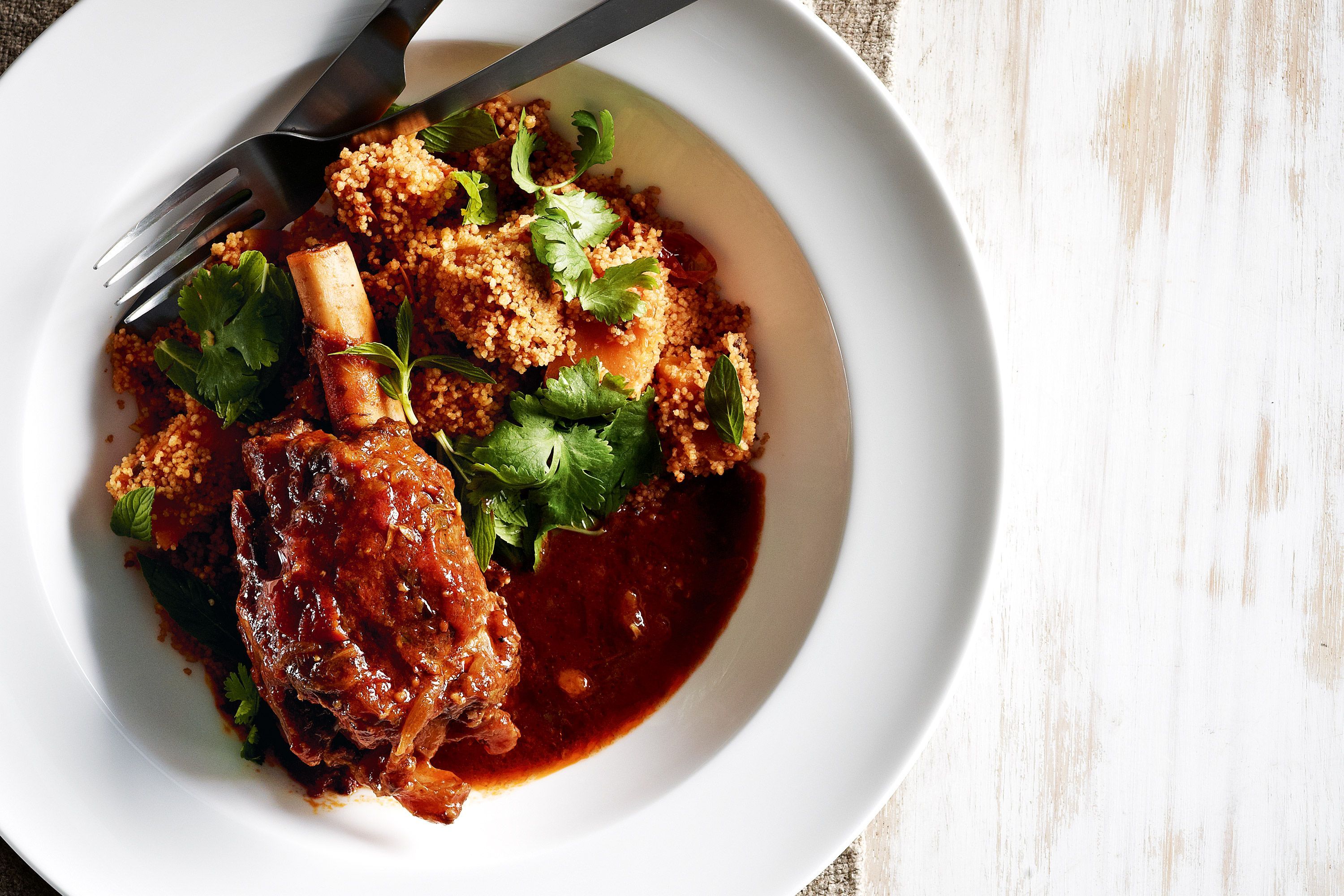
Recipe Score :
0.17
Details of the Ingredients:
- Beef: Quantité: 44.4g
Allergenicity: respiratory symptoms, and anaphylaxis
HypoAllergenic Traitement : cooking alters the reactivity of beef +freeze-drying and homogenization
Score: 0.17 - Black pepper: Quantité: 0.6g
Allergenicity: respiratory symptoms, contact dermatitis
HypoAllergenic Traitement : Eviction: the only way to manage allergens is by complete abstinence from the food
Score: 0.17 - Cumin: Quantité: 1.8g
Allergenicity: anaphylaxis, contact dermatitis
HypoAllergenic Traitement : NT
Score: 0.17 - Garlic: Quantité: 0.4g
Allergenicity: Garlic allergy is relatively rare although one case of severe symptoms has been reported after eating garlic. The individual suffered exercise induced anaphylaxis and on a subsequent occasion anaphylaxis without exercise.
HypoAllergenic Traitement : the reactivity is lowered when cooked
Score: 0.17 - Harissa: Quantité: 2.1g
Allergenicity: Allergy to bell pepper is commonly reported with respiratory symptoms rather than reactions of the mouth or skin (most commonly rhinoconjunctivitis but also asthma) which is slightly unusual. Headaches were also reported which are sometimes associated with allergic rhinitis but are otherwise rarely reported as a symptom of food allergy. Allergy to bell pepper is often associated with the celery-birch-mugwort-spice syndrome.
HypoAllergenic Traitement : the reactivity is lowered when cooked
Score: 0.17 - Mutton Liver: Quantité: 44.4g
Allergenicity: ND
HypoAllergenic Traitement : heat, homogenization and freeze-drying
Score: 0.17 - Olive Oil: Quantité: 1.2g
Allergenicity: contact dermatitis
HypoAllergenic Traitement : ND
Score: 0.17 - Red Pepper: Quantité: 0.6g
Allergenicity: contact urticaria, rhinocon junctivitis
HypoAllergenic Traitement : the reactivity is lowered when cooked
Score: 0.17 - Tomato: Quantité: 2.1g
Allergenicity: tomato allergy is associated with allergy to either latex or pollen. The symptoms reported were rather different in the two groups. The patients with no latex allergy reported mostly the oral allergy syndrome with some skin reactions such as urticaria (hives). Patients with latex allergy reported urticaria as the most common reaction but 20% suffered anaphylaxis. Allergy to tomato is also linked to allergy to potato since they are related plants.
HypoAllergenic Traitement : TT: ThermalTreatment
Score: 0.17 - Turmeric: Quantité: 1.2g
Deprecated: htmlspecialchars(): Passing null to parameter #1 ($string) of type string is deprecated in /var/www/foodallergy/public_html/page2.php on line 700
Allergenicity:
HypoAllergenic Traitement : ND
Score: 0.17
Scientifique Name of the ingredients :
- Beef: Bos taurus Linnaeus
- Black pepper: Piper nigrum L.
- Cumin: Cuminum cyminum L.
- Garlic: Allium sativum
- Harissa: Capsicum annuum
- Mutton Liver: Nom scientifique non disponible
- Olive Oil: Olea europaea
- Red Pepper: Capsicum annuum
- Tomato: Solanum lycopersicum
- Turmeric: Curcuma aromatica
Molecular Allergens of Ingredients :
- Beef: Bos d 6.0101 (UniProt: P02769) - Superfamille: Serum albumin-like
- Beef: Bos d 6 (UniProt: B0JYQ0) - Superfamille: Serum albumin-like
- Black pepper: Pip n 14kD (UniProt: Pip n - 13216)
- Black pepper: Pip n 28kD (UniProt: Pip n - 13216) - Superfamille: Germin, Germin-like Protein
- Garlic: All s Alliin lyase (UniProt: Q01594) - Superfamille: PLP-dependent transferases
- Harissa: Cap a 1.0101 (UniProt: Q9ARG0) - Superfamille: Osmotin, thaumatin-like protein
- Harissa: Cap a 2 (UniProt: Q6RG01) - Superfamille: Profilin (actin-binding protein)
- Harissa: Cap a 2.0101 (UniProt: Q93YI9) - Superfamille: Profilin (actin-binding protein)
- Harissa: Cap a 30kD (UniProt: Q42661) - Superfamille: Heme-dependent peroxidases
- Harissa: Cap a 4 (UniProt: B2CZJ6) - Superfamille: Bet v1-like
- Harissa: Cap a Glucanase (UniProt: Q9M5L5) - Superfamille: (Trans)glycosidases
- Olive Oil: Ole e 13.0101 (UniProt: E3SU11) - Superfamille: Osmotin, thaumatin-like protein
- Red Pepper: Cap a Glucanase (UniProt: Q9M5L5) - Superfamille: (Trans)glycosidases
- Red Pepper: Cap a 4 (UniProt: B2CZJ6) - Superfamille: Bet v1-like
- Red Pepper: Cap a 30kD (UniProt: Q42661) - Superfamille: Heme-dependent peroxidases
- Red Pepper: Cap a 2 (UniProt: Q6RG01) - Superfamille: Profilin (actin-binding protein)
- Red Pepper: Cap a 1.0101 (UniProt: Q9ARG0) - Superfamille: Osmotin, thaumatin-like protein
- Red Pepper: Cap a 2.0101 (UniProt: Q93YI9) - Superfamille: Profilin (actin-binding protein)
- Tomato: Sola l Vicilin (UniProt: B0JEU3) - Superfamille: RmlC-like cupins
- Tomato: Sola l TLP (UniProt: P12670) - Superfamille: Osmotin, thaumatin-like protein
- Tomato: Sola l SOD (UniProt: P14831) - Superfamille: Cu,Zn superoxide dismutase-like
- Tomato: Sola l PG (UniProt: P05117) - Superfamille: Pectin lyase-like
- Tomato: Sola l Peroxidase (UniProt: P15003) - Superfamille: Heme-dependent peroxidases
- Tomato: Sola l Glucanase (UniProt: Q01413) - Superfamille: (Trans)glycosidases
- Tomato: Sola l Chitinase (UniProt: Q05539) - Superfamille: Lysozyme-like
- Tomato: Sola l 7 (UniProt: K4AYX7) - Superfamille: Bifunctional inhibitor/lipid-transfer protein/seed storage 2S albumin
- Tomato: Sola l 5.0101 (UniProt: P21568) - Superfamille: Cyclophilin-like
- Tomato: Sola l 5 (UniProt: K4D184) - Superfamille: Cyclophilin-like
- Tomato: Sola l 4.0201 (UniProt: K4CWC4) - Superfamille: Bet v1-like
- Tomato: Sola l 4.0101 (UniProt: O49881) - Superfamille: Bet v1-like
- Tomato: Sola l 4 (UniProt: K4CWC5) - Superfamille: Bet v1-like
- Tomato: Sola l 3.0101 (UniProt: P93224) - Superfamille: Bifunctional inhibitor/lipid-transfer protein/seed storage 2S albumin
- Tomato: Sola l 3 (UniProt: P27056) - Superfamille: Bifunctional inhibitor/lipid-transfer protein/seed storage 2S albumin
- Tomato: Sola l 1.0101 (UniProt: Q93YG7) - Superfamille: Profilin (actin-binding protein)
- Tomato: Sola l 1 (UniProt: Q41344) - Superfamille: Profilin (actin-binding protein)
- Ingredients used :
- Ingredient 1 : 44.4g of Beef
- Ingredient 2 : 0.6g of Black pepper
- Ingredient 3 : 1.8g of Cumin
- Ingredient 4 : 0.4g of Garlic
- Ingredient 5 : 2.1g of Harissa
- Ingredient 6 : 44.4g of Mutton Liver
- Ingredient 7 : 1.2g of Olive Oil
- Ingredient 8 : 0.6g of Red Pepper
- Ingredient 9 : 2.1g of Tomato
- Ingredient 10 : 1.2g of Turmeric
- Steps of preparation
- Step 1 : Take a large pan and add olive oil in it.
- Step 2 : Chop the onion and add it into the pan. Cook until a brown color forms.
- Step 3 : Add the lamb pieces in the pan. Cook it for 1 minute.
- Step 4 : Add red chilli powder, cumin, turmeric, garlic powder, harissa, tomato paste.
- Step 5 : Lastly add salt and pepper.
- Step 6 : Mix them all together and cook for about 10-15 minutes so that the meat is tender.
- Step 7 : Add some water and reduce it at high heat.
- Step 8 : Once reduced take it out in a dish and add parsley leaves on it.
8 - Tunisian Lentil Soup (Tibikha)

Recipe Score :
0.17
Details of the Ingredients:
- Bay Leaf: Quantité: 0.7g
Allergenicity: perioral dermatitis, contact dermatitis, asthma
HypoAllergenic Traitement : Eviction: the only way to manage allergens is by complete abstinence from the food
Score: 0.17 - Garlic: Quantité: 0.9g
Allergenicity: Garlic allergy is relatively rare although one case of severe symptoms has been reported after eating garlic. The individual suffered exercise induced anaphylaxis and on a subsequent occasion anaphylaxis without exercise.
HypoAllergenic Traitement : the reactivity is lowered when cooked
Score: 0.17 - Lentils: Quantité: 71.4g
Allergenicity: The symptoms of allergic individuals after eating lentil range from relatively mild symptoms, such as the oral allergy syndrome, to severe symptoms requiring emergency treatment such as anaphylaxis or asthma. As for most allergenic foods, urticaria (hives) and other reactions of the skin are the most common symptoms. Allergy to lentil is associated with allergy to other legumes with allergy to chickpea and pea reported for over 50% of individuals allergic to lentil.
HypoAllergenic Traitement : The overall immunoreactivity of lentils was strongly reduced after autoclaving at 2.6 atm for 30 min
Score: 0.17 - Olive Oil: Quantité: 25.9g
Allergenicity: contact dermatitis
HypoAllergenic Traitement : ND
Score: 0.17 - Paprika: Quantité: 0.9g
Allergenicity: contact urticaria, rhinoconjunctivitis
HypoAllergenic Traitement : the reactivity is lowered when cooked
Score: 0.17 - Tomato: Quantité: 10g
Allergenicity: tomato allergy is associated with allergy to either latex or pollen. The symptoms reported were rather different in the two groups. The patients with no latex allergy reported mostly the oral allergy syndrome with some skin reactions such as urticaria (hives). Patients with latex allergy reported urticaria as the most common reaction but 20% suffered anaphylaxis. Allergy to tomato is also linked to allergy to potato since they are related plants.
HypoAllergenic Traitement : TT: ThermalTreatment
Score: 0.17
Scientifique Name of the ingredients :
- Bay Leaf: Laurus nobilis
- Garlic: Allium sativum
- Lentils: Lens culinaris
- Olive Oil: Olea europaea
- Paprika: Capsicum annuum
- Tomato: Solanum lycopersicum
Molecular Allergens of Ingredients :
- Bay Leaf: Lau no (UniProt: 85223)
- Garlic: All s Alliin lyase (UniProt: Q01594) - Superfamille: PLP-dependent transferases
- Lentils: Len c 1.0101 (UniProt: Q84UI1) - Superfamille: RmlC-like cupins
- Lentils: Len c 1.0102 (UniProt: Q84UI0) - Superfamille: RmlC-like cupins
- Lentils: Len c 3 (UniProt: A0AT28) - Superfamille: Bifunctional inhibitor/lipid-transfer protein/seed storage 2S albumin
- Lentils: Len c 3.0101 (UniProt: A0AT29) - Superfamille: Bifunctional inhibitor/lipid-transfer protein/seed storage 2S albumin
- Lentils: Len c Agglutinin (UniProt: P02870) - Superfamille: Concanavalin A-like lectins/glucanases
- Olive Oil: Ole e 13.0101 (UniProt: E3SU11) - Superfamille: Osmotin, thaumatin-like protein
- Paprika: Cap a 30kD (UniProt: Q42661) - Superfamille: Heme-dependent peroxidases
- Paprika: Cap a Glucanase (UniProt: Q9M5L5) - Superfamille: (Trans)glycosidases
- Paprika: Cap a 4 (UniProt: B2CZJ6) - Superfamille: Bet v1-like
- Paprika: Cap a 2.0101 (UniProt: Q93YI9) - Superfamille: Profilin (actin-binding protein)
- Paprika: Cap a 2 (UniProt: Q6RG01) - Superfamille: Profilin (actin-binding protein)
- Paprika: Cap a 1.0101 (UniProt: Q9ARG0) - Superfamille: Osmotin, thaumatin-like protein
- Tomato: Sola l Vicilin (UniProt: B0JEU3) - Superfamille: RmlC-like cupins
- Tomato: Sola l TLP (UniProt: P12670) - Superfamille: Osmotin, thaumatin-like protein
- Tomato: Sola l SOD (UniProt: P14831) - Superfamille: Cu,Zn superoxide dismutase-like
- Tomato: Sola l PG (UniProt: P05117) - Superfamille: Pectin lyase-like
- Tomato: Sola l Peroxidase (UniProt: P15003) - Superfamille: Heme-dependent peroxidases
- Tomato: Sola l Glucanase (UniProt: Q01413) - Superfamille: (Trans)glycosidases
- Tomato: Sola l Chitinase (UniProt: Q05539) - Superfamille: Lysozyme-like
- Tomato: Sola l 7 (UniProt: K4AYX7) - Superfamille: Bifunctional inhibitor/lipid-transfer protein/seed storage 2S albumin
- Tomato: Sola l 5.0101 (UniProt: P21568) - Superfamille: Cyclophilin-like
- Tomato: Sola l 5 (UniProt: K4D184) - Superfamille: Cyclophilin-like
- Tomato: Sola l 4.0201 (UniProt: K4CWC4) - Superfamille: Bet v1-like
- Tomato: Sola l 4.0101 (UniProt: O49881) - Superfamille: Bet v1-like
- Tomato: Sola l 4 (UniProt: K4CWC5) - Superfamille: Bet v1-like
- Tomato: Sola l 3.0101 (UniProt: P93224) - Superfamille: Bifunctional inhibitor/lipid-transfer protein/seed storage 2S albumin
- Tomato: Sola l 3 (UniProt: P27056) - Superfamille: Bifunctional inhibitor/lipid-transfer protein/seed storage 2S albumin
- Tomato: Sola l 1.0101 (UniProt: Q93YG7) - Superfamille: Profilin (actin-binding protein)
- Tomato: Sola l 1 (UniProt: Q41344) - Superfamille: Profilin (actin-binding protein)
- Ingredients used :
- Ingredient 1 : 0.7g of Bay Leaf
- Ingredient 2 : 0.9g of Garlic
- Ingredient 3 : 71.4g of Lentils
- Ingredient 4 : 25.9g of Olive Oil
- Ingredient 5 : 0.9g of Paprika
- Ingredient 6 : 10g of Tomato
- Steps of preparation
- Step 1 : Wash, peel, and chop the garlic.
- Step 2 : Place a pot over medium heat. Once heated, add the oil, spread, and add the ribs with the garlic.
- Step 3 : Add a pinch of salt and cook for 5 minutes until both sides of the ribs are golden brown.
- Step 4 : Next, add the broth to the pot and all the remaining ingredients.
- Step 5 : Bring to a boil. Once bubbling, lower the heat, cover, and cook for 40 minutes.
- Step 6 : Serve hot.
France Recipes
1 - Basque cake
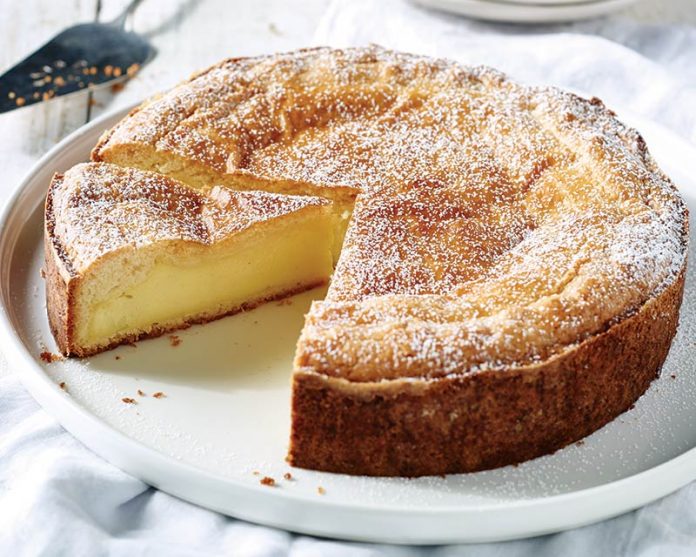
Recipe Score :
0.41
Details of the Ingredients:
- Almonds: Quantité: 4.4g
Allergenicity: severe anaphylaxis
HypoAllergenic Traitement : Eviction: the only way to manage allergens is by complete abstinence from the food
Score: 0.17 - Egg: Quantité: 5g
Allergenicity: Eggs from birds contain several proteins capable of inducing an immune response in man most of these are present in the egg white. Allergenic proteins in the yolk only contribute to a minor degree and isolated allergy to egg yolk proteins are rare (see cross reactions). Most of the allergenic proteins present in the egg white are both heat- and digestion resistant and may also be found in the house dust in normal households. Although not thoroughly investigated, sensitization is believed to take place by ingestion of egg proteins in the diet even the minute quantities present in human milk can sensitize the infant in some cases, where a reaction is elicited the very first time the infant eats a meal containing egg. Ingestion of egg will in sensitized individuals elicit an immediate allergic reaction starting with itching of the mouth and pharynx, followed by nettle rash (urticaria), vomiting, rhinoconjunctivitis, asthma and in rare cases anaphylaxis. Exacerbation of atopic eczema may be seen also, but isolated reactions taking place hours to days after intake, without a previous immediate reaction, are rare.
HypoAllergenic Traitement : gastric enzyme supplementation/ Dry heating with mannose, heating for 15 minutes at 95 °C
Score: 0.87 - Milk: Quantité: 39.9g
Allergenicity: Systemic reactions: anaphylaxis, exercise induced anaphylaxis (including fatal reactions). Cutaneous symptoms: angioedema, atopic dermatitis, contact urticaria, dermatitis, eczema, erythema, exanthema, lips oedema, pruritus, redness, swelling of eyelids, urticaria, chronic urticaria. Gastrointestinal symptoms: abdominal cramps, abdominal distention, abdominal pain, colic, infantile colic syndrome, colitis, constipation, chronic constipation, diarrhoea, chronic diarrhoea, eosinophilic colitis, eosinophilic gastroenteritis, gastroenteritis, gastro- oesophageal reflux, morphologic lesion, nausea, proctitis, progressive small bowel mucosal damage, occult intestinal bleeding, oropharyngeal itching / swelling, oropharyngeal pruritus, oedema of tongue, acute pancreatitis, loose stools, vomiting as well as general gastrointestinal symptoms. Food protein-induced enterocolitis syndrome was also listed but probably does not involve specific IgE to cow's milk. Respiratory symptoms: allergic alveolitis, asthma, bronchospasm, bronchitis, conjunctivitis, coughing, dyspnoea, nasal blockade, allergic rhinitis, rhinitis, rhinoconjunctivitis, serous rhinorrea, sneezing and wheeze.
HypoAllergenic Traitement : heat, homogenization and freeze-drying
Score: 0.87 - Plain four/ weat: Quantité: 18.4g
Allergenicity: Adverse reactions to wheat have been more frequently reported than to other cereal-based foods. The best defined of these are coeliac disease and IgE-dependent wheat allergy, both of which result from malfunctioning of the immune system. Allergies to other cereals such as maize, sorghum and millet, are not common and are not related to reactions triggered by wheat, rye, barley and oats. As a consequence individuals with wheat allergy, including coeliac disease, can usually eat maize-based foods such as polenta. However, allergic reactions to maize can result from the fruit allergies found in the South of Europe which often start with reactions to peach. Coeliac disease is triggered by the gluten fraction of wheat or by the gluten-like proteins found in other closely related cereals such as rye, barley. Some sensitive individuals may also react to oats. The gut reacts to the gluten and becomes smooth, loosing its ability to absorb nutrients; symptoms including diarrhoea as well as deficiencies in nutrients like vitamins. It can manifest itself in childhood, affecting childrens growth and development, or in adult hood. As there is no cure individuals with coeliac disease have to avoid eating gluten for life. However, coeliac disease does not cause the potentially fatal reaction of anaphylaxis if gluten is accidentally eaten. In contrast IgE-mediated cereal allergies can be caused by the antibody molecule IgE binding to many proteins, not just gluten. Sometimes the reactions (often severe) only develop if an individual takes exercise within a few hours of eating wheat or related cereals, in a condition called exercise-induced anaphylaxis. Individuals with wheat allergy often react to closely related cereals like barley and rye, less frequently to the more distant relative, oats. Diagnosis of cereal allergies can be complicated by the fact that some of the blood tests for cereal food allergy can accidentally detect allergy to grass pollens instead. As a consequence of these adverse reactions, cereals containing gluten, (i.e. wheat, rye, barley, oats, spelt or their hybridized strains) have been included in Annex IIIa of the food labelling directive along with derived products. Temporary exceptions to the labelling rule (derogations) have been granted for wheat based glucose syrups including dextrose, wheat based maltodextrins, glucose syrups based on barley and cereals used in distillates for spirits.
HypoAllergenic Traitement : Yusing young cereal grains
Score: 0.48
Scientifique Name of the ingredients :
- Almonds: Prunus dulcis
- Egg: Gallus gallus
- Milk: Bos taurus
- Plain four/ weat: Triticum aestivum
Molecular Allergens of Ingredients :
- Almonds: Pru du 3.0101 (UniProt: C0L0I5) - Superfamille: Bifunctional inhibitor/lipid-transfer protein/seed storage 2S albumin
- Almonds: Pru du 4.0101 (UniProt: Q8GSL5) - Superfamille: Profilin (actin-binding protein)
- Almonds: Pru du 6 (UniProt: Q43607) - Superfamille: RmlC-like cupins
- Almonds: Pru du 6.0101 (UniProt: E3SH28) - Superfamille: RmlC-like cupins
- Almonds: Pru du 6.0201 (UniProt: E3SH29) - Superfamille: RmlC-like cupins
- Almonds: Pru du Conglutin (UniProt: P82952) - Superfamille: Acid proteases
- Almonds: Pru du 3 (UniProt: Q43017) - Superfamille: Bifunctional inhibitor/lipid-transfer protein/seed storage 2S albumin
- Egg: Gal d 2.0101 (UniProt: P01012) - Superfamille: Serpins
- Egg: Gal d L-PGDS (UniProt: Q8QFM7) - Superfamille: Lipocalins
- Egg: Gal d 3 (UniProt: Q4ADG4) - Superfamille: Periplasmic binding protein-like II
- Egg: Gal d 6.0101 (UniProt: P87498) - Superfamille: Lipovitellin-phosvitin complex, superhelical domain
- Egg: Gal d Phosvitin (UniProt: P67869) - Superfamille: Casein kinase II beta subunit
- Egg: Gal d 5.0101 (UniProt: P19121) - Superfamille: Serum albumin-like
- Egg: Gal d OIH (UniProt: P10184) - Superfamille: Kazal-type serine protease inhibitors
- Egg: Gal d 3.0101 (UniProt: P02789) - Superfamille: Periplasmic binding protein-like II
- Egg: Gal d 1.0101 (UniProt: P01005) - Superfamille: Kazal-type serine protease inhibitors
- Egg: Gal d 4.0101 (UniProt: P00698) - Superfamille: Lysozyme-like
- Egg: Gal d 1 (UniProt: B6V1G0) - Superfamille: Kazal-type serine protease inhibitors
- Milk: Bos d 5.0102 (UniProt: B5B0D4) - Superfamille: Lipocalins
- Milk: Bos d LF (UniProt: P24627) - Superfamille: Periplasmic binding protein-like II
- Milk: Bos d Lactoperoxidase (UniProt: P80025) - Superfamille: Heme-dependent peroxidases
- Milk: Bos d 5 (UniProt: O77777) - Superfamille: Lipocalins
- Milk: Bos d 4.0101 (UniProt: P00711) - Superfamille: Lysozyme-like
- Milk: Bos d 4 (UniProt: A1YQB2) - Superfamille: Lysozyme-like
- Milk: Bos d 5.0101 (UniProt: P02754) - Superfamille: Lipocalins
- Plain four/ weat: Tri a Chitinase (UniProt: Q8W429) - Superfamille: Lysozyme-like
- Plain four/ weat: Tri a 36.0101 (UniProt: B2Y2Q7) - Superfamille: Bifunctional inhibitor/lipid-transfer protein/seed storage 2S albumin
- Plain four/ weat: Tri a 37 (UniProt: P32032) - Superfamille: Crambin-like
- Plain four/ weat: Tri a 37.0101 (UniProt: Q9T0P1) - Superfamille: Crambin-like
- Plain four/ weat: Tri a 41.0101 (UniProt: A0A0G3F2P1) - Superfamille: RING/U-box
- Plain four/ weat: Tri a 44 (UniProt: B2C4K0) - Superfamille: Bifunctional inhibitor/lipid-transfer protein/seed storage 2S albumin
- Plain four/ weat: Tri a 44.0101 (UniProt: A0A0G3F720) - Superfamille: Bifunctional inhibitor/lipid-transfer protein/seed storage 2S albumin
- Plain four/ weat: Tri a 45 (UniProt: W5HIH8) - Superfamille: Zinc beta-ribbon
- Plain four/ weat: Tri a 45.0101 (UniProt: A0A0G3F715) - Superfamille: Zinc beta-ribbon
- Plain four/ weat: Tri a 7kLTP (UniProt: P82900) - Superfamille: Bifunctional inhibitor/lipid-transfer protein/seed storage 2S albumin
- Plain four/ weat: Tri a aA_SI (UniProt: P16347) - Superfamille: STI-like
- Plain four/ weat: Tri a alpha_Gliadin (UniProt: Q1WA40) - Superfamille: Bifunctional inhibitor/lipid-transfer protein/seed storage 2S albumin
- Plain four/ weat: Tri a CMX (UniProt: Q43691) - Superfamille: Bifunctional inhibitor/lipid-transfer protein/seed storage 2S albumin
- Plain four/ weat: Tri a GBSS_I (UniProt: P27736) - Superfamille: UDP-Glycosyltransferase/glycogen phosphorylase
- Plain four/ weat: Tri a Peroxidase (UniProt: Q05855) - Superfamille: Heme-dependent peroxidases
- Plain four/ weat: Tri a Peroxidase 1 (UniProt: Q8LK23) - Superfamille: Heme-dependent peroxidases
- Plain four/ weat: Tri a TLP (UniProt: P27357) - Superfamille: Osmotin, thaumatin-like protein
- Plain four/ weat: Tri a Tritin (UniProt: Q07810) - Superfamille: Ribosome inactivating proteins (RIP)
- Plain four/ weat: Tri a XI (UniProt: Q8L5C6) - Superfamille: (Trans)glycosidases
- Plain four/ weat: Tri a 25.0101 (UniProt: Q9LDX4) - Superfamille: Thioredoxin-like
- Plain four/ weat: Tri a 10kD (UniProt: Q4W1F9) - Superfamille: Bifunctional inhibitor/lipid-transfer protein/seed storage 2S albumin
- Plain four/ weat: Tri a 12 (UniProt: P49233) - Superfamille: Profilin (actin-binding protein)
- Plain four/ weat: Tri a 14 (UniProt: P24296) - Superfamille: Bifunctional inhibitor/lipid-transfer protein/seed storage 2S albumin
- Plain four/ weat: Tri a 17.0101 (UniProt: P93594) - Superfamille: (Trans)glycosidases
- Plain four/ weat: Tri a 18 (UniProt: P10969) - Superfamille: Plant lectins/antimicrobial peptides
- Plain four/ weat: Tri a 18.0101 (UniProt: P10968) - Superfamille: Plant lectins/antimicrobial peptides
- Plain four/ weat: Tri a 20 (UniProt: P21292) - Superfamille: Bifunctional inhibitor/lipid-transfer protein/seed storage 2S albumin
- Plain four/ weat: Tri a 20.0101 (UniProt: A0A060N479) - Superfamille: Bifunctional inhibitor/lipid-transfer protein/seed storage 2S albumin
- Plain four/ weat: Tri a 23kD (UniProt: Q4W1G0) - Superfamille: L domain-like
- Plain four/ weat: Tri a 36 (UniProt: P10385) - Superfamille: Bifunctional inhibitor/lipid-transfer protein/seed storage 2S albumin
- Plain four/ weat: Tri a 26 (UniProt: P08489) - Superfamille: Bifunctional inhibitor/lipid-transfer protein/seed storage 2S albumin
- Plain four/ weat: Tri a 26.0101 (UniProt: P10388) - Superfamille: Bifunctional inhibitor/lipid-transfer protein/seed storage 2S albumin
- Plain four/ weat: Tri a 26.0201 (UniProt: Q45R38) - Superfamille: Bifunctional inhibitor/lipid-transfer protein/seed storage 2S albumin
- Plain four/ weat: Tri a 28 (UniProt: P01085) - Superfamille: Bifunctional inhibitor/lipid-transfer protein/seed storage 2S albumin
- Plain four/ weat: Tri a 28.0101 (UniProt: Q4W0V7) - Superfamille: Bifunctional inhibitor/lipid-transfer protein/seed storage 2S albumin
- Plain four/ weat: Tri a 30 (UniProt: Q53YX8) - Superfamille: Bifunctional inhibitor/lipid-transfer protein/seed storage 2S albumin
- Plain four/ weat: Tri a 30.0101 (UniProt: P17314) - Superfamille: Bifunctional inhibitor/lipid-transfer protein/seed storage 2S albumin
- Plain four/ weat: Tri a 33 (UniProt: P93692) - Superfamille: Serpins
- Plain four/ weat: Tri a 33.0101 (UniProt: Q9ST57) - Superfamille: Serpins
- Ingredients used :
- Ingredient 1 : 4.4g of Almonds
- Ingredient 2 : 5g of Egg
- Ingredient 3 : 39.9g of Milk
- Ingredient 4 : 18.4g of Plain four/ weat
- Steps of preparation
- Step 1 : Mix the flour, almond powder and lemon zest together in a bowl and make a well in the centre;
- Step 2 : Add half a beaten egg, the softened butter and vanilla essence and mix to form a dough;
- Step 3 : Divide the dough into 2 pieces, wrap in clingfilm and refrigerate for at least 30 minutes;
- Step 4 : Whisk the egg yolks and sugar together until they appear pale. Sift in the flour and almond powder and mix. Heat the milk and scrape the seeds from the vanilla pod and add to the milk and bring to the boil;
- Step 5 : Pour over the egg and flour mix, stirring all the time to avoid lumps. Pour the mix through a strainer if you used a vanilla pod, if not add the vanilla essence. Add the rum and pour the mix back into the saucepan and cook over a gentle heat to bring to the boil, keep stirring the whole time until it's thick and smooth. 2-4 minutes;
- Step 6 : Leave the mix to cool. Roll your pastry out to fit a small tart tin lined with grease proof paper. Spoon the jam over the base and spread evenly. Pour the pastry cream over the top. Roll the second lot of pastry to create a "lid", place over the pastry cream. Score the top with a sharp knife and brush with beaten egg (left over from the pastry). Bake at gas mark 4/180ºC/350F for 40 minutes until golden brown. Leave to cool, it's delicious warm or cold.
2 - Boles de Picolat
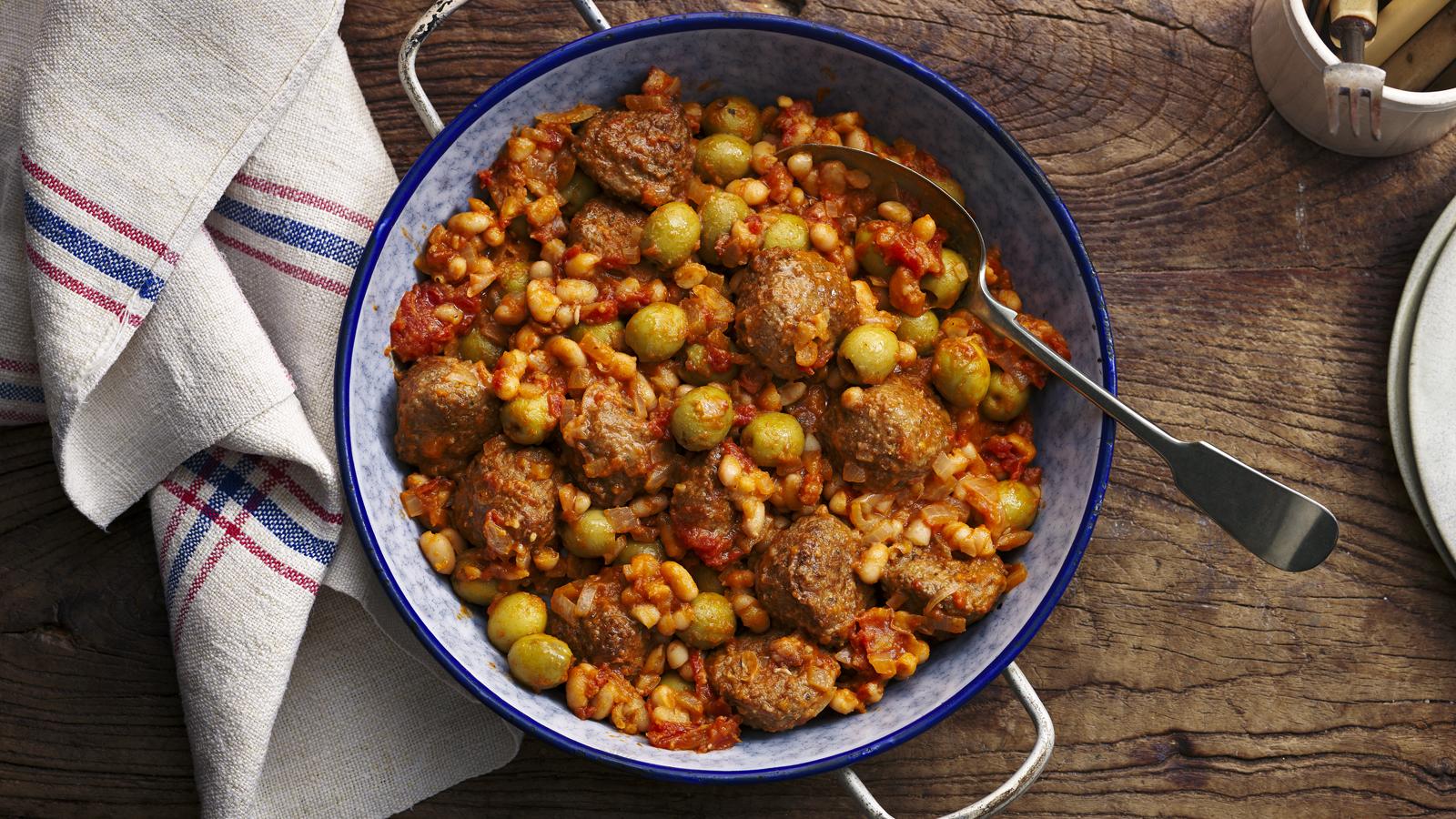
Recipe Score :
0.24
Details of the Ingredients:
- Beans: Quantité: 1000g
Allergenicity: nasobronchial and allergic rhinitis
HypoAllergenic Traitement : Cooking at 100 °C for 30 min could completely inactivate the hemagglutinin activity of lectins
Score: 0.17 - Beef: Quantité: 400g
Allergenicity: respiratory symptoms, and anaphylaxis
HypoAllergenic Traitement : cooking alters the reactivity of beef +freeze-drying and homogenization
Score: 0.17 - Black pepper: Quantité: 1g
Allergenicity: respiratory symptoms, contact dermatitis
HypoAllergenic Traitement : Eviction: the only way to manage allergens is by complete abstinence from the food
Score: 0.17 - Egg: Quantité: 120g
Allergenicity: Eggs from birds contain several proteins capable of inducing an immune response in man most of these are present in the egg white. Allergenic proteins in the yolk only contribute to a minor degree and isolated allergy to egg yolk proteins are rare (see cross reactions). Most of the allergenic proteins present in the egg white are both heat- and digestion resistant and may also be found in the house dust in normal households. Although not thoroughly investigated, sensitization is believed to take place by ingestion of egg proteins in the diet even the minute quantities present in human milk can sensitize the infant in some cases, where a reaction is elicited the very first time the infant eats a meal containing egg. Ingestion of egg will in sensitized individuals elicit an immediate allergic reaction starting with itching of the mouth and pharynx, followed by nettle rash (urticaria), vomiting, rhinoconjunctivitis, asthma and in rare cases anaphylaxis. Exacerbation of atopic eczema may be seen also, but isolated reactions taking place hours to days after intake, without a previous immediate reaction, are rare.
HypoAllergenic Traitement : gastric enzyme supplementation/ Dry heating with mannose, heating for 15 minutes at 95 °C
Score: 0.87 - Garlic: Quantité: 1g
Allergenicity: Garlic allergy is relatively rare although one case of severe symptoms has been reported after eating garlic. The individual suffered exercise induced anaphylaxis and on a subsequent occasion anaphylaxis without exercise.
HypoAllergenic Traitement : the reactivity is lowered when cooked
Score: 0.17 - Onion: Quantité: 600g
Allergenicity: contact allergy, anaphylaxis, asthma, rhinoconjunctivitis
HypoAllergenic Traitement : the reactivity is lowered when cooked
Score: 0.17 - Parsley: Quantité: 1g
Allergenicity: angioedema, urticaria
HypoAllergenic Traitement : the reactivity is lowered when cooked
Score: 0.17 - Potato: Quantité: 6g
Allergenicity: Potato is considered a rarely allergenic food and is frequently used in elimination diets and as part of the placebo in challenge protocols. However, many cases of food allergy after eating cooked potato have been reported and skin prick tests suggest that sensitization to raw potato is relatively common. Cases of contact allergy to raw potatoes have also been reported. The symptoms reported include reactions of the skin such as urticaria (hives), angioedema (wheals) and eczema, respiratory symptoms such as rhinitis, cough and wheezing and gastrointestinal symptoms such as vomiting and diarrhoea. Most reactions occurred within 2 hours (immediate reactions) but delayed reactions have also been reported. Allergy to cooked potato is related to tomato allergy and to latex allergy. Sensitization to raw potato may also be related to pollen allergies.
HypoAllergenic Traitement : the reactivity is lowered when cooked
Score: 0.17 - Tomato: Quantité: 5g
Allergenicity: tomato allergy is associated with allergy to either latex or pollen. The symptoms reported were rather different in the two groups. The patients with no latex allergy reported mostly the oral allergy syndrome with some skin reactions such as urticaria (hives). Patients with latex allergy reported urticaria as the most common reaction but 20% suffered anaphylaxis. Allergy to tomato is also linked to allergy to potato since they are related plants.
HypoAllergenic Traitement : TT: ThermalTreatment
Score: 0.17
Scientifique Name of the ingredients :
- Beans: Phaseolus vulgaris
- Beef: Bos taurus Linnaeus
- Black pepper: Piper nigrum L.
- Egg: Gallus gallus
- Garlic: Allium sativum
- Onion: Allium cepa var. aggregatum
- Parsley: Petroselinum crispum
- Potato: Solanum tuberosum
- Tomato: Solanum lycopersicum
Molecular Allergens of Ingredients :
- Beans: Pha v 3.0201 (UniProt: D3W147) - Superfamille: Bifunctional inhibitor/lipid-transfer protein/seed storage 2S albumin
- Beans: Pha v 5 (UniProt: P49231) - Superfamille: Profilin (actin-binding protein)
- Beans: Pha v 6 (UniProt: P25985) - Superfamille: Bet v1-like
- Beans: Pha v aAI.0101 (UniProt: P02873) - Superfamille: Concanavalin A-like lectins/glucanases
- Beans: Pha v PHA (UniProt: P05088) - Superfamille: Concanavalin A-like lectins/glucanases
- Beans: Pha v Phaseolin (UniProt: P02853) - Superfamille: RmlC-like cupins
- Beans: Pha v 3.0101 (UniProt: D3W146) - Superfamille: Bifunctional inhibitor/lipid-transfer protein/seed storage 2S albumin
- Beef: Bos d 6.0101 (UniProt: P02769) - Superfamille: Serum albumin-like
- Beef: Bos d 6 (UniProt: B0JYQ0) - Superfamille: Serum albumin-like
- Black pepper: Pip n 14kD (UniProt: Pip n - 13216)
- Black pepper: Pip n 28kD (UniProt: Pip n - 13216) - Superfamille: Germin, Germin-like Protein
- Egg: Gal d OIH (UniProt: P10184) - Superfamille: Kazal-type serine protease inhibitors
- Egg: Gal d L-PGDS (UniProt: Q8QFM7) - Superfamille: Lipocalins
- Egg: Gal d 3 (UniProt: Q4ADG4) - Superfamille: Periplasmic binding protein-like II
- Egg: Gal d 6.0101 (UniProt: P87498) - Superfamille: Lipovitellin-phosvitin complex, superhelical domain
- Egg: Gal d Phosvitin (UniProt: P67869) - Superfamille: Casein kinase II beta subunit
- Egg: Gal d 5.0101 (UniProt: P19121) - Superfamille: Serum albumin-like
- Egg: Gal d 3.0101 (UniProt: P02789) - Superfamille: Periplasmic binding protein-like II
- Egg: Gal d 2.0101 (UniProt: P01012) - Superfamille: Serpins
- Egg: Gal d 1.0101 (UniProt: P01005) - Superfamille: Kazal-type serine protease inhibitors
- Egg: Gal d 4.0101 (UniProt: P00698) - Superfamille: Lysozyme-like
- Egg: Gal d 1 (UniProt: B6V1G0) - Superfamille: Kazal-type serine protease inhibitors
- Garlic: All s Alliin lyase (UniProt: Q01594) - Superfamille: PLP-dependent transferases
- Onion: All a Alliin lyase (UniProt: P31756) - Superfamille: PLP-dependent transferases
- Onion: All c Alliin lyase (UniProt: P31757) - Superfamille: PLP-dependent transferases
- Parsley: Pet c 1 (UniProt: P19417) - Superfamille: Bet v1-like
- Parsley: Pet c 2 (UniProt: Q5EEP5) - Superfamille: Profilin (actin-binding protein)
- Potato: Sola t 1 (UniProt: P07745)
- Potato: Sola t Glucanase (UniProt: P52401) - Superfamille: (Trans)glycosidases
- Potato: Sola t 8 (UniProt: M1BLC8) - Superfamille: Profilin (actin-binding protein)
- Potato: Sola t 7k (UniProt: M1CHX3) - Superfamille: Bifunctional inhibitor/lipid-transfer protein/seed storage 2S albumin
- Potato: Sola t 4.0101 (UniProt: P30941) - Superfamille: STI-like
- Potato: Sola t 3.0101 (UniProt: O24383) - Superfamille: STI-like
- Potato: Sola t 3 (UniProt: Q6PMR6) - Superfamille: STI-like
- Potato: Sola t 2.0101 (UniProt: P16348) - Superfamille: STI-like
- Potato: Sola t 1.0101 (UniProt: P15476)
- Potato: Sola t 3.0102 (UniProt: P20347) - Superfamille: STI-like
- Tomato: Sola l Vicilin (UniProt: B0JEU3) - Superfamille: RmlC-like cupins
- Tomato: Sola l TLP (UniProt: P12670) - Superfamille: Osmotin, thaumatin-like protein
- Tomato: Sola l SOD (UniProt: P14831) - Superfamille: Cu,Zn superoxide dismutase-like
- Tomato: Sola l PG (UniProt: P05117) - Superfamille: Pectin lyase-like
- Tomato: Sola l Peroxidase (UniProt: P15003) - Superfamille: Heme-dependent peroxidases
- Tomato: Sola l Glucanase (UniProt: Q01413) - Superfamille: (Trans)glycosidases
- Tomato: Sola l Chitinase (UniProt: Q05539) - Superfamille: Lysozyme-like
- Tomato: Sola l 7 (UniProt: K4AYX7) - Superfamille: Bifunctional inhibitor/lipid-transfer protein/seed storage 2S albumin
- Tomato: Sola l 5.0101 (UniProt: P21568) - Superfamille: Cyclophilin-like
- Tomato: Sola l 5 (UniProt: K4D184) - Superfamille: Cyclophilin-like
- Tomato: Sola l 4.0201 (UniProt: K4CWC4) - Superfamille: Bet v1-like
- Tomato: Sola l 4.0101 (UniProt: O49881) - Superfamille: Bet v1-like
- Tomato: Sola l 4 (UniProt: K4CWC5) - Superfamille: Bet v1-like
- Tomato: Sola l 3.0101 (UniProt: P93224) - Superfamille: Bifunctional inhibitor/lipid-transfer protein/seed storage 2S albumin
- Tomato: Sola l 3 (UniProt: P27056) - Superfamille: Bifunctional inhibitor/lipid-transfer protein/seed storage 2S albumin
- Tomato: Sola l 1.0101 (UniProt: Q93YG7) - Superfamille: Profilin (actin-binding protein)
- Tomato: Sola l 1 (UniProt: Q41344) - Superfamille: Profilin (actin-binding protein)
- Ingredients used :
- Ingredient 1 : 1000g of Beans
- Ingredient 2 : 400g of Beef
- Ingredient 3 : 1g of Black pepper
- Ingredient 4 : 120g of Egg
- Ingredient 5 : 1g of Garlic
- Ingredient 6 : 600g of Onion
- Ingredient 7 : 1g of Parsley
- Ingredient 8 : 6g of Potato
- Ingredient 9 : 5g of Tomato
- Steps of preparation
- Step 1 : Soak the white beans the day before;
- Step 2 : Soak the porcini mushrooms in a bowl of warm milk. When they have softened, remove them and soak the dry bread in the same milk;
- Step 3 : In a bowl, mix (with your hands) the minced meats, drained breadcrumbs, eggs, 3 tablespoons of a mixture of minced garlic and parsley (in equal proportions), then season with salt and pepper (don't be stingy on the pepper);
- Step 4 : Shape the filling into balls, as round as possible, about 5 or 6 cm in diameter. You can form the 'boles' (balls) with slightly wet hands, to avoid flouring them;
- Step 5 : Flour them (or not) and fry them one after the other in a casserole dish. Turn to cook on all sides. As soon as the 'boles' have taken on a nice reddish color, set them aside. They should be brown and cooked on the surface;
- Step 6 : In a large casserole or Dutch oven, brown the 3 sliced onions in the oil. Stir. Add peeled, seeded and 4-cut tomatoes (or tomato pulp). Reduce the mixture to melt and thicken. If the onion is not sufficiently browned and the tomato not sufficiently melted, the result will be completely different;
- Step 7 : Add the boles, porcini mushrooms, 2 or 3 chopped carrots, salt and pepper, then moisten with water. The liquid should largely cover the boles. After 20 to 25 minutes, remove the boles and add the beans. Leave to cook slowly;
- Step 8 : When almost cooked, add the boles, then the green olives, rinsed and boiled for 2 minutes. Add a few potatoes, peeled and cut into 4. Keep an eye on the cooking. There should be enough juice in the pan for the beans to cook without sticking. This dish needs to be fairly spicy, and you'll need to be a little heavy-handed with the pepper.
3 - Bouillabaisse
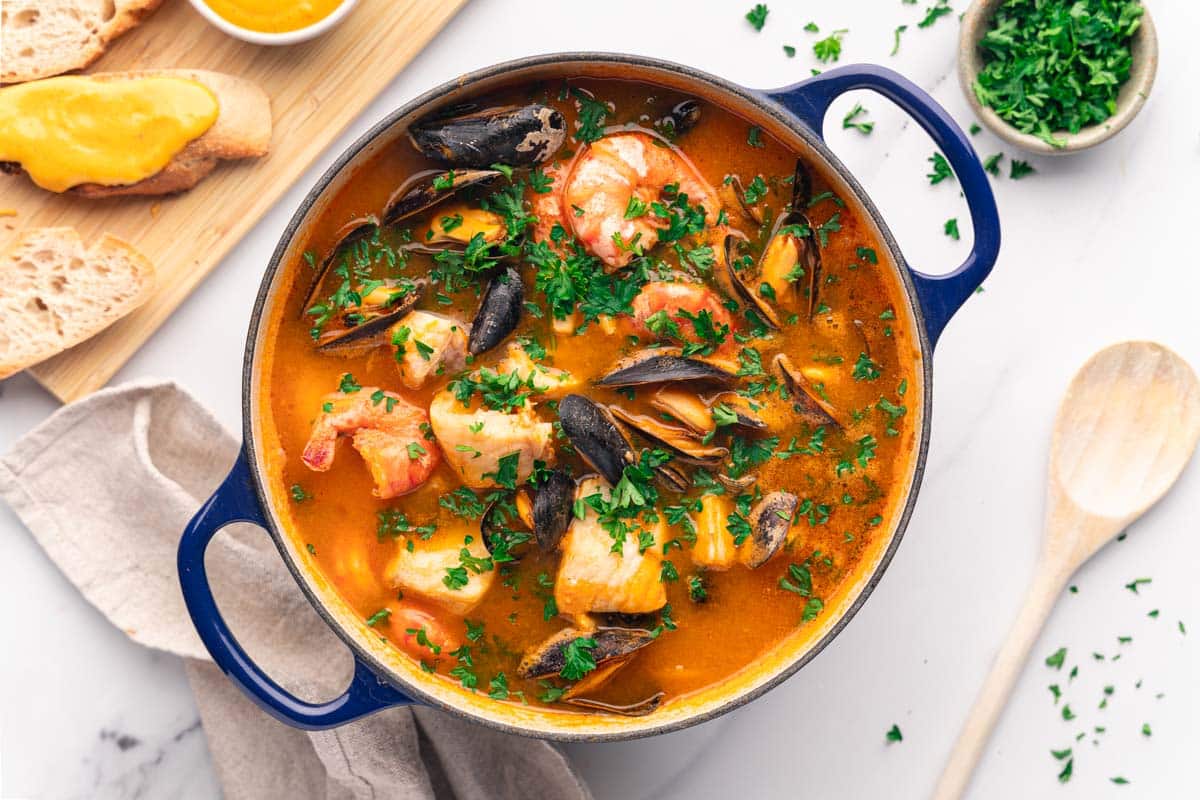
Recipe Score :
0.31
Details of the Ingredients:
- Black pepper:
Allergenicity: respiratory symptoms, contact dermatitis
HypoAllergenic Traitement : Eviction: the only way to manage allergens is by complete abstinence from the food
Score: 0.17 - Cayenne pepper: Quantité: 1g
Allergenicity: respiratory symptoms rather than reactions of the mouth or skin (most commonly rhinoconjunctivitis but also asthma) which is slightly unusual.; Headaches were also reported which are sometimes associated with allergic rhinitis but are otherwise rarely reported as a symptom of food allergy.; Allergy to bell pepper is often associated with the celery-birch-mugwort-spice syndrome.
HypoAllergenic Traitement : the reactivity is lowered when cooked
Score: 0.17 - Celery: Quantité: 33g
Allergenicity: Allergy to celery is associated with allergy to birch pollen and also allergy to mugwort pollen. The most common symptom is oral allergy syndrome as for several other pollen related food allergies. However, serious reactions to celery such as anaphylaxis have been reported. Raw celery, cooked celery and celery spice have all caused reactions although some individuals may not react to cooked celery. Thus celery and products thereof are listed in annex IIIa of the EU directive on labelling of pre-packaged foods.
HypoAllergenic Traitement : HPP: High-PressureProcessing
Score: 0.50 - Egg: Quantité: 1g
Allergenicity: Eggs from birds contain several proteins capable of inducing an immune response in man most of these are present in the egg white. Allergenic proteins in the yolk only contribute to a minor degree and isolated allergy to egg yolk proteins are rare (see cross reactions). Most of the allergenic proteins present in the egg white are both heat- and digestion resistant and may also be found in the house dust in normal households. Although not thoroughly investigated, sensitization is believed to take place by ingestion of egg proteins in the diet even the minute quantities present in human milk can sensitize the infant in some cases, where a reaction is elicited the very first time the infant eats a meal containing egg. Ingestion of egg will in sensitized individuals elicit an immediate allergic reaction starting with itching of the mouth and pharynx, followed by nettle rash (urticaria), vomiting, rhinoconjunctivitis, asthma and in rare cases anaphylaxis. Exacerbation of atopic eczema may be seen also, but isolated reactions taking place hours to days after intake, without a previous immediate reaction, are rare.
HypoAllergenic Traitement : gastric enzyme supplementation/ Dry heating with mannose, heating for 15 minutes at 95 °C
Score: 0.87 - Fennel: Quantité: 200g
Allergenicity: rhinoconjunctivits, asthma, atopic dermatitis
HypoAllergenic Traitement : the reactivity is lowered when cooked
Score: 0.17 - Garlic: Quantité: 1g
Allergenicity: Garlic allergy is relatively rare although one case of severe symptoms has been reported after eating garlic. The individual suffered exercise induced anaphylaxis and on a subsequent occasion anaphylaxis without exercise.
HypoAllergenic Traitement : the reactivity is lowered when cooked
Score: 0.17 - Lobster: Quantité: 1.5g
Allergenicity: IgE-mediated allergic reaction to seafood is a common cause of food allergy including anaphylactic reactions. Parvalbumin, the major fish allergen, has been shown to display IgE cross-reactivity among fish species consumed predominantly in Europe and the Far East. However, cross-reactivity studies of parvalbumin from fish species widely consumed in the Southern hemisphere are limited as is data relating to immunological and molecular characterisation.
HypoAllergenic Traitement : reverse-pressure-sterilization - microwaving
Score: 0.17 - Mussels: Quantité: 300g
Allergenicity: IgE-mediated allergic reaction to seafood is a common cause of food allergy including anaphylactic reactions. Parvalbumin, the major fish allergen, has been shown to display IgE cross-reactivity among fish species consumed predominantly in Europe and the Far East.
HypoAllergenic Traitement : Dry heating with glucose
Score: 0.50 - Mustard: Quantité: 0.5g
Allergenicity: Allergies to tree nuts and seeds tend to be of a more severe nature, causing life-threatening and sometimes fatal reactions. People with tree nut allergies also often suffer from reactions triggered by a number of different types of nuts, even though they do not come from closely related plant species. In general these allergies are triggered by the major proteins found in nuts and seeds which are resist processes such as cooking. There is also a milder form of tree nut allergy which is associated with birch pollen allergy, where symptoms are confined largely to the mouth, causing a condition called oral allergy syndrome (OAS). This condition is triggered by molecules found in tree nuts which are very similar to pollen allergens like the major birch pollen allergen called Bet v 1. These molecules tend to be destroyed by cooking, which can reduce the allergenicity of nuts and seeds for these allergic consumers. Reactions to nuts and seeds can also occur as a consequence of hidden nut ingredients or traces of nuts and certain seeds introduced as a consequence of food handling or manufacturing. As a result tree nuts and seeds have been included in Annex IIIa of the EU food labelling directive.
HypoAllergenic Traitement : Acombination of physical- and thermal treatment (e.g. extrusion) can suppress allergenicity of mustard seed allergens
Score: 0.50 - Olive Oil: Quantité: 2g
Allergenicity: contact dermatitis
HypoAllergenic Traitement : ND
Score: 0.17 - Potato: Quantité: 800g
Allergenicity: Potato is considered a rarely allergenic food and is frequently used in elimination diets and as part of the placebo in challenge protocols. However, many cases of food allergy after eating cooked potato have been reported and skin prick tests suggest that sensitization to raw potato is relatively common. Cases of contact allergy to raw potatoes have also been reported. The symptoms reported include reactions of the skin such as urticaria (hives), angioedema (wheals) and eczema, respiratory symptoms such as rhinitis, cough and wheezing and gastrointestinal symptoms such as vomiting and diarrhoea. Most reactions occurred within 2 hours (immediate reactions) but delayed reactions have also been reported. Allergy to cooked potato is related to tomato allergy and to latex allergy. Sensitization to raw potato may also be related to pollen allergies.
HypoAllergenic Traitement : the reactivity is lowered when cooked
Score: 0.17 - Saffron: Quantité: 0.5g
Allergenicity: anaphylaxis, asthma, rhinoconjunctivitis
HypoAllergenic Traitement : ND
Score: 0.17 - Sea bream fillets: Quantité: 1200g
Allergenicity: Allergy to fin fish is relatively common, and can be associated with severe symptoms such as anaphylactic shock. Symptoms occur after ingestion. Allergy to fish is not to be confused with a toxic reaction to histamine in spoiled fish (scombroid fish poisoning). Almost all fish allergy seems to involve the protein parvalbumin, which is found in the muscle of most fish. As the parvalbumins are similar in all fish species, individuals allergic to one fish are likely to react to a range of different fish species. Thus after a diagnosis of allergy to one fish species, patients are normally advised to avoid all fin fish. Some individuals also react to frog. Although fin fish and shellfish allergies are not linked, individuals can be allergic to both foods. Parvalbumin remains able to cause a reaction after cooking. Thus fish remains allergenic after cooking and other treatments. Fish can be a "hidden" allergen in, for example, pizza toppings. Consequently, the EU labelling regulations require foods containing fish and products thereof to be labelled.
HypoAllergenic Traitement : freezing at − 20 °C/ Dry heating with glucose
Score: 0.48 - bread: Quantité: 6g
Allergenicity: Adverse reactions to wheat have been more frequently reported than to other cereal-based foods. The best defined of these are coeliac disease and IgE-dependent wheat allergy, both of which result from malfunctioning of the immune system. Allergies to other cereals such as maize, sorghum and millet, are not common and are not related to reactions triggered by wheat, rye, barley and oats. As a consequence individuals with wheat allergy, including coeliac disease, can usually eat maize-based foods such as polenta. However, allergic reactions to maize can result from the fruit allergies found in the South of Europe which often start with reactions to peach. Coeliac disease is triggered by the gluten fraction of wheat or by the gluten-like proteins found in other closely related cereals such as rye, barley. Some sensitive individuals may also react to oats. The gut reacts to the gluten and becomes smooth, loosing its ability to absorb nutrients; symptoms including diarrhoea as well as deficiencies in nutrients like vitamins. It can manifest itself in childhood, affecting childrens growth and development, or in adult hood. As there is no cure individuals with coeliac disease have to avoid eating gluten for life. However, coeliac disease does not cause the potentially fatal reaction of anaphylaxis if gluten is accidentally eaten. In contrast IgE-mediated cereal allergies can be caused by the antibody molecule IgE binding to many proteins, not just gluten. Sometimes the reactions (often severe) only develop if an individual takes exercise within a few hours of eating wheat or related cereals, in a condition called exercise-induced anaphylaxis. Individuals with wheat allergy often react to closely related cereals like barley and rye, less frequently to the more distant relative, oats. Diagnosis of cereal allergies can be complicated by the fact that some of the blood tests for cereal food allergy can accidentally detect allergy to grass pollens instead. As a consequence of these adverse reactions, cereals containing gluten, (i.e. wheat, rye, barley, oats, spelt or their hybridized strains) have been included in Annex IIIa of the food labelling directive along with derived products. Temporary exceptions to the labelling rule (derogations) have been granted for wheat based glucose syrups including dextrose, wheat based maltodextrins, glucose syrups based on barley and cereals used in distillates for spirits.
HypoAllergenic Traitement : Yusing young cereal grains
Score: 0.48 - Tomato: Quantité: 1.5g
Allergenicity: tomato allergy is associated with allergy to either latex or pollen. The symptoms reported were rather different in the two groups. The patients with no latex allergy reported mostly the oral allergy syndrome with some skin reactions such as urticaria (hives). Patients with latex allergy reported urticaria as the most common reaction but 20% suffered anaphylaxis. Allergy to tomato is also linked to allergy to potato since they are related plants.
HypoAllergenic Traitement : TT: ThermalTreatment
Score: 0.17
Scientifique Name of the ingredients :
- Black pepper: Piper nigrum L.
- Cayenne pepper: Capsicum frutescens
- Cayenne pepper: Capsicum annuum
- Celery: Apium graveolens L.
- Egg: Gallus gallus
- Fennel: Foeniculum vulgare
- Garlic: Allium sativum
- Lobster: Homarus americanus
- Mussels: Mytilus galloprovincialis
- Mussels: Mytilus edulis
- Mustard: Brassica nigra
- Mustard: Brassica juncea
- Mustard: Brassica rapa
- Mustard: Brassica napus
- Olive Oil: Olea europaea
- Potato: Solanum tuberosum
- Saffron: Crocus sativus
- Sea bream fillets: Sparus auratus
- Sea bream fillets: Sparus aurata
- Sea bream fillets: Diplodus sargus
- bread: Triticum aestivum
- Tomato: Solanum lycopersicum
Molecular Allergens of Ingredients :
- Black pepper: Pip n 14kD (UniProt: Pip n - 13216)
- Black pepper: Pip n 28kD (UniProt: Pip n - 13216) - Superfamille: Germin, Germin-like Protein
- bread: Tri a 10kD (UniProt: Q4W1F9) - Superfamille: Bifunctional inhibitor/lipid-transfer protein/seed storage 2S albumin
- bread: Tri a 12 (UniProt: P49233) - Superfamille: Profilin (actin-binding protein)
- bread: Tri a 14 (UniProt: P24296) - Superfamille: Bifunctional inhibitor/lipid-transfer protein/seed storage 2S albumin
- bread: Tri a 17.0101 (UniProt: P93594) - Superfamille: (Trans)glycosidases
- bread: Tri a 18 (UniProt: P10969) - Superfamille: Plant lectins/antimicrobial peptides
- bread: Tri a 18.0101 (UniProt: P10968) - Superfamille: Plant lectins/antimicrobial peptides
- bread: Tri a 20 (UniProt: P21292) - Superfamille: Bifunctional inhibitor/lipid-transfer protein/seed storage 2S albumin
- bread: Tri a 20.0101 (UniProt: A0A060N479) - Superfamille: Bifunctional inhibitor/lipid-transfer protein/seed storage 2S albumin
- bread: Tri a 23kD (UniProt: Q4W1G0) - Superfamille: L domain-like
- bread: Tri a 25.0101 (UniProt: Q9LDX4) - Superfamille: Thioredoxin-like
- bread: Tri a 26 (UniProt: P08489) - Superfamille: Bifunctional inhibitor/lipid-transfer protein/seed storage 2S albumin
- bread: Tri a 26.0101 (UniProt: P10388) - Superfamille: Bifunctional inhibitor/lipid-transfer protein/seed storage 2S albumin
- bread: Tri a 26.0201 (UniProt: Q45R38) - Superfamille: Bifunctional inhibitor/lipid-transfer protein/seed storage 2S albumin
- bread: Tri a 28 (UniProt: P01085) - Superfamille: Bifunctional inhibitor/lipid-transfer protein/seed storage 2S albumin
- bread: Tri a 28.0101 (UniProt: Q4W0V7) - Superfamille: Bifunctional inhibitor/lipid-transfer protein/seed storage 2S albumin
- bread: Tri a 30 (UniProt: Q53YX8) - Superfamille: Bifunctional inhibitor/lipid-transfer protein/seed storage 2S albumin
- bread: Tri a 30.0101 (UniProt: P17314) - Superfamille: Bifunctional inhibitor/lipid-transfer protein/seed storage 2S albumin
- bread: Tri a 33 (UniProt: P93692) - Superfamille: Serpins
- bread: Tri a 33.0101 (UniProt: Q9ST57) - Superfamille: Serpins
- bread: Tri a 36 (UniProt: P10385) - Superfamille: Bifunctional inhibitor/lipid-transfer protein/seed storage 2S albumin
- bread: Tri a 36.0101 (UniProt: B2Y2Q7) - Superfamille: Bifunctional inhibitor/lipid-transfer protein/seed storage 2S albumin
- bread: Tri a 37 (UniProt: P32032) - Superfamille: Crambin-like
- bread: Tri a 37.0101 (UniProt: Q9T0P1) - Superfamille: Crambin-like
- bread: Tri a 41.0101 (UniProt: A0A0G3F2P1) - Superfamille: RING/U-box
- bread: Tri a 44 (UniProt: B2C4K0) - Superfamille: Bifunctional inhibitor/lipid-transfer protein/seed storage 2S albumin
- bread: Tri a 44.0101 (UniProt: A0A0G3F720) - Superfamille: Bifunctional inhibitor/lipid-transfer protein/seed storage 2S albumin
- bread: Tri a 45 (UniProt: W5HIH8) - Superfamille: Zinc beta-ribbon
- bread: Tri a 45.0101 (UniProt: A0A0G3F715) - Superfamille: Zinc beta-ribbon
- bread: Tri a 7kLTP (UniProt: P82900) - Superfamille: Bifunctional inhibitor/lipid-transfer protein/seed storage 2S albumin
- bread: Tri a aA_SI (UniProt: P16347) - Superfamille: STI-like
- bread: Tri a alpha_Gliadin (UniProt: Q1WA40) - Superfamille: Bifunctional inhibitor/lipid-transfer protein/seed storage 2S albumin
- bread: Tri a Chitinase (UniProt: Q8W429) - Superfamille: Lysozyme-like
- bread: Tri a CMX (UniProt: Q43691) - Superfamille: Bifunctional inhibitor/lipid-transfer protein/seed storage 2S albumin
- bread: Tri a GBSS_I (UniProt: P27736) - Superfamille: UDP-Glycosyltransferase/glycogen phosphorylase
- bread: Tri a Peroxidase (UniProt: Q05855) - Superfamille: Heme-dependent peroxidases
- bread: Tri a Peroxidase 1 (UniProt: Q8LK23) - Superfamille: Heme-dependent peroxidases
- bread: Tri a TLP (UniProt: P27357) - Superfamille: Osmotin, thaumatin-like protein
- bread: Tri a Tritin (UniProt: Q07810) - Superfamille: Ribosome inactivating proteins (RIP)
- bread: Tri a XI (UniProt: Q8L5C6) - Superfamille: (Trans)glycosidases
- Cayenne pepper: Cap a 1.0101 (2) (UniProt: Q9ARG0) - Superfamille: Osmotin, thaumatin-like protein
- Cayenne pepper: Cap a 2 (2) (UniProt: Q6RG01) - Superfamille: Profilin (actin-binding protein)
- Cayenne pepper: Cap a 2.0101 (2) (UniProt: Q93YI9) - Superfamille: Profilin (actin-binding protein)
- Cayenne pepper: Cap a 30kD (2) (UniProt: Q42661) - Superfamille: Heme-dependent peroxidases
- Cayenne pepper: Cap a 4 (2) (UniProt: B2CZJ6) - Superfamille: Bet v1-like
- Cayenne pepper: Cap a Glucanase (2) (UniProt: Q9M5L5) - Superfamille: (Trans)glycosidases
- Celery: Api g 1.0101 (UniProt: P49372) - Superfamille: Bet v1-like
- Celery: Api g 1.0201 (UniProt: P92918) - Superfamille: Bet v1-like
- Celery: Api g 2.0101 (UniProt: E6Y8S8) - Superfamille: Bifunctional inhibitor/lipid-transfer protein/seed storage 2S albumin
- Celery: Api g 3.0101 (UniProt: P92919) - Superfamille: Chlorophyll a-b binding protein
- Celery: Api g 4.0101 (UniProt: Q9XF37) - Superfamille: Profilin (actin-binding protein)
- Egg: Gal d 1 (UniProt: B6V1G0) - Superfamille: Kazal-type serine protease inhibitors
- Egg: Gal d 4.0101 (UniProt: P00698) - Superfamille: Lysozyme-like
- Egg: Gal d 1.0101 (UniProt: P01005) - Superfamille: Kazal-type serine protease inhibitors
- Egg: Gal d 2.0101 (UniProt: P01012) - Superfamille: Serpins
- Egg: Gal d 3.0101 (UniProt: P02789) - Superfamille: Periplasmic binding protein-like II
- Egg: Gal d OIH (UniProt: P10184) - Superfamille: Kazal-type serine protease inhibitors
- Egg: Gal d 5.0101 (UniProt: P19121) - Superfamille: Serum albumin-like
- Egg: Gal d Phosvitin (UniProt: P67869) - Superfamille: Casein kinase II beta subunit
- Egg: Gal d 6.0101 (UniProt: P87498) - Superfamille: Lipovitellin-phosvitin complex, superhelical domain
- Egg: Gal d 3 (UniProt: Q4ADG4) - Superfamille: Periplasmic binding protein-like II
- Egg: Gal d L-PGDS (UniProt: Q8QFM7) - Superfamille: Lipocalins
- Fennel: Foe v 1 (UniProt: C0HJB6) - Superfamille: Bet v1-like
- Fennel: Foe v 2 (UniProt: Foe v - 48038) - Superfamille: Profilin (actin-binding protein)
- Fennel: Foe v 3 (UniProt: B3EWP9) - Superfamille: Lipid Transfer Proteins
- Fennel: Foe v 5 (UniProt: Foe v - 48038)
- Garlic: All s Alliin lyase (UniProt: Q01594) - Superfamille: PLP-dependent transferases
- Lobster: Hom a 1.0101 (UniProt: O44119) - Superfamille: Tropomyosin
- Lobster: Hom a 1.0103 (UniProt: Q6E7L4) - Superfamille: Tropomyosin
- Lobster: Hom a 3.0101 (UniProt: EH115965) - Superfamille: Myosin light chain
- Lobster: Hom a 6.0101 (UniProt: P29291) - Superfamille: CBP, Troponin, Troponin C
- Mussels: Myt g 1 (UniProt: P91958) - Superfamille: Tropomyosin
- Mustard: Bra j 1 (UniProt: Q42413) - Superfamille: 2S Albumin, Bra j IE
- Mustard: Bra j 1.0101 (UniProt: P80207) - Superfamille: 2S Albumin, Bra j IE
- Mustard: Bra r 1.0101 (UniProt: Q42473) - Superfamille: 2S Albumin
- Mustard: Bra r 2.0101 (UniProt: P81729) - Superfamille: Chitin-binding Proteins, Chitinases
- Mustard: Bra r 3 (UniProt: O64431) - Superfamille: Lipid Transfer Proteins
- Mustard: Bra n 1.0101 (UniProt: P80208) - Superfamille: 2S Albumins
- Mustard: Bra n 1 (UniProt: Q8GT96) - Superfamille: 2S Albumins
- Olive Oil: Ole e 13.0101 (UniProt: E3SU11) - Superfamille: Osmotin, thaumatin-like protein
- Potato: Sola t 1 (UniProt: P07745)
- Potato: Sola t 1.0101 (UniProt: P15476)
- Potato: Sola t 2.0101 (UniProt: P16348) - Superfamille: STI-like
- Potato: Sola t 3 (UniProt: Q6PMR6) - Superfamille: STI-like
- Potato: Sola t 3.0101 (UniProt: O24383) - Superfamille: STI-like
- Potato: Sola t 3.0102 (UniProt: P20347) - Superfamille: STI-like
- Potato: Sola t 4.0101 (UniProt: P30941) - Superfamille: STI-like
- Potato: Sola t 7k (UniProt: M1CHX3) - Superfamille: Bifunctional inhibitor/lipid-transfer protein/seed storage 2S albumin
- Potato: Sola t 8 (UniProt: M1BLC8) - Superfamille: Profilin (actin-binding protein)
- Potato: Sola t Glucanase (UniProt: P52401) - Superfamille: (Trans)glycosidases
- Saffron: Cro s 3.02 (UniProt: D2T0A6) - Superfamille: Bifunctional inhibitor/lipid-transfer protein/seed storage 2S albumin
- Sea bream fillets: Spa a 1 (UniProt: Q4QY67) - Superfamille: EF-hand
- Sea bream fillets: Dip sa 1 - Superfamille: CBP, Parvalbumin/Calcium-binding Proteins
- Tomato: Sola l 1 (UniProt: Q41344) - Superfamille: Profilin (actin-binding protein)
- Tomato: Sola l 1.0101 (UniProt: Q93YG7) - Superfamille: Profilin (actin-binding protein)
- Tomato: Sola l 3 (UniProt: P27056) - Superfamille: Bifunctional inhibitor/lipid-transfer protein/seed storage 2S albumin
- Tomato: Sola l 3.0101 (UniProt: P93224) - Superfamille: Bifunctional inhibitor/lipid-transfer protein/seed storage 2S albumin
- Tomato: Sola l 4 (UniProt: K4CWC5) - Superfamille: Bet v1-like
- Tomato: Sola l 4.0101 (UniProt: O49881) - Superfamille: Bet v1-like
- Tomato: Sola l 4.0201 (UniProt: K4CWC4) - Superfamille: Bet v1-like
- Tomato: Sola l 5 (UniProt: K4D184) - Superfamille: Cyclophilin-like
- Tomato: Sola l 5.0101 (UniProt: P21568) - Superfamille: Cyclophilin-like
- Tomato: Sola l 7 (UniProt: K4AYX7) - Superfamille: Bifunctional inhibitor/lipid-transfer protein/seed storage 2S albumin
- Tomato: Sola l Chitinase (UniProt: Q05539) - Superfamille: Lysozyme-like
- Tomato: Sola l Glucanase (UniProt: Q01413) - Superfamille: (Trans)glycosidases
- Tomato: Sola l Peroxidase (UniProt: P15003) - Superfamille: Heme-dependent peroxidases
- Tomato: Sola l PG (UniProt: P05117) - Superfamille: Pectin lyase-like
- Tomato: Sola l SOD (UniProt: P14831) - Superfamille: Cu,Zn superoxide dismutase-like
- Tomato: Sola l TLP (UniProt: P12670) - Superfamille: Osmotin, thaumatin-like protein
- Tomato: Sola l Vicilin (UniProt: B0JEU3) - Superfamille: RmlC-like cupins
- Ingredients used :
- Ingredient 1 : Black pepper
- Ingredient 2 : 1g of Cayenne pepper
- Ingredient 3 : 33g of Celery
- Ingredient 4 : 1g of Egg
- Ingredient 5 : 200g of Fennel
- Ingredient 6 : 1g of Garlic
- Ingredient 7 : 1.5g of Lobster
- Ingredient 8 : 300g of Mussels
- Ingredient 9 : 0.5g of Mustard
- Ingredient 10 : 2g of Olive Oil
- Ingredient 11 : 800g of Potato
- Ingredient 12 : 0.5g of Saffron
- Ingredient 13 : 1200g of Sea bream fillets
- Ingredient 14 : 6g of bread
- Ingredient 15 : 1.5g of Tomato
- Steps of preparation
- Step 1 : Prepare the fish soup the day before. Gut the fish without opening them, but pressing from head to tail to remove the giblets. In a large bowl, mix with the diced fennel, peeled garlic cloves, chopped celery, saffron and herbes de Provence. Drizzle with olive oil. Place the bowl in the fridge and toss at least 2-3 times;
- Step 2 : The next day, separate the fish from the marinade. Put them in a pot with a little olive oil and sauté for a few minutes without letting them burn, then cover with water and add the tomato paste. Cook for a good 1/2 hour at a rolling boil, adding water and hot pepper to taste if necessary. Pass the soup through a potato masher;
- Step 3 : Prepare the bouillabaisse: Peel and cut the potatoes into 1 cm slices and set aside. In a saucepan, sauté the scorpion fish, red mullet, st. Pierre, galinette, conger eel pieces and halved lobster tails in olive oil over low heat (approx. 2-3 min.). Then remove the fish from the pot, add water just to cover and set aside;
- Step 4 : Place the soup in the pot and bring to the boil. Then add the lobster tails. 5 min later, add the fish and the sliced potatoes. When the potatoes are cooked, everything is done;
- Step 5 : Prepare the rouille: make a mayonnaise with the egg, mustard, oil, salt and pepper. Once set, add the tomato paste, chili pepper and a little fish soup;
- Step 6 : Prepare for serving: While the dish is cooking, place slices of sliced bread in the oven to toast, then rub them with garlic. Remove the potatoes and set aside. Remove the fish without breaking them, detach the fillets and place them on a serving platter so you can recognize them. Arrange the potatoes around the fish fillets. Serve the soup piping hot;
- Step 7 : First serve the slices of bread covered with rouille and drizzled with fish soup, then serve the pieces of fish drizzled with soup and a few croutons
4 - Cassoulet
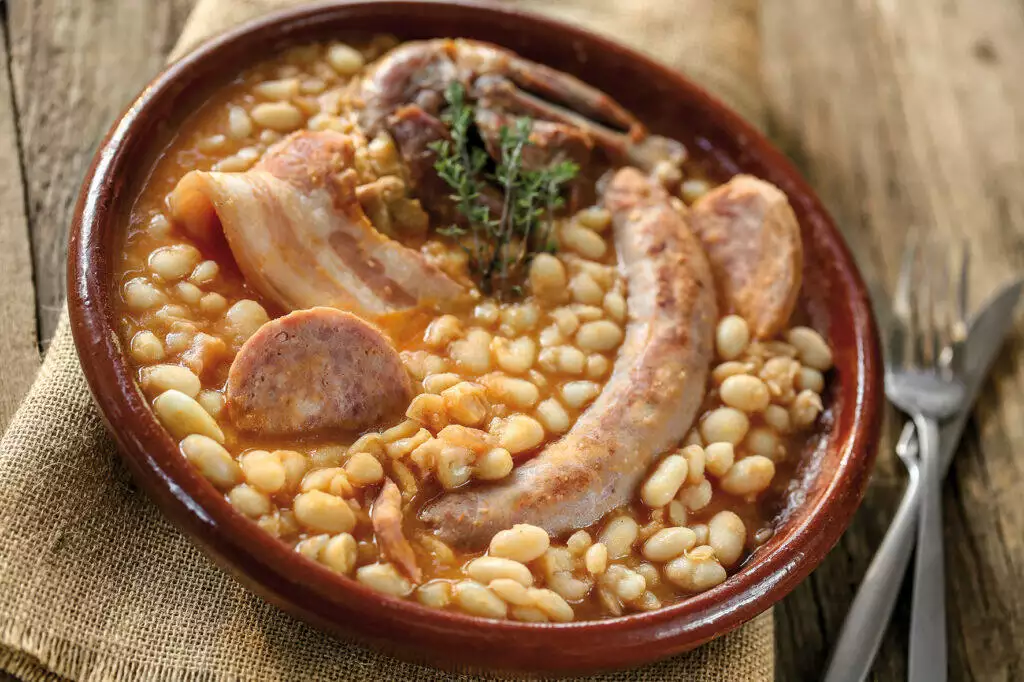
Recipe Score :
0.17
Details of the Ingredients:
- Bacon: Quantité: 50g
Allergenicity: atopic eczema/dermatitis syndrome; Anaphylactic reaction after eatign pork meat
HypoAllergenic Traitement : Autoclave Treatment
Score: 0.17 - Beans: Quantité: 350g
Allergenicity: nasobronchial and allergic rhinitis
HypoAllergenic Traitement : Cooking at 100 °C for 30 min could completely inactivate the hemagglutinin activity of lectins
Score: 0.17 - Carrot: Quantité: 100g
Allergenicity: The symptoms include oral allergy syndrome (OAS), angioedema, urticaria, dyspnea, vertigo, tightness of throat or chest, dysphagia, hoarseness, cough, rhinitis and conjunctivitis, Carrot allergy is generally associated with allergy to birch pollen or with the celery-carrot-mugwort-spice syndrome.
HypoAllergenic Traitement : the reactivity is lowered when cooked
Score: 0.17 - Garlic: Quantité: 6g
Allergenicity: Garlic allergy is relatively rare although one case of severe symptoms has been reported after eating garlic. The individual suffered exercise induced anaphylaxis and on a subsequent occasion anaphylaxis without exercise.
HypoAllergenic Traitement : the reactivity is lowered when cooked
Score: 0.17 - Onion: Quantité: 1g
Allergenicity: contact allergy, anaphylaxis, asthma, rhinoconjunctivitis
HypoAllergenic Traitement : the reactivity is lowered when cooked
Score: 0.17 - Pork Belly/ Neck/Rind: Quantité: 450g
Allergenicity: severe allergicreactionsm.; pork-cat syndrome
HypoAllergenic Traitement : heat, homogenization and freeze-drying
Score: 0.17
Scientifique Name of the ingredients :
- Bacon: Sus scrofa domesticus
- Beans: Phaseolus vulgaris
- Carrot: Daucus carota L.
- Garlic: Allium sativum
- Onion: Allium cepa var. aggregatum
- Pork Belly/ Neck/Rind: Sus scrofa
Molecular Allergens of Ingredients :
- Bacon: Sus s PRVB (UniProt: C1L369) - Superfamille: EF-hand
- Bacon: Sus s Laminin (UniProt: F1S663) - Superfamille: EGF/Laminin
- Beans: Pha v 3.0101 (UniProt: D3W146) - Superfamille: Bifunctional inhibitor/lipid-transfer protein/seed storage 2S albumin
- Beans: Pha v 3.0201 (UniProt: D3W147) - Superfamille: Bifunctional inhibitor/lipid-transfer protein/seed storage 2S albumin
- Beans: Pha v 5 (UniProt: P49231) - Superfamille: Profilin (actin-binding protein)
- Beans: Pha v 6 (UniProt: P25985) - Superfamille: Bet v1-like
- Beans: Pha v aAI.0101 (UniProt: P02873) - Superfamille: Concanavalin A-like lectins/glucanases
- Beans: Pha v PHA (UniProt: P05088) - Superfamille: Concanavalin A-like lectins/glucanases
- Beans: Pha v Phaseolin (UniProt: P02853) - Superfamille: RmlC-like cupins
- Carrot: Dau c 1.0201 (UniProt: Q8SAE7) - Superfamille: Bet v1-like
- Carrot: Dau c CyP (UniProt: H2DF84) - Superfamille: Cyclophilin-like
- Carrot: Dau c 5.0102 (UniProt: H2DF85) - Superfamille: NAD(P)-binding Rossmann-fold domains
- Carrot: Dau c 5.0101 (UniProt: H2DF86) - Superfamille: NAD(P)-binding Rossmann-fold domains
- Carrot: Dau c 4.0101 (UniProt: Q8SAE6) - Superfamille: Profilin (actin-binding protein)
- Carrot: Dau c 3 (UniProt: P27631) - Superfamille: Bifunctional inhibitor/lipid-transfer protein/seed storage 2S albumin
- Carrot: Dau c 1.0301 (UniProt: D9ZHN9) - Superfamille: Bet v1-like
- Carrot: Dau c 1.0101 (UniProt: O04298) - Superfamille: Bet v1-like
- Carrot: Dau c 1 (UniProt: Q75T31) - Superfamille: Bet v1-like
- Garlic: All s Alliin lyase (UniProt: Q01594) - Superfamille: PLP-dependent transferases
- Onion: All a Alliin lyase (UniProt: P31756) - Superfamille: PLP-dependent transferases
- Onion: All c Alliin lyase (UniProt: P31757) - Superfamille: PLP-dependent transferases
- Pork Belly/ Neck/Rind: Sus s Laminin (UniProt: F1S663) - Superfamille: EGF/Laminin
- Pork Belly/ Neck/Rind: Sus s PRVB (UniProt: C1L369) - Superfamille: EF-hand
- Ingredients used :
- Ingredient 1 : 50g of Bacon
- Ingredient 2 : 350g of Beans
- Ingredient 3 : 100g of Carrot
- Ingredient 4 : 6g of Garlic
- Ingredient 5 : 1g of Onion
- Ingredient 6 : 450g of Pork Belly/ Neck/Rind
- Steps of preparation
- Step 1 : Place the mogettes or lingot beans in a bowl and cover with water. Leave to soak overnight;
- Step 2 : Drain the beans, pour them into a casserole dish and cover with cold water. Cook for 10 minutes over low heat;
- Step 3 : Peel and roughly chop the carrot and onion. Cut the brisket into large pieces and the sausages into thick slices;
- Step 4 : Drain the cooked beans, then return them to the casserole dish. Add the carrot, onion, garlic cloves, a few pieces of bacon and the bicarbonate of soda. Cover with water and simmer for 1 hour. Be careful not to let it boil!;
- Step 5 : Meanwhile, brown the pork belly in a hot pan until golden brown. Remove from the pan and repeat with the sausages and duck legs. Preheat oven to 150°C;
- Step 6 : Skim the ingredients from the pot and set aside. Recover the stock and set aside. Line the bottom of the casserole with the rind and cover with a layer of beans. Scatter over the pieces of bacon and duck confit. Cover with the remaining beans;
- Step 7 : Add the stock, place the sausages and remaining bacon on top. Cover and bake for 1 hour or 1 hour 30 minutes. The longer it simmers, the better it will be.
5 - Piperade basque
Recipe Score :
0.20
Details of the Ingredients:
- Bell Peppers: Quantité: 802g
Allergenicity: respiratory symptoms rather than reactions of the mouth or skin (most commonly rhinoconjunctivitis but also asthma) which is slightly unusual.; Headaches were also reported which are sometimes associated with allergic rhinitis but are otherwise rarely reported as a symptom of food allergy.; Allergy to bell pepper is often associated with the celery-birch-mugwort-spice syndrome.
HypoAllergenic Traitement : the reactivity is lowered when cooked
Score: 0.17 - Garlic: Quantité: 2g
Allergenicity: Garlic allergy is relatively rare although one case of severe symptoms has been reported after eating garlic. The individual suffered exercise induced anaphylaxis and on a subsequent occasion anaphylaxis without exercise.
HypoAllergenic Traitement : the reactivity is lowered when cooked
Score: 0.17 - Olive Oil: Quantité: 10g
Allergenicity: contact dermatitis
HypoAllergenic Traitement : ND
Score: 0.17 - Onion: Quantité: 400g
Allergenicity: contact allergy, anaphylaxis, asthma, rhinoconjunctivitis
HypoAllergenic Traitement : the reactivity is lowered when cooked
Score: 0.17
Scientifique Name of the ingredients :
- Bell Peppers: Capsicum annuum L.
- Garlic: Allium sativum
- Olive Oil: Olea europaea
- Onion: Allium cepa var. aggregatum
Molecular Allergens of Ingredients :
- Bell Peppers: Cap a 1.0101 (UniProt: Q9ARG0) - Superfamille: Osmotin, thaumatin-like protein
- Bell Peppers: Cap a 2 (UniProt: Q6RG01) - Superfamille: Profilin (actin-binding protein)
- Bell Peppers: Cap a 2.0101 (UniProt: Q93YI9) - Superfamille: Profilin (actin-binding protein)
- Bell Peppers: Cap a 30kD (UniProt: Q42661) - Superfamille: Heme-dependent peroxidases
- Bell Peppers: Cap a 4 (UniProt: B2CZJ6) - Superfamille: Bet v1-like
- Bell Peppers: Cap a Glucanase (UniProt: Q9M5L5) - Superfamille: (Trans)glycosidases
- Garlic: All s Alliin lyase (UniProt: Q01594) - Superfamille: PLP-dependent transferases
- Olive Oil: Ole e 13.0101 (UniProt: E3SU11) - Superfamille: Osmotin, thaumatin-like protein
- Onion: All a Alliin lyase (UniProt: P31756) - Superfamille: PLP-dependent transferases
- Onion: All c Alliin lyase (UniProt: P31757) - Superfamille: PLP-dependent transferases
- Ingredients used :
- Ingredient 1 : 802g of Bell Peppers
- Ingredient 2 : 2g of Garlic
- Ingredient 3 : 10g of Olive Oil
- Ingredient 4 : 400g of Onion
- Steps of preparation
- Step 1 : Peel and chop onions. Remove seeds from sweet peppers and cut into large chunks. Peel and finely chop garlic;
- Step 2 : Gently fry the onions in a little oil. Stir in chillies and peppers. Cook for 15 minutes;
- Step 3 : Add garlic and bouquet garni. Chop the tomatoes directly into the casserole and add sugar. Stir often and cover to accelerate cooking. Cook for 15 minutes;
- Step 4 : Season with salt and pepper. Cook over high heat, stirring often, until the water in the tomatoes has evaporated. Cook for 15 minutes;
- Step 5 : Adjust seasoning. Finish cooking over low heat and serve.
6 - Pot au feu
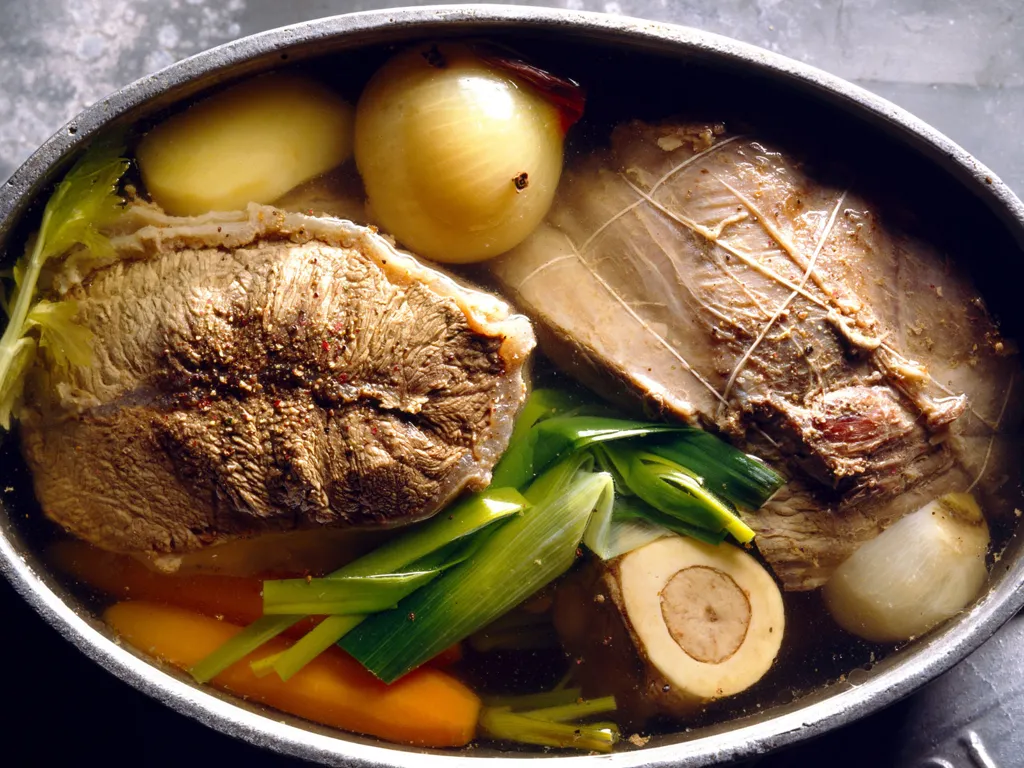
Recipe Score :
0.22
Details of the Ingredients:
- Beef: Quantité: 1500g
Allergenicity: respiratory symptoms, and anaphylaxis
HypoAllergenic Traitement : cooking alters the reactivity of beef +freeze-drying and homogenization
Score: 0.17 - Black pepper:
Allergenicity: respiratory symptoms, contact dermatitis
HypoAllergenic Traitement : Eviction: the only way to manage allergens is by complete abstinence from the food
Score: 0.17 - Carrot: Quantité: 4g
Allergenicity: The symptoms include oral allergy syndrome (OAS), angioedema, urticaria, dyspnea, vertigo, tightness of throat or chest, dysphagia, hoarseness, cough, rhinitis and conjunctivitis, Carrot allergy is generally associated with allergy to birch pollen or with the celery-carrot-mugwort-spice syndrome.
HypoAllergenic Traitement : the reactivity is lowered when cooked
Score: 0.17 - Celery: Quantité: 1g
Allergenicity: Allergy to celery is associated with allergy to birch pollen and also allergy to mugwort pollen. The most common symptom is oral allergy syndrome as for several other pollen related food allergies. However, serious reactions to celery such as anaphylaxis have been reported. Raw celery, cooked celery and celery spice have all caused reactions although some individuals may not react to cooked celery. Thus celery and products thereof are listed in annex IIIa of the EU directive on labelling of pre-packaged foods.
HypoAllergenic Traitement : HPP: High-PressureProcessing
Score: 0.50 - Garlic: Quantité: 1g
Allergenicity: Garlic allergy is relatively rare although one case of severe symptoms has been reported after eating garlic. The individual suffered exercise induced anaphylaxis and on a subsequent occasion anaphylaxis without exercise.
HypoAllergenic Traitement : the reactivity is lowered when cooked
Score: 0.17 - Leek: Quantité: 4g
Allergenicity: allergic rhinitis, asthma, and atopic dermatitis.chronic diarrhea. anaphylactic reactions
HypoAllergenic Traitement : the reactivity is lowered when cooked
Score: 0.17 - Onion: Quantité: 2g
Allergenicity: contact allergy, anaphylaxis, asthma, rhinoconjunctivitis
HypoAllergenic Traitement : the reactivity is lowered when cooked
Score: 0.17
Scientifique Name of the ingredients :
- Beef: Bos taurus Linnaeus
- Black pepper: Piper nigrum L.
- Carrot: Daucus carota L.
- Celery: Apium graveolens L.
- Garlic: Allium sativum
- Leek: Allium ampeloprasum
- Leek: Allium porrum
- Onion: Allium cepa var. aggregatum
Molecular Allergens of Ingredients :
- Beef: Bos d 6.0101 (UniProt: P02769) - Superfamille: Serum albumin-like
- Beef: Bos d 6 (UniProt: B0JYQ0) - Superfamille: Serum albumin-like
- Black pepper: Pip n 14kD (UniProt: Pip n - 13216)
- Black pepper: Pip n 28kD (UniProt: Pip n - 13216) - Superfamille: Germin, Germin-like Protein
- Carrot: Dau c 5.0102 (UniProt: H2DF85) - Superfamille: NAD(P)-binding Rossmann-fold domains
- Carrot: Dau c CyP (UniProt: H2DF84) - Superfamille: Cyclophilin-like
- Carrot: Dau c 5.0101 (UniProt: H2DF86) - Superfamille: NAD(P)-binding Rossmann-fold domains
- Carrot: Dau c 4.0101 (UniProt: Q8SAE6) - Superfamille: Profilin (actin-binding protein)
- Carrot: Dau c 3 (UniProt: P27631) - Superfamille: Bifunctional inhibitor/lipid-transfer protein/seed storage 2S albumin
- Carrot: Dau c 1.0301 (UniProt: D9ZHN9) - Superfamille: Bet v1-like
- Carrot: Dau c 1.0201 (UniProt: Q8SAE7) - Superfamille: Bet v1-like
- Carrot: Dau c 1.0101 (UniProt: O04298) - Superfamille: Bet v1-like
- Carrot: Dau c 1 (UniProt: Q75T31) - Superfamille: Bet v1-like
- Celery: Api g 1.0101 (UniProt: P49372) - Superfamille: Bet v1-like
- Celery: Api g 1.0201 (UniProt: P92918) - Superfamille: Bet v1-like
- Celery: Api g 2.0101 (UniProt: E6Y8S8) - Superfamille: Bifunctional inhibitor/lipid-transfer protein/seed storage 2S albumin
- Celery: Api g 3.0101 (UniProt: P92919) - Superfamille: Chlorophyll a-b binding protein
- Celery: Api g 4.0101 (UniProt: Q9XF37) - Superfamille: Profilin (actin-binding protein)
- Garlic: All s Alliin lyase (UniProt: Q01594) - Superfamille: PLP-dependent transferases
- Leek: All p Alliin lyase (UniProt: not given) - Superfamille: Alliinases
- Onion: All a Alliin lyase (UniProt: P31756) - Superfamille: PLP-dependent transferases
- Onion: All c Alliin lyase (UniProt: P31757) - Superfamille: PLP-dependent transferases
- Ingredients used :
- Ingredient 1 : 1500g of Beef
- Ingredient 2 : Black pepper
- Ingredient 3 : 4g of Carrot
- Ingredient 4 : 1g of Celery
- Ingredient 5 : 1g of Garlic
- Ingredient 6 : 4g of Leek
- Ingredient 7 : 2g of Onion
- Steps of preparation
- Step 1 : Tie the pieces of meat to keep them in shape during cooking and, if available, cut the oxtail into sections;
- Step 2 : Peel the carrots, leeks and celery stalk, then wash. Pierce one onion with cloves and brown the second, dry, in the oven: it will color the broth (to color the broth, add 1/2 teaspoon of Patrelle flavoring);
- Step 3 : Place all the pieces of meat and the marrow bone in a stewpot, wrapped in muslin to prevent the marrow from spilling out. Moisten with 5 liters of cold water. Season with coarse salt. Bring to the boil and boil, skimming frequently, until no more foam forms;
- Step 4 : Add the onions, carrots, leeks (tied in bunches), celery sticks, garlic and bouquet garni. Add 12 peppercorns;
- Step 5 : Bring back to the boil, then leave to cook, covered (steam should be able to escape to the side), over very low heat, for at least 4 hours. Degrease with a small ladle during cooking;
- Step 6 : Pot-au-feu broth can be served hot or warm, before meats and vegetables, or on its own. It can also be used as a base for a variety of soups. Remove the meat and vegetables from the broth and arrange them in a hot dish. Serve immediately, with gherkins, coarse salt and strong mustard.
7 - Ratatouille
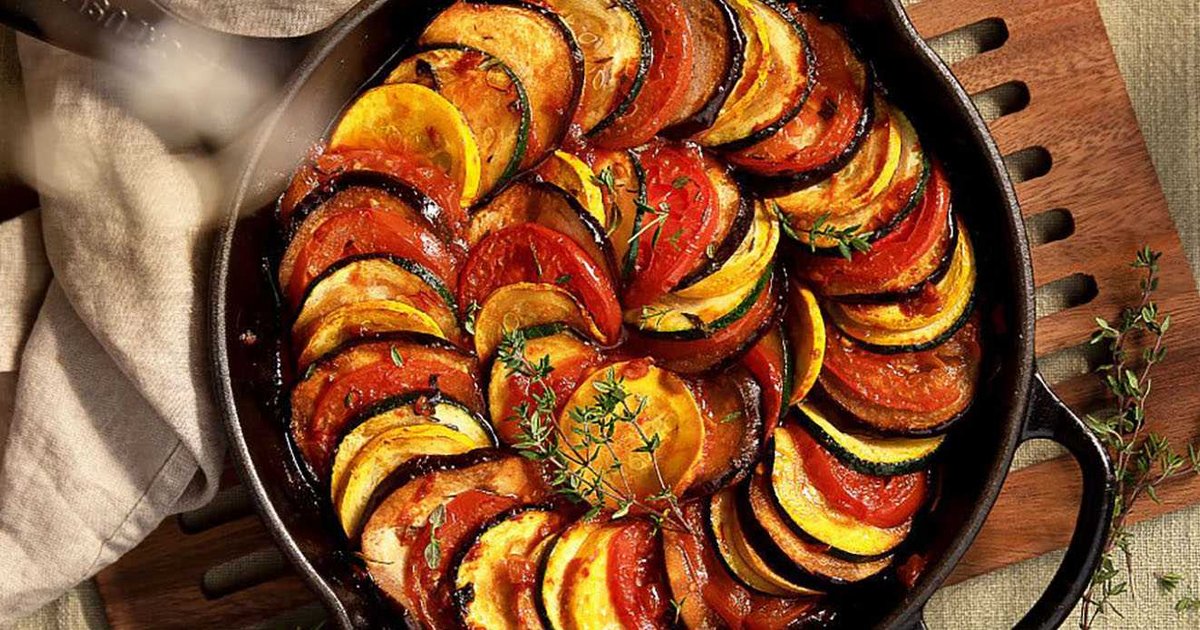
Recipe Score :
0.17
Details of the Ingredients:
- Aubergine: Quantité: 15g
Allergenicity: oral allergy syndrome
HypoAllergenic Traitement : the reactivity is lowered when cooked
Score: 0.17 - Olive Oil: Quantité: 5g
Allergenicity: contact dermatitis
HypoAllergenic Traitement : ND
Score: 0.17 - Thyme (dried and pulverised ): Quantité: 5g
Allergenicity: asthma, systemic, reactions, eczema
HypoAllergenic Traitement : Unknown
Score: 0.17 - Tomato: Quantité: 45g
Allergenicity: tomato allergy is associated with allergy to either latex or pollen. The symptoms reported were rather different in the two groups. The patients with no latex allergy reported mostly the oral allergy syndrome with some skin reactions such as urticaria (hives). Patients with latex allergy reported urticaria as the most common reaction but 20% suffered anaphylaxis. Allergy to tomato is also linked to allergy to potato since they are related plants.
HypoAllergenic Traitement : TT: ThermalTreatment
Score: 0.17 - Zucchini: Quantité: 25g
Allergenicity: The following symptoms have been reported after ingestion of cougette: Oral allergy syndrome, urticaria, angioedema, nausea, diarrhoea, pruritus
HypoAllergenic Traitement : the reactivity is lowered when cooked
Score: 0.17
Scientifique Name of the ingredients :
- Aubergine: Solanum melongena L.
- Olive Oil: Olea europaea
- Thyme (dried and pulverised ): Thymus vulgaris
- Tomato: Solanum lycopersicum
- Zucchini: Cucurbita pepo
Molecular Allergens of Ingredients :
- Aubergine: Sola m 1.0101 (UniProt: QEQ43417) - Superfamille: Profilin (actin-binding protein)
- Aubergine: Sola m 1 (UniProt: M1CJS2) - Superfamille: Profilin (actin-binding protein)
- Olive Oil: Ole e 13.0101 (UniProt: E3SU11) - Superfamille: Osmotin, thaumatin-like protein
- Tomato: Sola l 5.0101 (UniProt: P21568) - Superfamille: Cyclophilin-like
- Tomato: Sola l Vicilin (UniProt: B0JEU3) - Superfamille: RmlC-like cupins
- Tomato: Sola l TLP (UniProt: P12670) - Superfamille: Osmotin, thaumatin-like protein
- Tomato: Sola l SOD (UniProt: P14831) - Superfamille: Cu,Zn superoxide dismutase-like
- Tomato: Sola l PG (UniProt: P05117) - Superfamille: Pectin lyase-like
- Tomato: Sola l Peroxidase (UniProt: P15003) - Superfamille: Heme-dependent peroxidases
- Tomato: Sola l Glucanase (UniProt: Q01413) - Superfamille: (Trans)glycosidases
- Tomato: Sola l Chitinase (UniProt: Q05539) - Superfamille: Lysozyme-like
- Tomato: Sola l 7 (UniProt: K4AYX7) - Superfamille: Bifunctional inhibitor/lipid-transfer protein/seed storage 2S albumin
- Tomato: Sola l 5 (UniProt: K4D184) - Superfamille: Cyclophilin-like
- Tomato: Sola l 4.0201 (UniProt: K4CWC4) - Superfamille: Bet v1-like
- Tomato: Sola l 4.0101 (UniProt: O49881) - Superfamille: Bet v1-like
- Tomato: Sola l 4 (UniProt: K4CWC5) - Superfamille: Bet v1-like
- Tomato: Sola l 3.0101 (UniProt: P93224) - Superfamille: Bifunctional inhibitor/lipid-transfer protein/seed storage 2S albumin
- Tomato: Sola l 3 (UniProt: P27056) - Superfamille: Bifunctional inhibitor/lipid-transfer protein/seed storage 2S albumin
- Tomato: Sola l 1.0101 (UniProt: Q93YG7) - Superfamille: Profilin (actin-binding protein)
- Tomato: Sola l 1 (UniProt: Q41344) - Superfamille: Profilin (actin-binding protein)
- Zucchini: Cuc p AscO (UniProt: P37064) - Superfamille: Peroxidase
- Zucchini: Cuc p 2 - Superfamille: Profilin (actin-binding protein)
- Ingredients used :
- Ingredient 1 : 15g of Aubergine
- Ingredient 2 : 5g of Olive Oil
- Ingredient 3 : 5g of Thyme (dried and pulverised )
- Ingredient 4 : 45g of Tomato
- Ingredient 5 : 25g of Zucchini
- Steps of preparation
- Step 1 : Wash the vegetables;
- Step 2 : Cut the vegetables in cubes (1cm);
- Step 3 : Roast the vegetables in a pan with the olive oil for about 10 minutes;
- Step 4 : Add the tomato sauce and the thyme and cook at low flame for about 20 minutes;
- Step 5 : Add salt following your taste or diet requirements
8 - Tielle sétoise
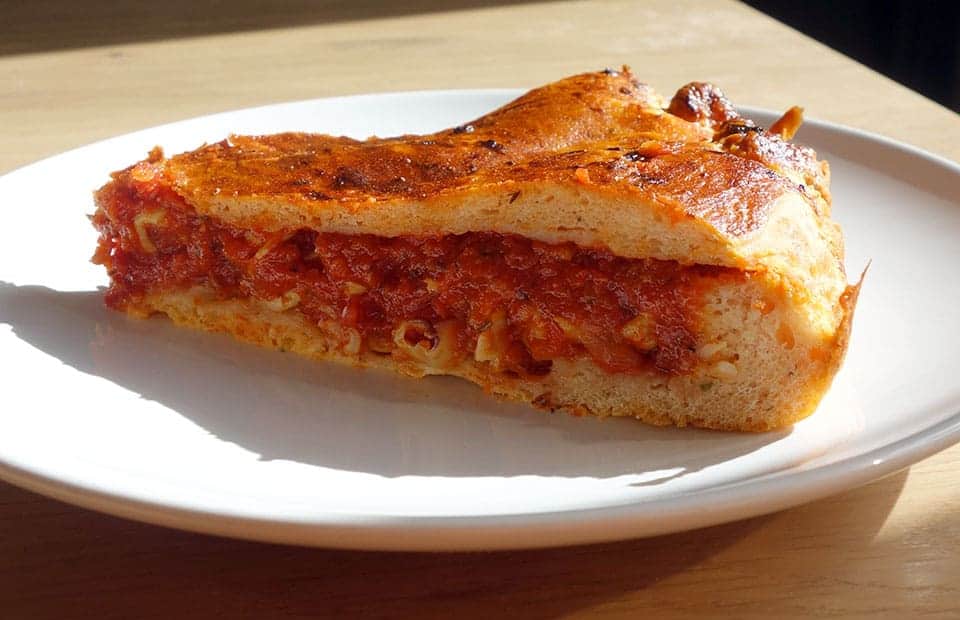
Recipe Score :
0.21
Details of the Ingredients:
- Corn / Maize: Quantité: 100g
Allergenicity: Allergy to corn is caused by proteins in the kernels. This protein is called the lipid transfer protein (LTP). LTP has first been identified as an important allergen in fruits, but it is also present in nuts, various vegetables and in cereals. LTP is an extremely stable protein. It is resistant to food processing, including heating, but also to gastro-intestinal digestion. These properties make LTP a strong food allergen that can cause severe reactions. Other potential allergens in corn are storage proteins that have also been identified as allergens in other cereals like wheat, barley, oat, rye and rice. Corn allergy can lead to symptoms of the skin like atopic dermatitis or eczema and urticaria or nettle rash. It can also cause swelling of skin, lips or throat (angioedema), itching in mouth and throat, symptoms of the stomach/gut (diarrhoea, nausea, abdominal pain and vomiting), runny or stuffed nose and asthma, and in severe cases anaphylactic shock. This suggests that corn allergy caused by LTP is frequently accompanied by allergy to other cereals because they contain similar LTP. Such reactions based on similarity are called cross-reactions.
HypoAllergenic Traitement : Food irradiation
Score: 0.17 - Garlic: Quantité: 3g
Allergenicity: Garlic allergy is relatively rare although one case of severe symptoms has been reported after eating garlic. The individual suffered exercise induced anaphylaxis and on a subsequent occasion anaphylaxis without exercise.
HypoAllergenic Traitement : the reactivity is lowered when cooked
Score: 0.17 - Octopus: Quantité: 500g
Allergenicity: IgE-mediated allergic reaction to seafood is a common cause of food allergy including anaphylactic reactions. Parvalbumin, the major fish allergen, has been shown to display IgE cross-reactivity among fish species consumed predominantly in Europe and the Far East. However, cross-reactivity studies of parvalbumin from fish species widely consumed in the Southern hemisphere are limited as is data relating to immunological and molecular characterisation.
HypoAllergenic Traitement : Dry heating with glucose
Score: 0.17 - Olive Oil: Quantité: 6g
Allergenicity: contact dermatitis
HypoAllergenic Traitement : ND
Score: 0.17 - Onion: Quantité: 50g
Allergenicity: contact allergy, anaphylaxis, asthma, rhinoconjunctivitis
HypoAllergenic Traitement : the reactivity is lowered when cooked
Score: 0.17 - Plain four/ weat: Quantité: 450g
Allergenicity: Adverse reactions to wheat have been more frequently reported than to other cereal-based foods. The best defined of these are coeliac disease and IgE-dependent wheat allergy, both of which result from malfunctioning of the immune system. Allergies to other cereals such as maize, sorghum and millet, are not common and are not related to reactions triggered by wheat, rye, barley and oats. As a consequence individuals with wheat allergy, including coeliac disease, can usually eat maize-based foods such as polenta. However, allergic reactions to maize can result from the fruit allergies found in the South of Europe which often start with reactions to peach. Coeliac disease is triggered by the gluten fraction of wheat or by the gluten-like proteins found in other closely related cereals such as rye, barley. Some sensitive individuals may also react to oats. The gut reacts to the gluten and becomes smooth, loosing its ability to absorb nutrients; symptoms including diarrhoea as well as deficiencies in nutrients like vitamins. It can manifest itself in childhood, affecting childrens growth and development, or in adult hood. As there is no cure individuals with coeliac disease have to avoid eating gluten for life. However, coeliac disease does not cause the potentially fatal reaction of anaphylaxis if gluten is accidentally eaten. In contrast IgE-mediated cereal allergies can be caused by the antibody molecule IgE binding to many proteins, not just gluten. Sometimes the reactions (often severe) only develop if an individual takes exercise within a few hours of eating wheat or related cereals, in a condition called exercise-induced anaphylaxis. Individuals with wheat allergy often react to closely related cereals like barley and rye, less frequently to the more distant relative, oats. Diagnosis of cereal allergies can be complicated by the fact that some of the blood tests for cereal food allergy can accidentally detect allergy to grass pollens instead. As a consequence of these adverse reactions, cereals containing gluten, (i.e. wheat, rye, barley, oats, spelt or their hybridized strains) have been included in Annex IIIa of the food labelling directive along with derived products. Temporary exceptions to the labelling rule (derogations) have been granted for wheat based glucose syrups including dextrose, wheat based maltodextrins, glucose syrups based on barley and cereals used in distillates for spirits.
HypoAllergenic Traitement : Yusing young cereal grains
Score: 0.48 - Rosemary: Quantité: 1g
Allergenicity: asthma, contact dermatitis
HypoAllergenic Traitement : ND
Score: 0.17 - Saffron:
Allergenicity: anaphylaxis, asthma, rhinoconjunctivitis
HypoAllergenic Traitement : ND
Score: 0.17 - Squid: Quantité: 500g
Allergenicity: Allergy to molluscs such as squid is less common than allergy to shrimps (crustaceans). Although squid has no shell it is related to shellfish such as clams and mussels. As with most food allergies, symptoms are usually mild such as oral allergy syndrome but severe symptoms such as anaphylactic shock can also occur after consumption. Note that squid are not currently listed in annex IIIa of the EU directive on labelling of foods and thus individuals allergic to squid must be alert to the possibility of squid or other molluscs as hidden allergens. Squid are a type of mollusc called a cephalopod and thus allergy to squid is associated with allergy to other cephalopods such as cuttlefish or octopus. Reaction is also likely after ingestion of more distantly related shellfish (molluscs) such as limpet, snails, winkles and whelks or clams, mussels, oysters and scallops. Thus after a diagnosis of allergy to one mollusc, patients are normally advised to avoid all molluscs. Whilst most individuals with allergy to shrimps (crustacea) can tolerate molluscs, individuals with allergy to both types of shellfish have been reported. However, individuals allergic to finfish (such as cod or salmon) do not generally have allergies to shellfish.
HypoAllergenic Traitement : Dry heating with glucose, lactose, and galactose
Score: 0.48 - Tomato: Quantité: 5g
Allergenicity: tomato allergy is associated with allergy to either latex or pollen. The symptoms reported were rather different in the two groups. The patients with no latex allergy reported mostly the oral allergy syndrome with some skin reactions such as urticaria (hives). Patients with latex allergy reported urticaria as the most common reaction but 20% suffered anaphylaxis. Allergy to tomato is also linked to allergy to potato since they are related plants.
HypoAllergenic Traitement : TT: ThermalTreatment
Score: 0.17
Scientifique Name of the ingredients :
- Corn / Maize: Zea mays
- Garlic: Allium sativum
- Octopus: Octopus vulgaris
- Olive Oil: Olea europaea
- Onion: Allium cepa var. aggregatum
- Plain four/ weat: Triticum aestivum
- Rosemary: Rosmarinus officinalis
- Saffron: Crocus sativus
- Squid: Loligo vulgaris
- Squid: Todarodes pacificus
- Squid: Loligo bleekeri
- Squid: Ommastrephes bartramii
- Tomato: Solanum lycopersicum
Molecular Allergens of Ingredients :
- Corn / Maize: Zea m 14.0101 (UniProt: P19656) - Superfamille: Bifunctional inhibitor/lipid-transfer protein/seed storage 2S albumin
- Corn / Maize: Zea m 14 (UniProt: B6SY96) - Superfamille: Bifunctional inhibitor/lipid-transfer protein/seed storage 2S albumin
- Corn / Maize: Zea m GBSS_I (UniProt: Q04713) - Superfamille: UDP-Glycosyltransferase/glycogen phosphorylase
- Corn / Maize: Zea m G2 (UniProt: Q7M1Z8) - Superfamille: RmlC-like cupins
- Corn / Maize: Zea m G1 (UniProt: Q03865) - Superfamille: RmlC-like cupins
- Corn / Maize: Zea m 50kD Zein (UniProt: Q946W1) - Superfamille: Bifunctional inhibitor/lipid-transfer protein/seed storage 2S albumin
- Corn / Maize: Zea m 27kD Zein (UniProt: P04706) - Superfamille: Bifunctional inhibitor/lipid-transfer protein/seed storage 2S albumin
- Corn / Maize: Zea m 25.0101 (UniProt: Q4W1F7) - Superfamille: Thioredoxin-like
- Corn / Maize: Zea m 25 (UniProt: Q4W1F6) - Superfamille: Thioredoxin-like
- Corn / Maize: Zea m 20S (UniProt: Q5XML0) - Superfamille: N-terminal nucleophile aminohydrolases (Ntn hydrolases)
- Corn / Maize: Zea m 32 (UniProt: A2SZW8) - Superfamille: Thioredoxin-like
- Garlic: All s Alliin lyase (UniProt: Q01594) - Superfamille: PLP-dependent transferases
- Octopus: Oct v 1.0101 (UniProt: Q2V0V0) - Superfamille: Tropomyosin
- Octopus: Oct v 2 (UniProt: Q9NKV5) - Superfamille: Arginine Kinase
- Octopus: Oct v PM (UniProt: not given) - Superfamille: Paramyosin
- Olive Oil: Ole e 13.0101 (UniProt: E3SU11) - Superfamille: Osmotin, thaumatin-like protein
- Onion: All a Alliin lyase (UniProt: P31756) - Superfamille: PLP-dependent transferases
- Onion: All c Alliin lyase (UniProt: P31757) - Superfamille: PLP-dependent transferases
- Plain four/ weat: Tri a 36.0101 (UniProt: B2Y2Q7) - Superfamille: Bifunctional inhibitor/lipid-transfer protein/seed storage 2S albumin
- Plain four/ weat: Tri a 37 (UniProt: P32032) - Superfamille: Crambin-like
- Plain four/ weat: Tri a 37.0101 (UniProt: Q9T0P1) - Superfamille: Crambin-like
- Plain four/ weat: Tri a 41.0101 (UniProt: A0A0G3F2P1) - Superfamille: RING/U-box
- Plain four/ weat: Tri a 44 (UniProt: B2C4K0) - Superfamille: Bifunctional inhibitor/lipid-transfer protein/seed storage 2S albumin
- Plain four/ weat: Tri a 44.0101 (UniProt: A0A0G3F720) - Superfamille: Bifunctional inhibitor/lipid-transfer protein/seed storage 2S albumin
- Plain four/ weat: Tri a 45 (UniProt: W5HIH8) - Superfamille: Zinc beta-ribbon
- Plain four/ weat: Tri a 45.0101 (UniProt: A0A0G3F715) - Superfamille: Zinc beta-ribbon
- Plain four/ weat: Tri a 7kLTP (UniProt: P82900) - Superfamille: Bifunctional inhibitor/lipid-transfer protein/seed storage 2S albumin
- Plain four/ weat: Tri a aA_SI (UniProt: P16347) - Superfamille: STI-like
- Plain four/ weat: Tri a alpha_Gliadin (UniProt: Q1WA40) - Superfamille: Bifunctional inhibitor/lipid-transfer protein/seed storage 2S albumin
- Plain four/ weat: Tri a Chitinase (UniProt: Q8W429) - Superfamille: Lysozyme-like
- Plain four/ weat: Tri a CMX (UniProt: Q43691) - Superfamille: Bifunctional inhibitor/lipid-transfer protein/seed storage 2S albumin
- Plain four/ weat: Tri a GBSS_I (UniProt: P27736) - Superfamille: UDP-Glycosyltransferase/glycogen phosphorylase
- Plain four/ weat: Tri a Peroxidase (UniProt: Q05855) - Superfamille: Heme-dependent peroxidases
- Plain four/ weat: Tri a Peroxidase 1 (UniProt: Q8LK23) - Superfamille: Heme-dependent peroxidases
- Plain four/ weat: Tri a TLP (UniProt: P27357) - Superfamille: Osmotin, thaumatin-like protein
- Plain four/ weat: Tri a Tritin (UniProt: Q07810) - Superfamille: Ribosome inactivating proteins (RIP)
- Plain four/ weat: Tri a XI (UniProt: Q8L5C6) - Superfamille: (Trans)glycosidases
- Plain four/ weat: Tri a 33.0101 (UniProt: Q9ST57) - Superfamille: Serpins
- Plain four/ weat: Tri a 10kD (UniProt: Q4W1F9) - Superfamille: Bifunctional inhibitor/lipid-transfer protein/seed storage 2S albumin
- Plain four/ weat: Tri a 12 (UniProt: P49233) - Superfamille: Profilin (actin-binding protein)
- Plain four/ weat: Tri a 14 (UniProt: P24296) - Superfamille: Bifunctional inhibitor/lipid-transfer protein/seed storage 2S albumin
- Plain four/ weat: Tri a 17.0101 (UniProt: P93594) - Superfamille: (Trans)glycosidases
- Plain four/ weat: Tri a 18 (UniProt: P10969) - Superfamille: Plant lectins/antimicrobial peptides
- Plain four/ weat: Tri a 18.0101 (UniProt: P10968) - Superfamille: Plant lectins/antimicrobial peptides
- Plain four/ weat: Tri a 20 (UniProt: P21292) - Superfamille: Bifunctional inhibitor/lipid-transfer protein/seed storage 2S albumin
- Plain four/ weat: Tri a 20.0101 (UniProt: A0A060N479) - Superfamille: Bifunctional inhibitor/lipid-transfer protein/seed storage 2S albumin
- Plain four/ weat: Tri a 23kD (UniProt: Q4W1G0) - Superfamille: L domain-like
- Plain four/ weat: Tri a 26 (UniProt: P08489) - Superfamille: Bifunctional inhibitor/lipid-transfer protein/seed storage 2S albumin
- Plain four/ weat: Tri a 26.0101 (UniProt: P10388) - Superfamille: Bifunctional inhibitor/lipid-transfer protein/seed storage 2S albumin
- Plain four/ weat: Tri a 26.0201 (UniProt: Q45R38) - Superfamille: Bifunctional inhibitor/lipid-transfer protein/seed storage 2S albumin
- Plain four/ weat: Tri a 28 (UniProt: P01085) - Superfamille: Bifunctional inhibitor/lipid-transfer protein/seed storage 2S albumin
- Plain four/ weat: Tri a 28.0101 (UniProt: Q4W0V7) - Superfamille: Bifunctional inhibitor/lipid-transfer protein/seed storage 2S albumin
- Plain four/ weat: Tri a 30 (UniProt: Q53YX8) - Superfamille: Bifunctional inhibitor/lipid-transfer protein/seed storage 2S albumin
- Plain four/ weat: Tri a 30.0101 (UniProt: P17314) - Superfamille: Bifunctional inhibitor/lipid-transfer protein/seed storage 2S albumin
- Plain four/ weat: Tri a 33 (UniProt: P93692) - Superfamille: Serpins
- Plain four/ weat: Tri a 36 (UniProt: P10385) - Superfamille: Bifunctional inhibitor/lipid-transfer protein/seed storage 2S albumin
- Plain four/ weat: Tri a 25.0101 (UniProt: Q9LDX4) - Superfamille: Thioredoxin-like
- Saffron: Cro s 3.02 (UniProt: D2T0A6) - Superfamille: Bifunctional inhibitor/lipid-transfer protein/seed storage 2S albumin
- Squid: Tod p 1 - Superfamille: Tropomyosin family
- Tomato: Sola l Vicilin (UniProt: B0JEU3) - Superfamille: RmlC-like cupins
- Tomato: Sola l TLP (UniProt: P12670) - Superfamille: Osmotin, thaumatin-like protein
- Tomato: Sola l SOD (UniProt: P14831) - Superfamille: Cu,Zn superoxide dismutase-like
- Tomato: Sola l PG (UniProt: P05117) - Superfamille: Pectin lyase-like
- Tomato: Sola l Peroxidase (UniProt: P15003) - Superfamille: Heme-dependent peroxidases
- Tomato: Sola l Glucanase (UniProt: Q01413) - Superfamille: (Trans)glycosidases
- Tomato: Sola l Chitinase (UniProt: Q05539) - Superfamille: Lysozyme-like
- Tomato: Sola l 7 (UniProt: K4AYX7) - Superfamille: Bifunctional inhibitor/lipid-transfer protein/seed storage 2S albumin
- Tomato: Sola l 5.0101 (UniProt: P21568) - Superfamille: Cyclophilin-like
- Tomato: Sola l 5 (UniProt: K4D184) - Superfamille: Cyclophilin-like
- Tomato: Sola l 4.0201 (UniProt: K4CWC4) - Superfamille: Bet v1-like
- Tomato: Sola l 4.0101 (UniProt: O49881) - Superfamille: Bet v1-like
- Tomato: Sola l 4 (UniProt: K4CWC5) - Superfamille: Bet v1-like
- Tomato: Sola l 3.0101 (UniProt: P93224) - Superfamille: Bifunctional inhibitor/lipid-transfer protein/seed storage 2S albumin
- Tomato: Sola l 3 (UniProt: P27056) - Superfamille: Bifunctional inhibitor/lipid-transfer protein/seed storage 2S albumin
- Tomato: Sola l 1.0101 (UniProt: Q93YG7) - Superfamille: Profilin (actin-binding protein)
- Tomato: Sola l 1 (UniProt: Q41344) - Superfamille: Profilin (actin-binding protein)
- Ingredients used :
- Ingredient 1 : 100g of Corn / Maize
- Ingredient 2 : 3g of Garlic
- Ingredient 3 : 500g of Octopus
- Ingredient 4 : 6g of Olive Oil
- Ingredient 5 : 50g of Onion
- Ingredient 6 : 450g of Plain four/ weat
- Ingredient 7 : 1g of Rosemary
- Ingredient 8 : Saffron
- Ingredient 9 : 500g of Squid
- Ingredient 10 : 5g of Tomato
- Steps of preparation
- Step 1 : Put all the ingredients (except the water) into a food processor and combine; slowly add enough ice-cold water to form a ball. Remove, knead gently on a floured surface, then wrap and rest it in the fridge while you make the stuffing;
- Step 2 : In a heavy-bottomed frying pan heat the oil with a pinch of salt, add the onions so they soften but remain translucent but if they start to colour turn down the heat. Add the garlic, saffron, rosemary and piment. Stir well to combine;
- Step 3 : Now add the octopus, cut into fine dice (or squid tubes cut into fine rings);
- Step 4 : Add the tomatoes and purée, a few grinds of pepper and simmer on a gentle heat until thickened. Check for seasoning. Then cool;
- Step 5 : Heat the oven to 180°C, prepare your mould, you can either make one large tielle or several small ones. For my tastings, I always make the small ones and this usually yields around 24. Generously oil two muffin cases with twelve holes;
- Step 6 : On a well-floured, cool surface roll out the pastry to roughly 3mm thickness and cut out the circles to suit your muffin tin, mine is 5cm in diameter, saving enough pastry for the lids which should be slightly smaller. Fill the pies with the stuffing, roughly a dessert spoon’s worth, making sure that you drain off any liquid;
- Step 7 : Brush the edges of the lid and ‘glue’ onto the base. There is a traditional way of sealing the edges of a tielle: using a knife, make 2 to 3cm incisions all around the edge of the pie, every 2cm, then pinch in the strips of pastry;
- Step 8 : Remove from the oven and cool.
Spain Recipes
1 - Fish suquet
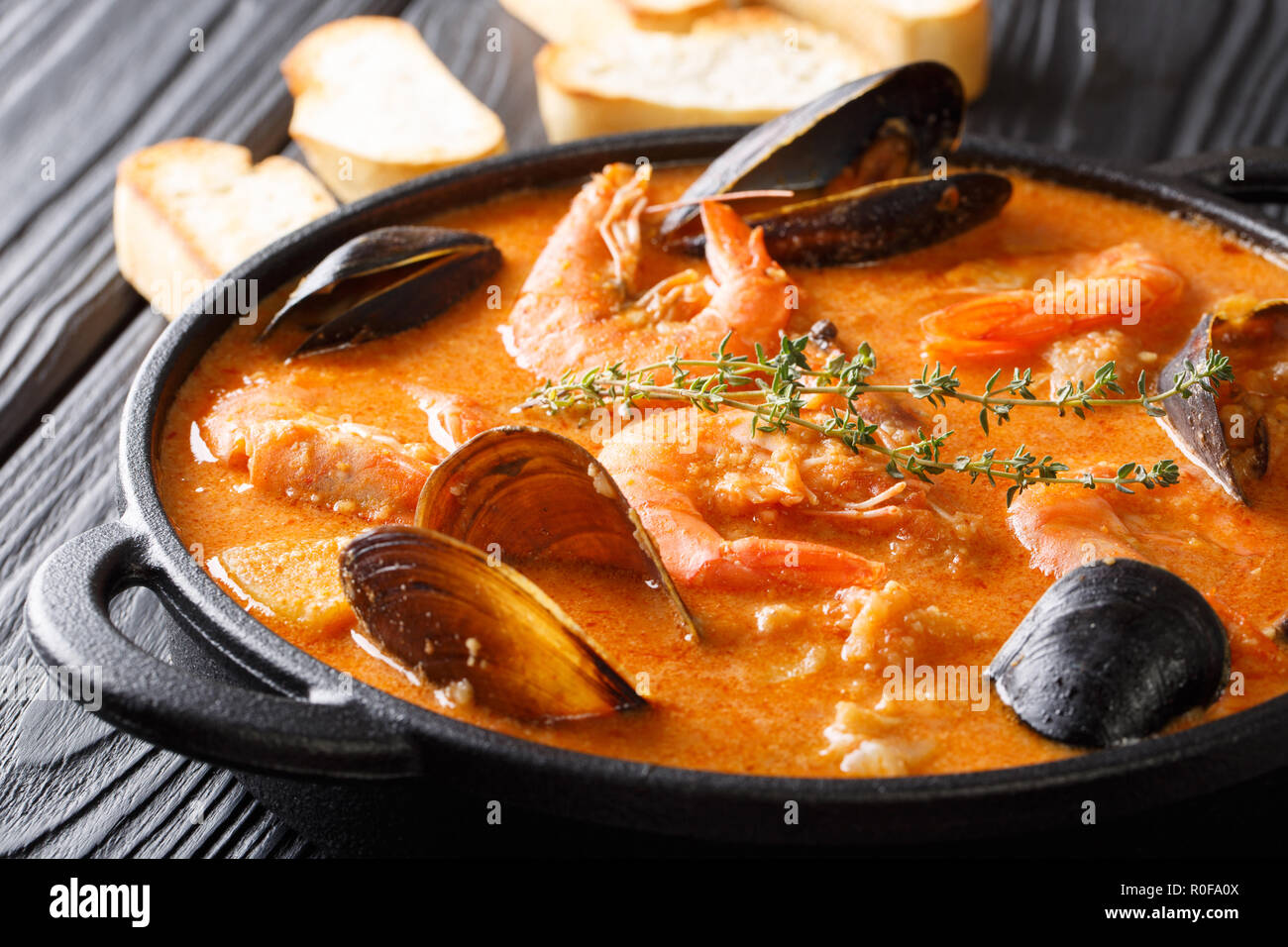
Recipe Score :
0.34
Details of the Ingredients:
- Clams: Quantité: 7g
Allergenicity: symptoms ranging from mild oral allergy to severe symptoms such as anaphylaxis.; Cooking does not remove the allergen. Crustacea are the third most important cause of food induced anaphylaxis Thus crustacea and products thereof are listed in annex IIIa of the EU directive on labelling of pre-packaged foods. In addition, some individuals with allergies to insects such as cockroach or moths can suffer food allergy to crustacean foods. Whilst most individuals with allergy to shrimps (crustacea) can tolerate molluscs, individuals with allergy to both types of shellfish have been reported. However, individuals allergic to finfish (such as cod or salmon) do not generally have allergies to shellfish.
HypoAllergenic Traitement : Dry heating with glucose
Score: 0.50 - Garlic: Quantité: 1g
Allergenicity: Garlic allergy is relatively rare although one case of severe symptoms has been reported after eating garlic. The individual suffered exercise induced anaphylaxis and on a subsequent occasion anaphylaxis without exercise.
HypoAllergenic Traitement : the reactivity is lowered when cooked
Score: 0.17 - Langoustines: Quantité: 22g
Allergenicity: itching and angioedema of the lips, mouth and pharynx. atopic individuals are at greater risk of developing anaphylactic reactions
HypoAllergenic Traitement : Dry heating with glucose
Score: 0.50 - Monkfish: Quantité: 20g
Allergenicity: Allergy to fin fish is relatively common, and can be associated with severe symptoms such as anaphylactic shock. Symptoms occur after ingestion. Allergy to fish is not to be confused with a toxic reaction to histamine in spoiled fish (scombroid fish poisoning). Almost all fish allergy seems to involve the protein parvalbumin, which is found in the muscle of most fish. As the parvalbumins are similar in all fish species, individuals allergic to one fish are likely to react to a range of different fish species. Thus after a diagnosis of allergy to one fish species, patients are normally advised to avoid all fin fish. Some individuals also react to frog. Although fin fish and shellfish allergies are not linked, individuals can be allergic to both foods. Parvalbumin remains able to cause a reaction after cooking. Thus fish remains allergenic after cooking and other treatments. Fish can be a "hidden" allergen in, for example, pizza toppings. Consequently, the EU labelling regulations require foods containing fish and products thereof to be labelled.
HypoAllergenic Traitement : Dry heating with glucose
Score: 0.48 - Olive Oil: Quantité: 1g
Allergenicity: contact dermatitis
HypoAllergenic Traitement : ND
Score: 0.17 - Onion: Quantité: 5g
Allergenicity: contact allergy, anaphylaxis, asthma, rhinoconjunctivitis
HypoAllergenic Traitement : the reactivity is lowered when cooked
Score: 0.17 - Parsley: Quantité: 1g
Allergenicity: angioedema, urticaria
HypoAllergenic Traitement : the reactivity is lowered when cooked
Score: 0.17 - Potato: Quantité: 7g
Allergenicity: Potato is considered a rarely allergenic food and is frequently used in elimination diets and as part of the placebo in challenge protocols. However, many cases of food allergy after eating cooked potato have been reported and skin prick tests suggest that sensitization to raw potato is relatively common. Cases of contact allergy to raw potatoes have also been reported. The symptoms reported include reactions of the skin such as urticaria (hives), angioedema (wheals) and eczema, respiratory symptoms such as rhinitis, cough and wheezing and gastrointestinal symptoms such as vomiting and diarrhoea. Most reactions occurred within 2 hours (immediate reactions) but delayed reactions have also been reported. Allergy to cooked potato is related to tomato allergy and to latex allergy. Sensitization to raw potato may also be related to pollen allergies.
HypoAllergenic Traitement : the reactivity is lowered when cooked
Score: 0.17 - Shrimp: Quantité: 5g
Allergenicity: Most allergy to crustacea seems to involve a muscles protein called tropomyosin, which is very similar in a wide range of crustacean foods. As a result someone with allergy to tropomyosin from one kind of crustacean is likely to react to others. Thus individuals with allergy to one kind of crustacean are usually advised to avoid all types of crustacean foods. In addition, some individuals with allergies to insects such as cockroach or moths can suffer food allergy to crustacean foods. Whilst most individuals with allergy to shrimps (crustacea) can tolerate molluscs, individuals with allergy to both types of shellfish have been reported. However, individuals allergic to finfish (such as cod or salmon) do not generally have allergies to shellfish.
HypoAllergenic Traitement : tropomyosin in shrimp protein extracts were treated at 55 ◦ C, 500 MPa for 10 min
Score: 0.50 - Squid: Quantité: 6g
Allergenicity: Allergy to molluscs such as squid is less common than allergy to shrimps (crustaceans). Although squid has no shell it is related to shellfish such as clams and mussels. As with most food allergies, symptoms are usually mild such as oral allergy syndrome but severe symptoms such as anaphylactic shock can also occur after consumption. Note that squid are not currently listed in annex IIIa of the EU directive on labelling of foods and thus individuals allergic to squid must be alert to the possibility of squid or other molluscs as hidden allergens. Squid are a type of mollusc called a cephalopod and thus allergy to squid is associated with allergy to other cephalopods such as cuttlefish or octopus. Reaction is also likely after ingestion of more distantly related shellfish (molluscs) such as limpet, snails, winkles and whelks or clams, mussels, oysters and scallops. Thus after a diagnosis of allergy to one mollusc, patients are normally advised to avoid all molluscs. Whilst most individuals with allergy to shrimps (crustacea) can tolerate molluscs, individuals with allergy to both types of shellfish have been reported. However, individuals allergic to finfish (such as cod or salmon) do not generally have allergies to shellfish.
HypoAllergenic Traitement : Dry heating with glucose, lactose, and galactose
Score: 0.48 - Tomato: Quantité: 2g
Allergenicity: tomato allergy is associated with allergy to either latex or pollen. The symptoms reported were rather different in the two groups. The patients with no latex allergy reported mostly the oral allergy syndrome with some skin reactions such as urticaria (hives). Patients with latex allergy reported urticaria as the most common reaction but 20% suffered anaphylaxis. Allergy to tomato is also linked to allergy to potato since they are related plants.
HypoAllergenic Traitement : TT: ThermalTreatment
Score: 0.17
Scientifique Name of the ingredients :
- Clams: Mytilus galloprovincialis
- Clams: Mytilus edulis
- Clams: Anadara broughtonii
- Clams: Meretrix lyrata
- Clams: Lutraria philippinarum
- Clams: Haliotis rufescens
- Clams: Panulirus stimpsoni
- Garlic: Allium sativum
- Langoustines: Panulirus stimpsoni
- Langoustines: Nephrops norvegicus
- Langoustines: Jasus lalandii
- Monkfish: Lophius americanus
- Olive Oil: Olea europaea
- Onion: Allium cepa var. aggregatum
- Parsley: Petroselinum crispum
- Potato: Solanum tuberosum
- Shrimp: Penaeus vannamei
- Squid: Loligo vulgaris
- Squid: Todarodes pacificus
- Squid: Loligo bleekeri
- Squid: Ommastrephes bartramii
- Tomato: Solanum lycopersicum
Molecular Allergens of Ingredients :
- Clams: Myt e 1 (UniProt: Q25457) - Superfamille: Tropomyosin
- Clams: Ana br 1 (UniProt: B7XC65) - Superfamille: Tropomyosin
- Clams: Mer ly 1 (UniProt: G8XWU0) - Superfamille: Tropomyosin
- Clams: Lut p 1 (UniProt: not given) - Superfamille: Tropomyosin
- Clams: Hal ru 1 (UniProt: Q25145) - Superfamille: Tropomyosin-Muscle Contraction Proteins
- Clams: Pan s I (UniProt: O61379) - Superfamille: Tropomyosin-Muscle Contraction Proteins
- Clams: Myt g 1 (UniProt: P91958) - Superfamille: Tropomyosin
- Garlic: All s Alliin lyase (UniProt: Q01594) - Superfamille: PLP-dependent transferases
- Langoustines: Jas la 1.0103 (UniProt: K9UTQ8) - Superfamille: Tropomyosin-Muscle Contraction Proteins
- Langoustines: Jas la 1.0102 (UniProt: B6DUC4) - Superfamille: Tropomyosin-Muscle Contraction Proteins
- Langoustines: Jas la 1.0101 (UniProt: B6DUC3) - Superfamille: Tropomyosin-Muscle Contraction Proteins
- Langoustines: Pan s I (UniProt: O61379) - Superfamille: Tropomyosin-Muscle Contraction Proteins
- Olive Oil: Ole e 13.0101 (UniProt: E3SU11) - Superfamille: Osmotin, thaumatin-like protein
- Onion: All a Alliin lyase (UniProt: P31756) - Superfamille: PLP-dependent transferases
- Onion: All c Alliin lyase (UniProt: P31757) - Superfamille: PLP-dependent transferases
- Parsley: Pet c 1 (UniProt: P19417) - Superfamille: Bet v1-like
- Parsley: Pet c 2 (UniProt: Q5EEP5) - Superfamille: Profilin (actin-binding protein)
- Potato: Sola t 8 (UniProt: M1BLC8) - Superfamille: Profilin (actin-binding protein)
- Potato: Sola t Glucanase (UniProt: P52401) - Superfamille: (Trans)glycosidases
- Potato: Sola t 7k (UniProt: M1CHX3) - Superfamille: Bifunctional inhibitor/lipid-transfer protein/seed storage 2S albumin
- Potato: Sola t 4.0101 (UniProt: P30941) - Superfamille: STI-like
- Potato: Sola t 3.0102 (UniProt: P20347) - Superfamille: STI-like
- Potato: Sola t 3 (UniProt: Q6PMR6) - Superfamille: STI-like
- Potato: Sola t 2.0101 (UniProt: P16348) - Superfamille: STI-like
- Potato: Sola t 1.0101 (UniProt: P15476)
- Potato: Sola t 1 (UniProt: P07745)
- Potato: Sola t 3.0101 (UniProt: O24383) - Superfamille: STI-like
- Shrimp: Lit v Trx (UniProt: B1PWB9) - Superfamille: Thioredoxin-like
- Shrimp: Lit v 6 (UniProt: G8H4B8) - Superfamille: EF-hand
- Shrimp: Lit v 4.0101 (UniProt: C7A639) - Superfamille: EF-hand
- Shrimp: Lit v 3.0101 (UniProt: B7SNI3) - Superfamille: EF-hand
- Shrimp: Lit v 1.0101 (UniProt: B4YAH6) - Superfamille: Tropomyosin family
- Squid: Tod p 1 - Superfamille: Tropomyosin family
- Tomato: Sola l Vicilin (UniProt: B0JEU3) - Superfamille: RmlC-like cupins
- Tomato: Sola l TLP (UniProt: P12670) - Superfamille: Osmotin, thaumatin-like protein
- Tomato: Sola l SOD (UniProt: P14831) - Superfamille: Cu,Zn superoxide dismutase-like
- Tomato: Sola l PG (UniProt: P05117) - Superfamille: Pectin lyase-like
- Tomato: Sola l Peroxidase (UniProt: P15003) - Superfamille: Heme-dependent peroxidases
- Tomato: Sola l Glucanase (UniProt: Q01413) - Superfamille: (Trans)glycosidases
- Tomato: Sola l Chitinase (UniProt: Q05539) - Superfamille: Lysozyme-like
- Tomato: Sola l 7 (UniProt: K4AYX7) - Superfamille: Bifunctional inhibitor/lipid-transfer protein/seed storage 2S albumin
- Tomato: Sola l 5.0101 (UniProt: P21568) - Superfamille: Cyclophilin-like
- Tomato: Sola l 5 (UniProt: K4D184) - Superfamille: Cyclophilin-like
- Tomato: Sola l 4.0201 (UniProt: K4CWC4) - Superfamille: Bet v1-like
- Tomato: Sola l 4.0101 (UniProt: O49881) - Superfamille: Bet v1-like
- Tomato: Sola l 4 (UniProt: K4CWC5) - Superfamille: Bet v1-like
- Tomato: Sola l 3.0101 (UniProt: P93224) - Superfamille: Bifunctional inhibitor/lipid-transfer protein/seed storage 2S albumin
- Tomato: Sola l 3 (UniProt: P27056) - Superfamille: Bifunctional inhibitor/lipid-transfer protein/seed storage 2S albumin
- Tomato: Sola l 1.0101 (UniProt: Q93YG7) - Superfamille: Profilin (actin-binding protein)
- Tomato: Sola l 1 (UniProt: Q41344) - Superfamille: Profilin (actin-binding protein)
- Ingredients used :
- Ingredient 1 : 7g of Clams
- Ingredient 2 : 1g of Garlic
- Ingredient 3 : 22g of Langoustines
- Ingredient 4 : 20g of Monkfish
- Ingredient 5 : 1g of Olive Oil
- Ingredient 6 : 5g of Onion
- Ingredient 7 : 1g of Parsley
- Ingredient 8 : 7g of Potato
- Ingredient 9 : 5g of Shrimp
- Ingredient 10 : 6g of Squid
- Ingredient 11 : 2g of Tomato
- Steps of preparation
- Step 1 : One hour before, place the clams in a container with water and salt to release the sand.
- Step 2 : Wash and peel the potatoes and chop the onion into small pieces. Chop the garlic with the parsley, excluding the stems. Cut each piece of monkfish into 2-3 chunks. Slice the squid into ring shapes.
- Step 3 : Pour plenty of oil into a saucepan or paella pan. When the oil is hot, add the onion and sauté for a few minutes until it starts to turn translucent. Stir to prevent it from burning.
- Step 4 : Add the garlic and parsley and sauté for 3-4 minutes until it's golden. When it's golden, crack an egg into the center of the pan, pushing the sautéed mixture to the sides.
- Step 5 : Dredge the monkfish in flour and sauté for approximately one minute on each side, then set it aside. Add tomato to the sautéed mixture and season with salt to taste, keeping in mind that fish broth tends to be salty.
- Step 6 : Sauté for about 10 minutes in the pan until the tomato reduces. Break the potatoes over the sautéed mixture into medium-sized pieces. Stir for 2-3 minutes to coat them well with the sauté.
- Step 7 : Pour in the fish and seafood broth. Let it boil for about 20 minutes until the potatoes are almost cooked. Add the shrimp and squid. Cook for 3 minutes.
- Step 8 : Drain the clams from the salted water and rinse them with tap water. Add them to the pot evenly distributed. Submerge the monkfish in the broth. Place the langoustines around the center. Cook for about 10 minutes until the clams open. Serve hot.
2 - Garlic rabbit
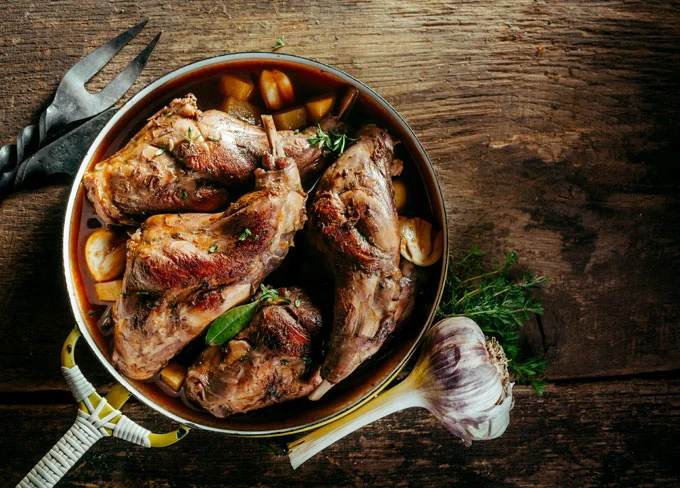
Recipe Score :
0.17
Details of the Ingredients:
- Black pepper: Quantité: 2g
Allergenicity: respiratory symptoms, contact dermatitis
HypoAllergenic Traitement : Eviction: the only way to manage allergens is by complete abstinence from the food
Score: 0.17 - Garlic: Quantité: 2g
Allergenicity: Garlic allergy is relatively rare although one case of severe symptoms has been reported after eating garlic. The individual suffered exercise induced anaphylaxis and on a subsequent occasion anaphylaxis without exercise.
HypoAllergenic Traitement : the reactivity is lowered when cooked
Score: 0.17 - Olive Oil: Quantité: 8g
Allergenicity: contact dermatitis
HypoAllergenic Traitement : ND
Score: 0.17 - Potato: Quantité: 37g
Allergenicity: Potato is considered a rarely allergenic food and is frequently used in elimination diets and as part of the placebo in challenge protocols. However, many cases of food allergy after eating cooked potato have been reported and skin prick tests suggest that sensitization to raw potato is relatively common. Cases of contact allergy to raw potatoes have also been reported. The symptoms reported include reactions of the skin such as urticaria (hives), angioedema (wheals) and eczema, respiratory symptoms such as rhinitis, cough and wheezing and gastrointestinal symptoms such as vomiting and diarrhoea. Most reactions occurred within 2 hours (immediate reactions) but delayed reactions have also been reported. Allergy to cooked potato is related to tomato allergy and to latex allergy. Sensitization to raw potato may also be related to pollen allergies.
HypoAllergenic Traitement : the reactivity is lowered when cooked
Score: 0.17 - Rabbit: Quantité: 40g
Allergenicity: severe allergic, symptoms, Anaphylaxis
HypoAllergenic Traitement : heat, homogenization and freeze-drying
Score: 0.17 - Raisins / grape/ wine: Quantité: 7g
Allergenicity: airway reactions (rhinitis and asthma)
HypoAllergenic Traitement : NT
Score: 0.17 - Thyme (dried and pulverised ): Quantité: 2g
Allergenicity: asthma, systemic, reactions, eczema
HypoAllergenic Traitement : Unknown
Score: 0.17
Scientifique Name of the ingredients :
- Black pepper: Piper nigrum L.
- Garlic: Allium sativum
- Olive Oil: Olea europaea
- Potato: Solanum tuberosum
- Rabbit: Oryctolagus cuniculus
- Raisins / grape/ wine: Vitis vinifera
- Thyme (dried and pulverised ): Thymus vulgaris
Molecular Allergens of Ingredients :
- Black pepper: Pip n 28kD (UniProt: Pip n - 13216) - Superfamille: Germin, Germin-like Protein
- Black pepper: Pip n 14kD (UniProt: Pip n - 13216)
- Garlic: All s Alliin lyase (UniProt: Q01594) - Superfamille: PLP-dependent transferases
- Olive Oil: Ole e 13.0101 (UniProt: E3SU11) - Superfamille: Osmotin, thaumatin-like protein
- Potato: Sola t 7k (UniProt: M1CHX3) - Superfamille: Bifunctional inhibitor/lipid-transfer protein/seed storage 2S albumin
- Potato: Sola t Glucanase (UniProt: P52401) - Superfamille: (Trans)glycosidases
- Potato: Sola t 8 (UniProt: M1BLC8) - Superfamille: Profilin (actin-binding protein)
- Potato: Sola t 4.0101 (UniProt: P30941) - Superfamille: STI-like
- Potato: Sola t 3.0102 (UniProt: P20347) - Superfamille: STI-like
- Potato: Sola t 3.0101 (UniProt: O24383) - Superfamille: STI-like
- Potato: Sola t 3 (UniProt: Q6PMR6) - Superfamille: STI-like
- Potato: Sola t 2.0101 (UniProt: P16348) - Superfamille: STI-like
- Potato: Sola t 1.0101 (UniProt: P15476)
- Potato: Sola t 1 (UniProt: P07745)
- Rabbit: Ory c TM (UniProt: P58772) - Superfamille: Tropomyosin
- Rabbit: Ory c GAPDH (UniProt: G1TJG6) - Superfamille: Glyceraldehyde-3-phosphate dehydrogenases
- Raisins / grape/ wine: Vit v 1 (UniProt: Q850K6) - Superfamille: Bifunctional inhibitor/lipid-transfer protein/seed storage 2S albumin
- Raisins / grape/ wine: Vit v 1.0101 (UniProt: P80274) - Superfamille: Bifunctional inhibitor/lipid-transfer protein/seed storage 2S albumin
- Raisins / grape/ wine: Vit v 4 (UniProt: A5BLM8) - Superfamille: Profilin (actin-binding protein)
- Raisins / grape/ wine: Vit v 8 (UniProt: Q9FS42) - Superfamille: Bet v1-like
- Raisins / grape/ wine: Vit v Glucanase (UniProt: Q9M563) - Superfamille: (Trans)glycosidases
- Raisins / grape/ wine: Vit v TLP (UniProt: Q9LLB7) - Superfamille: Osmotin, thaumatin-like protein
- Ingredients used :
- Ingredient 1 : 2g of Black pepper
- Ingredient 2 : 2g of Garlic
- Ingredient 3 : 8g of Olive Oil
- Ingredient 4 : 37g of Potato
- Ingredient 5 : 40g of Rabbit
- Ingredient 6 : 7g of Raisins / grape/ wine
- Ingredient 7 : 2g of Thyme (dried and pulverised )
- Steps of preparation
- Step 1 : To season the rabbit with salt and pepper. Peel the garlic cloves and crush them lightly. Peel and cut the potatoes.
- Step 2 : In a pot, heat the extra virgin olive oil over medium heat.
- Step 3 : Add the garlic and toast them over low heat. It's important not to let them burn. Reserve them for later.
- Step 4 : Fry the rabbit over high heat until they turn golden brown, and then the potatoes. Pour in the wine until the alcohol evaporates. After 5 minutes, a sauce will have formed.
- Step 5 : Incorporate the garlic and add the spices. Cover and cook over medium heat for 20 minutes, then serve.
3 - Potato omelette
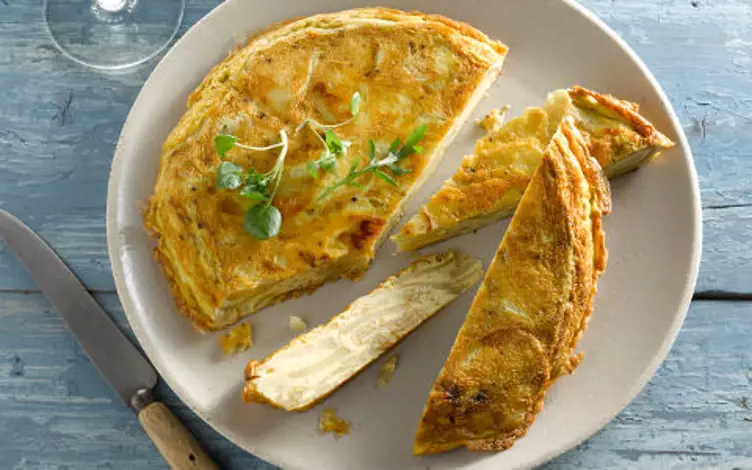
Recipe Score :
0.34
Details of the Ingredients:
- Egg: Quantité: 33g
Allergenicity: Eggs from birds contain several proteins capable of inducing an immune response in man most of these are present in the egg white. Allergenic proteins in the yolk only contribute to a minor degree and isolated allergy to egg yolk proteins are rare (see cross reactions). Most of the allergenic proteins present in the egg white are both heat- and digestion resistant and may also be found in the house dust in normal households. Although not thoroughly investigated, sensitization is believed to take place by ingestion of egg proteins in the diet even the minute quantities present in human milk can sensitize the infant in some cases, where a reaction is elicited the very first time the infant eats a meal containing egg. Ingestion of egg will in sensitized individuals elicit an immediate allergic reaction starting with itching of the mouth and pharynx, followed by nettle rash (urticaria), vomiting, rhinoconjunctivitis, asthma and in rare cases anaphylaxis. Exacerbation of atopic eczema may be seen also, but isolated reactions taking place hours to days after intake, without a previous immediate reaction, are rare.
HypoAllergenic Traitement : gastric enzyme supplementation/ Dry heating with mannose, heating for 15 minutes at 95 °C
Score: 0.87 - Olive Oil: Quantité: 3g
Allergenicity: contact dermatitis
HypoAllergenic Traitement : ND
Score: 0.17 - Onion: Quantité: 10g
Allergenicity: contact allergy, anaphylaxis, asthma, rhinoconjunctivitis
HypoAllergenic Traitement : the reactivity is lowered when cooked
Score: 0.17 - Potato: Quantité: 53g
Allergenicity: Potato is considered a rarely allergenic food and is frequently used in elimination diets and as part of the placebo in challenge protocols. However, many cases of food allergy after eating cooked potato have been reported and skin prick tests suggest that sensitization to raw potato is relatively common. Cases of contact allergy to raw potatoes have also been reported. The symptoms reported include reactions of the skin such as urticaria (hives), angioedema (wheals) and eczema, respiratory symptoms such as rhinitis, cough and wheezing and gastrointestinal symptoms such as vomiting and diarrhoea. Most reactions occurred within 2 hours (immediate reactions) but delayed reactions have also been reported. Allergy to cooked potato is related to tomato allergy and to latex allergy. Sensitization to raw potato may also be related to pollen allergies.
HypoAllergenic Traitement : the reactivity is lowered when cooked
Score: 0.17
Scientifique Name of the ingredients :
- Egg: Gallus gallus
- Olive Oil: Olea europaea
- Onion: Allium cepa var. aggregatum
- Potato: Solanum tuberosum
Molecular Allergens of Ingredients :
- Egg: Gal d 4.0101 (UniProt: P00698) - Superfamille: Lysozyme-like
- Egg: Gal d 1.0101 (UniProt: P01005) - Superfamille: Kazal-type serine protease inhibitors
- Egg: Gal d 2.0101 (UniProt: P01012) - Superfamille: Serpins
- Egg: Gal d 3.0101 (UniProt: P02789) - Superfamille: Periplasmic binding protein-like II
- Egg: Gal d OIH (UniProt: P10184) - Superfamille: Kazal-type serine protease inhibitors
- Egg: Gal d 5.0101 (UniProt: P19121) - Superfamille: Serum albumin-like
- Egg: Gal d Phosvitin (UniProt: P67869) - Superfamille: Casein kinase II beta subunit
- Egg: Gal d 6.0101 (UniProt: P87498) - Superfamille: Lipovitellin-phosvitin complex, superhelical domain
- Egg: Gal d 3 (UniProt: Q4ADG4) - Superfamille: Periplasmic binding protein-like II
- Egg: Gal d L-PGDS (UniProt: Q8QFM7) - Superfamille: Lipocalins
- Egg: Gal d 1 (UniProt: B6V1G0) - Superfamille: Kazal-type serine protease inhibitors
- Olive Oil: Ole e 13.0101 (UniProt: E3SU11) - Superfamille: Osmotin, thaumatin-like protein
- Onion: All a Alliin lyase (UniProt: P31756) - Superfamille: PLP-dependent transferases
- Onion: All c Alliin lyase (UniProt: P31757) - Superfamille: PLP-dependent transferases
- Potato: Sola t 1 (UniProt: P07745)
- Potato: Sola t 1.0101 (UniProt: P15476)
- Potato: Sola t 2.0101 (UniProt: P16348) - Superfamille: STI-like
- Potato: Sola t 3 (UniProt: Q6PMR6) - Superfamille: STI-like
- Potato: Sola t 3.0101 (UniProt: O24383) - Superfamille: STI-like
- Potato: Sola t 3.0102 (UniProt: P20347) - Superfamille: STI-like
- Potato: Sola t 4.0101 (UniProt: P30941) - Superfamille: STI-like
- Potato: Sola t 7k (UniProt: M1CHX3) - Superfamille: Bifunctional inhibitor/lipid-transfer protein/seed storage 2S albumin
- Potato: Sola t 8 (UniProt: M1BLC8) - Superfamille: Profilin (actin-binding protein)
- Potato: Sola t Glucanase (UniProt: P52401) - Superfamille: (Trans)glycosidases
- Ingredients used :
- Ingredient 1 : 33g of Egg
- Ingredient 2 : 3g of Olive Oil
- Ingredient 3 : 10g of Onion
- Ingredient 4 : 53g of Potato
- Steps of preparation
- Step 1 : Peel the potatoes, wash them, and dry them. Slice them and reserve them in a large bowl.
- Step 2 : In a frying pan, add olive oil and heat it on the stove. Once hot, add the potatoes and let them fry for 20 - 30 minutes.
- Step 3 : While the potatoes are frying, crack the eggs into a bowl and beat them, then set aside. Peel the onion and finely chop it.
- Step 4 : In another frying pan, add more olive oil and the chopped onion. Sauté it until it caramelizes. Drain it and then add it to the bowl with the beaten eggs.
- Step 5 : Drain the potatoes and add them to the bowl with the onion and eggs, letting it rest for 15 minutes.
- Step 6 : Add the mixture to a pan with a little oil and cook it for 4 minutes on medium-high heat on each side, then serve.
4 - Torrija with horchata
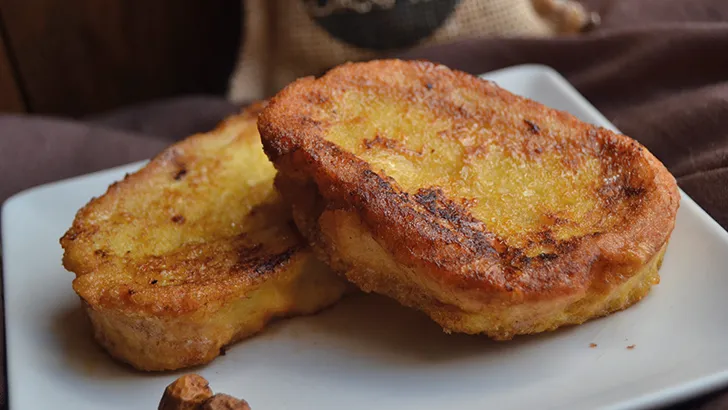
Recipe Score :
0.50
Details of the Ingredients:
- Egg: Quantité: 3.3g
Allergenicity: Eggs from birds contain several proteins capable of inducing an immune response in man most of these are present in the egg white. Allergenic proteins in the yolk only contribute to a minor degree and isolated allergy to egg yolk proteins are rare (see cross reactions). Most of the allergenic proteins present in the egg white are both heat- and digestion resistant and may also be found in the house dust in normal households. Although not thoroughly investigated, sensitization is believed to take place by ingestion of egg proteins in the diet even the minute quantities present in human milk can sensitize the infant in some cases, where a reaction is elicited the very first time the infant eats a meal containing egg. Ingestion of egg will in sensitized individuals elicit an immediate allergic reaction starting with itching of the mouth and pharynx, followed by nettle rash (urticaria), vomiting, rhinoconjunctivitis, asthma and in rare cases anaphylaxis. Exacerbation of atopic eczema may be seen also, but isolated reactions taking place hours to days after intake, without a previous immediate reaction, are rare.
HypoAllergenic Traitement : gastric enzyme supplementation/ Dry heating with mannose, heating for 15 minutes at 95 °C
Score: 0.87 - Olive Oil: Quantité: 26.1g
Allergenicity: contact dermatitis
HypoAllergenic Traitement : ND
Score: 0.17 - bread: Quantité: 15.7g
Allergenicity: Adverse reactions to wheat have been more frequently reported than to other cereal-based foods. The best defined of these are coeliac disease and IgE-dependent wheat allergy, both of which result from malfunctioning of the immune system. Allergies to other cereals such as maize, sorghum and millet, are not common and are not related to reactions triggered by wheat, rye, barley and oats. As a consequence individuals with wheat allergy, including coeliac disease, can usually eat maize-based foods such as polenta. However, allergic reactions to maize can result from the fruit allergies found in the South of Europe which often start with reactions to peach. Coeliac disease is triggered by the gluten fraction of wheat or by the gluten-like proteins found in other closely related cereals such as rye, barley. Some sensitive individuals may also react to oats. The gut reacts to the gluten and becomes smooth, loosing its ability to absorb nutrients; symptoms including diarrhoea as well as deficiencies in nutrients like vitamins. It can manifest itself in childhood, affecting childrens growth and development, or in adult hood. As there is no cure individuals with coeliac disease have to avoid eating gluten for life. However, coeliac disease does not cause the potentially fatal reaction of anaphylaxis if gluten is accidentally eaten. In contrast IgE-mediated cereal allergies can be caused by the antibody molecule IgE binding to many proteins, not just gluten. Sometimes the reactions (often severe) only develop if an individual takes exercise within a few hours of eating wheat or related cereals, in a condition called exercise-induced anaphylaxis. Individuals with wheat allergy often react to closely related cereals like barley and rye, less frequently to the more distant relative, oats. Diagnosis of cereal allergies can be complicated by the fact that some of the blood tests for cereal food allergy can accidentally detect allergy to grass pollens instead. As a consequence of these adverse reactions, cereals containing gluten, (i.e. wheat, rye, barley, oats, spelt or their hybridized strains) have been included in Annex IIIa of the food labelling directive along with derived products. Temporary exceptions to the labelling rule (derogations) have been granted for wheat based glucose syrups including dextrose, wheat based maltodextrins, glucose syrups based on barley and cereals used in distillates for spirits.
HypoAllergenic Traitement : Yusing young cereal grains
Score: 0.48 - Tiger nut horchata: Quantité: 52.3g
Allergenicity: ND No data
HypoAllergenic Traitement : unknown
Score: 0.17
Scientifique Name of the ingredients :
- Egg: Gallus gallus
- Olive Oil: Olea europaea
- bread: Triticum aestivum
- Tiger nut horchata: Cyperus esculentus L.
Molecular Allergens of Ingredients :
- bread: Tri a 45 (UniProt: W5HIH8) - Superfamille: Zinc beta-ribbon
- bread: Tri a 28.0101 (UniProt: Q4W0V7) - Superfamille: Bifunctional inhibitor/lipid-transfer protein/seed storage 2S albumin
- bread: Tri a 30 (UniProt: Q53YX8) - Superfamille: Bifunctional inhibitor/lipid-transfer protein/seed storage 2S albumin
- bread: Tri a 30.0101 (UniProt: P17314) - Superfamille: Bifunctional inhibitor/lipid-transfer protein/seed storage 2S albumin
- bread: Tri a 33 (UniProt: P93692) - Superfamille: Serpins
- bread: Tri a 33.0101 (UniProt: Q9ST57) - Superfamille: Serpins
- bread: Tri a 36 (UniProt: P10385) - Superfamille: Bifunctional inhibitor/lipid-transfer protein/seed storage 2S albumin
- bread: Tri a 36.0101 (UniProt: B2Y2Q7) - Superfamille: Bifunctional inhibitor/lipid-transfer protein/seed storage 2S albumin
- bread: Tri a 37 (UniProt: P32032) - Superfamille: Crambin-like
- bread: Tri a 37.0101 (UniProt: Q9T0P1) - Superfamille: Crambin-like
- bread: Tri a 41.0101 (UniProt: A0A0G3F2P1) - Superfamille: RING/U-box
- bread: Tri a 44 (UniProt: B2C4K0) - Superfamille: Bifunctional inhibitor/lipid-transfer protein/seed storage 2S albumin
- bread: Tri a 44.0101 (UniProt: A0A0G3F720) - Superfamille: Bifunctional inhibitor/lipid-transfer protein/seed storage 2S albumin
- bread: Tri a 28 (UniProt: P01085) - Superfamille: Bifunctional inhibitor/lipid-transfer protein/seed storage 2S albumin
- bread: Tri a 45.0101 (UniProt: A0A0G3F715) - Superfamille: Zinc beta-ribbon
- bread: Tri a 7kLTP (UniProt: P82900) - Superfamille: Bifunctional inhibitor/lipid-transfer protein/seed storage 2S albumin
- bread: Tri a aA_SI (UniProt: P16347) - Superfamille: STI-like
- bread: Tri a alpha_Gliadin (UniProt: Q1WA40) - Superfamille: Bifunctional inhibitor/lipid-transfer protein/seed storage 2S albumin
- bread: Tri a Chitinase (UniProt: Q8W429) - Superfamille: Lysozyme-like
- bread: Tri a CMX (UniProt: Q43691) - Superfamille: Bifunctional inhibitor/lipid-transfer protein/seed storage 2S albumin
- bread: Tri a GBSS_I (UniProt: P27736) - Superfamille: UDP-Glycosyltransferase/glycogen phosphorylase
- bread: Tri a Peroxidase (UniProt: Q05855) - Superfamille: Heme-dependent peroxidases
- bread: Tri a Peroxidase 1 (UniProt: Q8LK23) - Superfamille: Heme-dependent peroxidases
- bread: Tri a TLP (UniProt: P27357) - Superfamille: Osmotin, thaumatin-like protein
- bread: Tri a Tritin (UniProt: Q07810) - Superfamille: Ribosome inactivating proteins (RIP)
- bread: Tri a XI (UniProt: Q8L5C6) - Superfamille: (Trans)glycosidases
- bread: Tri a 26.0201 (UniProt: Q45R38) - Superfamille: Bifunctional inhibitor/lipid-transfer protein/seed storage 2S albumin
- bread: Tri a 10kD (UniProt: Q4W1F9) - Superfamille: Bifunctional inhibitor/lipid-transfer protein/seed storage 2S albumin
- bread: Tri a 12 (UniProt: P49233) - Superfamille: Profilin (actin-binding protein)
- bread: Tri a 14 (UniProt: P24296) - Superfamille: Bifunctional inhibitor/lipid-transfer protein/seed storage 2S albumin
- bread: Tri a 17.0101 (UniProt: P93594) - Superfamille: (Trans)glycosidases
- bread: Tri a 18 (UniProt: P10969) - Superfamille: Plant lectins/antimicrobial peptides
- bread: Tri a 18.0101 (UniProt: P10968) - Superfamille: Plant lectins/antimicrobial peptides
- bread: Tri a 20.0101 (UniProt: A0A060N479) - Superfamille: Bifunctional inhibitor/lipid-transfer protein/seed storage 2S albumin
- bread: Tri a 23kD (UniProt: Q4W1G0) - Superfamille: L domain-like
- bread: Tri a 25.0101 (UniProt: Q9LDX4) - Superfamille: Thioredoxin-like
- bread: Tri a 26 (UniProt: P08489) - Superfamille: Bifunctional inhibitor/lipid-transfer protein/seed storage 2S albumin
- bread: Tri a 26.0101 (UniProt: P10388) - Superfamille: Bifunctional inhibitor/lipid-transfer protein/seed storage 2S albumin
- bread: Tri a 20 (UniProt: P21292) - Superfamille: Bifunctional inhibitor/lipid-transfer protein/seed storage 2S albumin
- Egg: Gal d 4.0101 (UniProt: P00698) - Superfamille: Lysozyme-like
- Egg: Gal d 1.0101 (UniProt: P01005) - Superfamille: Kazal-type serine protease inhibitors
- Egg: Gal d 2.0101 (UniProt: P01012) - Superfamille: Serpins
- Egg: Gal d 3.0101 (UniProt: P02789) - Superfamille: Periplasmic binding protein-like II
- Egg: Gal d OIH (UniProt: P10184) - Superfamille: Kazal-type serine protease inhibitors
- Egg: Gal d 5.0101 (UniProt: P19121) - Superfamille: Serum albumin-like
- Egg: Gal d Phosvitin (UniProt: P67869) - Superfamille: Casein kinase II beta subunit
- Egg: Gal d 6.0101 (UniProt: P87498) - Superfamille: Lipovitellin-phosvitin complex, superhelical domain
- Egg: Gal d 3 (UniProt: Q4ADG4) - Superfamille: Periplasmic binding protein-like II
- Egg: Gal d L-PGDS (UniProt: Q8QFM7) - Superfamille: Lipocalins
- Egg: Gal d 1 (UniProt: B6V1G0) - Superfamille: Kazal-type serine protease inhibitors
- Olive Oil: Ole e 13.0101 (UniProt: E3SU11) - Superfamille: Osmotin, thaumatin-like protein
- Ingredients used :
- Ingredient 1 : 3.3g of Egg
- Ingredient 2 : 26.1g of Olive Oil
- Ingredient 3 : 15.7g of bread
- Ingredient 4 : 52.3g of Tiger nut horchata
- Steps of preparation
- Step 1 : We pour 1 liter of horchata into a fountain or container in which we are going to soak the bread. We put 10 slices of day-old bread with the horchata and let them absorb the horchata, about 10-15 minutes on each side will be enough.
- Step 2 : Drain the excess horchata by placing the bread slices on a rack.
- Step 3 : We pass the bread through 1 egg beaten on both sides.
- Step 4 : Heat the sunflower oil, about 500 ml or enough to fry the torrijas, in a low saucepan or frying pan until it reaches 180ºC, ideally. We fry the torrijas on both sides until they are golden to our liking.
- Step 5 : We leave the torrijas on kitchen paper to eliminate excess oil. Next, we coat the torrijas on both sides with white sugar.
- Step 6 : We serve the horchata torrijas warm or cold.
5 - Valencian hake
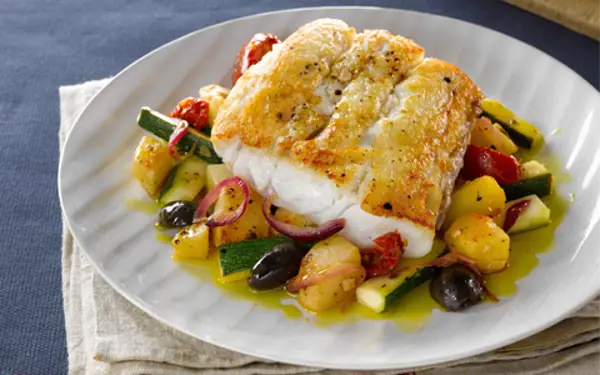
Recipe Score :
0.24
Details of the Ingredients:
- Black pepper: Quantité: 1g
Allergenicity: respiratory symptoms, contact dermatitis
HypoAllergenic Traitement : Eviction: the only way to manage allergens is by complete abstinence from the food
Score: 0.17 - Egg: Quantité: 7g
Allergenicity: Eggs from birds contain several proteins capable of inducing an immune response in man most of these are present in the egg white. Allergenic proteins in the yolk only contribute to a minor degree and isolated allergy to egg yolk proteins are rare (see cross reactions). Most of the allergenic proteins present in the egg white are both heat- and digestion resistant and may also be found in the house dust in normal households. Although not thoroughly investigated, sensitization is believed to take place by ingestion of egg proteins in the diet even the minute quantities present in human milk can sensitize the infant in some cases, where a reaction is elicited the very first time the infant eats a meal containing egg. Ingestion of egg will in sensitized individuals elicit an immediate allergic reaction starting with itching of the mouth and pharynx, followed by nettle rash (urticaria), vomiting, rhinoconjunctivitis, asthma and in rare cases anaphylaxis. Exacerbation of atopic eczema may be seen also, but isolated reactions taking place hours to days after intake, without a previous immediate reaction, are rare.
HypoAllergenic Traitement : gastric enzyme supplementation/ Dry heating with mannose, heating for 15 minutes at 95 °C
Score: 0.87 - Hake: Quantité: 46g
Allergenicity: Allergy to fin fish is relatively common, and can be associated with severe symptoms such as anaphylactic shock. Symptoms occur after ingestion. Allergy to fish is not to be confused with a toxic reaction to histamine in spoiled fish (scombroid fish poisoning). Almost all fish allergy seems to involve the protein parvalbumin, which is found in the muscle of most fish. As the parvalbumins are similar in all fish species, individuals allergic to one fish are likely to react to a range of different fish species. Thus after a diagnosis of allergy to one fish species, patients are normally advised to avoid all fin fish. Some individuals also react to frog. Although fin fish and shellfish allergies are not linked, individuals can be allergic to both foods. Parvalbumin remains able to cause a reaction after cooking. Thus fish remains allergenic after cooking and other treatments. Fish can be a "hidden" allergen in, for example, pizza toppings. Consequently, the EU labelling regulations require foods containing fish and products thereof to be labelled.
HypoAllergenic Traitement : Dry heating with glucose, lactose, and galactose
Score: 0.48 - Nocellara del Belice DOP olive: Quantité: 6g
Allergenicity: itching and generalised urticaria after the ingestion of olive fruit
HypoAllergenic Traitement : the reactivity is lowered when cooked
Score: 0.17 - Olive Oil: Quantité: 1g
Allergenicity: contact dermatitis
HypoAllergenic Traitement : ND
Score: 0.17 - Onion: Quantité: 12g
Allergenicity: contact allergy, anaphylaxis, asthma, rhinoconjunctivitis
HypoAllergenic Traitement : the reactivity is lowered when cooked
Score: 0.17 - Raisins / grape/ wine: Quantité: 10g
Allergenicity: airway reactions (rhinitis and asthma)
HypoAllergenic Traitement : NT
Score: 0.17 - bread: Quantité: 1g
Allergenicity: Adverse reactions to wheat have been more frequently reported than to other cereal-based foods. The best defined of these are coeliac disease and IgE-dependent wheat allergy, both of which result from malfunctioning of the immune system. Allergies to other cereals such as maize, sorghum and millet, are not common and are not related to reactions triggered by wheat, rye, barley and oats. As a consequence individuals with wheat allergy, including coeliac disease, can usually eat maize-based foods such as polenta. However, allergic reactions to maize can result from the fruit allergies found in the South of Europe which often start with reactions to peach. Coeliac disease is triggered by the gluten fraction of wheat or by the gluten-like proteins found in other closely related cereals such as rye, barley. Some sensitive individuals may also react to oats. The gut reacts to the gluten and becomes smooth, loosing its ability to absorb nutrients; symptoms including diarrhoea as well as deficiencies in nutrients like vitamins. It can manifest itself in childhood, affecting childrens growth and development, or in adult hood. As there is no cure individuals with coeliac disease have to avoid eating gluten for life. However, coeliac disease does not cause the potentially fatal reaction of anaphylaxis if gluten is accidentally eaten. In contrast IgE-mediated cereal allergies can be caused by the antibody molecule IgE binding to many proteins, not just gluten. Sometimes the reactions (often severe) only develop if an individual takes exercise within a few hours of eating wheat or related cereals, in a condition called exercise-induced anaphylaxis. Individuals with wheat allergy often react to closely related cereals like barley and rye, less frequently to the more distant relative, oats. Diagnosis of cereal allergies can be complicated by the fact that some of the blood tests for cereal food allergy can accidentally detect allergy to grass pollens instead. As a consequence of these adverse reactions, cereals containing gluten, (i.e. wheat, rye, barley, oats, spelt or their hybridized strains) have been included in Annex IIIa of the food labelling directive along with derived products. Temporary exceptions to the labelling rule (derogations) have been granted for wheat based glucose syrups including dextrose, wheat based maltodextrins, glucose syrups based on barley and cereals used in distillates for spirits.
HypoAllergenic Traitement : Yusing young cereal grains
Score: 0.48
Scientifique Name of the ingredients :
- Black pepper: Piper nigrum L.
- Egg: Gallus gallus
- Hake: Merluccius paradoxus
- Nocellara del Belice DOP olive: Nom scientifique non disponible
- Olive Oil: Olea europaea
- Onion: Allium cepa var. aggregatum
- Raisins / grape/ wine: Vitis vinifera
- bread: Triticum aestivum
Molecular Allergens of Ingredients :
- Black pepper: Pip n 28kD (UniProt: Pip n - 13216) - Superfamille: Germin, Germin-like Protein
- Black pepper: Pip n 14kD (UniProt: Pip n - 13216)
- bread: Tri a 37.0101 (UniProt: Q9T0P1) - Superfamille: Crambin-like
- bread: Tri a 25.0101 (UniProt: Q9LDX4) - Superfamille: Thioredoxin-like
- bread: Tri a 37 (UniProt: P32032) - Superfamille: Crambin-like
- bread: Tri a 36.0101 (UniProt: B2Y2Q7) - Superfamille: Bifunctional inhibitor/lipid-transfer protein/seed storage 2S albumin
- bread: Tri a 36 (UniProt: P10385) - Superfamille: Bifunctional inhibitor/lipid-transfer protein/seed storage 2S albumin
- bread: Tri a 33.0101 (UniProt: Q9ST57) - Superfamille: Serpins
- bread: Tri a 33 (UniProt: P93692) - Superfamille: Serpins
- bread: Tri a 30.0101 (UniProt: P17314) - Superfamille: Bifunctional inhibitor/lipid-transfer protein/seed storage 2S albumin
- bread: Tri a 30 (UniProt: Q53YX8) - Superfamille: Bifunctional inhibitor/lipid-transfer protein/seed storage 2S albumin
- bread: Tri a 28.0101 (UniProt: Q4W0V7) - Superfamille: Bifunctional inhibitor/lipid-transfer protein/seed storage 2S albumin
- bread: Tri a 28 (UniProt: P01085) - Superfamille: Bifunctional inhibitor/lipid-transfer protein/seed storage 2S albumin
- bread: Tri a 26.0201 (UniProt: Q45R38) - Superfamille: Bifunctional inhibitor/lipid-transfer protein/seed storage 2S albumin
- bread: Tri a 26.0101 (UniProt: P10388) - Superfamille: Bifunctional inhibitor/lipid-transfer protein/seed storage 2S albumin
- bread: Tri a 26 (UniProt: P08489) - Superfamille: Bifunctional inhibitor/lipid-transfer protein/seed storage 2S albumin
- bread: Tri a XI (UniProt: Q8L5C6) - Superfamille: (Trans)glycosidases
- bread: Tri a 41.0101 (UniProt: A0A0G3F2P1) - Superfamille: RING/U-box
- bread: Tri a 44 (UniProt: B2C4K0) - Superfamille: Bifunctional inhibitor/lipid-transfer protein/seed storage 2S albumin
- bread: Tri a 44.0101 (UniProt: A0A0G3F720) - Superfamille: Bifunctional inhibitor/lipid-transfer protein/seed storage 2S albumin
- bread: Tri a 45 (UniProt: W5HIH8) - Superfamille: Zinc beta-ribbon
- bread: Tri a 45.0101 (UniProt: A0A0G3F715) - Superfamille: Zinc beta-ribbon
- bread: Tri a 7kLTP (UniProt: P82900) - Superfamille: Bifunctional inhibitor/lipid-transfer protein/seed storage 2S albumin
- bread: Tri a aA_SI (UniProt: P16347) - Superfamille: STI-like
- bread: Tri a alpha_Gliadin (UniProt: Q1WA40) - Superfamille: Bifunctional inhibitor/lipid-transfer protein/seed storage 2S albumin
- bread: Tri a Chitinase (UniProt: Q8W429) - Superfamille: Lysozyme-like
- bread: Tri a CMX (UniProt: Q43691) - Superfamille: Bifunctional inhibitor/lipid-transfer protein/seed storage 2S albumin
- bread: Tri a GBSS_I (UniProt: P27736) - Superfamille: UDP-Glycosyltransferase/glycogen phosphorylase
- bread: Tri a Peroxidase (UniProt: Q05855) - Superfamille: Heme-dependent peroxidases
- bread: Tri a Peroxidase 1 (UniProt: Q8LK23) - Superfamille: Heme-dependent peroxidases
- bread: Tri a TLP (UniProt: P27357) - Superfamille: Osmotin, thaumatin-like protein
- bread: Tri a Tritin (UniProt: Q07810) - Superfamille: Ribosome inactivating proteins (RIP)
- bread: Tri a 20.0101 (UniProt: A0A060N479) - Superfamille: Bifunctional inhibitor/lipid-transfer protein/seed storage 2S albumin
- bread: Tri a 20 (UniProt: P21292) - Superfamille: Bifunctional inhibitor/lipid-transfer protein/seed storage 2S albumin
- bread: Tri a 18.0101 (UniProt: P10968) - Superfamille: Plant lectins/antimicrobial peptides
- bread: Tri a 18 (UniProt: P10969) - Superfamille: Plant lectins/antimicrobial peptides
- bread: Tri a 17.0101 (UniProt: P93594) - Superfamille: (Trans)glycosidases
- bread: Tri a 14 (UniProt: P24296) - Superfamille: Bifunctional inhibitor/lipid-transfer protein/seed storage 2S albumin
- bread: Tri a 12 (UniProt: P49233) - Superfamille: Profilin (actin-binding protein)
- bread: Tri a 10kD (UniProt: Q4W1F9) - Superfamille: Bifunctional inhibitor/lipid-transfer protein/seed storage 2S albumin
- bread: Tri a 23kD (UniProt: Q4W1G0) - Superfamille: L domain-like
- Egg: Gal d L-PGDS (UniProt: Q8QFM7) - Superfamille: Lipocalins
- Egg: Gal d 1 (UniProt: B6V1G0) - Superfamille: Kazal-type serine protease inhibitors
- Egg: Gal d 3 (UniProt: Q4ADG4) - Superfamille: Periplasmic binding protein-like II
- Egg: Gal d 6.0101 (UniProt: P87498) - Superfamille: Lipovitellin-phosvitin complex, superhelical domain
- Egg: Gal d Phosvitin (UniProt: P67869) - Superfamille: Casein kinase II beta subunit
- Egg: Gal d 5.0101 (UniProt: P19121) - Superfamille: Serum albumin-like
- Egg: Gal d OIH (UniProt: P10184) - Superfamille: Kazal-type serine protease inhibitors
- Egg: Gal d 3.0101 (UniProt: P02789) - Superfamille: Periplasmic binding protein-like II
- Egg: Gal d 2.0101 (UniProt: P01012) - Superfamille: Serpins
- Egg: Gal d 1.0101 (UniProt: P01005) - Superfamille: Kazal-type serine protease inhibitors
- Egg: Gal d 4.0101 (UniProt: P00698) - Superfamille: Lysozyme-like
- Hake: Mer pa 1 (UniProt: P86768) - Superfamille: EF-hand
- Hake: Mer pa NDKB (UniProt: P85284) - Superfamille: Nucleoside diphosphate kinase, NDK
- Olive Oil: Ole e 13.0101 (UniProt: E3SU11) - Superfamille: Osmotin, thaumatin-like protein
- Onion: All a Alliin lyase (UniProt: P31756) - Superfamille: PLP-dependent transferases
- Onion: All c Alliin lyase (UniProt: P31757) - Superfamille: PLP-dependent transferases
- Raisins / grape/ wine: Vit v 1 (UniProt: Q850K6) - Superfamille: Bifunctional inhibitor/lipid-transfer protein/seed storage 2S albumin
- Raisins / grape/ wine: Vit v 1.0101 (UniProt: P80274) - Superfamille: Bifunctional inhibitor/lipid-transfer protein/seed storage 2S albumin
- Raisins / grape/ wine: Vit v 4 (UniProt: A5BLM8) - Superfamille: Profilin (actin-binding protein)
- Raisins / grape/ wine: Vit v 8 (UniProt: Q9FS42) - Superfamille: Bet v1-like
- Raisins / grape/ wine: Vit v Glucanase (UniProt: Q9M563) - Superfamille: (Trans)glycosidases
- Raisins / grape/ wine: Vit v TLP (UniProt: Q9LLB7) - Superfamille: Osmotin, thaumatin-like protein
- Ingredients used :
- Ingredient 1 : 1g of Black pepper
- Ingredient 2 : 7g of Egg
- Ingredient 3 : 46g of Hake
- Ingredient 4 : 6g of Nocellara del Belice DOP olive
- Ingredient 5 : 1g of Olive Oil
- Ingredient 6 : 12g of Onion
- Ingredient 7 : 10g of Raisins / grape/ wine
- Ingredient 8 : 1g of bread
- Steps of preparation
- Step 1 : Boil the eggs for 5 minutes. After time, add cold water and set aside the hard-boiled eggs. Slice the olives into thin rounds and peel the boiled eggs to chop them later.
- Step 2 : In a frying pan, heat olive oil. Peel and thinly julienne the onion and add it to the pan when the oil is hot.
- Step 3 : Once the onion is sautéed, add the hake fillets and cook them.
- Step 4 : Add fish broth, pepper, water, wine, bread crumbs, olives, and eggs. To mix well, move the pan to avoid breaking the hake fillets in the sauce.
- Step 5 : Cover the Valencian-style hake and let it come to a boil. Keep on the heat, stirring occasionally, until the liquid reduces, and the sauce thickens. Remove from heat and plate.
6 - Valencian paella
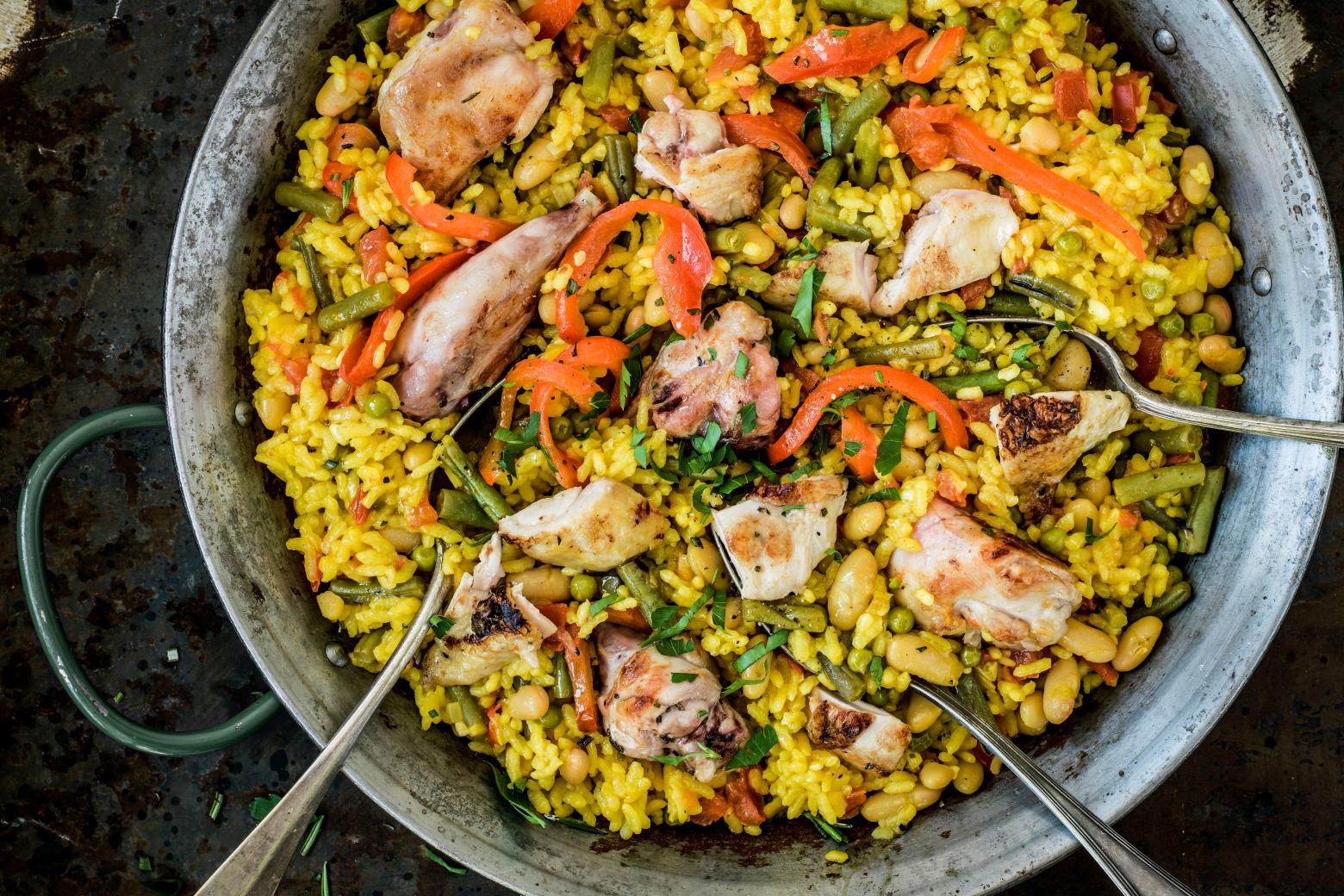
Recipe Score :
0.17
Details of the Ingredients:
- Beans: Quantité: 4g
Allergenicity: nasobronchial and allergic rhinitis
HypoAllergenic Traitement : Cooking at 100 °C for 30 min could completely inactivate the hemagglutinin activity of lectins
Score: 0.17 - Bomba rice: Quantité: 41g
Allergenicity: Rice allergy seems uncommon in Europe or America but the reported symptoms have involved the skin (urticaria), respiratory symptoms (asthma), gastrointestinal symptoms (nausea) and anaphylatic shock, sometimes induced by exercise.; Rice allergy is reported as more common in Japan and has been associated with atopic ezcema.
HypoAllergenic Traitement : Yusing young cereal grains
Score: 0.17 - Chicken: Quantité: 16g
Allergenicity: ND
HypoAllergenic Traitement : heat, homogenization and freeze-drying
Score: 0.17 - Olive Oil: Quantité: 3g
Allergenicity: contact dermatitis
HypoAllergenic Traitement : ND
Score: 0.17 - Paprika: Quantité: 1g
Allergenicity: contact urticaria, rhinoconjunctivitis
HypoAllergenic Traitement : the reactivity is lowered when cooked
Score: 0.17 - Peas: Quantité: 8g
Allergenicity: urticaria, emesis, angioedema or rhinitis) severity, severe reactions with wheezing and dyspnoea.
HypoAllergenic Traitement : the reactivity is lowered when cooked
Score: 0.17 - Rabbit: Quantité: 20g
Allergenicity: severe allergic, symptoms, Anaphylaxis
HypoAllergenic Traitement : heat, homogenization and freeze-drying
Score: 0.17 - Rosemary: Quantité: 1g
Allergenicity: asthma, contact dermatitis
HypoAllergenic Traitement : ND
Score: 0.17 - Saffron: Quantité: 1g
Allergenicity: anaphylaxis, asthma, rhinoconjunctivitis
HypoAllergenic Traitement : ND
Score: 0.17 - Tomato: Quantité: 4g
Allergenicity: tomato allergy is associated with allergy to either latex or pollen. The symptoms reported were rather different in the two groups. The patients with no latex allergy reported mostly the oral allergy syndrome with some skin reactions such as urticaria (hives). Patients with latex allergy reported urticaria as the most common reaction but 20% suffered anaphylaxis. Allergy to tomato is also linked to allergy to potato since they are related plants.
HypoAllergenic Traitement : TT: ThermalTreatment
Score: 0.17
Scientifique Name of the ingredients :
- Beans: Phaseolus vulgaris
- Bomba rice: Oryza sativa L.
- Chicken: Gallus gallus domesticus
- Olive Oil: Olea europaea
- Paprika: Capsicum annuum
- Peas: Pisum sativum
- Rabbit: Oryctolagus cuniculus
- Rosemary: Rosmarinus officinalis
- Saffron: Crocus sativus
- Tomato: Solanum lycopersicum
Molecular Allergens of Ingredients :
- Beans: Pha v 3.0201 (UniProt: D3W147) - Superfamille: Bifunctional inhibitor/lipid-transfer protein/seed storage 2S albumin
- Beans: Pha v 5 (UniProt: P49231) - Superfamille: Profilin (actin-binding protein)
- Beans: Pha v 6 (UniProt: P25985) - Superfamille: Bet v1-like
- Beans: Pha v aAI.0101 (UniProt: P02873) - Superfamille: Concanavalin A-like lectins/glucanases
- Beans: Pha v PHA (UniProt: P05088) - Superfamille: Concanavalin A-like lectins/glucanases
- Beans: Pha v Phaseolin (UniProt: P02853) - Superfamille: RmlC-like cupins
- Beans: Pha v 3.0101 (UniProt: D3W146) - Superfamille: Bifunctional inhibitor/lipid-transfer protein/seed storage 2S albumin
- Bomba rice: Ory s aA_TI (UniProt: Q01882) - Superfamille: Bifunctional inhibitor/lipid-transfer protein/seed storage 2S albumin
- Bomba rice: Ory s 32 (UniProt: P0C5C9) - Superfamille: Thioredoxin-like
- Bomba rice: Ory s NRA (UniProt: Q852L2) - Superfamille: RmlC-like cupins
- Bomba rice: Ory s GLP63 (UniProt: Q75GX9) - Superfamille: RmlC-like cupins
- Bomba rice: Ory s Glyoxalase I (UniProt: Q948T6) - Superfamille: Glyoxalase/Bleomycin resistance protein/Dihydroxybiphenyl dioxygenase
- Bomba rice: Ory s 19kD (UniProt: P29835) - Superfamille: Bifunctional inhibitor/lipid-transfer protein/seed storage 2S albumin
- Bomba rice: Ory s 17kD (UniProt: Q7X8H9) - Superfamille: Bifunctional inhibitor/lipid-transfer protein/seed storage 2S albumin
- Chicken: Gal d 8 (UniProt: P80026) - Superfamille: EF-hand
- Chicken: Gal d TM (UniProt: P04268) - Superfamille: Tropomyosin
- Chicken: Gal d HG (UniProt: P02112) - Superfamille: Globin-like
- Chicken: Gal d GPI (UniProt: Q5ZMU3) - Superfamille: SIS domain
- Chicken: Gal d 8.0101 (UniProt: C1L370) - Superfamille: EF-hand
- Chicken: Gal d 7.0101 (UniProt: P02604) - Superfamille: EF-hand
- Chicken: Gal d 10 (UniProt: R4GM10) - Superfamille: Aldolase
- Olive Oil: Ole e 13.0101 (UniProt: E3SU11) - Superfamille: Osmotin, thaumatin-like protein
- Paprika: Cap a 1.0101 (UniProt: Q9ARG0) - Superfamille: Osmotin, thaumatin-like protein
- Paprika: Cap a 2 (UniProt: Q6RG01) - Superfamille: Profilin (actin-binding protein)
- Paprika: Cap a 2.0101 (UniProt: Q93YI9) - Superfamille: Profilin (actin-binding protein)
- Paprika: Cap a 30kD (UniProt: Q42661) - Superfamille: Heme-dependent peroxidases
- Paprika: Cap a 4 (UniProt: B2CZJ6) - Superfamille: Bet v1-like
- Paprika: Cap a Glucanase (UniProt: Q9M5L5) - Superfamille: (Trans)glycosidases
- Peas: Pis s 1 (UniProt: P02854) - Superfamille: RmlC-like cupins
- Peas: Pis s Albumin (UniProt: P08688) - Superfamille: Hemopexin-like domain
- Peas: Pis s Agglutinin (UniProt: P02867) - Superfamille: Concanavalin A-like lectins/glucanases
- Peas: Pis s 6 (UniProt: P13239) - Superfamille: Bet v1-like
- Peas: Pis s 3.0101 (UniProt: A0A161AT60) - Superfamille: Bifunctional inhibitor/lipid-transfer protein/seed storage 2S albumin
- Peas: Pis s 2 (UniProt: P13915) - Superfamille: RmlC-like cupins
- Peas: Pis s 1.0102 (UniProt: Q702P0) - Superfamille: RmlC-like cupins
- Peas: Pis s 1.0101 (UniProt: Q702P1) - Superfamille: RmlC-like cupins
- Peas: Pis s 3 (UniProt: A0A158V755) - Superfamille: Bifunctional inhibitor/lipid-transfer protein/seed storage 2S albumin
- Rabbit: Ory c TM (UniProt: P58772) - Superfamille: Tropomyosin
- Rabbit: Ory c GAPDH (UniProt: G1TJG6) - Superfamille: Glyceraldehyde-3-phosphate dehydrogenases
- Saffron: Cro s 3.02 (UniProt: D2T0A6) - Superfamille: Bifunctional inhibitor/lipid-transfer protein/seed storage 2S albumin
- Tomato: Sola l Vicilin (UniProt: B0JEU3) - Superfamille: RmlC-like cupins
- Tomato: Sola l TLP (UniProt: P12670) - Superfamille: Osmotin, thaumatin-like protein
- Tomato: Sola l SOD (UniProt: P14831) - Superfamille: Cu,Zn superoxide dismutase-like
- Tomato: Sola l PG (UniProt: P05117) - Superfamille: Pectin lyase-like
- Tomato: Sola l Peroxidase (UniProt: P15003) - Superfamille: Heme-dependent peroxidases
- Tomato: Sola l Glucanase (UniProt: Q01413) - Superfamille: (Trans)glycosidases
- Tomato: Sola l Chitinase (UniProt: Q05539) - Superfamille: Lysozyme-like
- Tomato: Sola l 7 (UniProt: K4AYX7) - Superfamille: Bifunctional inhibitor/lipid-transfer protein/seed storage 2S albumin
- Tomato: Sola l 5.0101 (UniProt: P21568) - Superfamille: Cyclophilin-like
- Tomato: Sola l 5 (UniProt: K4D184) - Superfamille: Cyclophilin-like
- Tomato: Sola l 4.0201 (UniProt: K4CWC4) - Superfamille: Bet v1-like
- Tomato: Sola l 4.0101 (UniProt: O49881) - Superfamille: Bet v1-like
- Tomato: Sola l 4 (UniProt: K4CWC5) - Superfamille: Bet v1-like
- Tomato: Sola l 3.0101 (UniProt: P93224) - Superfamille: Bifunctional inhibitor/lipid-transfer protein/seed storage 2S albumin
- Tomato: Sola l 3 (UniProt: P27056) - Superfamille: Bifunctional inhibitor/lipid-transfer protein/seed storage 2S albumin
- Tomato: Sola l 1.0101 (UniProt: Q93YG7) - Superfamille: Profilin (actin-binding protein)
- Tomato: Sola l 1 (UniProt: Q41344) - Superfamille: Profilin (actin-binding protein)
- Ingredients used :
- Ingredient 1 : 4g of Beans
- Ingredient 2 : 41g of Bomba rice
- Ingredient 3 : 16g of Chicken
- Ingredient 4 : 3g of Olive Oil
- Ingredient 5 : 1g of Paprika
- Ingredient 6 : 8g of Peas
- Ingredient 7 : 20g of Rabbit
- Ingredient 8 : 1g of Rosemary
- Ingredient 9 : 1g of Saffron
- Ingredient 10 : 4g of Tomato
- Steps of preparation
- Step 1 : Pour the olive oil into the paella pan and ignite the flame. Once the oil is hot, add the diced chicken and rabbit, and sauté until they turn golden brown.
- Step 2 : Add the vegetables and sauté. Add the grated tomato and fry while stirring constantly.
- Step 3 : Add the paprika. It's important to stir as soon as it's added to prevent it from burning. Then, pour in water up to the rivets of the paella pan. Add rosemary, saffron, and salt.
- Step 4 : Once it comes to a boil, let it boil vigorously for 5 minutes. Then, reduce the heat to medium and let it cook for 20 to 30 minutes. Increase the heat to add the rice.
- Step 5 : Traditionally, add the rice in the shape of a cross in the water and distribute it evenly across the surface of the pan. Adjust for salt if necessary.
- Step 6 : Maintain high heat for 10 minutes, then reduce the heat to medium for a similar amount of time until the rice reaches its desired level of doneness. Serve and accompany with lemon to taste.
7 - Valencian titaina
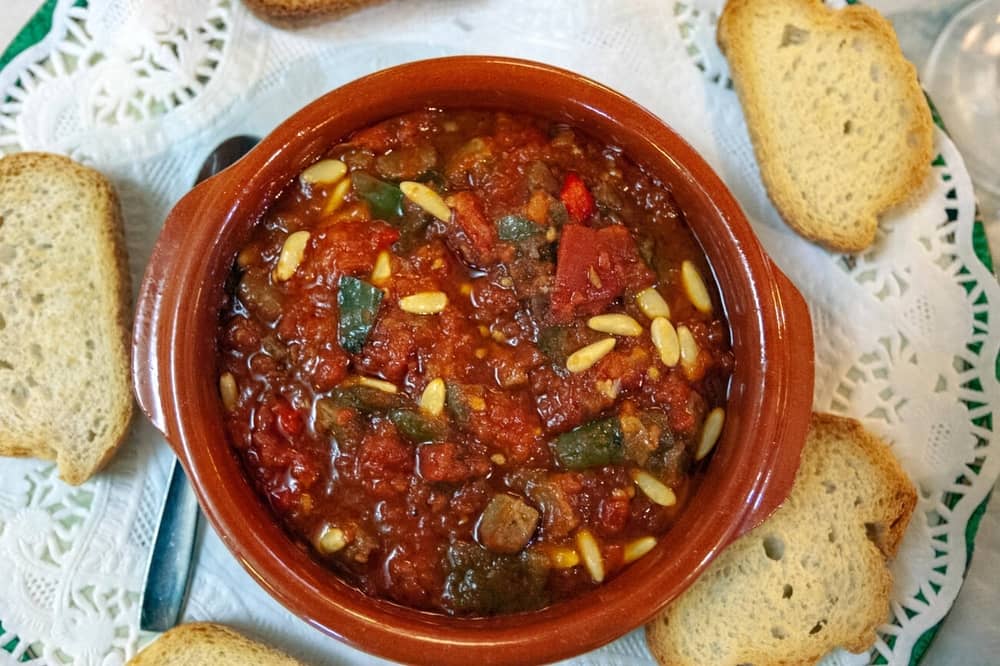
Recipe Score :
0.22
Details of the Ingredients:
- Bell Peppers: Quantité: 4g
Allergenicity: respiratory symptoms rather than reactions of the mouth or skin (most commonly rhinoconjunctivitis but also asthma) which is slightly unusual.; Headaches were also reported which are sometimes associated with allergic rhinitis but are otherwise rarely reported as a symptom of food allergy.; Allergy to bell pepper is often associated with the celery-birch-mugwort-spice syndrome.
HypoAllergenic Traitement : the reactivity is lowered when cooked
Score: 0.17 - Garlic: Quantité: 2g
Allergenicity: Garlic allergy is relatively rare although one case of severe symptoms has been reported after eating garlic. The individual suffered exercise induced anaphylaxis and on a subsequent occasion anaphylaxis without exercise.
HypoAllergenic Traitement : the reactivity is lowered when cooked
Score: 0.17 - Olive Oil: Quantité: 1g
Allergenicity: contact dermatitis
HypoAllergenic Traitement : ND
Score: 0.17 - Pine Nuts: Quantité: 3g
Allergenicity: Allergies to tree nuts and seeds tend to be of a more severe nature, causing life-threatening and sometimes fatal reactions. People with tree nut allergies also often suffer from reactions triggered by a number of different types of nuts, even though they do not come from closely related plant species. In general these allergies are triggered by the major proteins found in nuts and seeds which are resist processes such as cooking. Reactions to nuts and seeds can also occur as a consequence of hidden nut ingredients or traces of nuts and certain seeds introduced as a consequence of food handling or manufacturing. As a result tree nuts and seeds have been included in Annex IIIa of the EU food labelling directive.
HypoAllergenic Traitement : Eviction: the only way to manage allergens is by complete abstinence from the food
Score: 0.17 - Tomato: Quantité: 73g
Allergenicity: tomato allergy is associated with allergy to either latex or pollen. The symptoms reported were rather different in the two groups. The patients with no latex allergy reported mostly the oral allergy syndrome with some skin reactions such as urticaria (hives). Patients with latex allergy reported urticaria as the most common reaction but 20% suffered anaphylaxis. Allergy to tomato is also linked to allergy to potato since they are related plants.
HypoAllergenic Traitement : TT: ThermalTreatment
Score: 0.17 - Tuna loin: Quantité: 15g
Allergenicity: Allergy to fin fish is relatively common, and can be associated with severe symptoms such as anaphylactic shock. Symptoms occur after ingestion. Allergy to fish is not to be confused with a toxic reaction to histamine in spoiled fish (scombroid fish poisoning). Almost all fish allergy seems to involve the protein parvalbumin, which is found in the muscle of most fish. As the parvalbumins are similar in all fish species, individuals allergic to one fish are likely to react to a range of different fish species. Thus after a diagnosis of allergy to one fish species, patients are normally advised to avoid all fin fish. Some individuals also react to frog. Although fin fish and shellfish allergies are not linked, individuals can be allergic to both foods. Parvalbumin remains able to cause a reaction after cooking. Thus fish remains allergenic after cooking and other treatments. Fish can be a "hidden" allergen in, for example, pizza toppings. Consequently, the EU labelling regulations require foods containing fish and products thereof to be labelled.
HypoAllergenic Traitement : Dry heating with glucose, lactose, and galactose
Score: 0.48
Scientifique Name of the ingredients :
- Bell Peppers: Capsicum annuum L.
- Garlic: Allium sativum
- Olive Oil: Olea europaea
- Pine Nuts: Pinus pinea
- Tomato: Solanum lycopersicum
- Tuna loin: Thunnus thynnus
- Tuna loin: Thunnus tonggol
- Tuna loin: Thunnus albacares
Molecular Allergens of Ingredients :
- Bell Peppers: Cap a 2 (UniProt: Q6RG01) - Superfamille: Profilin (actin-binding protein)
- Bell Peppers: Cap a 1.0101 (UniProt: Q9ARG0) - Superfamille: Osmotin, thaumatin-like protein
- Bell Peppers: Cap a Glucanase (UniProt: Q9M5L5) - Superfamille: (Trans)glycosidases
- Bell Peppers: Cap a 4 (UniProt: B2CZJ6) - Superfamille: Bet v1-like
- Bell Peppers: Cap a 30kD (UniProt: Q42661) - Superfamille: Heme-dependent peroxidases
- Bell Peppers: Cap a 2.0101 (UniProt: Q93YI9) - Superfamille: Profilin (actin-binding protein)
- Garlic: All s Alliin lyase (UniProt: Q01594) - Superfamille: PLP-dependent transferases
- Olive Oil: Ole e 13.0101 (UniProt: E3SU11) - Superfamille: Osmotin, thaumatin-like protein
- Pine Nuts: Pin p 1 (UniProt: A0A0B6XK84) - Superfamille: Bifunctional inhibitor/lipid-transfer protein/seed storage 2S albumin
- Pine Nuts: Pin p 1.0101 (UniProt: A0A0K3AVY3) - Superfamille: Bifunctional inhibitor/lipid-transfer protein/seed storage 2S albumin
- Tomato: Sola l Vicilin (UniProt: B0JEU3) - Superfamille: RmlC-like cupins
- Tomato: Sola l TLP (UniProt: P12670) - Superfamille: Osmotin, thaumatin-like protein
- Tomato: Sola l SOD (UniProt: P14831) - Superfamille: Cu,Zn superoxide dismutase-like
- Tomato: Sola l PG (UniProt: P05117) - Superfamille: Pectin lyase-like
- Tomato: Sola l Peroxidase (UniProt: P15003) - Superfamille: Heme-dependent peroxidases
- Tomato: Sola l Glucanase (UniProt: Q01413) - Superfamille: (Trans)glycosidases
- Tomato: Sola l Chitinase (UniProt: Q05539) - Superfamille: Lysozyme-like
- Tomato: Sola l 7 (UniProt: K4AYX7) - Superfamille: Bifunctional inhibitor/lipid-transfer protein/seed storage 2S albumin
- Tomato: Sola l 5.0101 (UniProt: P21568) - Superfamille: Cyclophilin-like
- Tomato: Sola l 4.0201 (UniProt: K4CWC4) - Superfamille: Bet v1-like
- Tomato: Sola l 4.0101 (UniProt: O49881) - Superfamille: Bet v1-like
- Tomato: Sola l 4 (UniProt: K4CWC5) - Superfamille: Bet v1-like
- Tomato: Sola l 3.0101 (UniProt: P93224) - Superfamille: Bifunctional inhibitor/lipid-transfer protein/seed storage 2S albumin
- Tomato: Sola l 3 (UniProt: P27056) - Superfamille: Bifunctional inhibitor/lipid-transfer protein/seed storage 2S albumin
- Tomato: Sola l 1.0101 (UniProt: Q93YG7) - Superfamille: Profilin (actin-binding protein)
- Tomato: Sola l 1 (UniProt: Q41344) - Superfamille: Profilin (actin-binding protein)
- Tomato: Sola l 5 (UniProt: K4D184) - Superfamille: Cyclophilin-like
- Tuna loin: Thu a 3.0101 (UniProt: P86979) - Superfamille: Aldolase, FPA, Fructose 1,6-bisphosphate Aldolase
- Tuna loin: Thu a 3 (UniProt: D4HTS6) - Superfamille: Aldolase, FPA, Fructose 1,6-bisphosphate Aldolase
- Tuna loin: Thu a 2.0101 (UniProt: P86978) - Superfamille: Glycolytic Enzymes
- Tuna loin: Thu a 2 (UniProt: B3A0L6) - Superfamille: Glycolytic Enzymes
- Tuna loin: Thu a 1.0101 (UniProt: C6GKU3) - Superfamille: CBP, Parvalbumin, Parvalbumin beta
- Tuna loin: Thu to 7 - Superfamille: Creatine kinases
- Tuna loin: Thu to 2 - Superfamille: Enolase
- Tuna loin: Thu to 1 - Superfamille: CBP, Parvalbumin
- Tuna loin: Thu t 4 (UniProt: E1CG15) - Superfamille: Tropomyosin
- Tuna loin: Thu t 1 - Superfamille: CBP, Parvalbumin
- Ingredients used :
- Ingredient 1 : 4g of Bell Peppers
- Ingredient 2 : 2g of Garlic
- Ingredient 3 : 1g of Olive Oil
- Ingredient 4 : 3g of Pine Nuts
- Ingredient 5 : 73g of Tomato
- Ingredient 6 : 15g of Tuna loin
- Steps of preparation
- Step 1 : Desalinate the tuna the day before cooking it with cold water. If using fresh tuna, there's no need to desalinate.
- Step 2 : After 24 hours, drain the tuna, pat it dry with paper towels, and cut it into 1 centimeter cubes.
- Step 3 : Wash the green bell pepper, remove the stem and seeds, and cut it into small cubes. Peel and grate the garlic clove or chop it, according to your preference.
- Step 4 : Heat a base of olive oil in a pan and fry the pine nuts over medium heat, being careful not to burn them. Once they are golden, drain and set them aside.
- Step 5 : In the same pan, sauté the green bell pepper and garlic over low heat until they soften without burning. Then, add the tuna cubes and sauté for a couple of minutes.
- Step 6 : Add the crushed fresh tomato, sugar, and salt. Stir and simmer over low heat for 30 minutes or until it reduces by half, but remains juicy.
- Step 7 : Finish by adding the fried pine nuts, covering the pan, and letting it rest for a few minutes before serving. Serve with bread.
8 - Zarangollo
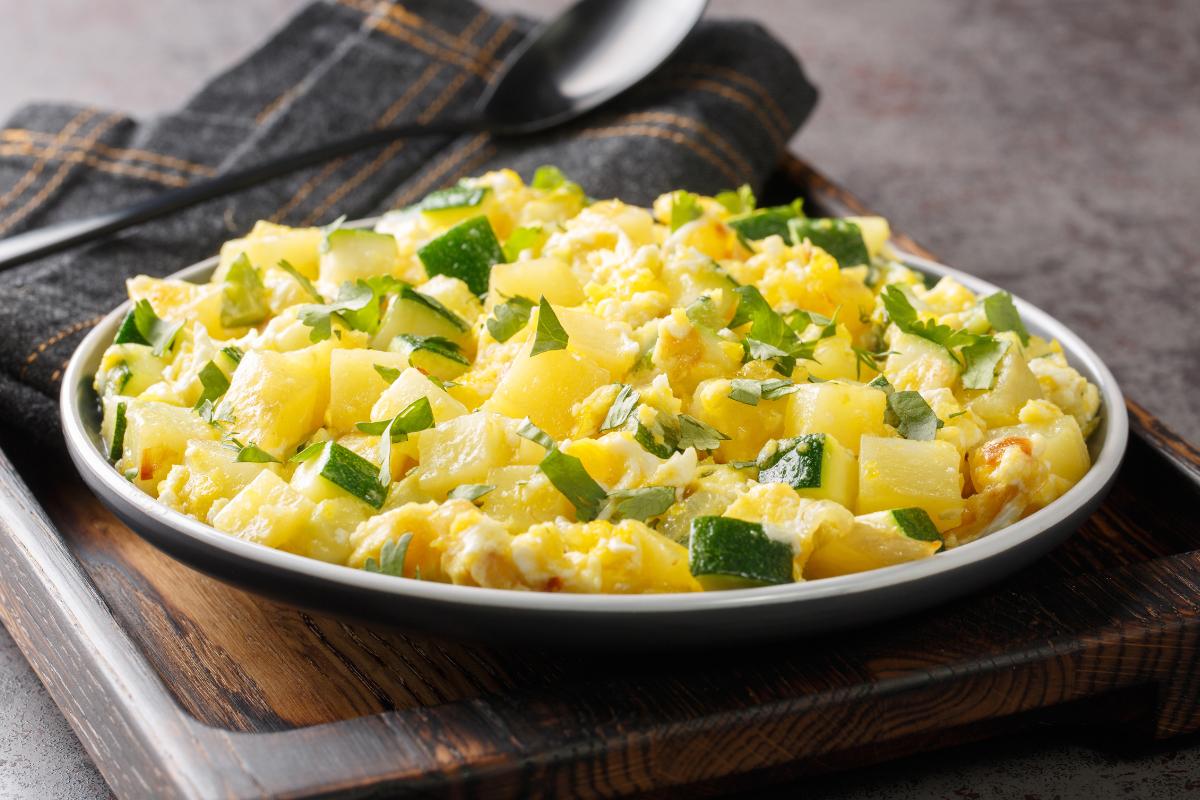
Recipe Score :
0.28
Details of the Ingredients:
- Black pepper: Quantité: 1g
Allergenicity: respiratory symptoms, contact dermatitis
HypoAllergenic Traitement : Eviction: the only way to manage allergens is by complete abstinence from the food
Score: 0.17 - Egg: Quantité: 19g
Allergenicity: Eggs from birds contain several proteins capable of inducing an immune response in man most of these are present in the egg white. Allergenic proteins in the yolk only contribute to a minor degree and isolated allergy to egg yolk proteins are rare (see cross reactions). Most of the allergenic proteins present in the egg white are both heat- and digestion resistant and may also be found in the house dust in normal households. Although not thoroughly investigated, sensitization is believed to take place by ingestion of egg proteins in the diet even the minute quantities present in human milk can sensitize the infant in some cases, where a reaction is elicited the very first time the infant eats a meal containing egg. Ingestion of egg will in sensitized individuals elicit an immediate allergic reaction starting with itching of the mouth and pharynx, followed by nettle rash (urticaria), vomiting, rhinoconjunctivitis, asthma and in rare cases anaphylaxis. Exacerbation of atopic eczema may be seen also, but isolated reactions taking place hours to days after intake, without a previous immediate reaction, are rare.
HypoAllergenic Traitement : gastric enzyme supplementation/ Dry heating with mannose, heating for 15 minutes at 95 °C
Score: 0.87 - Olive Oil: Quantité: 1g
Allergenicity: contact dermatitis
HypoAllergenic Traitement : ND
Score: 0.17 - Onion: Quantité: 16g
Allergenicity: contact allergy, anaphylaxis, asthma, rhinoconjunctivitis
HypoAllergenic Traitement : the reactivity is lowered when cooked
Score: 0.17 - Potato: Quantité: 16g
Allergenicity: Potato is considered a rarely allergenic food and is frequently used in elimination diets and as part of the placebo in challenge protocols. However, many cases of food allergy after eating cooked potato have been reported and skin prick tests suggest that sensitization to raw potato is relatively common. Cases of contact allergy to raw potatoes have also been reported. The symptoms reported include reactions of the skin such as urticaria (hives), angioedema (wheals) and eczema, respiratory symptoms such as rhinitis, cough and wheezing and gastrointestinal symptoms such as vomiting and diarrhoea. Most reactions occurred within 2 hours (immediate reactions) but delayed reactions have also been reported. Allergy to cooked potato is related to tomato allergy and to latex allergy. Sensitization to raw potato may also be related to pollen allergies.
HypoAllergenic Traitement : the reactivity is lowered when cooked
Score: 0.17 - Zucchini: Quantité: 46g
Allergenicity: The following symptoms have been reported after ingestion of cougette: Oral allergy syndrome, urticaria, angioedema, nausea, diarrhoea, pruritus
HypoAllergenic Traitement : the reactivity is lowered when cooked
Score: 0.17
Scientifique Name of the ingredients :
- Black pepper: Piper nigrum L.
- Egg: Gallus gallus
- Olive Oil: Olea europaea
- Onion: Allium cepa var. aggregatum
- Potato: Solanum tuberosum
- Zucchini: Cucurbita pepo
Molecular Allergens of Ingredients :
- Black pepper: Pip n 28kD (UniProt: Pip n - 13216) - Superfamille: Germin, Germin-like Protein
- Black pepper: Pip n 14kD (UniProt: Pip n - 13216)
- Egg: Gal d 1 (UniProt: B6V1G0) - Superfamille: Kazal-type serine protease inhibitors
- Egg: Gal d 4.0101 (UniProt: P00698) - Superfamille: Lysozyme-like
- Egg: Gal d 1.0101 (UniProt: P01005) - Superfamille: Kazal-type serine protease inhibitors
- Egg: Gal d 2.0101 (UniProt: P01012) - Superfamille: Serpins
- Egg: Gal d 3.0101 (UniProt: P02789) - Superfamille: Periplasmic binding protein-like II
- Egg: Gal d OIH (UniProt: P10184) - Superfamille: Kazal-type serine protease inhibitors
- Egg: Gal d 5.0101 (UniProt: P19121) - Superfamille: Serum albumin-like
- Egg: Gal d Phosvitin (UniProt: P67869) - Superfamille: Casein kinase II beta subunit
- Egg: Gal d 6.0101 (UniProt: P87498) - Superfamille: Lipovitellin-phosvitin complex, superhelical domain
- Egg: Gal d 3 (UniProt: Q4ADG4) - Superfamille: Periplasmic binding protein-like II
- Egg: Gal d L-PGDS (UniProt: Q8QFM7) - Superfamille: Lipocalins
- Olive Oil: Ole e 13.0101 (UniProt: E3SU11) - Superfamille: Osmotin, thaumatin-like protein
- Onion: All a Alliin lyase (UniProt: P31756) - Superfamille: PLP-dependent transferases
- Onion: All c Alliin lyase (UniProt: P31757) - Superfamille: PLP-dependent transferases
- Potato: Sola t 1 (UniProt: P07745)
- Potato: Sola t 1.0101 (UniProt: P15476)
- Potato: Sola t 2.0101 (UniProt: P16348) - Superfamille: STI-like
- Potato: Sola t 3 (UniProt: Q6PMR6) - Superfamille: STI-like
- Potato: Sola t 3.0101 (UniProt: O24383) - Superfamille: STI-like
- Potato: Sola t 3.0102 (UniProt: P20347) - Superfamille: STI-like
- Potato: Sola t 4.0101 (UniProt: P30941) - Superfamille: STI-like
- Potato: Sola t 7k (UniProt: M1CHX3) - Superfamille: Bifunctional inhibitor/lipid-transfer protein/seed storage 2S albumin
- Potato: Sola t 8 (UniProt: M1BLC8) - Superfamille: Profilin (actin-binding protein)
- Potato: Sola t Glucanase (UniProt: P52401) - Superfamille: (Trans)glycosidases
- Zucchini: Cuc p AscO (UniProt: P37064) - Superfamille: Peroxidase
- Zucchini: Cuc p 2 - Superfamille: Profilin (actin-binding protein)
- Ingredients used :
- Ingredient 1 : 1g of Black pepper
- Ingredient 2 : 19g of Egg
- Ingredient 3 : 1g of Olive Oil
- Ingredient 4 : 16g of Onion
- Ingredient 5 : 16g of Potato
- Ingredient 6 : 46g of Zucchini
- Steps of preparation
- Step 1 : Wash, chop, and cut the onion into julienne strips, and slice the zucchini and potato into thin rounds.
- Step 2 : Heat extra virgin olive oil in a pan and add the onion, potato, and zucchini. Let them simmer slowly until they are soft and caramelized, for about 1 hour over low heat.
- Step 3 : Season with salt and black pepper, and add the scrambled eggs, cooking until they are done.
- Step 4 : Serve accompanied by some slices of toasted or fried bread.
Italy Recipes
1 - Bread and chickpea flour fritters
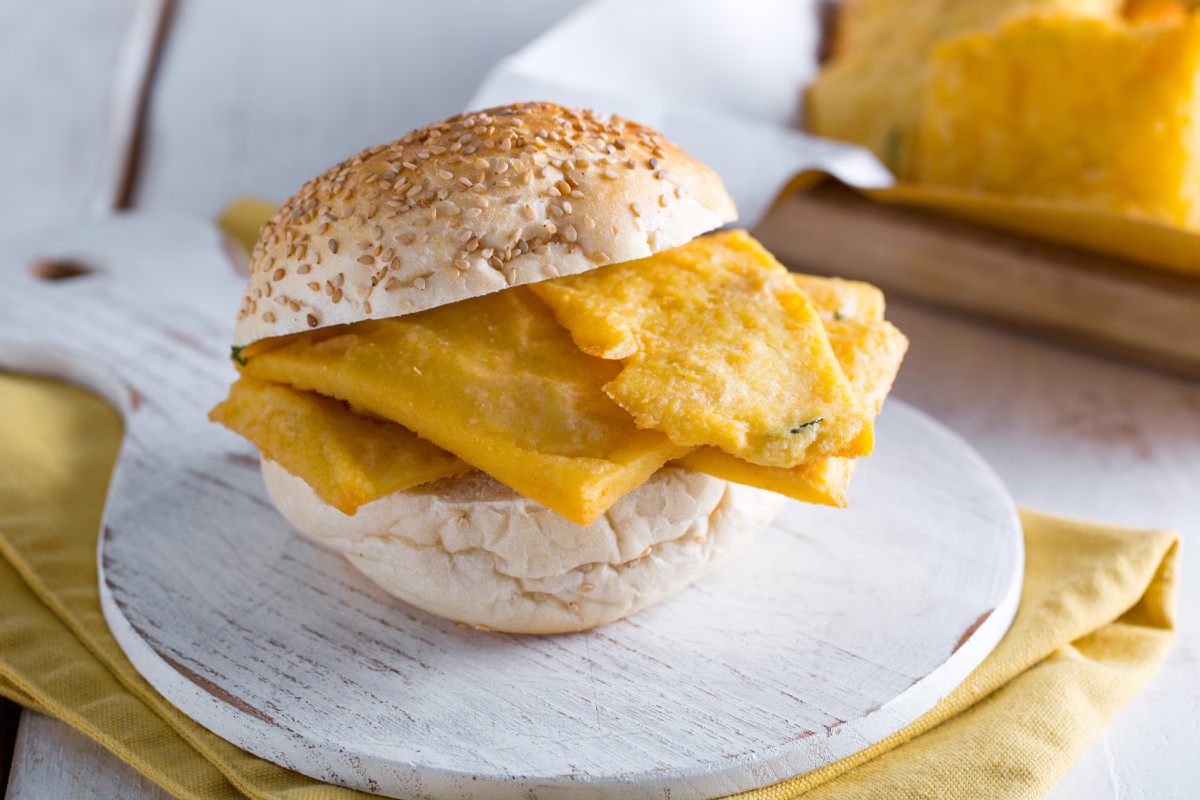
Recipe Score :
0.23
Details of the Ingredients:
- cherry: Quantité: 15.1g
Allergenicity: skin rash after drinking a glass of apple juice supplemented with acerola, who also had latex allergy.; The allergy was associated with oral allergy syndrome to other plant foods.
HypoAllergenic Traitement : Syruping+Chemical peeling
Score: 0.17 - Black pepper: Quantité: 0.7g
Allergenicity: respiratory symptoms, contact dermatitis
HypoAllergenic Traitement : Eviction: the only way to manage allergens is by complete abstinence from the food
Score: 0.17 - Lemon: Quantité: 0.2g
Allergenicity: laryngeal edema, generalized urticaria, and asthma symptoms, anaphylactic reactions
HypoAllergenic Traitement : remove seed
Score: 0.17 - Olive Oil: Quantité: 0.3g
Allergenicity: contact dermatitis
HypoAllergenic Traitement : ND
Score: 0.17 - Parsley: Quantité: 0.8g
Allergenicity: angioedema, urticaria
HypoAllergenic Traitement : the reactivity is lowered when cooked
Score: 0.17 - bread: Quantité: 22.6g
Allergenicity: Adverse reactions to wheat have been more frequently reported than to other cereal-based foods. The best defined of these are coeliac disease and IgE-dependent wheat allergy, both of which result from malfunctioning of the immune system. Allergies to other cereals such as maize, sorghum and millet, are not common and are not related to reactions triggered by wheat, rye, barley and oats. As a consequence individuals with wheat allergy, including coeliac disease, can usually eat maize-based foods such as polenta. However, allergic reactions to maize can result from the fruit allergies found in the South of Europe which often start with reactions to peach. Coeliac disease is triggered by the gluten fraction of wheat or by the gluten-like proteins found in other closely related cereals such as rye, barley. Some sensitive individuals may also react to oats. The gut reacts to the gluten and becomes smooth, loosing its ability to absorb nutrients; symptoms including diarrhoea as well as deficiencies in nutrients like vitamins. It can manifest itself in childhood, affecting childrens growth and development, or in adult hood. As there is no cure individuals with coeliac disease have to avoid eating gluten for life. However, coeliac disease does not cause the potentially fatal reaction of anaphylaxis if gluten is accidentally eaten. In contrast IgE-mediated cereal allergies can be caused by the antibody molecule IgE binding to many proteins, not just gluten. Sometimes the reactions (often severe) only develop if an individual takes exercise within a few hours of eating wheat or related cereals, in a condition called exercise-induced anaphylaxis. Individuals with wheat allergy often react to closely related cereals like barley and rye, less frequently to the more distant relative, oats. Diagnosis of cereal allergies can be complicated by the fact that some of the blood tests for cereal food allergy can accidentally detect allergy to grass pollens instead. As a consequence of these adverse reactions, cereals containing gluten, (i.e. wheat, rye, barley, oats, spelt or their hybridized strains) have been included in Annex IIIa of the food labelling directive along with derived products. Temporary exceptions to the labelling rule (derogations) have been granted for wheat based glucose syrups including dextrose, wheat based maltodextrins, glucose syrups based on barley and cereals used in distillates for spirits.
HypoAllergenic Traitement : Yusing young cereal grains
Score: 0.48
Scientifique Name of the ingredients :
- cherry: Prunus avium
- Black pepper: Piper nigrum L.
- Lemon: Citrus limon
- Olive Oil: Olea europaea
- Parsley: Petroselinum crispum
- bread: Triticum aestivum
Molecular Allergens of Ingredients :
- Black pepper: Pip n 28kD (UniProt: Pip n - 13216) - Superfamille: Germin, Germin-like Protein
- Black pepper: Pip n 14kD (UniProt: Pip n - 13216)
- bread: Tri a 33.0101 (UniProt: Q9ST57) - Superfamille: Serpins
- bread: Tri a 44 (UniProt: B2C4K0) - Superfamille: Bifunctional inhibitor/lipid-transfer protein/seed storage 2S albumin
- bread: Tri a 41.0101 (UniProt: A0A0G3F2P1) - Superfamille: RING/U-box
- bread: Tri a 37.0101 (UniProt: Q9T0P1) - Superfamille: Crambin-like
- bread: Tri a 37 (UniProt: P32032) - Superfamille: Crambin-like
- bread: Tri a 36.0101 (UniProt: B2Y2Q7) - Superfamille: Bifunctional inhibitor/lipid-transfer protein/seed storage 2S albumin
- bread: Tri a 36 (UniProt: P10385) - Superfamille: Bifunctional inhibitor/lipid-transfer protein/seed storage 2S albumin
- bread: Tri a 45 (UniProt: W5HIH8) - Superfamille: Zinc beta-ribbon
- bread: Tri a 33 (UniProt: P93692) - Superfamille: Serpins
- bread: Tri a 30.0101 (UniProt: P17314) - Superfamille: Bifunctional inhibitor/lipid-transfer protein/seed storage 2S albumin
- bread: Tri a 30 (UniProt: Q53YX8) - Superfamille: Bifunctional inhibitor/lipid-transfer protein/seed storage 2S albumin
- bread: Tri a 28.0101 (UniProt: Q4W0V7) - Superfamille: Bifunctional inhibitor/lipid-transfer protein/seed storage 2S albumin
- bread: Tri a 28 (UniProt: P01085) - Superfamille: Bifunctional inhibitor/lipid-transfer protein/seed storage 2S albumin
- bread: Tri a 26.0201 (UniProt: Q45R38) - Superfamille: Bifunctional inhibitor/lipid-transfer protein/seed storage 2S albumin
- bread: Tri a 26.0101 (UniProt: P10388) - Superfamille: Bifunctional inhibitor/lipid-transfer protein/seed storage 2S albumin
- bread: Tri a 44.0101 (UniProt: A0A0G3F720) - Superfamille: Bifunctional inhibitor/lipid-transfer protein/seed storage 2S albumin
- bread: Tri a 25.0101 (UniProt: Q9LDX4) - Superfamille: Thioredoxin-like
- bread: Tri a 45.0101 (UniProt: A0A0G3F715) - Superfamille: Zinc beta-ribbon
- bread: Tri a 7kLTP (UniProt: P82900) - Superfamille: Bifunctional inhibitor/lipid-transfer protein/seed storage 2S albumin
- bread: Tri a aA_SI (UniProt: P16347) - Superfamille: STI-like
- bread: Tri a alpha_Gliadin (UniProt: Q1WA40) - Superfamille: Bifunctional inhibitor/lipid-transfer protein/seed storage 2S albumin
- bread: Tri a Chitinase (UniProt: Q8W429) - Superfamille: Lysozyme-like
- bread: Tri a CMX (UniProt: Q43691) - Superfamille: Bifunctional inhibitor/lipid-transfer protein/seed storage 2S albumin
- bread: Tri a GBSS_I (UniProt: P27736) - Superfamille: UDP-Glycosyltransferase/glycogen phosphorylase
- bread: Tri a Peroxidase (UniProt: Q05855) - Superfamille: Heme-dependent peroxidases
- bread: Tri a Peroxidase 1 (UniProt: Q8LK23) - Superfamille: Heme-dependent peroxidases
- bread: Tri a TLP (UniProt: P27357) - Superfamille: Osmotin, thaumatin-like protein
- bread: Tri a Tritin (UniProt: Q07810) - Superfamille: Ribosome inactivating proteins (RIP)
- bread: Tri a XI (UniProt: Q8L5C6) - Superfamille: (Trans)glycosidases
- bread: Tri a 26 (UniProt: P08489) - Superfamille: Bifunctional inhibitor/lipid-transfer protein/seed storage 2S albumin
- bread: Tri a 10kD (UniProt: Q4W1F9) - Superfamille: Bifunctional inhibitor/lipid-transfer protein/seed storage 2S albumin
- bread: Tri a 12 (UniProt: P49233) - Superfamille: Profilin (actin-binding protein)
- bread: Tri a 14 (UniProt: P24296) - Superfamille: Bifunctional inhibitor/lipid-transfer protein/seed storage 2S albumin
- bread: Tri a 17.0101 (UniProt: P93594) - Superfamille: (Trans)glycosidases
- bread: Tri a 18 (UniProt: P10969) - Superfamille: Plant lectins/antimicrobial peptides
- bread: Tri a 18.0101 (UniProt: P10968) - Superfamille: Plant lectins/antimicrobial peptides
- bread: Tri a 20 (UniProt: P21292) - Superfamille: Bifunctional inhibitor/lipid-transfer protein/seed storage 2S albumin
- bread: Tri a 20.0101 (UniProt: A0A060N479) - Superfamille: Bifunctional inhibitor/lipid-transfer protein/seed storage 2S albumin
- bread: Tri a 23kD (UniProt: Q4W1G0) - Superfamille: L domain-like
- cherry: Pru av 1 - Superfamille: Bet v1-like
- cherry: Pru av 1.0101 (UniProt: O24248) - Superfamille: Bet v1-like
- cherry: Pru av 1.0201 - Superfamille: Bet v1-like
- cherry: Pru av 1.0202 - Superfamille: Bet v1-like
- cherry: Pru av 1.0203 - Superfamille: Bet v1-like
- cherry: Pru av 2 (UniProt: P50694) - Superfamille: Thaumatin-like protein
- cherry: Pru av 2.0101 (UniProt: P50694) - Superfamille: Thaumatin-like protein
- cherry: Pru av 3 (UniProt: E7CLQ2) - Superfamille: Lipid Transfer Proteins
- cherry: Pru av 3.0101 (UniProt: Q9M5X8) - Superfamille: Lipid Transfer Proteins
- cherry: Pru av 4 (UniProt: Q9XF39) - Superfamille: Profilin (actin-binding protein)
- cherry: Pru av 4.0101 (UniProt: Q9XF39) - Superfamille: Profilin (actin-binding protein)
- cherry: Pru av 7 (UniProt: 42229) - Superfamille: Anti-Microbial Peptides
- cherry: Pru av 7.0101 (UniProt: 42229) - Superfamille: Gibberellin-regulated proteins/GASA/snakin family
- Lemon: Cit l 1 (UniProt: I6UVE3) - Superfamille: RmlC-like cupins
- Lemon: Cit l 3 (UniProt: P84160) - Superfamille: Lipid Transfer Proteins
- Olive Oil: Ole e 13.0101 (UniProt: E3SU11) - Superfamille: Osmotin, thaumatin-like protein
- Parsley: Pet c 1 (UniProt: P19417) - Superfamille: Bet v1-like
- Parsley: Pet c 2 (UniProt: Q5EEP5) - Superfamille: Profilin (actin-binding protein)
- Ingredients used :
- Ingredient 1 : 15.1g of cherry
- Ingredient 2 : 0.7g of Black pepper
- Ingredient 3 : 0.2g of Lemon
- Ingredient 4 : 0.3g of Olive Oil
- Ingredient 5 : 0.8g of Parsley
- Ingredient 6 : 22.6g of bread
- Steps of preparation
- Step 1 : Pour the chickpea flour into a large pot. Add the salt and stir together while still dry. Now pour in nearly all the water slowly, saving the final part for the next step, and start to mix with a whisk;
- Step 2 : Slowly pour in the remaining water, whisking continuously. The consistency will be fairly liquid at this point, but if you lift up a spoonful of the mixture, it should drizzle down, without being runny. Take the pot off the stove for the time it takes to chop the parsley roughly. The leaves should still be nearly intact;
- Step 3 : Put the pot back on the heat and start stirring again, without stopping. Once the flour starts to thicken, this is when the cooking really begins, so you’ll need to stir more vigorously. It will take around 30 minutes to get the right consistency. At that point, add the parsley and stir again to distribute it evenly;
- Step 4 : Once you’ve got an even mixture, turn off the heat. Take a bit of the mixture and, using a spatula, spread it onto a marble work surface until it’s a little less than ¼ inch (4-5 mm) thick. Let it cool slightly to make things easier. Trim the edges using a knife or dough cutter;
- Step 5 : Heat plenty of oil in a pot. Immerse a few panelle at a time and cook them until they’re golden, turning them on both sides. It will take around 3 minutes. This will create the classic coating, making them crispy on the outside and soft on the inside. Drain them and transfer to paper towel;
- Step 6 : Once all the panelle have been fried, you can choose whether to eat them on their own or use them to fill the bread rolls. In this case, we recommend using 5 panelle per roll;
- Step 7 : Add lemon juice, black pepper and salt.
2 - Green olive patè
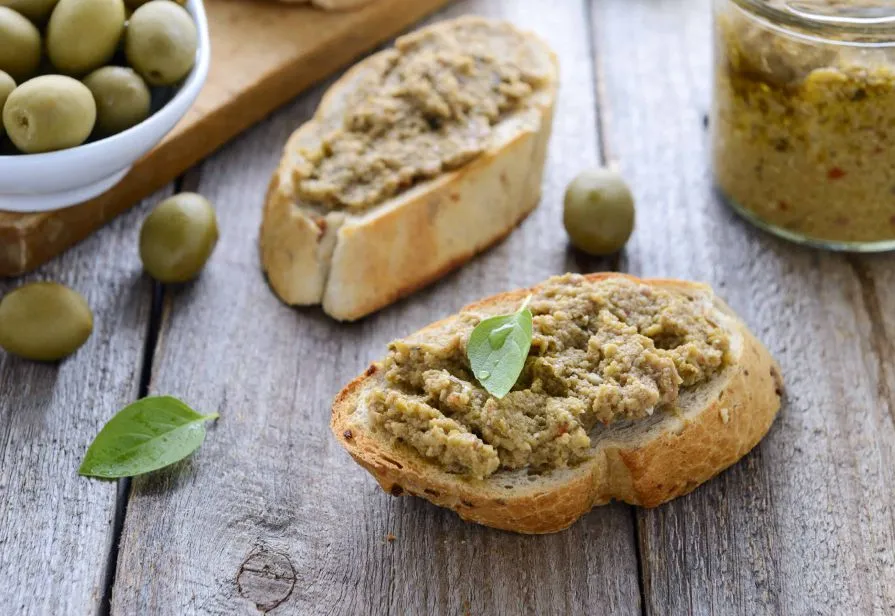
Recipe Score :
0.17
Details of the Ingredients:
- Black pepper: Quantité: 0.1g
Allergenicity: respiratory symptoms, contact dermatitis
HypoAllergenic Traitement : Eviction: the only way to manage allergens is by complete abstinence from the food
Score: 0.17 - Capers: Quantité: 1.6g
Allergenicity: ND
HypoAllergenic Traitement : Eviction: the only way to manage allergens is by complete abstinence from the food
Score: 0.17 - Garlic: Quantité: 0.6g
Allergenicity: Garlic allergy is relatively rare although one case of severe symptoms has been reported after eating garlic. The individual suffered exercise induced anaphylaxis and on a subsequent occasion anaphylaxis without exercise.
HypoAllergenic Traitement : the reactivity is lowered when cooked
Score: 0.17 - Lemon: Quantité: 1.47g
Allergenicity: laryngeal edema, generalized urticaria, and asthma symptoms, anaphylactic reactions
HypoAllergenic Traitement : remove seed
Score: 0.17 - Nocellara del Belice DOP olive: Quantité: 80.5g
Allergenicity: itching and generalised urticaria after the ingestion of olive fruit
HypoAllergenic Traitement : the reactivity is lowered when cooked
Score: 0.17 - Olive Oil: Quantité: 16.1g
Allergenicity: contact dermatitis
HypoAllergenic Traitement : ND
Score: 0.17 - Origan: Quantité: 0.2g
Allergenicity: systemic reactions
HypoAllergenic Traitement : ND
Score: 0.17
Scientifique Name of the ingredients :
- Black pepper: Piper nigrum L.
- Capers: Capparis spinosa
- Garlic: Allium sativum
- Lemon: Citrus limon
- Nocellara del Belice DOP olive: Nom scientifique non disponible
- Olive Oil: Olea europaea
- Origan: Origanum majorana
- Origan: Origanum vulgare
Molecular Allergens of Ingredients :
- Black pepper: Pip n 14kD (UniProt: Pip n - 13216)
- Black pepper: Pip n 28kD (UniProt: Pip n - 13216) - Superfamille: Germin, Germin-like Protein
- Capers: Cap sp Hevein (UniProt: Cap sp - 65558) - Superfamille: Hevein-like and class I/II chitinase
- Garlic: All s Alliin lyase (UniProt: Q01594) - Superfamille: PLP-dependent transferases
- Lemon: Cit l 1 (UniProt: I6UVE3) - Superfamille: RmlC-like cupins
- Lemon: Cit l 3 (UniProt: P84160) - Superfamille: Lipid Transfer Proteins
- Olive Oil: Ole e 13.0101 (UniProt: E3SU11) - Superfamille: Osmotin, thaumatin-like protein
- Origan: Ori m (UniProt: not given)
- Origan: Ori v (UniProt: not given)
- Ingredients used :
- Ingredient 1 : 0.1g of Black pepper
- Ingredient 2 : 1.6g of Capers
- Ingredient 3 : 0.6g of Garlic
- Ingredient 4 : 1.47g of Lemon
- Ingredient 5 : 80.5g of Nocellara del Belice DOP olive
- Ingredient 6 : 16.1g of Olive Oil
- Ingredient 7 : 0.2g of Origan
- Steps of preparation
- Step 1 : Take the Nocellara del Belice olives and remove the stone with a stoner, then put them in a blender;
- Step 2 : Quickly rinse the capers under running water, dry them gently with kitchen paper and add them to the blender with garlic, origan and pepper;
- Step 3 : Turn on the machine and work, then, still with the blender running, slowly add the oil, working until you obtain a homogeneous mixture;
- Step 4 : Put everything in the fridge to rest for about an hour and finally, after this time, serve your Green Olive Paté. In the case it will be canned, it is necessary to cover with EVOO.
3 - Margherita pizza
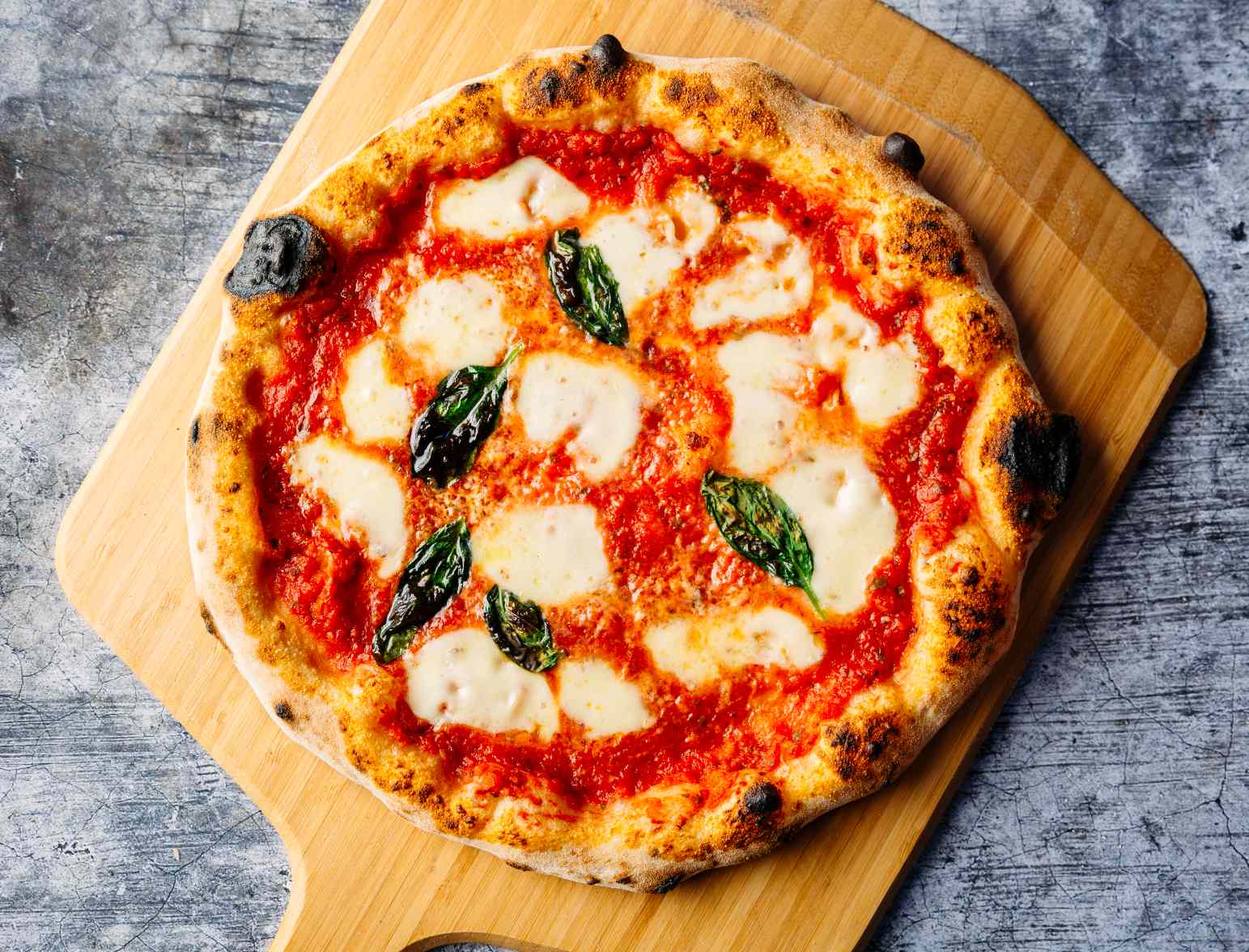
Recipe Score :
0.33
Details of the Ingredients:
- basil:
Allergenicity: contact dermatitis
HypoAllergenic Traitement : the reactivity is lowered when cooked
Score: 0.17 - Brewer’s yeast: Quantité: 300g
Allergenicity: only by inhalation
HypoAllergenic Traitement : ND
Score: 0.17 - Mozzarella cheese: Quantité: 25g
Allergenicity: Systemic reactions: anaphylaxis, exercise induced anaphylaxis (including fatal reactions). Cutaneous symptoms: angioedema, atopic dermatitis, contact urticaria, dermatitis, eczema, erythema, exanthema, lips oedema, pruritus, redness, swelling of eyelids, urticaria, chronic urticaria. Gastrointestinal symptoms: abdominal cramps, abdominal distention, abdominal pain, colic, infantile colic syndrome, colitis, constipation, chronic constipation, diarrhoea, chronic diarrhoea, eosinophilic colitis, eosinophilic gastroenteritis, gastroenteritis, gastro- oesophageal reflux, morphologic lesion, nausea, proctitis, progressive small bowel mucosal damage, occult intestinal bleeding, oropharyngeal itching / swelling, oropharyngeal pruritus, oedema of tongue, acute pancreatitis, loose stools, vomiting as well as general gastrointestinal symptoms. Food protein-induced enterocolitis syndrome was also listed but probably does not involve specific IgE to cow's milk. Respiratory symptoms: allergic alveolitis, asthma, bronchospasm, bronchitis, conjunctivitis, coughing, dyspnoea, nasal blockade, allergic rhinitis, rhinitis, rhinoconjunctivitis, serous rhinorrea, sneezing and wheeze.
HypoAllergenic Traitement : gastric enzyme supplementation/ Dryheatingwithmannose
Score: 0.87 - Olive Oil: Quantité: 10g
Allergenicity: contact dermatitis
HypoAllergenic Traitement : ND
Score: 0.17 - Plain four/ weat: Quantité: 650g
Allergenicity: Adverse reactions to wheat have been more frequently reported than to other cereal-based foods. The best defined of these are coeliac disease and IgE-dependent wheat allergy, both of which result from malfunctioning of the immune system. Allergies to other cereals such as maize, sorghum and millet, are not common and are not related to reactions triggered by wheat, rye, barley and oats. As a consequence individuals with wheat allergy, including coeliac disease, can usually eat maize-based foods such as polenta. However, allergic reactions to maize can result from the fruit allergies found in the South of Europe which often start with reactions to peach. Coeliac disease is triggered by the gluten fraction of wheat or by the gluten-like proteins found in other closely related cereals such as rye, barley. Some sensitive individuals may also react to oats. The gut reacts to the gluten and becomes smooth, loosing its ability to absorb nutrients; symptoms including diarrhoea as well as deficiencies in nutrients like vitamins. It can manifest itself in childhood, affecting childrens growth and development, or in adult hood. As there is no cure individuals with coeliac disease have to avoid eating gluten for life. However, coeliac disease does not cause the potentially fatal reaction of anaphylaxis if gluten is accidentally eaten. In contrast IgE-mediated cereal allergies can be caused by the antibody molecule IgE binding to many proteins, not just gluten. Sometimes the reactions (often severe) only develop if an individual takes exercise within a few hours of eating wheat or related cereals, in a condition called exercise-induced anaphylaxis. Individuals with wheat allergy often react to closely related cereals like barley and rye, less frequently to the more distant relative, oats. Diagnosis of cereal allergies can be complicated by the fact that some of the blood tests for cereal food allergy can accidentally detect allergy to grass pollens instead. As a consequence of these adverse reactions, cereals containing gluten, (i.e. wheat, rye, barley, oats, spelt or their hybridized strains) have been included in Annex IIIa of the food labelling directive along with derived products. Temporary exceptions to the labelling rule (derogations) have been granted for wheat based glucose syrups including dextrose, wheat based maltodextrins, glucose syrups based on barley and cereals used in distillates for spirits.
HypoAllergenic Traitement : Yusing young cereal grains
Score: 0.48 - Tomato: Quantité: 175g
Allergenicity: tomato allergy is associated with allergy to either latex or pollen. The symptoms reported were rather different in the two groups. The patients with no latex allergy reported mostly the oral allergy syndrome with some skin reactions such as urticaria (hives). Patients with latex allergy reported urticaria as the most common reaction but 20% suffered anaphylaxis. Allergy to tomato is also linked to allergy to potato since they are related plants.
HypoAllergenic Traitement : TT: ThermalTreatment
Score: 0.17
Scientifique Name of the ingredients :
- basil: Ocimum basilicum L.
- Brewer’s yeast: Saccharomyces cerevisiae
- Mozzarella cheese: Bos taurus
- Olive Oil: Olea europaea
- Plain four/ weat: Triticum aestivum
- Tomato: Solanum lycopersicum
Molecular Allergens of Ingredients :
- basil: Oci b
- Mozzarella cheese: Bos d 4 (UniProt: A1YQB2) - Superfamille: Lysozyme-like
- Mozzarella cheese: Bos d 4.0101 (UniProt: P00711) - Superfamille: Lysozyme-like
- Mozzarella cheese: Bos d 5 (UniProt: O77777) - Superfamille: Lipocalins
- Mozzarella cheese: Bos d 5.0101 (UniProt: P02754) - Superfamille: Lipocalins
- Mozzarella cheese: Bos d 5.0102 (UniProt: B5B0D4) - Superfamille: Lipocalins
- Mozzarella cheese: Bos d Lactoperoxidase (UniProt: P80025) - Superfamille: Heme-dependent peroxidases
- Mozzarella cheese: Bos d LF (UniProt: P24627) - Superfamille: Periplasmic binding protein-like II
- Olive Oil: Ole e 13.0101 (UniProt: E3SU11) - Superfamille: Osmotin, thaumatin-like protein
- Plain four/ weat: Tri a 7kLTP (UniProt: P82900) - Superfamille: Bifunctional inhibitor/lipid-transfer protein/seed storage 2S albumin
- Plain four/ weat: Tri a 36.0101 (UniProt: B2Y2Q7) - Superfamille: Bifunctional inhibitor/lipid-transfer protein/seed storage 2S albumin
- Plain four/ weat: Tri a 45.0101 (UniProt: A0A0G3F715) - Superfamille: Zinc beta-ribbon
- Plain four/ weat: Tri a 45 (UniProt: W5HIH8) - Superfamille: Zinc beta-ribbon
- Plain four/ weat: Tri a 44.0101 (UniProt: A0A0G3F720) - Superfamille: Bifunctional inhibitor/lipid-transfer protein/seed storage 2S albumin
- Plain four/ weat: Tri a 44 (UniProt: B2C4K0) - Superfamille: Bifunctional inhibitor/lipid-transfer protein/seed storage 2S albumin
- Plain four/ weat: Tri a 37.0101 (UniProt: Q9T0P1) - Superfamille: Crambin-like
- Plain four/ weat: Tri a 37 (UniProt: P32032) - Superfamille: Crambin-like
- Plain four/ weat: Tri a 41.0101 (UniProt: A0A0G3F2P1) - Superfamille: RING/U-box
- Plain four/ weat: Tri a aA_SI (UniProt: P16347) - Superfamille: STI-like
- Plain four/ weat: Tri a alpha_Gliadin (UniProt: Q1WA40) - Superfamille: Bifunctional inhibitor/lipid-transfer protein/seed storage 2S albumin
- Plain four/ weat: Tri a Chitinase (UniProt: Q8W429) - Superfamille: Lysozyme-like
- Plain four/ weat: Tri a CMX (UniProt: Q43691) - Superfamille: Bifunctional inhibitor/lipid-transfer protein/seed storage 2S albumin
- Plain four/ weat: Tri a GBSS_I (UniProt: P27736) - Superfamille: UDP-Glycosyltransferase/glycogen phosphorylase
- Plain four/ weat: Tri a Peroxidase (UniProt: Q05855) - Superfamille: Heme-dependent peroxidases
- Plain four/ weat: Tri a Peroxidase 1 (UniProt: Q8LK23) - Superfamille: Heme-dependent peroxidases
- Plain four/ weat: Tri a TLP (UniProt: P27357) - Superfamille: Osmotin, thaumatin-like protein
- Plain four/ weat: Tri a Tritin (UniProt: Q07810) - Superfamille: Ribosome inactivating proteins (RIP)
- Plain four/ weat: Tri a XI (UniProt: Q8L5C6) - Superfamille: (Trans)glycosidases
- Plain four/ weat: Tri a 33.0101 (UniProt: Q9ST57) - Superfamille: Serpins
- Plain four/ weat: Tri a 10kD (UniProt: Q4W1F9) - Superfamille: Bifunctional inhibitor/lipid-transfer protein/seed storage 2S albumin
- Plain four/ weat: Tri a 12 (UniProt: P49233) - Superfamille: Profilin (actin-binding protein)
- Plain four/ weat: Tri a 14 (UniProt: P24296) - Superfamille: Bifunctional inhibitor/lipid-transfer protein/seed storage 2S albumin
- Plain four/ weat: Tri a 17.0101 (UniProt: P93594) - Superfamille: (Trans)glycosidases
- Plain four/ weat: Tri a 18 (UniProt: P10969) - Superfamille: Plant lectins/antimicrobial peptides
- Plain four/ weat: Tri a 18.0101 (UniProt: P10968) - Superfamille: Plant lectins/antimicrobial peptides
- Plain four/ weat: Tri a 20 (UniProt: P21292) - Superfamille: Bifunctional inhibitor/lipid-transfer protein/seed storage 2S albumin
- Plain four/ weat: Tri a 20.0101 (UniProt: A0A060N479) - Superfamille: Bifunctional inhibitor/lipid-transfer protein/seed storage 2S albumin
- Plain four/ weat: Tri a 23kD (UniProt: Q4W1G0) - Superfamille: L domain-like
- Plain four/ weat: Tri a 26 (UniProt: P08489) - Superfamille: Bifunctional inhibitor/lipid-transfer protein/seed storage 2S albumin
- Plain four/ weat: Tri a 25.0101 (UniProt: Q9LDX4) - Superfamille: Thioredoxin-like
- Plain four/ weat: Tri a 36 (UniProt: P10385) - Superfamille: Bifunctional inhibitor/lipid-transfer protein/seed storage 2S albumin
- Plain four/ weat: Tri a 33 (UniProt: P93692) - Superfamille: Serpins
- Plain four/ weat: Tri a 30.0101 (UniProt: P17314) - Superfamille: Bifunctional inhibitor/lipid-transfer protein/seed storage 2S albumin
- Plain four/ weat: Tri a 30 (UniProt: Q53YX8) - Superfamille: Bifunctional inhibitor/lipid-transfer protein/seed storage 2S albumin
- Plain four/ weat: Tri a 28.0101 (UniProt: Q4W0V7) - Superfamille: Bifunctional inhibitor/lipid-transfer protein/seed storage 2S albumin
- Plain four/ weat: Tri a 28 (UniProt: P01085) - Superfamille: Bifunctional inhibitor/lipid-transfer protein/seed storage 2S albumin
- Plain four/ weat: Tri a 26.0201 (UniProt: Q45R38) - Superfamille: Bifunctional inhibitor/lipid-transfer protein/seed storage 2S albumin
- Plain four/ weat: Tri a 26.0101 (UniProt: P10388) - Superfamille: Bifunctional inhibitor/lipid-transfer protein/seed storage 2S albumin
- Tomato: Sola l Vicilin (UniProt: B0JEU3) - Superfamille: RmlC-like cupins
- Tomato: Sola l TLP (UniProt: P12670) - Superfamille: Osmotin, thaumatin-like protein
- Tomato: Sola l SOD (UniProt: P14831) - Superfamille: Cu,Zn superoxide dismutase-like
- Tomato: Sola l PG (UniProt: P05117) - Superfamille: Pectin lyase-like
- Tomato: Sola l Peroxidase (UniProt: P15003) - Superfamille: Heme-dependent peroxidases
- Tomato: Sola l Glucanase (UniProt: Q01413) - Superfamille: (Trans)glycosidases
- Tomato: Sola l Chitinase (UniProt: Q05539) - Superfamille: Lysozyme-like
- Tomato: Sola l 7 (UniProt: K4AYX7) - Superfamille: Bifunctional inhibitor/lipid-transfer protein/seed storage 2S albumin
- Tomato: Sola l 5.0101 (UniProt: P21568) - Superfamille: Cyclophilin-like
- Tomato: Sola l 5 (UniProt: K4D184) - Superfamille: Cyclophilin-like
- Tomato: Sola l 4.0201 (UniProt: K4CWC4) - Superfamille: Bet v1-like
- Tomato: Sola l 4.0101 (UniProt: O49881) - Superfamille: Bet v1-like
- Tomato: Sola l 4 (UniProt: K4CWC5) - Superfamille: Bet v1-like
- Tomato: Sola l 3.0101 (UniProt: P93224) - Superfamille: Bifunctional inhibitor/lipid-transfer protein/seed storage 2S albumin
- Tomato: Sola l 3 (UniProt: P27056) - Superfamille: Bifunctional inhibitor/lipid-transfer protein/seed storage 2S albumin
- Tomato: Sola l 1.0101 (UniProt: Q93YG7) - Superfamille: Profilin (actin-binding protein)
- Tomato: Sola l 1 (UniProt: Q41344) - Superfamille: Profilin (actin-binding protein)
- Ingredients used :
- Ingredient 1 : basil
- Ingredient 2 : 300g of Brewer’s yeast
- Ingredient 3 : 25g of Mozzarella cheese
- Ingredient 4 : 10g of Olive Oil
- Ingredient 5 : 650g of Plain four/ weat
- Ingredient 6 : 175g of Tomato
- Steps of preparation
- Step 1 : To make the pizza dough, we’ve chosen to knead by hand, but if you prefer to use a mixer or kneading machine, you can follow the same steps, using the dough hook at low medium speed. First of all, pour the two flours into a bowl, crumble the yeast into it, and pour in the water a little at a time. The ideal water temperature is 77°F (25°C);
- Step 2 : As you pour the water in, stir slowly using a wooden spoon, and once you’ve added nearly all the water, add the salt as well. Continue adding the water and begin to knead with your hands to combine the ingredients well;
- Step 3 : Finally, transfer the dough to a work surface and work it with your hands until it is smooth and even. At this point, leave it to rest on the work surface for around 10 minutes, covering it with a bowl. Once rested, give it a little fold: Imagine that the ball of dough is divided into 4 parts; take the end of each part, pull it out delicately, and fold it in toward the center;
- Step 4 : After making the 4 folds, shape the dough into a ball again by turning it over on itself. Transfer the ball of dough into a bowl, cover with plastic wrap, and leave it to rise. For your convenience, you can place the bowl in an oven that’s turned off but with the light on; that way, the inside will reach a temperature of 79-82°F (26-28°C), which is ideal for leavening. Otherwise, you can put the bowl in a warm place. The leavening times are approximate because the dough itself, temperature, and weather conditions all have an influence on the leavening: On average, it should take 6 hours for the dough to double its volume;
- Step 5 : After this leavening time has passed, the dough will be nice and puffed up, so transfer it to the work surface and divide it into three 9½-oz (365-g) pieces using a dough cutter. If needed, you can lightly flour the work surface. Next, take each portion of dough and lift up one end of it and bring it toward the center, like you did before in step 9. Repeat this process for the other 3 ends of the dough;
- Step 6 : Turn the dough over and carry on with the rounding: Rounding the dough means turning it around with your hands on the work surface, bringing it toward you and then moving it away repeatedly until you get a smooth, even ball. As you form these little balls, transfer them to a greased pizza dough container and cover with the lid;
- Step 7 : Let the balls of dough rise for another 30 minutes. In the meantime, place the pizza stone in the upper part of the oven. Turn the oven on and heat to 480°F (250°C) in conventional mode. Now, using a dough cutter, carefully lift the first ball out of the dough container. Transfer it to a work surface with plenty of semolina and also add some semolina to the surface of the dough. Press down in the middle of the ball using your fingertips;
- Step 8 : Keep doing this, with a rotating movement, so the dough gets stretched out. Be sure not to press the edges down, however, and continue pressing and rotating until you get an 11-inch (28-cm) disc. Transfer the dough to a pizza peel, taking care not to damage it;
- Step 9 : Now, using a spoon to help you, spread some tomato purée on the dough, leaving some room around the edge. Place the raw pizza in the oven by sliding it carefully onto the stone. Let it cook for around 6 minutes. In the meantime, cut the mozzarella into strips or pull it apart with your hands. You can squeeze it out gently so that it doesn’t release too much water when it gets cooked. After 6 minutes have passed, take the pizza out of the oven using the peel;
- Step 10 : Arrange the pieces of mozzarella on top and then put it back in the oven for another 6 minutes, approximately. Once it’s nice and golden, take it out of the oven, add the basil leaves, and a drizzle of oil if you like, and serve up your Margherita pizza. Finish the other two pizzas following the same steps and enjoy while still hot.
4 - Raw of sea bream and croaker fish with mango and green olives
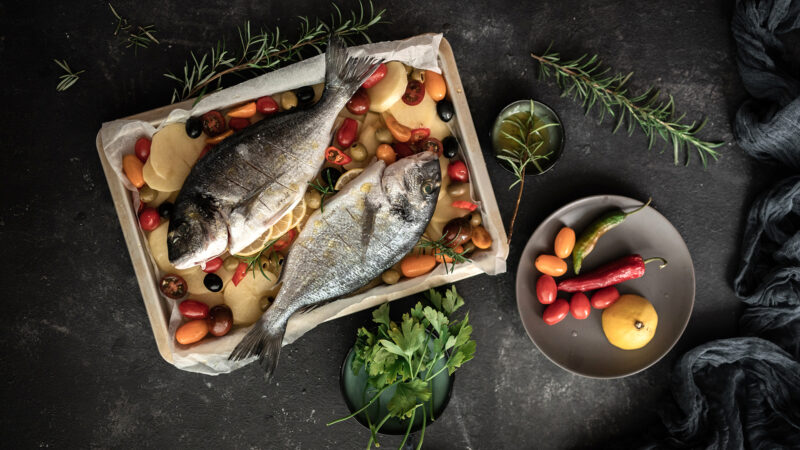
Recipe Score :
0.26
Details of the Ingredients:
- Anchovies: Quantité: 1.17g
Allergenicity: anaphylactic reactions.; Parvalbumin, the major fish allergen, has been shown to display IgE cross-reactivity among fish species consumed predominantly in Europe
HypoAllergenic Traitement : Dry heating with glucose, lactose, and galactose
Score: 0.48 - Black pepper: Quantité: 0.24g
Allergenicity: respiratory symptoms, contact dermatitis
HypoAllergenic Traitement : Eviction: the only way to manage allergens is by complete abstinence from the food
Score: 0.17 - Capers: Quantité: 0.49g
Allergenicity: ND
HypoAllergenic Traitement : Eviction: the only way to manage allergens is by complete abstinence from the food
Score: 0.17 - Croaker fish: Quantité: 14.68g
Allergenicity: Allergy to fin fish is relatively common, and can be associated with severe symptoms such as anaphylactic shock. Symptoms occur after ingestion. Allergy to fish is not to be confused with a toxic reaction to histamine in spoiled fish (scombroid fish poisoning). Almost all fish allergy seems to involve the protein parvalbumin, which is found in the muscle of most fish. As the parvalbumins are similar in all fish species, individuals allergic to one fish are likely to react to a range of different fish species. Thus after a diagnosis of allergy to one fish species, patients are normally advised to avoid all fin fish. Some individuals also react to frog. Although fin fish and shellfish allergies are not linked, individuals can be allergic to both foods. Parvalbumin remains able to cause a reaction after cooking. Thus fish remains allergenic after cooking and other treatments. Fish can be a "hidden" allergen in, for example, pizza toppings. Consequently, the EU labelling regulations require foods containing fish and products thereof to be labelled.
HypoAllergenic Traitement : Maillard reaction with pressure treatment
Score: 0.48 - Ginger: Quantité: 0.98g
Allergenicity: contact dermatitis, respiratory symptoms
HypoAllergenic Traitement : NT
Score: 0.17 - Lemon: Quantité: 12.23g
Allergenicity: laryngeal edema, generalized urticaria, and asthma symptoms, anaphylactic reactions
HypoAllergenic Traitement : remove seed
Score: 0.17 - Mango: Quantité: 34.25g
Allergenicity: Oral allergy syndrome (OAS), rhinoconjunctivitis, cough, and dyspnea
HypoAllergenic Traitement : The mango allergens, remain stable in the processed products, which include heating, mechanical or enzymatic tissue disintegration
Score: 0.17 - Mint: Quantité: 0.24g
Allergenicity: ND
HypoAllergenic Traitement : NT
Score: 0.17 - Nocellara del Belice DOP olive: Quantité: 2.45g
Allergenicity: itching and generalised urticaria after the ingestion of olive fruit
HypoAllergenic Traitement : the reactivity is lowered when cooked
Score: 0.17 - Olive Oil: Quantité: 12.23g
Allergenicity: contact dermatitis
HypoAllergenic Traitement : ND
Score: 0.17 - Sea bream fillets: Quantité: 14.68g
Allergenicity: Allergy to fin fish is relatively common, and can be associated with severe symptoms such as anaphylactic shock. Symptoms occur after ingestion. Allergy to fish is not to be confused with a toxic reaction to histamine in spoiled fish (scombroid fish poisoning). Almost all fish allergy seems to involve the protein parvalbumin, which is found in the muscle of most fish. As the parvalbumins are similar in all fish species, individuals allergic to one fish are likely to react to a range of different fish species. Thus after a diagnosis of allergy to one fish species, patients are normally advised to avoid all fin fish. Some individuals also react to frog. Although fin fish and shellfish allergies are not linked, individuals can be allergic to both foods. Parvalbumin remains able to cause a reaction after cooking. Thus fish remains allergenic after cooking and other treatments. Fish can be a "hidden" allergen in, for example, pizza toppings. Consequently, the EU labelling regulations require foods containing fish and products thereof to be labelled.
HypoAllergenic Traitement : freezing at − 20 °C/ Dry heating with glucose
Score: 0.48 - bread: Quantité: 4.89g
Allergenicity: Adverse reactions to wheat have been more frequently reported than to other cereal-based foods. The best defined of these are coeliac disease and IgE-dependent wheat allergy, both of which result from malfunctioning of the immune system. Allergies to other cereals such as maize, sorghum and millet, are not common and are not related to reactions triggered by wheat, rye, barley and oats. As a consequence individuals with wheat allergy, including coeliac disease, can usually eat maize-based foods such as polenta. However, allergic reactions to maize can result from the fruit allergies found in the South of Europe which often start with reactions to peach. Coeliac disease is triggered by the gluten fraction of wheat or by the gluten-like proteins found in other closely related cereals such as rye, barley. Some sensitive individuals may also react to oats. The gut reacts to the gluten and becomes smooth, loosing its ability to absorb nutrients; symptoms including diarrhoea as well as deficiencies in nutrients like vitamins. It can manifest itself in childhood, affecting childrens growth and development, or in adult hood. As there is no cure individuals with coeliac disease have to avoid eating gluten for life. However, coeliac disease does not cause the potentially fatal reaction of anaphylaxis if gluten is accidentally eaten. In contrast IgE-mediated cereal allergies can be caused by the antibody molecule IgE binding to many proteins, not just gluten. Sometimes the reactions (often severe) only develop if an individual takes exercise within a few hours of eating wheat or related cereals, in a condition called exercise-induced anaphylaxis. Individuals with wheat allergy often react to closely related cereals like barley and rye, less frequently to the more distant relative, oats. Diagnosis of cereal allergies can be complicated by the fact that some of the blood tests for cereal food allergy can accidentally detect allergy to grass pollens instead. As a consequence of these adverse reactions, cereals containing gluten, (i.e. wheat, rye, barley, oats, spelt or their hybridized strains) have been included in Annex IIIa of the food labelling directive along with derived products. Temporary exceptions to the labelling rule (derogations) have been granted for wheat based glucose syrups including dextrose, wheat based maltodextrins, glucose syrups based on barley and cereals used in distillates for spirits.
HypoAllergenic Traitement : Yusing young cereal grains
Score: 0.48
Scientifique Name of the ingredients :
- Anchovies: Engraulis encrasicolus
- Black pepper: Piper nigrum L.
- Capers: Capparis spinosa
- Croaker fish: Micropogonias undulatus
- Ginger: Zingiber officinale
- Lemon: Citrus limon
- Mango: Mangifera indica
- Mint: Mentha piperita L.
- Nocellara del Belice DOP olive: Nom scientifique non disponible
- Olive Oil: Olea europaea
- Sea bream fillets: Sparus auratus
- Sea bream fillets: Sparus aurata
- Sea bream fillets: Diplodus sargus
- bread: Triticum aestivum
Molecular Allergens of Ingredients :
- Anchovies: Eng e 1 Eng e - 184585 - UniProt (UniProt: 184585) - Superfamille: CBP, Parvalbumin/Calcium-binding Proteins
- Anchovies: Eng e - 184585 - UniProt (UniProt: 184585) - Superfamille: CBP, Parvalbumin/Calcium-binding Proteins
- Black pepper: Pip n 14kD (UniProt: Pip n - 13216)
- Black pepper: Pip n 28kD (UniProt: Pip n - 13216) - Superfamille: Germin, Germin-like Protein
- bread: Tri a 30 (UniProt: Q53YX8) - Superfamille: Bifunctional inhibitor/lipid-transfer protein/seed storage 2S albumin
- bread: Tri a XI (UniProt: Q8L5C6) - Superfamille: (Trans)glycosidases
- bread: Tri a 30.0101 (UniProt: P17314) - Superfamille: Bifunctional inhibitor/lipid-transfer protein/seed storage 2S albumin
- bread: Tri a 33 (UniProt: P93692) - Superfamille: Serpins
- bread: Tri a 33.0101 (UniProt: Q9ST57) - Superfamille: Serpins
- bread: Tri a 36 (UniProt: P10385) - Superfamille: Bifunctional inhibitor/lipid-transfer protein/seed storage 2S albumin
- bread: Tri a 36.0101 (UniProt: B2Y2Q7) - Superfamille: Bifunctional inhibitor/lipid-transfer protein/seed storage 2S albumin
- bread: Tri a 37 (UniProt: P32032) - Superfamille: Crambin-like
- bread: Tri a 37.0101 (UniProt: Q9T0P1) - Superfamille: Crambin-like
- bread: Tri a 41.0101 (UniProt: A0A0G3F2P1) - Superfamille: RING/U-box
- bread: Tri a 44 (UniProt: B2C4K0) - Superfamille: Bifunctional inhibitor/lipid-transfer protein/seed storage 2S albumin
- bread: Tri a 44.0101 (UniProt: A0A0G3F720) - Superfamille: Bifunctional inhibitor/lipid-transfer protein/seed storage 2S albumin
- bread: Tri a 45 (UniProt: W5HIH8) - Superfamille: Zinc beta-ribbon
- bread: Tri a 45.0101 (UniProt: A0A0G3F715) - Superfamille: Zinc beta-ribbon
- bread: Tri a 7kLTP (UniProt: P82900) - Superfamille: Bifunctional inhibitor/lipid-transfer protein/seed storage 2S albumin
- bread: Tri a aA_SI (UniProt: P16347) - Superfamille: STI-like
- bread: Tri a alpha_Gliadin (UniProt: Q1WA40) - Superfamille: Bifunctional inhibitor/lipid-transfer protein/seed storage 2S albumin
- bread: Tri a Chitinase (UniProt: Q8W429) - Superfamille: Lysozyme-like
- bread: Tri a CMX (UniProt: Q43691) - Superfamille: Bifunctional inhibitor/lipid-transfer protein/seed storage 2S albumin
- bread: Tri a GBSS_I (UniProt: P27736) - Superfamille: UDP-Glycosyltransferase/glycogen phosphorylase
- bread: Tri a Peroxidase (UniProt: Q05855) - Superfamille: Heme-dependent peroxidases
- bread: Tri a Peroxidase 1 (UniProt: Q8LK23) - Superfamille: Heme-dependent peroxidases
- bread: Tri a TLP (UniProt: P27357) - Superfamille: Osmotin, thaumatin-like protein
- bread: Tri a Tritin (UniProt: Q07810) - Superfamille: Ribosome inactivating proteins (RIP)
- bread: Tri a 28 (UniProt: P01085) - Superfamille: Bifunctional inhibitor/lipid-transfer protein/seed storage 2S albumin
- bread: Tri a 10kD (UniProt: Q4W1F9) - Superfamille: Bifunctional inhibitor/lipid-transfer protein/seed storage 2S albumin
- bread: Tri a 12 (UniProt: P49233) - Superfamille: Profilin (actin-binding protein)
- bread: Tri a 14 (UniProt: P24296) - Superfamille: Bifunctional inhibitor/lipid-transfer protein/seed storage 2S albumin
- bread: Tri a 17.0101 (UniProt: P93594) - Superfamille: (Trans)glycosidases
- bread: Tri a 18 (UniProt: P10969) - Superfamille: Plant lectins/antimicrobial peptides
- bread: Tri a 18.0101 (UniProt: P10968) - Superfamille: Plant lectins/antimicrobial peptides
- bread: Tri a 20 (UniProt: P21292) - Superfamille: Bifunctional inhibitor/lipid-transfer protein/seed storage 2S albumin
- bread: Tri a 20.0101 (UniProt: A0A060N479) - Superfamille: Bifunctional inhibitor/lipid-transfer protein/seed storage 2S albumin
- bread: Tri a 23kD (UniProt: Q4W1G0) - Superfamille: L domain-like
- bread: Tri a 25.0101 (UniProt: Q9LDX4) - Superfamille: Thioredoxin-like
- bread: Tri a 26 (UniProt: P08489) - Superfamille: Bifunctional inhibitor/lipid-transfer protein/seed storage 2S albumin
- bread: Tri a 26.0101 (UniProt: P10388) - Superfamille: Bifunctional inhibitor/lipid-transfer protein/seed storage 2S albumin
- bread: Tri a 26.0201 (UniProt: Q45R38) - Superfamille: Bifunctional inhibitor/lipid-transfer protein/seed storage 2S albumin
- bread: Tri a 28.0101 (UniProt: Q4W0V7) - Superfamille: Bifunctional inhibitor/lipid-transfer protein/seed storage 2S albumin
- Capers: Cap sp Hevein (UniProt: Cap sp - 65558) - Superfamille: Hevein-like and class I/II chitinase
- Croaker fish: Mic un 1 (UniProt: D3YPN9) - Superfamille: EF-hand
- Lemon: Cit l 3 (UniProt: P84160) - Superfamille: Lipid Transfer Proteins
- Lemon: Cit l 1 (UniProt: I6UVE3) - Superfamille: RmlC-like cupins
- Mango: Man i 3.02 (UniProt: Q27HX6) - Superfamille: Profilin (actin-binding protein)
- Mango: Man i 3.01 (UniProt: Q2XPH2) - Superfamille: Profilin (actin-binding protein)
- Olive Oil: Ole e 13.0101 (UniProt: E3SU11) - Superfamille: Osmotin, thaumatin-like protein
- Sea bream fillets: Dip sa 1 - Superfamille: CBP, Parvalbumin/Calcium-binding Proteins
- Sea bream fillets: Spa a 1 (UniProt: Q4QY67) - Superfamille: EF-hand
- Ingredients used :
- Ingredient 1 : 1.17g of Anchovies
- Ingredient 2 : 0.24g of Black pepper
- Ingredient 3 : 0.49g of Capers
- Ingredient 4 : 14.68g of Croaker fish
- Ingredient 5 : 0.98g of Ginger
- Ingredient 6 : 12.23g of Lemon
- Ingredient 7 : 34.25g of Mango
- Ingredient 8 : 0.24g of Mint
- Ingredient 9 : 2.45g of Nocellara del Belice DOP olive
- Ingredient 10 : 12.23g of Olive Oil
- Ingredient 11 : 14.68g of Sea bream fillets
- Ingredient 12 : 4.89g of bread
- Steps of preparation
- Step 1 : Take 300 g of sea bream fillets, cut them very thin, sprinkle them with lemon juice and leave them in the refrigerator;
- Step 2 : Separately, put some breadcrumbs to macerate in a bowl sprayed with vinegar, remove it, squeeze it and chop it in a mortar with 2 anchovies, 1 tablespoon of capers and two of EVOO. Add a few leaves of chopped fresh mint, mix and let the sauce rest for at least 30 minutes;
- Step 3 : Wet the sea bream slices with the mint sauce and leave to rest in the fridge for an hour before serving;
- Step 4 : Take 300 g of croaker fish fillets, cut them very thin, sprinkle them with lemon juice and leave them in the refrigerator;
- Step 5 : Separately, take 2 fully ripe mangoes, clean them and cut them into thin slices;
- Step 6 : In a bowl, mix the juice of half a lemon, some grated ginger, some pink pepper, salt and oil;
- Step 7 : Emulsify and distribute on the croaker fish slices, leaving everything to macerate for at least an hour in the refrigerator;
- Step 8 : Remove the stones from the Nocellara del Belice olives and, before serving, arrange the mango and the olive slices on a plate, place the fish seasoned with the sauce on top and bring to the table.
5 - Sardine meatballs
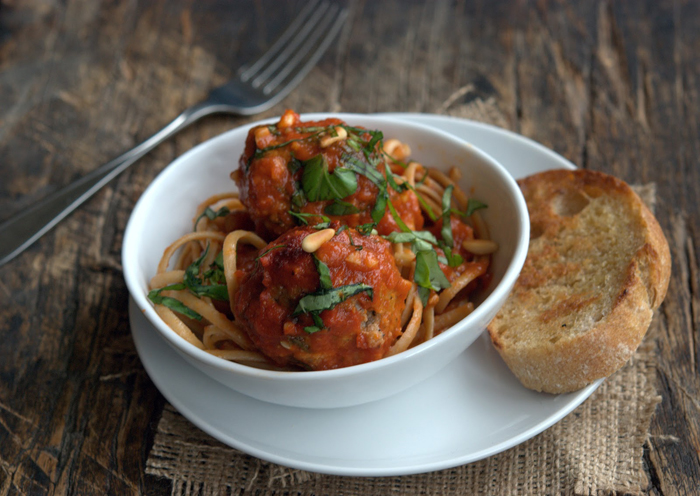
Recipe Score :
0.35
Details of the Ingredients:
- Black pepper: Quantité: 0.1g
Allergenicity: respiratory symptoms, contact dermatitis
HypoAllergenic Traitement : Eviction: the only way to manage allergens is by complete abstinence from the food
Score: 0.17 - Corn / Maize: Quantité: 7.4g
Allergenicity: Allergy to corn is caused by proteins in the kernels. This protein is called the lipid transfer protein (LTP). LTP has first been identified as an important allergen in fruits, but it is also present in nuts, various vegetables and in cereals. LTP is an extremely stable protein. It is resistant to food processing, including heating, but also to gastro-intestinal digestion. These properties make LTP a strong food allergen that can cause severe reactions. Other potential allergens in corn are storage proteins that have also been identified as allergens in other cereals like wheat, barley, oat, rye and rice. Corn allergy can lead to symptoms of the skin like atopic dermatitis or eczema and urticaria or nettle rash. It can also cause swelling of skin, lips or throat (angioedema), itching in mouth and throat, symptoms of the stomach/gut (diarrhoea, nausea, abdominal pain and vomiting), runny or stuffed nose and asthma, and in severe cases anaphylactic shock. This suggests that corn allergy caused by LTP is frequently accompanied by allergy to other cereals because they contain similar LTP. Such reactions based on similarity are called cross-reactions.
HypoAllergenic Traitement : Food irradiation
Score: 0.17 - Egg: Quantité: 8.4g
Allergenicity: Eggs from birds contain several proteins capable of inducing an immune response in man most of these are present in the egg white. Allergenic proteins in the yolk only contribute to a minor degree and isolated allergy to egg yolk proteins are rare (see cross reactions). Most of the allergenic proteins present in the egg white are both heat- and digestion resistant and may also be found in the house dust in normal households. Although not thoroughly investigated, sensitization is believed to take place by ingestion of egg proteins in the diet even the minute quantities present in human milk can sensitize the infant in some cases, where a reaction is elicited the very first time the infant eats a meal containing egg. Ingestion of egg will in sensitized individuals elicit an immediate allergic reaction starting with itching of the mouth and pharynx, followed by nettle rash (urticaria), vomiting, rhinoconjunctivitis, asthma and in rare cases anaphylaxis. Exacerbation of atopic eczema may be seen also, but isolated reactions taking place hours to days after intake, without a previous immediate reaction, are rare.
HypoAllergenic Traitement : gastric enzyme supplementation/ Dry heating with mannose, heating for 15 minutes at 95 °C
Score: 0.87 - Garlic: Quantité: 0.6g
Allergenicity: Garlic allergy is relatively rare although one case of severe symptoms has been reported after eating garlic. The individual suffered exercise induced anaphylaxis and on a subsequent occasion anaphylaxis without exercise.
HypoAllergenic Traitement : the reactivity is lowered when cooked
Score: 0.17 - Olive Oil: Quantité: 21.4g
Allergenicity: contact dermatitis
HypoAllergenic Traitement : ND
Score: 0.17 - Onion: Quantité: 6.4g
Allergenicity: contact allergy, anaphylaxis, asthma, rhinoconjunctivitis
HypoAllergenic Traitement : the reactivity is lowered when cooked
Score: 0.17 - Parsley: Quantité: 4.7g
Allergenicity: angioedema, urticaria
HypoAllergenic Traitement : the reactivity is lowered when cooked
Score: 0.17 - Ragusano Cheese DOP: Quantité: 2.1g
Allergenicity: respiratory tract and the skin, with gastrointestinal
HypoAllergenic Traitement : Autoclaving
Score: 0.87 - Sardine: Quantité: 39.7g
Allergenicity: Allergy to fin fish is relatively common, and can be associated with severe symptoms such as anaphylactic shock. Symptoms occur after ingestion. Allergy to fish is not to be confused with a toxic reaction to histamine in spoiled fish (scombroid fish poisoning). Almost all fish allergy seems to involve the protein parvalbumin, which is found in the muscle of most fish. As the parvalbumins are similar in all fish species, individuals allergic to one fish are likely to react to a range of different fish species. Thus after a diagnosis of allergy to one fish species, patients are normally advised to avoid all fin fish. Some individuals also react to frog. Although fin fish and shellfish allergies are not linked, individuals can be allergic to both foods. Parvalbumin remains able to cause a reaction after cooking. Thus fish remains allergenic after cooking and other treatments. Fish can be a "hidden" allergen in, for example, pizza toppings. Consequently, the EU labelling regulations require foods containing fish and products thereof to be labelled.
HypoAllergenic Traitement : Dry heating with glucose, lactose, and galactose
Score: 0.48 - bread: Quantité: 4.3g
Allergenicity: Adverse reactions to wheat have been more frequently reported than to other cereal-based foods. The best defined of these are coeliac disease and IgE-dependent wheat allergy, both of which result from malfunctioning of the immune system. Allergies to other cereals such as maize, sorghum and millet, are not common and are not related to reactions triggered by wheat, rye, barley and oats. As a consequence individuals with wheat allergy, including coeliac disease, can usually eat maize-based foods such as polenta. However, allergic reactions to maize can result from the fruit allergies found in the South of Europe which often start with reactions to peach. Coeliac disease is triggered by the gluten fraction of wheat or by the gluten-like proteins found in other closely related cereals such as rye, barley. Some sensitive individuals may also react to oats. The gut reacts to the gluten and becomes smooth, loosing its ability to absorb nutrients; symptoms including diarrhoea as well as deficiencies in nutrients like vitamins. It can manifest itself in childhood, affecting childrens growth and development, or in adult hood. As there is no cure individuals with coeliac disease have to avoid eating gluten for life. However, coeliac disease does not cause the potentially fatal reaction of anaphylaxis if gluten is accidentally eaten. In contrast IgE-mediated cereal allergies can be caused by the antibody molecule IgE binding to many proteins, not just gluten. Sometimes the reactions (often severe) only develop if an individual takes exercise within a few hours of eating wheat or related cereals, in a condition called exercise-induced anaphylaxis. Individuals with wheat allergy often react to closely related cereals like barley and rye, less frequently to the more distant relative, oats. Diagnosis of cereal allergies can be complicated by the fact that some of the blood tests for cereal food allergy can accidentally detect allergy to grass pollens instead. As a consequence of these adverse reactions, cereals containing gluten, (i.e. wheat, rye, barley, oats, spelt or their hybridized strains) have been included in Annex IIIa of the food labelling directive along with derived products. Temporary exceptions to the labelling rule (derogations) have been granted for wheat based glucose syrups including dextrose, wheat based maltodextrins, glucose syrups based on barley and cereals used in distillates for spirits.
HypoAllergenic Traitement : Yusing young cereal grains
Score: 0.48
Scientifique Name of the ingredients :
- Black pepper: Piper nigrum L.
- Corn / Maize: Zea mays
- Egg: Gallus gallus
- Garlic: Allium sativum
- Olive Oil: Olea europaea
- Onion: Allium cepa var. aggregatum
- Parsley: Petroselinum crispum
- Ragusano Cheese DOP: Bos taurus
- Sardine: Sardina pilchardus
- Sardine: Sardinops melanostictus
- Sardine: Sardinops sagax
- bread: Triticum aestivum
Molecular Allergens of Ingredients :
- Black pepper: Pip n 28kD (UniProt: Pip n - 13216) - Superfamille: Germin, Germin-like Protein
- Black pepper: Pip n 14kD (UniProt: Pip n - 13216)
- bread: Tri a 33.0101 (UniProt: Q9ST57) - Superfamille: Serpins
- bread: Tri a 10kD (UniProt: Q4W1F9) - Superfamille: Bifunctional inhibitor/lipid-transfer protein/seed storage 2S albumin
- bread: Tri a 33 (UniProt: P93692) - Superfamille: Serpins
- bread: Tri a 30.0101 (UniProt: P17314) - Superfamille: Bifunctional inhibitor/lipid-transfer protein/seed storage 2S albumin
- bread: Tri a 30 (UniProt: Q53YX8) - Superfamille: Bifunctional inhibitor/lipid-transfer protein/seed storage 2S albumin
- bread: Tri a 28.0101 (UniProt: Q4W0V7) - Superfamille: Bifunctional inhibitor/lipid-transfer protein/seed storage 2S albumin
- bread: Tri a 28 (UniProt: P01085) - Superfamille: Bifunctional inhibitor/lipid-transfer protein/seed storage 2S albumin
- bread: Tri a 26.0201 (UniProt: Q45R38) - Superfamille: Bifunctional inhibitor/lipid-transfer protein/seed storage 2S albumin
- bread: Tri a 26.0101 (UniProt: P10388) - Superfamille: Bifunctional inhibitor/lipid-transfer protein/seed storage 2S albumin
- bread: Tri a 26 (UniProt: P08489) - Superfamille: Bifunctional inhibitor/lipid-transfer protein/seed storage 2S albumin
- bread: Tri a 25.0101 (UniProt: Q9LDX4) - Superfamille: Thioredoxin-like
- bread: Tri a 23kD (UniProt: Q4W1G0) - Superfamille: L domain-like
- bread: Tri a 20.0101 (UniProt: A0A060N479) - Superfamille: Bifunctional inhibitor/lipid-transfer protein/seed storage 2S albumin
- bread: Tri a 20 (UniProt: P21292) - Superfamille: Bifunctional inhibitor/lipid-transfer protein/seed storage 2S albumin
- bread: Tri a 18.0101 (UniProt: P10968) - Superfamille: Plant lectins/antimicrobial peptides
- bread: Tri a 18 (UniProt: P10969) - Superfamille: Plant lectins/antimicrobial peptides
- bread: Tri a 17.0101 (UniProt: P93594) - Superfamille: (Trans)glycosidases
- bread: Tri a 14 (UniProt: P24296) - Superfamille: Bifunctional inhibitor/lipid-transfer protein/seed storage 2S albumin
- bread: Tri a 12 (UniProt: P49233) - Superfamille: Profilin (actin-binding protein)
- bread: Tri a XI (UniProt: Q8L5C6) - Superfamille: (Trans)glycosidases
- bread: Tri a 7kLTP (UniProt: P82900) - Superfamille: Bifunctional inhibitor/lipid-transfer protein/seed storage 2S albumin
- bread: Tri a Tritin (UniProt: Q07810) - Superfamille: Ribosome inactivating proteins (RIP)
- bread: Tri a TLP (UniProt: P27357) - Superfamille: Osmotin, thaumatin-like protein
- bread: Tri a Peroxidase 1 (UniProt: Q8LK23) - Superfamille: Heme-dependent peroxidases
- bread: Tri a Peroxidase (UniProt: Q05855) - Superfamille: Heme-dependent peroxidases
- bread: Tri a GBSS_I (UniProt: P27736) - Superfamille: UDP-Glycosyltransferase/glycogen phosphorylase
- bread: Tri a CMX (UniProt: Q43691) - Superfamille: Bifunctional inhibitor/lipid-transfer protein/seed storage 2S albumin
- bread: Tri a Chitinase (UniProt: Q8W429) - Superfamille: Lysozyme-like
- bread: Tri a alpha_Gliadin (UniProt: Q1WA40) - Superfamille: Bifunctional inhibitor/lipid-transfer protein/seed storage 2S albumin
- bread: Tri a aA_SI (UniProt: P16347) - Superfamille: STI-like
- bread: Tri a 36 (UniProt: P10385) - Superfamille: Bifunctional inhibitor/lipid-transfer protein/seed storage 2S albumin
- bread: Tri a 45.0101 (UniProt: A0A0G3F715) - Superfamille: Zinc beta-ribbon
- bread: Tri a 45 (UniProt: W5HIH8) - Superfamille: Zinc beta-ribbon
- bread: Tri a 44.0101 (UniProt: A0A0G3F720) - Superfamille: Bifunctional inhibitor/lipid-transfer protein/seed storage 2S albumin
- bread: Tri a 44 (UniProt: B2C4K0) - Superfamille: Bifunctional inhibitor/lipid-transfer protein/seed storage 2S albumin
- bread: Tri a 41.0101 (UniProt: A0A0G3F2P1) - Superfamille: RING/U-box
- bread: Tri a 37.0101 (UniProt: Q9T0P1) - Superfamille: Crambin-like
- bread: Tri a 37 (UniProt: P32032) - Superfamille: Crambin-like
- bread: Tri a 36.0101 (UniProt: B2Y2Q7) - Superfamille: Bifunctional inhibitor/lipid-transfer protein/seed storage 2S albumin
- Corn / Maize: Zea m 14 (UniProt: B6SY96) - Superfamille: Bifunctional inhibitor/lipid-transfer protein/seed storage 2S albumin
- Corn / Maize: Zea m GBSS_I (UniProt: Q04713) - Superfamille: UDP-Glycosyltransferase/glycogen phosphorylase
- Corn / Maize: Zea m G2 (UniProt: Q7M1Z8) - Superfamille: RmlC-like cupins
- Corn / Maize: Zea m G1 (UniProt: Q03865) - Superfamille: RmlC-like cupins
- Corn / Maize: Zea m 50kD Zein (UniProt: Q946W1) - Superfamille: Bifunctional inhibitor/lipid-transfer protein/seed storage 2S albumin
- Corn / Maize: Zea m 32 (UniProt: A2SZW8) - Superfamille: Thioredoxin-like
- Corn / Maize: Zea m 27kD Zein (UniProt: P04706) - Superfamille: Bifunctional inhibitor/lipid-transfer protein/seed storage 2S albumin
- Corn / Maize: Zea m 25.0101 (UniProt: Q4W1F7) - Superfamille: Thioredoxin-like
- Corn / Maize: Zea m 25 (UniProt: Q4W1F6) - Superfamille: Thioredoxin-like
- Corn / Maize: Zea m 20S (UniProt: Q5XML0) - Superfamille: N-terminal nucleophile aminohydrolases (Ntn hydrolases)
- Corn / Maize: Zea m 14.0101 (UniProt: P19656) - Superfamille: Bifunctional inhibitor/lipid-transfer protein/seed storage 2S albumin
- Egg: Gal d 6.0101 (UniProt: P87498) - Superfamille: Lipovitellin-phosvitin complex, superhelical domain
- Egg: Gal d 1 (UniProt: B6V1G0) - Superfamille: Kazal-type serine protease inhibitors
- Egg: Gal d 4.0101 (UniProt: P00698) - Superfamille: Lysozyme-like
- Egg: Gal d 1.0101 (UniProt: P01005) - Superfamille: Kazal-type serine protease inhibitors
- Egg: Gal d 2.0101 (UniProt: P01012) - Superfamille: Serpins
- Egg: Gal d 3.0101 (UniProt: P02789) - Superfamille: Periplasmic binding protein-like II
- Egg: Gal d OIH (UniProt: P10184) - Superfamille: Kazal-type serine protease inhibitors
- Egg: Gal d 5.0101 (UniProt: P19121) - Superfamille: Serum albumin-like
- Egg: Gal d Phosvitin (UniProt: P67869) - Superfamille: Casein kinase II beta subunit
- Egg: Gal d 3 (UniProt: Q4ADG4) - Superfamille: Periplasmic binding protein-like II
- Egg: Gal d L-PGDS (UniProt: Q8QFM7) - Superfamille: Lipocalins
- Garlic: All s Alliin lyase (UniProt: Q01594) - Superfamille: PLP-dependent transferases
- Olive Oil: Ole e 13.0101 (UniProt: E3SU11) - Superfamille: Osmotin, thaumatin-like protein
- Onion: All a Alliin lyase (UniProt: P31756) - Superfamille: PLP-dependent transferases
- Onion: All c Alliin lyase (UniProt: P31757) - Superfamille: PLP-dependent transferases
- Parsley: Pet c 1 (UniProt: P19417) - Superfamille: Bet v1-like
- Parsley: Pet c 2 (UniProt: Q5EEP5) - Superfamille: Profilin (actin-binding protein)
- Ragusano Cheese DOP: Bos d 6 (UniProt: B0JYQ0) - Superfamille: Serum albumin-like
- Ragusano Cheese DOP: Bos d LF (UniProt: P24627) - Superfamille: Periplasmic binding protein-like II
- Ragusano Cheese DOP: Bos d Lactoperoxidase (UniProt: P80025) - Superfamille: Heme-dependent peroxidases
- Ragusano Cheese DOP: Bos d 5.0102 (UniProt: B5B0D4) - Superfamille: Lipocalins
- Ragusano Cheese DOP: Bos d 5.0101 (UniProt: P02754) - Superfamille: Lipocalins
- Ragusano Cheese DOP: Bos d 5 (UniProt: O77777) - Superfamille: Lipocalins
- Ragusano Cheese DOP: Bos d 4.0101 (UniProt: P00711) - Superfamille: Lysozyme-like
- Ragusano Cheese DOP: Bos d 4 (UniProt: A1YQB2) - Superfamille: Lysozyme-like
- Ragusano Cheese DOP: Bos d 6.0101 (UniProt: P02769) - Superfamille: Serum albumin-like
- Sardine: Sar sa 1.0101 (UniProt: B3WFF7) - Superfamille: CBP, Parvalbumin/Calcium-binding Proteins
- Sardine: Sar m 1 (UniProt: A9ZTE8) - Superfamille: CBP, Parvalbumin/Calcium-binding Proteins
- Ingredients used :
- Ingredient 1 : 0.1g of Black pepper
- Ingredient 2 : 7.4g of Corn / Maize
- Ingredient 3 : 8.4g of Egg
- Ingredient 4 : 0.6g of Garlic
- Ingredient 5 : 21.4g of Olive Oil
- Ingredient 6 : 6.4g of Onion
- Ingredient 7 : 4.7g of Parsley
- Ingredient 8 : 2.1g of Ragusano Cheese DOP
- Ingredient 9 : 39.7g of Sardine
- Ingredient 10 : 4.3g of bread
- Steps of preparation
- Step 1 : Clean the sardines in 1l of salted water;
- Step 2 : To make sardine meatballs, first clean the fish: rinse the sardines under running water to scale them, then remove the fin;
- Step 3 : Cut the breadcrumbs into cubes, then transfer them to a blender. Add the parsley and blend coarsely;
- Step 4 : Chop the sardines with a knife and pour them into a large bowl, then add the bread crumbs with parsley and the grated Ragusano DOP;
- Step 5 : Also add the chopped garlic, eggs and pepper, then knead to mix everything together. Let the dough rest in the refrigerator for 30 minutes;
- Step 6 : At this point, grease your hands with oil, take a spoonful of dough and form slightly flattened meatballs, then cover them with corn starch. Heat a generous layer of oil in a pan and immerse the meatballs;
- Step 7 : Fry the meatballs on both sides until golden brown, then transfer them to absorbent paper;
- Step 8 : To prepare the dressing, pour the oil, chopped parsley stems, vinegar and sliced onion into a bowl. Mix everything well;
- Step 9 : Plate the sardine meatballs and sprinkle with the seasoning to taste.
6 - Sicilian caponata
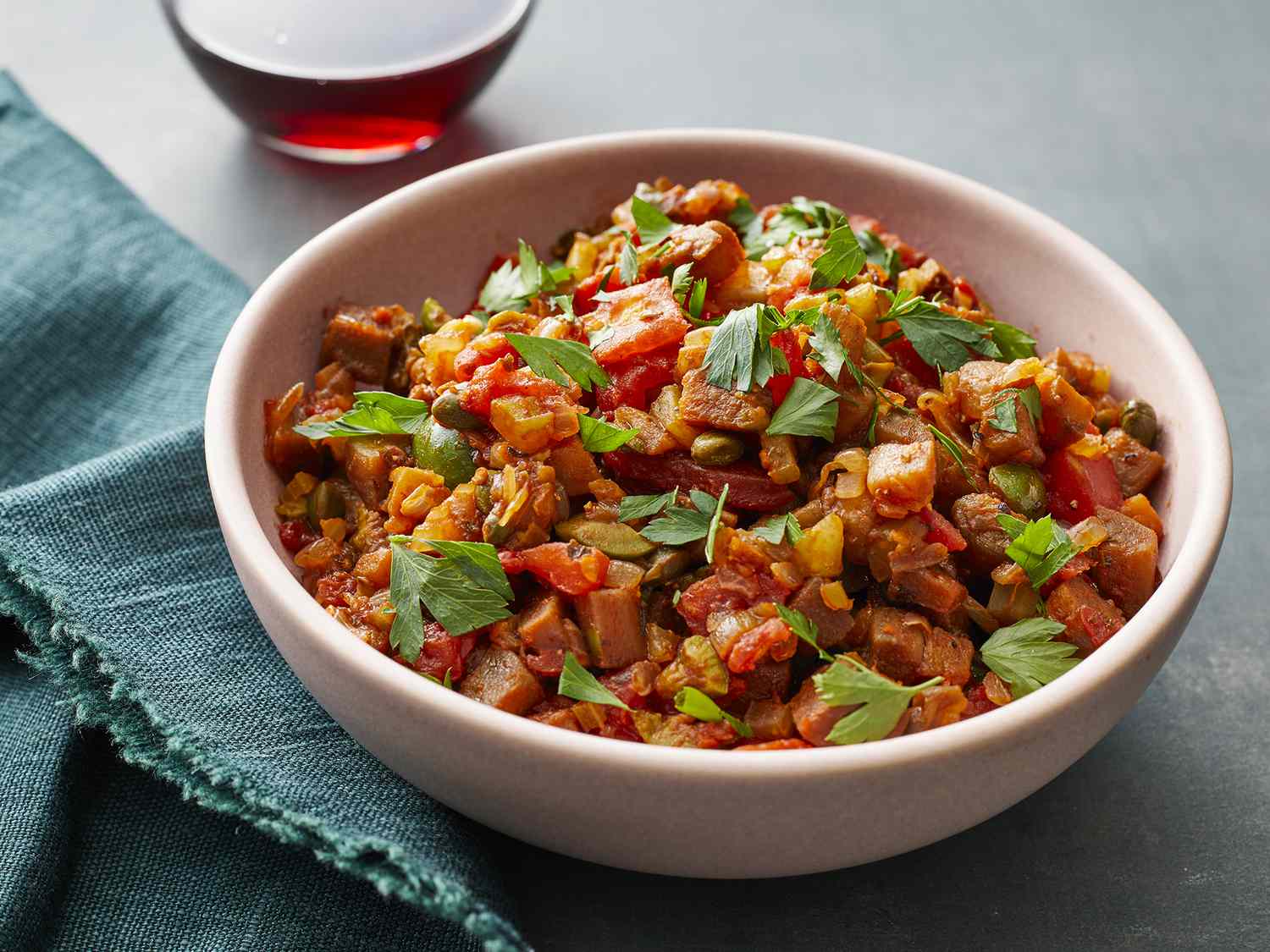
Recipe Score :
0.20
Details of the Ingredients:
- basil: Quantité: 0.4g
Allergenicity: contact dermatitis
HypoAllergenic Traitement : the reactivity is lowered when cooked
Score: 0.17 - Butternut Squash: Quantité: 42g
Allergenicity: ND
HypoAllergenic Traitement : Eviction: the only way to manage allergens is by complete abstinence from the food
Score: 0.17 - Capers: Quantité: 2.5g
Allergenicity: ND
HypoAllergenic Traitement : Eviction: the only way to manage allergens is by complete abstinence from the food
Score: 0.17 - Celery: Quantité: 21.1g
Allergenicity: Allergy to celery is associated with allergy to birch pollen and also allergy to mugwort pollen. The most common symptom is oral allergy syndrome as for several other pollen related food allergies. However, serious reactions to celery such as anaphylaxis have been reported. Raw celery, cooked celery and celery spice have all caused reactions although some individuals may not react to cooked celery. Thus celery and products thereof are listed in annex IIIa of the EU directive on labelling of pre-packaged foods.
HypoAllergenic Traitement : HPP: High-PressureProcessing
Score: 0.50 - Nocellara del Belice DOP olive: Quantité: 3.5g
Allergenicity: itching and generalised urticaria after the ingestion of olive fruit
HypoAllergenic Traitement : the reactivity is lowered when cooked
Score: 0.17 - Olive Oil: Quantité: 10.5g
Allergenicity: contact dermatitis
HypoAllergenic Traitement : ND
Score: 0.17 - Onion: Quantité: 6.3g
Allergenicity: contact allergy, anaphylaxis, asthma, rhinoconjunctivitis
HypoAllergenic Traitement : the reactivity is lowered when cooked
Score: 0.17 - Tomato: Quantité: 10.5g
Allergenicity: tomato allergy is associated with allergy to either latex or pollen. The symptoms reported were rather different in the two groups. The patients with no latex allergy reported mostly the oral allergy syndrome with some skin reactions such as urticaria (hives). Patients with latex allergy reported urticaria as the most common reaction but 20% suffered anaphylaxis. Allergy to tomato is also linked to allergy to potato since they are related plants.
HypoAllergenic Traitement : TT: ThermalTreatment
Score: 0.17
Scientifique Name of the ingredients :
- basil: Ocimum basilicum L.
- Butternut Squash: Cucurbita moschata
- Capers: Capparis spinosa
- Celery: Apium graveolens L.
- Nocellara del Belice DOP olive: Nom scientifique non disponible
- Olive Oil: Olea europaea
- Onion: Allium cepa var. aggregatum
- Tomato: Solanum lycopersicum
Molecular Allergens of Ingredients :
- basil: Oci b
- Butternut Squash: Cuc ma CyP (UniProt: Cuc ma - 3661) - Superfamille: Cyclophilin
- Butternut Squash: Cuc ma 2 (UniProt: Cuc ma - 3661) - Superfamille: Profilin (actin-binding protein)
- Butternut Squash: Cuc ma 4 (UniProt: P13744) - Superfamille: 11S Globulin-Legumin-like Proteins, Trypsin Inhibitors
- Butternut Squash: Cuc ma 4.0101 (UniProt: P13744) - Superfamille: 11S Globulin-Legumin-like Proteins, Trypsin Inhibitors
- Butternut Squash: Cuc ma 5 (UniProt: A0A6J1JVR2) - Superfamille: 2S Albumin
- Butternut Squash: Cuc ma 5.0101 (UniProt: Q39649) - Superfamille: 2S Albumin
- Capers: Cap sp Hevein (UniProt: Cap sp - 65558) - Superfamille: Hevein-like and class I/II chitinase
- Celery: Api g 4.0101 (UniProt: Q9XF37) - Superfamille: Profilin (actin-binding protein)
- Celery: Api g 3.0101 (UniProt: P92919) - Superfamille: Chlorophyll a-b binding protein
- Celery: Api g 2.0101 (UniProt: E6Y8S8) - Superfamille: Bifunctional inhibitor/lipid-transfer protein/seed storage 2S albumin
- Celery: Api g 1.0201 (UniProt: P92918) - Superfamille: Bet v1-like
- Celery: Api g 1.0101 (UniProt: P49372) - Superfamille: Bet v1-like
- Olive Oil: Ole e 13.0101 (UniProt: E3SU11) - Superfamille: Osmotin, thaumatin-like protein
- Onion: All a Alliin lyase (UniProt: P31756) - Superfamille: PLP-dependent transferases
- Onion: All c Alliin lyase (UniProt: P31757) - Superfamille: PLP-dependent transferases
- Tomato: Sola l Vicilin (UniProt: B0JEU3) - Superfamille: RmlC-like cupins
- Tomato: Sola l TLP (UniProt: P12670) - Superfamille: Osmotin, thaumatin-like protein
- Tomato: Sola l SOD (UniProt: P14831) - Superfamille: Cu,Zn superoxide dismutase-like
- Tomato: Sola l PG (UniProt: P05117) - Superfamille: Pectin lyase-like
- Tomato: Sola l Peroxidase (UniProt: P15003) - Superfamille: Heme-dependent peroxidases
- Tomato: Sola l Glucanase (UniProt: Q01413) - Superfamille: (Trans)glycosidases
- Tomato: Sola l Chitinase (UniProt: Q05539) - Superfamille: Lysozyme-like
- Tomato: Sola l 7 (UniProt: K4AYX7) - Superfamille: Bifunctional inhibitor/lipid-transfer protein/seed storage 2S albumin
- Tomato: Sola l 5.0101 (UniProt: P21568) - Superfamille: Cyclophilin-like
- Tomato: Sola l 5 (UniProt: K4D184) - Superfamille: Cyclophilin-like
- Tomato: Sola l 4.0201 (UniProt: K4CWC4) - Superfamille: Bet v1-like
- Tomato: Sola l 4.0101 (UniProt: O49881) - Superfamille: Bet v1-like
- Tomato: Sola l 4 (UniProt: K4CWC5) - Superfamille: Bet v1-like
- Tomato: Sola l 3.0101 (UniProt: P93224) - Superfamille: Bifunctional inhibitor/lipid-transfer protein/seed storage 2S albumin
- Tomato: Sola l 3 (UniProt: P27056) - Superfamille: Bifunctional inhibitor/lipid-transfer protein/seed storage 2S albumin
- Tomato: Sola l 1.0101 (UniProt: Q93YG7) - Superfamille: Profilin (actin-binding protein)
- Tomato: Sola l 1 (UniProt: Q41344) - Superfamille: Profilin (actin-binding protein)
- Ingredients used :
- Ingredient 1 : 0.4g of basil
- Ingredient 2 : 42g of Butternut Squash
- Ingredient 3 : 2.5g of Capers
- Ingredient 4 : 21.1g of Celery
- Ingredient 5 : 3.5g of Nocellara del Belice DOP olive
- Ingredient 6 : 10.5g of Olive Oil
- Ingredient 7 : 6.3g of Onion
- Ingredient 8 : 10.5g of Tomato
- Steps of preparation
- Step 1 : Start preparing the Sicilian caponata by draining the aubergines. Wash them well with running water, cut off the end with the stalk, cut them into slices a couple of centimeters thick and collect them in a bowl. Sprinkle with coarse salt and place a weight on top. After about an hour, rinse them well with fresh water and let them drain on sheets of absorbent paper. When they are well drained, cut them into cubes;
- Step 2 : Pour plenty of oil into a pan and when it is hot, fry the aubergines until golden brown;
- Step 3 : Remove them with a slotted spoon and let them drain on absorbent paper for fried foods;
- Step 4 : Clean the celery, wash it with cold water and cut it into pieces more or less the size of the aubergines. Blanch it for a few minutes in boiling salted water and drain it;
- Step 5 : Pour the sugar and vinegar into a bowl and mix until the sugar is completely dissolved. Keep aside;
- Step 6 : Peel the onion and chop it finely. In a saucepan, fry the chopped onion in the oil for a couple of minutes, taking care not to let it burn. Also add the capers and the blanched pieces of celery and leave to flavor for a few minutes, stirring often;
- Step 7 : Add the olives and tomato sauce to the saucepan. Mix, add salt and cook for five minutes;
- Step 8 : Finally add the aubergines and the sweet and sour sauce. Mix with a wooden spoon until the ingredients are well blended. Season with salt, turn off the heat and flavor with basil;
- Step 9 : Let the caponata rest and serve it at room temperature so the flavor of the vinegar will be less intrusive.
7 - Stewed Dolphin fish
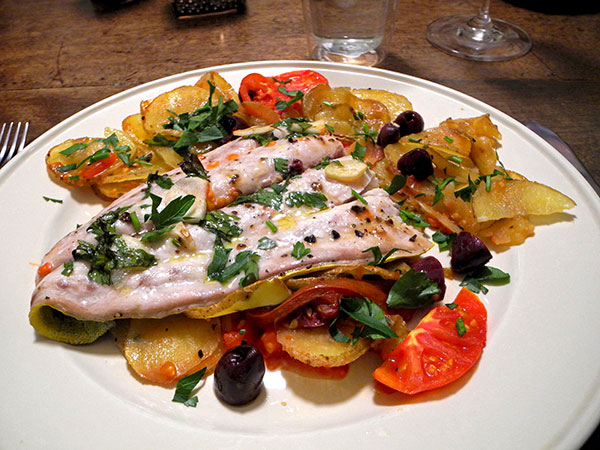
Recipe Score :
0.20
Details of the Ingredients:
- Black pepper: Quantité: 0.4g
Allergenicity: respiratory symptoms, contact dermatitis
HypoAllergenic Traitement : Eviction: the only way to manage allergens is by complete abstinence from the food
Score: 0.17 - Capers: Quantité: 0.8g
Allergenicity: ND
HypoAllergenic Traitement : Eviction: the only way to manage allergens is by complete abstinence from the food
Score: 0.17 - Dolphin Fish (Fresh): Quantité: 39g
Allergenicity: Allergy to fin fish is relatively common, and can be associated with severe symptoms such as anaphylactic shock. Symptoms occur after ingestion. Allergy to fish is not to be confused with a toxic reaction to histamine in spoiled fish (scombroid fish poisoning). Almost all fish allergy seems to involve the protein parvalbumin, which is found in the muscle of most fish. As the parvalbumins are similar in all fish species, individuals allergic to one fish are likely to react to a range of different fish species. Thus after a diagnosis of allergy to one fish species, patients are normally advised to avoid all fin fish. Some individuals also react to frog. Although fin fish and shellfish allergies are not linked, individuals can be allergic to both foods. Parvalbumin remains able to cause a reaction after cooking. Thus fish remains allergenic after cooking and other treatments. Fish can be a "hidden" allergen in, for example, pizza toppings. Consequently, the EU labelling regulations require foods containing fish and products thereof to be labelled.
HypoAllergenic Traitement : Dry heating with glucose, lactose, and galactose
Score: 0.48 - Garlic: Quantité: 0.1g
Allergenicity: Garlic allergy is relatively rare although one case of severe symptoms has been reported after eating garlic. The individual suffered exercise induced anaphylaxis and on a subsequent occasion anaphylaxis without exercise.
HypoAllergenic Traitement : the reactivity is lowered when cooked
Score: 0.17 - Nocellara del Belice DOP olive: Quantité: 3.9g
Allergenicity: itching and generalised urticaria after the ingestion of olive fruit
HypoAllergenic Traitement : the reactivity is lowered when cooked
Score: 0.17 - Olive Oil: Quantité: 3.8g
Allergenicity: contact dermatitis
HypoAllergenic Traitement : ND
Score: 0.17 - Onion: Quantité: 17.6g
Allergenicity: contact allergy, anaphylaxis, asthma, rhinoconjunctivitis
HypoAllergenic Traitement : the reactivity is lowered when cooked
Score: 0.17 - Parsley: Quantité: 0.4g
Allergenicity: angioedema, urticaria
HypoAllergenic Traitement : the reactivity is lowered when cooked
Score: 0.17 - Piccadilly/Pachino Tomatoes: Quantité: 7.8g
Allergenicity: Tomato allergy is associated with allergy to either latex or pollen. The symptoms reported were rather different in the two groups. The patients with no latex allergy reported mostly the oral allergy syndrome with some skin reactions such as urticaria (hives). Patients with latex allergy reported urticaria as the most common reaction but 20% suffered anaphylaxis. Allergy to tomato is also linked to allergy to potato since they are related plants.
HypoAllergenic Traitement : TT: ThermalTreatment
Score: 0.17 - Pine Nuts: Quantité: 1.2g
Allergenicity: Allergies to tree nuts and seeds tend to be of a more severe nature, causing life-threatening and sometimes fatal reactions. People with tree nut allergies also often suffer from reactions triggered by a number of different types of nuts, even though they do not come from closely related plant species. In general these allergies are triggered by the major proteins found in nuts and seeds which are resist processes such as cooking. Reactions to nuts and seeds can also occur as a consequence of hidden nut ingredients or traces of nuts and certain seeds introduced as a consequence of food handling or manufacturing. As a result tree nuts and seeds have been included in Annex IIIa of the EU food labelling directive.
HypoAllergenic Traitement : Eviction: the only way to manage allergens is by complete abstinence from the food
Score: 0.17 - Raisins / grape/ wine: Quantité: 3.9g
Allergenicity: airway reactions (rhinitis and asthma)
HypoAllergenic Traitement : NT
Score: 0.17 - Tomato: Quantité: 13.7g
Allergenicity: tomato allergy is associated with allergy to either latex or pollen. The symptoms reported were rather different in the two groups. The patients with no latex allergy reported mostly the oral allergy syndrome with some skin reactions such as urticaria (hives). Patients with latex allergy reported urticaria as the most common reaction but 20% suffered anaphylaxis. Allergy to tomato is also linked to allergy to potato since they are related plants.
HypoAllergenic Traitement : TT: ThermalTreatment
Score: 0.17
Scientifique Name of the ingredients :
- Black pepper: Piper nigrum L.
- Capers: Capparis spinosa
- Dolphin Fish (Fresh): Coryphaena hippurus
- Garlic: Allium sativum
- Nocellara del Belice DOP olive: Nom scientifique non disponible
- Olive Oil: Olea europaea
- Onion: Allium cepa var. aggregatum
- Parsley: Petroselinum crispum
- Piccadilly/Pachino Tomatoes: Solanum lycopersicum
- Pine Nuts: Pinus pinea
- Raisins / grape/ wine: Vitis vinifera
- Tomato: Solanum lycopersicum
Molecular Allergens of Ingredients :
- Black pepper: Pip n 28kD (UniProt: Pip n - 13216) - Superfamille: Germin, Germin-like Protein
- Black pepper: Pip n 14kD (UniProt: Pip n - 13216)
- Capers: Cap sp Hevein (UniProt: Cap sp - 65558) - Superfamille: Hevein-like and class I/II chitinase
- Dolphin Fish (Fresh): Cor hi 1 (UniProt: not given) - Superfamille: CBP, Parvalbumin
- Garlic: All s Alliin lyase (UniProt: Q01594) - Superfamille: PLP-dependent transferases
- Olive Oil: Ole e 13.0101 (UniProt: E3SU11) - Superfamille: Osmotin, thaumatin-like protein
- Onion: All a Alliin lyase (UniProt: P31756) - Superfamille: PLP-dependent transferases
- Onion: All c Alliin lyase (UniProt: P31757) - Superfamille: PLP-dependent transferases
- Parsley: Pet c 2 (UniProt: Q5EEP5) - Superfamille: Profilin (actin-binding protein)
- Parsley: Pet c 1 (UniProt: P19417) - Superfamille: Bet v1-like
- Piccadilly/Pachino Tomatoes: Sola l Vicilin (UniProt: B0JEU3) - Superfamille: RmlC-like cupins
- Piccadilly/Pachino Tomatoes: Sola l TLP (UniProt: P12670) - Superfamille: Osmotin, thaumatin-like protein
- Piccadilly/Pachino Tomatoes: Sola l SOD (UniProt: P14831) - Superfamille: Cu,Zn superoxide dismutase-like
- Piccadilly/Pachino Tomatoes: Sola l PG (UniProt: P05117) - Superfamille: Pectin lyase-like
- Piccadilly/Pachino Tomatoes: Sola l Peroxidase (UniProt: P15003) - Superfamille: Heme-dependent peroxidases
- Piccadilly/Pachino Tomatoes: Sola l Glucanase (UniProt: Q01413) - Superfamille: (Trans)glycosidases
- Piccadilly/Pachino Tomatoes: Sola l Chitinase (UniProt: Q05539) - Superfamille: Lysozyme-like
- Piccadilly/Pachino Tomatoes: Sola l 7 (UniProt: K4AYX7) - Superfamille: Bifunctional inhibitor/lipid-transfer protein/seed storage 2S albumin
- Piccadilly/Pachino Tomatoes: Sola l 5 (UniProt: K4D184) - Superfamille: Cyclophilin-like
- Piccadilly/Pachino Tomatoes: Sola l 4.0201 (UniProt: K4CWC4) - Superfamille: Bet v1-like
- Piccadilly/Pachino Tomatoes: Sola l 4.0101 (UniProt: O49881) - Superfamille: Bet v1-like
- Piccadilly/Pachino Tomatoes: Sola l 4 (UniProt: K4CWC5) - Superfamille: Bet v1-like
- Piccadilly/Pachino Tomatoes: Sola l 3.0101 (UniProt: P93224) - Superfamille: Bifunctional inhibitor/lipid-transfer protein/seed storage 2S albumin
- Piccadilly/Pachino Tomatoes: Sola l 3 (UniProt: P27056) - Superfamille: Bifunctional inhibitor/lipid-transfer protein/seed storage 2S albumin
- Piccadilly/Pachino Tomatoes: Sola l 1.0101 (UniProt: Q93YG7) - Superfamille: Profilin (actin-binding protein)
- Piccadilly/Pachino Tomatoes: Sola l 1 (UniProt: Q41344) - Superfamille: Profilin (actin-binding protein)
- Piccadilly/Pachino Tomatoes: Sola l 5.0101 (UniProt: P21568) - Superfamille: Cyclophilin-like
- Pine Nuts: Pin p 1 (UniProt: A0A0B6XK84) - Superfamille: Bifunctional inhibitor/lipid-transfer protein/seed storage 2S albumin
- Pine Nuts: Pin p 1.0101 (UniProt: A0A0K3AVY3) - Superfamille: Bifunctional inhibitor/lipid-transfer protein/seed storage 2S albumin
- Raisins / grape/ wine: Vit v 1.0101 (UniProt: P80274) - Superfamille: Bifunctional inhibitor/lipid-transfer protein/seed storage 2S albumin
- Raisins / grape/ wine: Vit v TLP (UniProt: Q9LLB7) - Superfamille: Osmotin, thaumatin-like protein
- Raisins / grape/ wine: Vit v Glucanase (UniProt: Q9M563) - Superfamille: (Trans)glycosidases
- Raisins / grape/ wine: Vit v 8 (UniProt: Q9FS42) - Superfamille: Bet v1-like
- Raisins / grape/ wine: Vit v 4 (UniProt: A5BLM8) - Superfamille: Profilin (actin-binding protein)
- Raisins / grape/ wine: Vit v 1 (UniProt: Q850K6) - Superfamille: Bifunctional inhibitor/lipid-transfer protein/seed storage 2S albumin
- Tomato: Sola l Vicilin (UniProt: B0JEU3) - Superfamille: RmlC-like cupins
- Tomato: Sola l TLP (UniProt: P12670) - Superfamille: Osmotin, thaumatin-like protein
- Tomato: Sola l SOD (UniProt: P14831) - Superfamille: Cu,Zn superoxide dismutase-like
- Tomato: Sola l PG (UniProt: P05117) - Superfamille: Pectin lyase-like
- Tomato: Sola l Peroxidase (UniProt: P15003) - Superfamille: Heme-dependent peroxidases
- Tomato: Sola l Glucanase (UniProt: Q01413) - Superfamille: (Trans)glycosidases
- Tomato: Sola l Chitinase (UniProt: Q05539) - Superfamille: Lysozyme-like
- Tomato: Sola l 7 (UniProt: K4AYX7) - Superfamille: Bifunctional inhibitor/lipid-transfer protein/seed storage 2S albumin
- Tomato: Sola l 5.0101 (UniProt: P21568) - Superfamille: Cyclophilin-like
- Tomato: Sola l 5 (UniProt: K4D184) - Superfamille: Cyclophilin-like
- Tomato: Sola l 4.0201 (UniProt: K4CWC4) - Superfamille: Bet v1-like
- Tomato: Sola l 4.0101 (UniProt: O49881) - Superfamille: Bet v1-like
- Tomato: Sola l 4 (UniProt: K4CWC5) - Superfamille: Bet v1-like
- Tomato: Sola l 3.0101 (UniProt: P93224) - Superfamille: Bifunctional inhibitor/lipid-transfer protein/seed storage 2S albumin
- Tomato: Sola l 3 (UniProt: P27056) - Superfamille: Bifunctional inhibitor/lipid-transfer protein/seed storage 2S albumin
- Tomato: Sola l 1.0101 (UniProt: Q93YG7) - Superfamille: Profilin (actin-binding protein)
- Tomato: Sola l 1 (UniProt: Q41344) - Superfamille: Profilin (actin-binding protein)
- Ingredients used :
- Ingredient 1 : 0.4g of Black pepper
- Ingredient 2 : 0.8g of Capers
- Ingredient 3 : 39g of Dolphin Fish (Fresh)
- Ingredient 4 : 0.1g of Garlic
- Ingredient 5 : 3.9g of Nocellara del Belice DOP olive
- Ingredient 6 : 3.8g of Olive Oil
- Ingredient 7 : 17.6g of Onion
- Ingredient 8 : 0.4g of Parsley
- Ingredient 9 : 7.8g of Piccadilly/Pachino Tomatoes
- Ingredient 10 : 1.2g of Pine Nuts
- Ingredient 11 : 3.9g of Raisins / grape/ wine
- Ingredient 12 : 13.7g of Tomato
- Steps of preparation
- Step 1 : Clean and slice the fish in fillets;
- Step 2 : Dredge it in flour;
- Step 3 : Take a pan, add EVO and when it is hot add the fish and salt to taste;
- Step 4 : Turn it gently and when ready (brown) remove it from the pan;
- Step 5 : Take a pan with high sides, fry the sliced onions until they become brownish, then put the fish in and let it cook;
- Step 6 : When it is brown add the wine until it deglazes, then add tomato sauce, olives, garlic, black pepper and Piccadilly.
8 - Tiramisú
Recipe Score :
0.41
Details of the Ingredients:
- Bomba rice:
Allergenicity: Rice allergy seems uncommon in Europe or America but the reported symptoms have involved the skin (urticaria), respiratory symptoms (asthma), gastrointestinal symptoms (nausea) and anaphylatic shock, sometimes induced by exercise.; Rice allergy is reported as more common in Japan and has been associated with atopic ezcema.
HypoAllergenic Traitement : Yusing young cereal grains
Score: 0.17 - chocolate:
Allergenicity: cutaneous symptoms such as hives, redness or itching.
HypoAllergenic Traitement : NT, but some results highlight the potential of different cocoa populations in the prevention of allergic asthma.
Score: 0.17 - Cocoa:
Allergenicity: cutaneous symptoms such as hives, redness or itching.
HypoAllergenic Traitement : NT, but some results highlight the potential of different cocoa populations in the prevention of allergic asthma.
Score: 0.17 - Sponge fingers:
Allergenicity: Eggs from birds contain several proteins capable of inducing an immune response in man most of these are present in the egg white. Allergenic proteins in the yolk only contribute to a minor degree and isolated allergy to egg yolk proteins are rare (see cross reactions). Most of the allergenic proteins present in the egg white are both heat- and digestion resistant and may also be found in the house dust in normal households. Although not thoroughly investigated, sensitization is believed to take place by ingestion of egg proteins in the diet even the minute quantities present in human milk can sensitize the infant in some cases, where a reaction is elicited the very first time the infant eats a meal containing egg. Ingestion of egg will in sensitized individuals elicit an immediate allergic reaction starting with itching of the mouth and pharynx, followed by nettle rash (urticaria), vomiting, rhinoconjunctivitis, asthma and in rare cases anaphylaxis. Exacerbation of atopic eczema may be seen also, but isolated reactions taking place hours to days after intake, without a previous immediate reaction, are rare.; Adverse reactions to wheat have been more frequently reported than to other cereal-based foods. The best defined of these are coeliac disease and IgE-dependent wheat allergy, both of which result from malfunctioning of the immune system. Allergies to other cereals such as maize, sorghum and millet, are not common and are not related to reactions triggered by wheat, rye, barley and oats. As a consequence individuals with wheat allergy, including coeliac disease, can usually eat maize-based foods such as polenta. However, allergic reactions to maize can result from the fruit allergies found in the South of Europe which often start with reactions to peach. Coeliac disease is triggered by the gluten fraction of wheat or by the gluten-like proteins found in other closely related cereals such as rye, barley. Some sensitive individuals may also react to oats. The gut reacts to the gluten and becomes smooth, loosing its ability to absorb nutrients; symptoms including diarrhoea as well as deficiencies in nutrients like vitamins. It can manifest itself in childhood, affecting childrens growth and development, or in adult hood. As there is no cure individuals with coeliac disease have to avoid eating gluten for life. However, coeliac disease does not cause the potentially fatal reaction of anaphylaxis if gluten is accidentally eaten. In contrast IgE-mediated cereal allergies can be caused by the antibody molecule IgE binding to many proteins, not just gluten. Sometimes the reactions (often severe) only develop if an individual takes exercise within a few hours of eating wheat or related cereals, in a condition called exercise-induced anaphylaxis. Individuals with wheat allergy often react to closely related cereals like barley and rye, less frequently to the more distant relative, oats. Diagnosis of cereal allergies can be complicated by the fact that some of the blood tests for cereal food allergy can accidentally detect allergy to grass pollens instead. As a consequence of these adverse reactions, cereals containing gluten, (i.e. wheat, rye, barley, oats, spelt or their hybridized strains) have been included in Annex IIIa of the food labelling directive along with derived products. Temporary exceptions to the labelling rule (derogations) have been granted for wheat based glucose syrups including dextrose, wheat based maltodextrins, glucose syrups based on barley and cereals used in distillates for spirits.
HypoAllergenic Traitement : Yusing young cereal grains; gastric enzyme supplementation/ Dry heating with mannose, heating for 15 minutes at 95 °C
Score: 0.87
Scientifique Name of the ingredients :
- Bomba rice: Oryza sativa L.
- chocolate: Theobroma cacao
- chocolate: Bos taurus
- Cocoa: Theobroma cacao L.
- Sponge fingers: Gallus gallus
- Sponge fingers: Triticum aestivum
Molecular Allergens of Ingredients :
- Bomba rice: Ory s 19kD (UniProt: P29835) - Superfamille: Bifunctional inhibitor/lipid-transfer protein/seed storage 2S albumin
- Bomba rice: Ory s aA_TI (UniProt: Q01882) - Superfamille: Bifunctional inhibitor/lipid-transfer protein/seed storage 2S albumin
- Bomba rice: Ory s Glyoxalase I (UniProt: Q948T6) - Superfamille: Glyoxalase/Bleomycin resistance protein/Dihydroxybiphenyl dioxygenase
- Bomba rice: Ory s GLP63 (UniProt: Q75GX9) - Superfamille: RmlC-like cupins
- Bomba rice: Ory s NRA (UniProt: Q852L2) - Superfamille: RmlC-like cupins
- Bomba rice: Ory s 32 (UniProt: P0C5C9) - Superfamille: Thioredoxin-like
- Bomba rice: Ory s 17kD (UniProt: Q7X8H9) - Superfamille: Bifunctional inhibitor/lipid-transfer protein/seed storage 2S albumin
- chocolate: Bos d LF (UniProt: P24627) - Superfamille: Periplasmic binding protein-like II
- chocolate: Bos d Lactoperoxidase (UniProt: P80025) - Superfamille: Heme-dependent peroxidases
- chocolate: Bos d 5.0102 (UniProt: B5B0D4) - Superfamille: Lipocalins
- chocolate: Bos d 5.0101 (UniProt: P02754) - Superfamille: Lipocalins
- chocolate: Bos d 4.0101 (UniProt: P00711) - Superfamille: Lysozyme-like
- chocolate: Bos d 4 (UniProt: A1YQB2) - Superfamille: Lysozyme-like
- chocolate: Bos d 5 (UniProt: O77777) - Superfamille: Lipocalins
- chocolate: The ca (UniProt: The ca - 3641) - Superfamille: Bet v 1-like (PR-Proteins)
- Cocoa: The ca (UniProt: The ca - 3641) - Superfamille: Bet v 1-like (PR-Proteins)
- Sponge fingers: Tri a 44.0101 (UniProt: A0A0G3F720) - Superfamille: Bifunctional inhibitor/lipid-transfer protein/seed storage 2S albumin
- Sponge fingers: Tri a 44 (UniProt: B2C4K0) - Superfamille: Bifunctional inhibitor/lipid-transfer protein/seed storage 2S albumin
- Sponge fingers: Tri a 41.0101 (UniProt: A0A0G3F2P1) - Superfamille: RING/U-box
- Sponge fingers: Tri a 37.0101 (UniProt: Q9T0P1) - Superfamille: Crambin-like
- Sponge fingers: Tri a 37 (UniProt: P32032) - Superfamille: Crambin-like
- Sponge fingers: Tri a 36.0101 (UniProt: B2Y2Q7) - Superfamille: Bifunctional inhibitor/lipid-transfer protein/seed storage 2S albumin
- Sponge fingers: Tri a 36 (UniProt: P10385) - Superfamille: Bifunctional inhibitor/lipid-transfer protein/seed storage 2S albumin
- Sponge fingers: Tri a 33.0101 (UniProt: Q9ST57) - Superfamille: Serpins
- Sponge fingers: Tri a 33 (UniProt: P93692) - Superfamille: Serpins
- Sponge fingers: Tri a 30.0101 (UniProt: P17314) - Superfamille: Bifunctional inhibitor/lipid-transfer protein/seed storage 2S albumin
- Sponge fingers: Tri a 30 (UniProt: Q53YX8) - Superfamille: Bifunctional inhibitor/lipid-transfer protein/seed storage 2S albumin
- Sponge fingers: Tri a XI (UniProt: Q8L5C6) - Superfamille: (Trans)glycosidases
- Sponge fingers: Tri a 28.0101 (UniProt: Q4W0V7) - Superfamille: Bifunctional inhibitor/lipid-transfer protein/seed storage 2S albumin
- Sponge fingers: Tri a 45 (UniProt: W5HIH8) - Superfamille: Zinc beta-ribbon
- Sponge fingers: Tri a 45.0101 (UniProt: A0A0G3F715) - Superfamille: Zinc beta-ribbon
- Sponge fingers: Tri a 7kLTP (UniProt: P82900) - Superfamille: Bifunctional inhibitor/lipid-transfer protein/seed storage 2S albumin
- Sponge fingers: Tri a aA_SI (UniProt: P16347) - Superfamille: STI-like
- Sponge fingers: Tri a alpha_Gliadin (UniProt: Q1WA40) - Superfamille: Bifunctional inhibitor/lipid-transfer protein/seed storage 2S albumin
- Sponge fingers: Tri a Chitinase (UniProt: Q8W429) - Superfamille: Lysozyme-like
- Sponge fingers: Tri a CMX (UniProt: Q43691) - Superfamille: Bifunctional inhibitor/lipid-transfer protein/seed storage 2S albumin
- Sponge fingers: Tri a GBSS_I (UniProt: P27736) - Superfamille: UDP-Glycosyltransferase/glycogen phosphorylase
- Sponge fingers: Tri a Peroxidase (UniProt: Q05855) - Superfamille: Heme-dependent peroxidases
- Sponge fingers: Tri a Peroxidase 1 (UniProt: Q8LK23) - Superfamille: Heme-dependent peroxidases
- Sponge fingers: Tri a TLP (UniProt: P27357) - Superfamille: Osmotin, thaumatin-like protein
- Sponge fingers: Tri a Tritin (UniProt: Q07810) - Superfamille: Ribosome inactivating proteins (RIP)
- Sponge fingers: Tri a 12 (UniProt: P49233) - Superfamille: Profilin (actin-binding protein)
- Sponge fingers: Gal d 1 (UniProt: B6V1G0) - Superfamille: Kazal-type serine protease inhibitors
- Sponge fingers: Gal d 4.0101 (UniProt: P00698) - Superfamille: Lysozyme-like
- Sponge fingers: Gal d 1.0101 (UniProt: P01005) - Superfamille: Kazal-type serine protease inhibitors
- Sponge fingers: Gal d 2.0101 (UniProt: P01012) - Superfamille: Serpins
- Sponge fingers: Gal d 3.0101 (UniProt: P02789) - Superfamille: Periplasmic binding protein-like II
- Sponge fingers: Gal d OIH (UniProt: P10184) - Superfamille: Kazal-type serine protease inhibitors
- Sponge fingers: Gal d 5.0101 (UniProt: P19121) - Superfamille: Serum albumin-like
- Sponge fingers: Gal d Phosvitin (UniProt: P67869) - Superfamille: Casein kinase II beta subunit
- Sponge fingers: Gal d 6.0101 (UniProt: P87498) - Superfamille: Lipovitellin-phosvitin complex, superhelical domain
- Sponge fingers: Gal d 3 (UniProt: Q4ADG4) - Superfamille: Periplasmic binding protein-like II
- Sponge fingers: Gal d L-PGDS (UniProt: Q8QFM7) - Superfamille: Lipocalins
- Sponge fingers: Tri a 10kD (UniProt: Q4W1F9) - Superfamille: Bifunctional inhibitor/lipid-transfer protein/seed storage 2S albumin
- Sponge fingers: Tri a 28 (UniProt: P01085) - Superfamille: Bifunctional inhibitor/lipid-transfer protein/seed storage 2S albumin
- Sponge fingers: Tri a 14 (UniProt: P24296) - Superfamille: Bifunctional inhibitor/lipid-transfer protein/seed storage 2S albumin
- Sponge fingers: Tri a 17.0101 (UniProt: P93594) - Superfamille: (Trans)glycosidases
- Sponge fingers: Tri a 18 (UniProt: P10969) - Superfamille: Plant lectins/antimicrobial peptides
- Sponge fingers: Tri a 18.0101 (UniProt: P10968) - Superfamille: Plant lectins/antimicrobial peptides
- Sponge fingers: Tri a 20 (UniProt: P21292) - Superfamille: Bifunctional inhibitor/lipid-transfer protein/seed storage 2S albumin
- Sponge fingers: Tri a 20.0101 (UniProt: A0A060N479) - Superfamille: Bifunctional inhibitor/lipid-transfer protein/seed storage 2S albumin
- Sponge fingers: Tri a 23kD (UniProt: Q4W1G0) - Superfamille: L domain-like
- Sponge fingers: Tri a 25.0101 (UniProt: Q9LDX4) - Superfamille: Thioredoxin-like
- Sponge fingers: Tri a 26 (UniProt: P08489) - Superfamille: Bifunctional inhibitor/lipid-transfer protein/seed storage 2S albumin
- Sponge fingers: Tri a 26.0101 (UniProt: P10388) - Superfamille: Bifunctional inhibitor/lipid-transfer protein/seed storage 2S albumin
- Sponge fingers: Tri a 26.0201 (UniProt: Q45R38) - Superfamille: Bifunctional inhibitor/lipid-transfer protein/seed storage 2S albumin
- Ingredients used :
- Ingredient 1 : Bomba rice
- Ingredient 2 : chocolate
- Ingredient 3 : Cocoa
- Ingredient 4 : Sponge fingers
- Steps of preparation
- Step 1 : Put the double cream, mascarpone, marsala and golden caster sugar in a large bowl;
- Step 2 : Whisk until the cream and mascarpone have completely combined and have the consistency of thickly whipped cream;
- Step 3 : Pour the coffee into a shallow dish. Dip in a few of the sponge fingers at a time, turning for a few seconds until they are nicely soaked, but not soggy. Layer these in a dish until you have used half the sponge fingers, then spread over half of the creamy mixture;
- Step 4 : Using the coarse side of the grater, grate over most of the dark chocolate. Then repeat the layers (you should use up all the coffee), finishing with the creamy layer;
- Step 5 : To serve, dust with the cocoa powder and grate over the remainder of the chocolate.
Germany Recipes
1 - Erbsensuppe
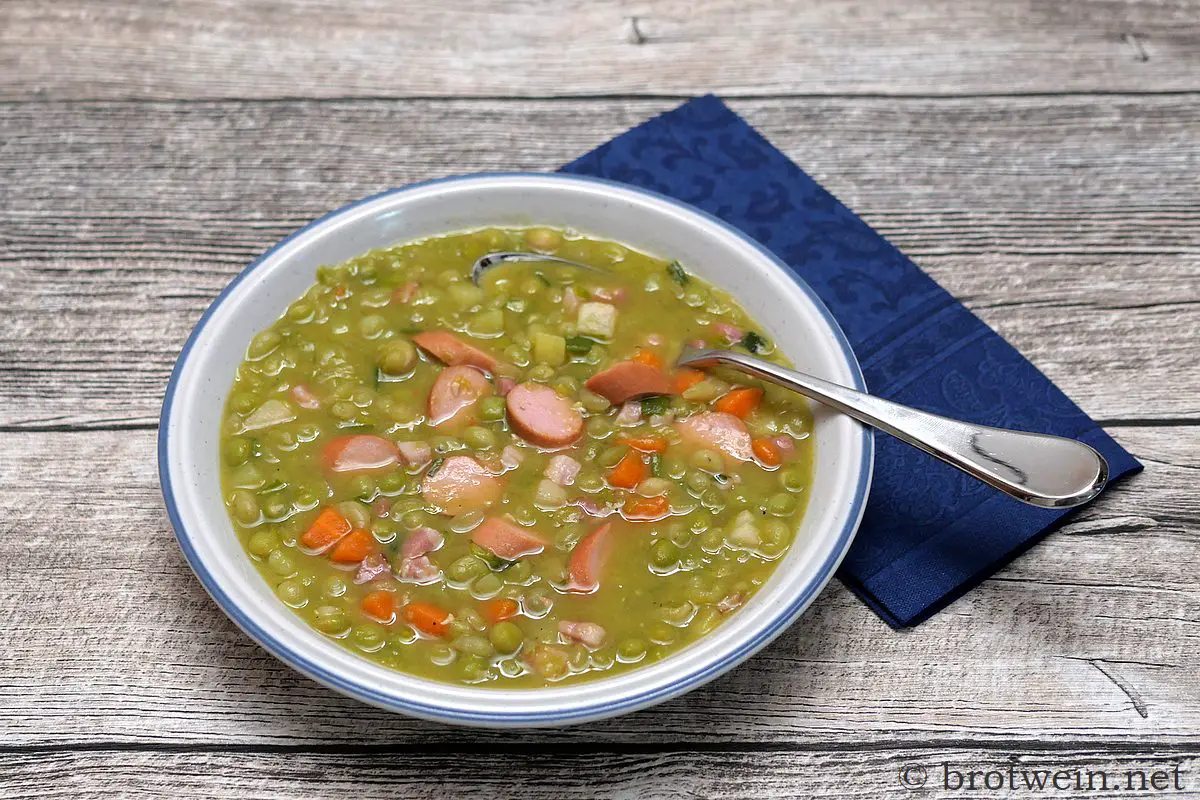
Recipe Score :
0.17
Details of the Ingredients:
- Bacon: Quantité: 4.3g
Allergenicity: atopic eczema/dermatitis syndrome; Anaphylactic reaction after eatign pork meat
HypoAllergenic Traitement : Autoclave Treatment
Score: 0.17 - Bay Leaf: Quantité: 0.1g
Allergenicity: perioral dermatitis, contact dermatitis, asthma
HypoAllergenic Traitement : Eviction: the only way to manage allergens is by complete abstinence from the food
Score: 0.17 - Beans: Quantité: 10g
Allergenicity: nasobronchial and allergic rhinitis
HypoAllergenic Traitement : Cooking at 100 °C for 30 min could completely inactivate the hemagglutinin activity of lectins
Score: 0.17 - Black pepper: Quantité: 0.5g
Allergenicity: respiratory symptoms, contact dermatitis
HypoAllergenic Traitement : Eviction: the only way to manage allergens is by complete abstinence from the food
Score: 0.17 - Marjoram: Quantité: 0.1g
Allergenicity: perioral dermatitis, atopic eczema
HypoAllergenic Traitement : NT
Score: 0.17 - Meat: Quantité: 14.5g
Allergenicity: respiratory symptoms, and anaphylaxis
HypoAllergenic Traitement : α-gal glycosylation
Score: 0.17 - Olive Oil: Quantité: 1.2g
Allergenicity: contact dermatitis
HypoAllergenic Traitement : ND
Score: 0.17 - Onion: Quantité: 6.5g
Allergenicity: contact allergy, anaphylaxis, asthma, rhinoconjunctivitis
HypoAllergenic Traitement : the reactivity is lowered when cooked
Score: 0.17 - Peas: Quantité: 7.3g
Allergenicity: urticaria, emesis, angioedema or rhinitis) severity, severe reactions with wheezing and dyspnoea.
HypoAllergenic Traitement : the reactivity is lowered when cooked
Score: 0.17 - Potato: Quantité: 7.3g
Allergenicity: Potato is considered a rarely allergenic food and is frequently used in elimination diets and as part of the placebo in challenge protocols. However, many cases of food allergy after eating cooked potato have been reported and skin prick tests suggest that sensitization to raw potato is relatively common. Cases of contact allergy to raw potatoes have also been reported. The symptoms reported include reactions of the skin such as urticaria (hives), angioedema (wheals) and eczema, respiratory symptoms such as rhinitis, cough and wheezing and gastrointestinal symptoms such as vomiting and diarrhoea. Most reactions occurred within 2 hours (immediate reactions) but delayed reactions have also been reported. Allergy to cooked potato is related to tomato allergy and to latex allergy. Sensitization to raw potato may also be related to pollen allergies.
HypoAllergenic Traitement : the reactivity is lowered when cooked
Score: 0.17
Scientifique Name of the ingredients :
- Bacon: Sus scrofa domesticus
- Bay Leaf: Laurus nobilis
- Beans: Phaseolus vulgaris
- Black pepper: Piper nigrum L.
- Marjoram: Origanum majorana
- Meat: Bos taurus
- Olive Oil: Olea europaea
- Onion: Allium cepa var. aggregatum
- Peas: Pisum sativum
- Potato: Solanum tuberosum
Molecular Allergens of Ingredients :
- Bacon: Sus s PRVB (UniProt: C1L369) - Superfamille: EF-hand
- Bacon: Sus s Laminin (UniProt: F1S663) - Superfamille: EGF/Laminin
- Bay Leaf: Lau no (UniProt: 85223)
- Beans: Pha v 3.0101 (UniProt: D3W146) - Superfamille: Bifunctional inhibitor/lipid-transfer protein/seed storage 2S albumin
- Beans: Pha v 3.0201 (UniProt: D3W147) - Superfamille: Bifunctional inhibitor/lipid-transfer protein/seed storage 2S albumin
- Beans: Pha v 5 (UniProt: P49231) - Superfamille: Profilin (actin-binding protein)
- Beans: Pha v 6 (UniProt: P25985) - Superfamille: Bet v1-like
- Beans: Pha v aAI.0101 (UniProt: P02873) - Superfamille: Concanavalin A-like lectins/glucanases
- Beans: Pha v PHA (UniProt: P05088) - Superfamille: Concanavalin A-like lectins/glucanases
- Beans: Pha v Phaseolin (UniProt: P02853) - Superfamille: RmlC-like cupins
- Black pepper: Pip n 28kD (UniProt: Pip n - 13216) - Superfamille: Germin, Germin-like Protein
- Black pepper: Pip n 14kD (UniProt: Pip n - 13216)
- Meat: Bos d 6 (UniProt: B0JYQ0) - Superfamille: Serum albumin-like
- Meat: Bos d 6.0101 (UniProt: P02769) - Superfamille: Serum albumin-like
- Olive Oil: Ole e 13.0101 (UniProt: E3SU11) - Superfamille: Osmotin, thaumatin-like protein
- Onion: All a Alliin lyase (UniProt: P31756) - Superfamille: PLP-dependent transferases
- Onion: All c Alliin lyase (UniProt: P31757) - Superfamille: PLP-dependent transferases
- Peas: Pis s 1.0101 (UniProt: Q702P1) - Superfamille: RmlC-like cupins
- Peas: Pis s Albumin (UniProt: P08688) - Superfamille: Hemopexin-like domain
- Peas: Pis s Agglutinin (UniProt: P02867) - Superfamille: Concanavalin A-like lectins/glucanases
- Peas: Pis s 6 (UniProt: P13239) - Superfamille: Bet v1-like
- Peas: Pis s 3.0101 (UniProt: A0A161AT60) - Superfamille: Bifunctional inhibitor/lipid-transfer protein/seed storage 2S albumin
- Peas: Pis s 3 (UniProt: A0A158V755) - Superfamille: Bifunctional inhibitor/lipid-transfer protein/seed storage 2S albumin
- Peas: Pis s 2 (UniProt: P13915) - Superfamille: RmlC-like cupins
- Peas: Pis s 1.0102 (UniProt: Q702P0) - Superfamille: RmlC-like cupins
- Peas: Pis s 1 (UniProt: P02854) - Superfamille: RmlC-like cupins
- Potato: Sola t 1 (UniProt: P07745)
- Potato: Sola t 1.0101 (UniProt: P15476)
- Potato: Sola t 2.0101 (UniProt: P16348) - Superfamille: STI-like
- Potato: Sola t 3 (UniProt: Q6PMR6) - Superfamille: STI-like
- Potato: Sola t 3.0101 (UniProt: O24383) - Superfamille: STI-like
- Potato: Sola t 3.0102 (UniProt: P20347) - Superfamille: STI-like
- Potato: Sola t 4.0101 (UniProt: P30941) - Superfamille: STI-like
- Potato: Sola t 7k (UniProt: M1CHX3) - Superfamille: Bifunctional inhibitor/lipid-transfer protein/seed storage 2S albumin
- Potato: Sola t 8 (UniProt: M1BLC8) - Superfamille: Profilin (actin-binding protein)
- Potato: Sola t Glucanase (UniProt: P52401) - Superfamille: (Trans)glycosidases
- Ingredients used :
- Ingredient 1 : 4.3g of Bacon
- Ingredient 2 : 0.1g of Bay Leaf
- Ingredient 3 : 10g of Beans
- Ingredient 4 : 0.5g of Black pepper
- Ingredient 5 : 0.1g of Marjoram
- Ingredient 6 : 14.5g of Meat
- Ingredient 7 : 1.2g of Olive Oil
- Ingredient 8 : 6.5g of Onion
- Ingredient 9 : 7.3g of Peas
- Ingredient 10 : 7.3g of Potato
- Steps of preparation
- Step 1 : Cut the bacon into strips
- Step 2 : Clean or peel the soup greens, rinse and dice small. Peel the potatoes, rinse them and also dice them into small pieces. Peel the onion and dice it small.
- Step 3 : Heat the oil in a casserole dish and fry the bacon in it. Then add the peas and bay leaf, pour in 1 1/2 liters of water and cover and simmer the soup for about 2 hours.
- Step 4 : 30 minutes before the end of the cooking time, add the diced soup greens and the potato cubes.
- Step 5 : Season the stew with a little salt, pepper and marjoram, add the Vienna sausages and warm them up.
2 - Gulasch
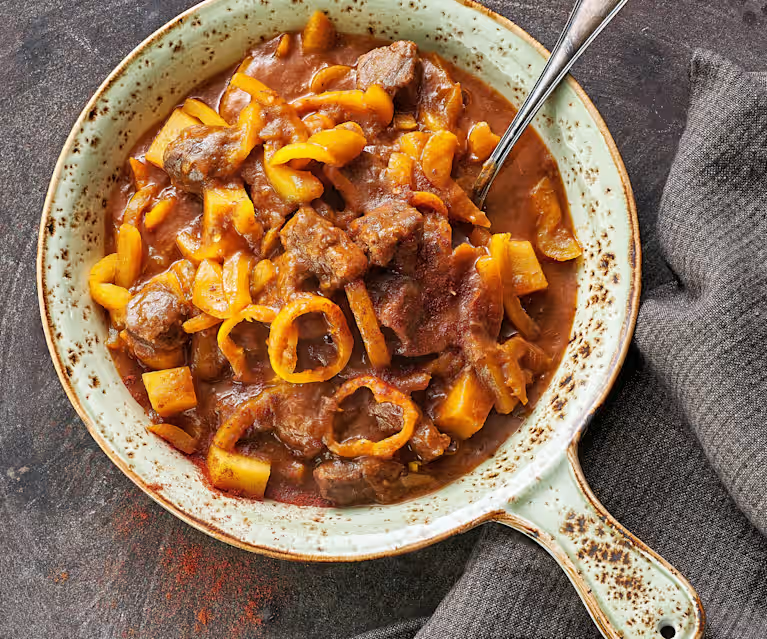
Recipe Score :
0.21
Details of the Ingredients:
- Bay Leaf: Quantité: 0.1g
Allergenicity: perioral dermatitis, contact dermatitis, asthma
HypoAllergenic Traitement : Eviction: the only way to manage allergens is by complete abstinence from the food
Score: 0.17 - Beef: Quantité: 17.6g
Allergenicity: respiratory symptoms, and anaphylaxis
HypoAllergenic Traitement : cooking alters the reactivity of beef +freeze-drying and homogenization
Score: 0.17 - Carrot: Quantité: 1.1g
Allergenicity: The symptoms include oral allergy syndrome (OAS), angioedema, urticaria, dyspnea, vertigo, tightness of throat or chest, dysphagia, hoarseness, cough, rhinitis and conjunctivitis, Carrot allergy is generally associated with allergy to birch pollen or with the celery-carrot-mugwort-spice syndrome.
HypoAllergenic Traitement : the reactivity is lowered when cooked
Score: 0.17 - Celery: Quantité: 0.9g
Allergenicity: Allergy to celery is associated with allergy to birch pollen and also allergy to mugwort pollen. The most common symptom is oral allergy syndrome as for several other pollen related food allergies. However, serious reactions to celery such as anaphylaxis have been reported. Raw celery, cooked celery and celery spice have all caused reactions although some individuals may not react to cooked celery. Thus celery and products thereof are listed in annex IIIa of the EU directive on labelling of pre-packaged foods.
HypoAllergenic Traitement : HPP: High-PressureProcessing
Score: 0.50 - Onion: Quantité: 7.8g
Allergenicity: contact allergy, anaphylaxis, asthma, rhinoconjunctivitis
HypoAllergenic Traitement : the reactivity is lowered when cooked
Score: 0.17 - Paprika: Quantité: 0.1g
Allergenicity: contact urticaria, rhinoconjunctivitis
HypoAllergenic Traitement : the reactivity is lowered when cooked
Score: 0.17 - Raisins / grape/ wine: Quantité: 12.3g
Allergenicity: airway reactions (rhinitis and asthma)
HypoAllergenic Traitement : NT
Score: 0.17 - Sauce thickener: Quantité: 0.4g
Allergenicity: Adverse reactions to wheat have been more frequently reported than to other cereal-based foods. The best defined of these are coeliac disease and IgE-dependent wheat allergy, both of which result from malfunctioning of the immune system. Allergies to other cereals such as maize, sorghum and millet, are not common and are not related to reactions triggered by wheat, rye, barley and oats. As a consequence individuals with wheat allergy, including coeliac disease, can usually eat maize-based foods such as polenta. However, allergic reactions to maize can result from the fruit allergies found in the South of Europe which often start with reactions to peach. Coeliac disease is triggered by the gluten fraction of wheat or by the gluten-like proteins found in other closely related cereals such as rye, barley. Some sensitive individuals may also react to oats. The gut reacts to the gluten and becomes smooth, loosing its ability to absorb nutrients; symptoms including diarrhoea as well as deficiencies in nutrients like vitamins. It can manifest itself in childhood, affecting childrens growth and development, or in adult hood. As there is no cure individuals with coeliac disease have to avoid eating gluten for life. However, coeliac disease does not cause the potentially fatal reaction of anaphylaxis if gluten is accidentally eaten. In contrast IgE-mediated cereal allergies can be caused by the antibody molecule IgE binding to many proteins, not just gluten. Sometimes the reactions (often severe) only develop if an individual takes exercise within a few hours of eating wheat or related cereals, in a condition called exercise-induced anaphylaxis. Individuals with wheat allergy often react to closely related cereals like barley and rye, less frequently to the more distant relative, oats. Diagnosis of cereal allergies can be complicated by the fact that some of the blood tests for cereal food allergy can accidentally detect allergy to grass pollens instead. As a consequence of these adverse reactions, cereals containing gluten, (i.e. wheat, rye, barley, oats, spelt or their hybridized strains) have been included in Annex IIIa of the food labelling directive along with derived products. Temporary exceptions to the labelling rule (derogations) have been granted for wheat based glucose syrups including dextrose, wheat based maltodextrins, glucose syrups based on barley and cereals used in distillates for spirits.
HypoAllergenic Traitement : Yusing young cereal grains
Score: 0.48 - Tomato: Quantité: 0.5g
Allergenicity: tomato allergy is associated with allergy to either latex or pollen. The symptoms reported were rather different in the two groups. The patients with no latex allergy reported mostly the oral allergy syndrome with some skin reactions such as urticaria (hives). Patients with latex allergy reported urticaria as the most common reaction but 20% suffered anaphylaxis. Allergy to tomato is also linked to allergy to potato since they are related plants.
HypoAllergenic Traitement : TT: ThermalTreatment
Score: 0.17
Scientifique Name of the ingredients :
- Bay Leaf: Laurus nobilis
- Beef: Bos taurus Linnaeus
- Carrot: Daucus carota L.
- Celery: Apium graveolens L.
- Onion: Allium cepa var. aggregatum
- Paprika: Capsicum annuum
- Raisins / grape/ wine: Vitis vinifera
- Sauce thickener: Triticum aestivum
- Tomato: Solanum lycopersicum
Molecular Allergens of Ingredients :
- Bay Leaf: Lau no (UniProt: 85223)
- Beef: Bos d 6 (UniProt: B0JYQ0) - Superfamille: Serum albumin-like
- Beef: Bos d 6.0101 (UniProt: P02769) - Superfamille: Serum albumin-like
- Carrot: Dau c 1 (UniProt: Q75T31) - Superfamille: Bet v1-like
- Carrot: Dau c 1.0101 (UniProt: O04298) - Superfamille: Bet v1-like
- Carrot: Dau c 1.0201 (UniProt: Q8SAE7) - Superfamille: Bet v1-like
- Carrot: Dau c 1.0301 (UniProt: D9ZHN9) - Superfamille: Bet v1-like
- Carrot: Dau c 3 (UniProt: P27631) - Superfamille: Bifunctional inhibitor/lipid-transfer protein/seed storage 2S albumin
- Carrot: Dau c 4.0101 (UniProt: Q8SAE6) - Superfamille: Profilin (actin-binding protein)
- Carrot: Dau c 5.0101 (UniProt: H2DF86) - Superfamille: NAD(P)-binding Rossmann-fold domains
- Carrot: Dau c 5.0102 (UniProt: H2DF85) - Superfamille: NAD(P)-binding Rossmann-fold domains
- Carrot: Dau c CyP (UniProt: H2DF84) - Superfamille: Cyclophilin-like
- Celery: Api g 2.0101 (UniProt: E6Y8S8) - Superfamille: Bifunctional inhibitor/lipid-transfer protein/seed storage 2S albumin
- Celery: Api g 4.0101 (UniProt: Q9XF37) - Superfamille: Profilin (actin-binding protein)
- Celery: Api g 3.0101 (UniProt: P92919) - Superfamille: Chlorophyll a-b binding protein
- Celery: Api g 1.0201 (UniProt: P92918) - Superfamille: Bet v1-like
- Celery: Api g 1.0101 (UniProt: P49372) - Superfamille: Bet v1-like
- Onion: All a Alliin lyase (UniProt: P31756) - Superfamille: PLP-dependent transferases
- Onion: All c Alliin lyase (UniProt: P31757) - Superfamille: PLP-dependent transferases
- Paprika: Cap a 1.0101 (UniProt: Q9ARG0) - Superfamille: Osmotin, thaumatin-like protein
- Paprika: Cap a 2 (UniProt: Q6RG01) - Superfamille: Profilin (actin-binding protein)
- Paprika: Cap a 2.0101 (UniProt: Q93YI9) - Superfamille: Profilin (actin-binding protein)
- Paprika: Cap a 30kD (UniProt: Q42661) - Superfamille: Heme-dependent peroxidases
- Paprika: Cap a 4 (UniProt: B2CZJ6) - Superfamille: Bet v1-like
- Paprika: Cap a Glucanase (UniProt: Q9M5L5) - Superfamille: (Trans)glycosidases
- Raisins / grape/ wine: Vit v 1 (UniProt: Q850K6) - Superfamille: Bifunctional inhibitor/lipid-transfer protein/seed storage 2S albumin
- Raisins / grape/ wine: Vit v TLP (UniProt: Q9LLB7) - Superfamille: Osmotin, thaumatin-like protein
- Raisins / grape/ wine: Vit v Glucanase (UniProt: Q9M563) - Superfamille: (Trans)glycosidases
- Raisins / grape/ wine: Vit v 4 (UniProt: A5BLM8) - Superfamille: Profilin (actin-binding protein)
- Raisins / grape/ wine: Vit v 1.0101 (UniProt: P80274) - Superfamille: Bifunctional inhibitor/lipid-transfer protein/seed storage 2S albumin
- Raisins / grape/ wine: Vit v 8 (UniProt: Q9FS42) - Superfamille: Bet v1-like
- Sauce thickener: Tri a 36.0101 (UniProt: B2Y2Q7) - Superfamille: Bifunctional inhibitor/lipid-transfer protein/seed storage 2S albumin
- Sauce thickener: Tri a 37 (UniProt: P32032) - Superfamille: Crambin-like
- Sauce thickener: Tri a 37.0101 (UniProt: Q9T0P1) - Superfamille: Crambin-like
- Sauce thickener: Tri a 41.0101 (UniProt: A0A0G3F2P1) - Superfamille: RING/U-box
- Sauce thickener: Tri a 44 (UniProt: B2C4K0) - Superfamille: Bifunctional inhibitor/lipid-transfer protein/seed storage 2S albumin
- Sauce thickener: Tri a 44.0101 (UniProt: A0A0G3F720) - Superfamille: Bifunctional inhibitor/lipid-transfer protein/seed storage 2S albumin
- Sauce thickener: Tri a 45 (UniProt: W5HIH8) - Superfamille: Zinc beta-ribbon
- Sauce thickener: Tri a 26.0201 (UniProt: Q45R38) - Superfamille: Bifunctional inhibitor/lipid-transfer protein/seed storage 2S albumin
- Sauce thickener: Tri a 45.0101 (UniProt: A0A0G3F715) - Superfamille: Zinc beta-ribbon
- Sauce thickener: Tri a 7kLTP (UniProt: P82900) - Superfamille: Bifunctional inhibitor/lipid-transfer protein/seed storage 2S albumin
- Sauce thickener: Tri a aA_SI (UniProt: P16347) - Superfamille: STI-like
- Sauce thickener: Tri a alpha_Gliadin (UniProt: Q1WA40) - Superfamille: Bifunctional inhibitor/lipid-transfer protein/seed storage 2S albumin
- Sauce thickener: Tri a Chitinase (UniProt: Q8W429) - Superfamille: Lysozyme-like
- Sauce thickener: Tri a CMX (UniProt: Q43691) - Superfamille: Bifunctional inhibitor/lipid-transfer protein/seed storage 2S albumin
- Sauce thickener: Tri a GBSS_I (UniProt: P27736) - Superfamille: UDP-Glycosyltransferase/glycogen phosphorylase
- Sauce thickener: Tri a Peroxidase (UniProt: Q05855) - Superfamille: Heme-dependent peroxidases
- Sauce thickener: Tri a Peroxidase 1 (UniProt: Q8LK23) - Superfamille: Heme-dependent peroxidases
- Sauce thickener: Tri a TLP (UniProt: P27357) - Superfamille: Osmotin, thaumatin-like protein
- Sauce thickener: Tri a Tritin (UniProt: Q07810) - Superfamille: Ribosome inactivating proteins (RIP)
- Sauce thickener: Tri a XI (UniProt: Q8L5C6) - Superfamille: (Trans)glycosidases
- Sauce thickener: Tri a 33.0101 (UniProt: Q9ST57) - Superfamille: Serpins
- Sauce thickener: Tri a 10kD (UniProt: Q4W1F9) - Superfamille: Bifunctional inhibitor/lipid-transfer protein/seed storage 2S albumin
- Sauce thickener: Tri a 12 (UniProt: P49233) - Superfamille: Profilin (actin-binding protein)
- Sauce thickener: Tri a 14 (UniProt: P24296) - Superfamille: Bifunctional inhibitor/lipid-transfer protein/seed storage 2S albumin
- Sauce thickener: Tri a 17.0101 (UniProt: P93594) - Superfamille: (Trans)glycosidases
- Sauce thickener: Tri a 18 (UniProt: P10969) - Superfamille: Plant lectins/antimicrobial peptides
- Sauce thickener: Tri a 18.0101 (UniProt: P10968) - Superfamille: Plant lectins/antimicrobial peptides
- Sauce thickener: Tri a 20 (UniProt: P21292) - Superfamille: Bifunctional inhibitor/lipid-transfer protein/seed storage 2S albumin
- Sauce thickener: Tri a 20.0101 (UniProt: A0A060N479) - Superfamille: Bifunctional inhibitor/lipid-transfer protein/seed storage 2S albumin
- Sauce thickener: Tri a 23kD (UniProt: Q4W1G0) - Superfamille: L domain-like
- Sauce thickener: Tri a 26 (UniProt: P08489) - Superfamille: Bifunctional inhibitor/lipid-transfer protein/seed storage 2S albumin
- Sauce thickener: Tri a 25.0101 (UniProt: Q9LDX4) - Superfamille: Thioredoxin-like
- Sauce thickener: Tri a 36 (UniProt: P10385) - Superfamille: Bifunctional inhibitor/lipid-transfer protein/seed storage 2S albumin
- Sauce thickener: Tri a 33 (UniProt: P93692) - Superfamille: Serpins
- Sauce thickener: Tri a 30.0101 (UniProt: P17314) - Superfamille: Bifunctional inhibitor/lipid-transfer protein/seed storage 2S albumin
- Sauce thickener: Tri a 30 (UniProt: Q53YX8) - Superfamille: Bifunctional inhibitor/lipid-transfer protein/seed storage 2S albumin
- Sauce thickener: Tri a 28.0101 (UniProt: Q4W0V7) - Superfamille: Bifunctional inhibitor/lipid-transfer protein/seed storage 2S albumin
- Sauce thickener: Tri a 28 (UniProt: P01085) - Superfamille: Bifunctional inhibitor/lipid-transfer protein/seed storage 2S albumin
- Sauce thickener: Tri a 26.0101 (UniProt: P10388) - Superfamille: Bifunctional inhibitor/lipid-transfer protein/seed storage 2S albumin
- Tomato: Sola l Vicilin (UniProt: B0JEU3) - Superfamille: RmlC-like cupins
- Tomato: Sola l TLP (UniProt: P12670) - Superfamille: Osmotin, thaumatin-like protein
- Tomato: Sola l SOD (UniProt: P14831) - Superfamille: Cu,Zn superoxide dismutase-like
- Tomato: Sola l PG (UniProt: P05117) - Superfamille: Pectin lyase-like
- Tomato: Sola l Peroxidase (UniProt: P15003) - Superfamille: Heme-dependent peroxidases
- Tomato: Sola l Glucanase (UniProt: Q01413) - Superfamille: (Trans)glycosidases
- Tomato: Sola l Chitinase (UniProt: Q05539) - Superfamille: Lysozyme-like
- Tomato: Sola l 7 (UniProt: K4AYX7) - Superfamille: Bifunctional inhibitor/lipid-transfer protein/seed storage 2S albumin
- Tomato: Sola l 5.0101 (UniProt: P21568) - Superfamille: Cyclophilin-like
- Tomato: Sola l 5 (UniProt: K4D184) - Superfamille: Cyclophilin-like
- Tomato: Sola l 4.0201 (UniProt: K4CWC4) - Superfamille: Bet v1-like
- Tomato: Sola l 4.0101 (UniProt: O49881) - Superfamille: Bet v1-like
- Tomato: Sola l 4 (UniProt: K4CWC5) - Superfamille: Bet v1-like
- Tomato: Sola l 3.0101 (UniProt: P93224) - Superfamille: Bifunctional inhibitor/lipid-transfer protein/seed storage 2S albumin
- Tomato: Sola l 3 (UniProt: P27056) - Superfamille: Bifunctional inhibitor/lipid-transfer protein/seed storage 2S albumin
- Tomato: Sola l 1.0101 (UniProt: Q93YG7) - Superfamille: Profilin (actin-binding protein)
- Tomato: Sola l 1 (UniProt: Q41344) - Superfamille: Profilin (actin-binding protein)
- Ingredients used :
- Ingredient 1 : 0.1g of Bay Leaf
- Ingredient 2 : 17.6g of Beef
- Ingredient 3 : 1.1g of Carrot
- Ingredient 4 : 0.9g of Celery
- Ingredient 5 : 7.8g of Onion
- Ingredient 6 : 0.1g of Paprika
- Ingredient 7 : 12.3g of Raisins / grape/ wine
- Ingredient 8 : 0.4g of Sauce thickener
- Ingredient 9 : 0.5g of Tomato
- Steps of preparation
- Step 1 : Cut the onions into 0.5 cm cubes, dice the carrot and celery.
- Step 2 : Fry everything vigorously in 2 tablespoons of clarified butter. Add tomato paste and sauté until a homogeneous mass forms; the paste may settle a little. Briefly roast the paprika powder (be careful not to burn!). Deglaze with the red wine and stock and bring to the boil. Now add the diced meat, bring to the boil again and simmer over a low heat with the bay leaves for about 2 hours.
- Step 3 : Because of the vegetables it is usually not necessary to thicken the sauce. water. Then season to taste with salt and pepper.
- Step 4 : However, if it is too liquid, you can thicken the goulash with 1 tablespoon of starch flour dissolved in cold water. Then season to taste.
- Step 5 : If possible, you can remove the bay leaves before serving.
3 - Königsberger Klopse
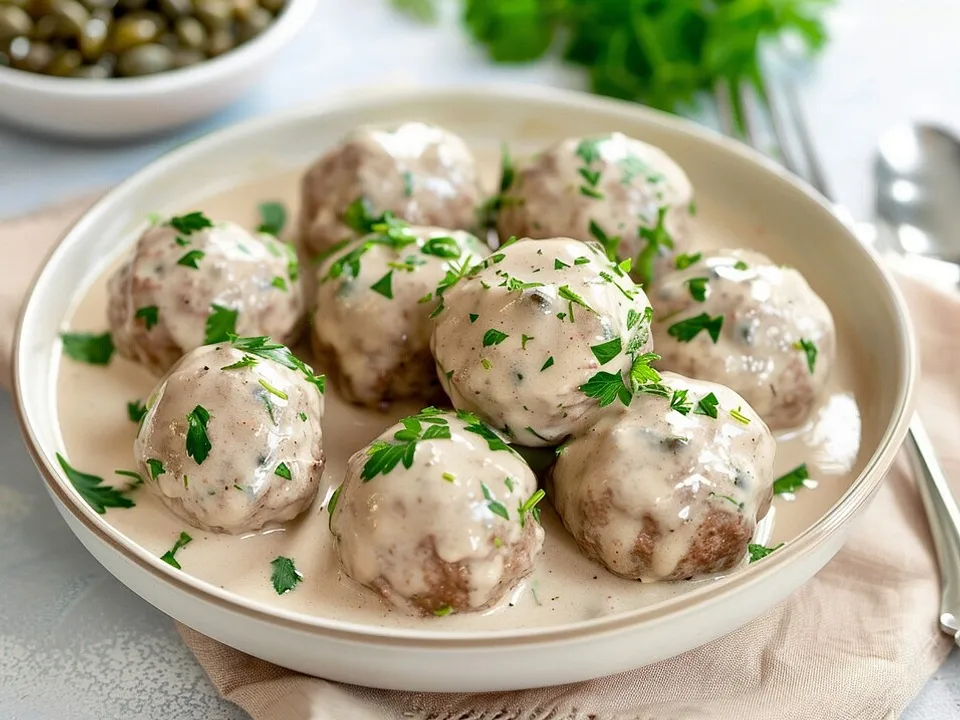
Recipe Score :
0.36
Details of the Ingredients:
- Black pepper: Quantité: 0.6g
Allergenicity: respiratory symptoms, contact dermatitis
HypoAllergenic Traitement : Eviction: the only way to manage allergens is by complete abstinence from the food
Score: 0.17 - Capers: Quantité: 1.6g
Allergenicity: ND
HypoAllergenic Traitement : Eviction: the only way to manage allergens is by complete abstinence from the food
Score: 0.17 - Egg: Quantité: 2.4g
Allergenicity: Eggs from birds contain several proteins capable of inducing an immune response in man most of these are present in the egg white. Allergenic proteins in the yolk only contribute to a minor degree and isolated allergy to egg yolk proteins are rare (see cross reactions). Most of the allergenic proteins present in the egg white are both heat- and digestion resistant and may also be found in the house dust in normal households. Although not thoroughly investigated, sensitization is believed to take place by ingestion of egg proteins in the diet even the minute quantities present in human milk can sensitize the infant in some cases, where a reaction is elicited the very first time the infant eats a meal containing egg. Ingestion of egg will in sensitized individuals elicit an immediate allergic reaction starting with itching of the mouth and pharynx, followed by nettle rash (urticaria), vomiting, rhinoconjunctivitis, asthma and in rare cases anaphylaxis. Exacerbation of atopic eczema may be seen also, but isolated reactions taking place hours to days after intake, without a previous immediate reaction, are rare.
HypoAllergenic Traitement : gastric enzyme supplementation/ Dry heating with mannose, heating for 15 minutes at 95 °C
Score: 0.87 - Lemon: Quantité: 1.2g
Allergenicity: laryngeal edema, generalized urticaria, and asthma symptoms, anaphylactic reactions
HypoAllergenic Traitement : remove seed
Score: 0.17 - Meat: Quantité: 20.1g
Allergenicity: respiratory symptoms, and anaphylaxis
HypoAllergenic Traitement : α-gal glycosylation
Score: 0.17 - Nutmeg: Quantité: 0.6g
Allergenicity: asthma, contact allergy
HypoAllergenic Traitement : ND
Score: 0.17 - Plain four/ weat: Quantité: 0.4g
Allergenicity: Adverse reactions to wheat have been more frequently reported than to other cereal-based foods. The best defined of these are coeliac disease and IgE-dependent wheat allergy, both of which result from malfunctioning of the immune system. Allergies to other cereals such as maize, sorghum and millet, are not common and are not related to reactions triggered by wheat, rye, barley and oats. As a consequence individuals with wheat allergy, including coeliac disease, can usually eat maize-based foods such as polenta. However, allergic reactions to maize can result from the fruit allergies found in the South of Europe which often start with reactions to peach. Coeliac disease is triggered by the gluten fraction of wheat or by the gluten-like proteins found in other closely related cereals such as rye, barley. Some sensitive individuals may also react to oats. The gut reacts to the gluten and becomes smooth, loosing its ability to absorb nutrients; symptoms including diarrhoea as well as deficiencies in nutrients like vitamins. It can manifest itself in childhood, affecting childrens growth and development, or in adult hood. As there is no cure individuals with coeliac disease have to avoid eating gluten for life. However, coeliac disease does not cause the potentially fatal reaction of anaphylaxis if gluten is accidentally eaten. In contrast IgE-mediated cereal allergies can be caused by the antibody molecule IgE binding to many proteins, not just gluten. Sometimes the reactions (often severe) only develop if an individual takes exercise within a few hours of eating wheat or related cereals, in a condition called exercise-induced anaphylaxis. Individuals with wheat allergy often react to closely related cereals like barley and rye, less frequently to the more distant relative, oats. Diagnosis of cereal allergies can be complicated by the fact that some of the blood tests for cereal food allergy can accidentally detect allergy to grass pollens instead. As a consequence of these adverse reactions, cereals containing gluten, (i.e. wheat, rye, barley, oats, spelt or their hybridized strains) have been included in Annex IIIa of the food labelling directive along with derived products. Temporary exceptions to the labelling rule (derogations) have been granted for wheat based glucose syrups including dextrose, wheat based maltodextrins, glucose syrups based on barley and cereals used in distillates for spirits.
HypoAllergenic Traitement : Yusing young cereal grains
Score: 0.48 - Sauce thickener: Quantité: 1.2g
Allergenicity: Adverse reactions to wheat have been more frequently reported than to other cereal-based foods. The best defined of these are coeliac disease and IgE-dependent wheat allergy, both of which result from malfunctioning of the immune system. Allergies to other cereals such as maize, sorghum and millet, are not common and are not related to reactions triggered by wheat, rye, barley and oats. As a consequence individuals with wheat allergy, including coeliac disease, can usually eat maize-based foods such as polenta. However, allergic reactions to maize can result from the fruit allergies found in the South of Europe which often start with reactions to peach. Coeliac disease is triggered by the gluten fraction of wheat or by the gluten-like proteins found in other closely related cereals such as rye, barley. Some sensitive individuals may also react to oats. The gut reacts to the gluten and becomes smooth, loosing its ability to absorb nutrients; symptoms including diarrhoea as well as deficiencies in nutrients like vitamins. It can manifest itself in childhood, affecting childrens growth and development, or in adult hood. As there is no cure individuals with coeliac disease have to avoid eating gluten for life. However, coeliac disease does not cause the potentially fatal reaction of anaphylaxis if gluten is accidentally eaten. In contrast IgE-mediated cereal allergies can be caused by the antibody molecule IgE binding to many proteins, not just gluten. Sometimes the reactions (often severe) only develop if an individual takes exercise within a few hours of eating wheat or related cereals, in a condition called exercise-induced anaphylaxis. Individuals with wheat allergy often react to closely related cereals like barley and rye, less frequently to the more distant relative, oats. Diagnosis of cereal allergies can be complicated by the fact that some of the blood tests for cereal food allergy can accidentally detect allergy to grass pollens instead. As a consequence of these adverse reactions, cereals containing gluten, (i.e. wheat, rye, barley, oats, spelt or their hybridized strains) have been included in Annex IIIa of the food labelling directive along with derived products. Temporary exceptions to the labelling rule (derogations) have been granted for wheat based glucose syrups including dextrose, wheat based maltodextrins, glucose syrups based on barley and cereals used in distillates for spirits.
HypoAllergenic Traitement : Yusing young cereal grains
Score: 0.48 - Shallots: Quantité: 2g
Allergenicity: contact allergy, anaphylaxis, asthma, rhinoconjunctivitis
HypoAllergenic Traitement : the reactivity is lowered when cooked
Score: 0.17 - bread: Quantité: 0.9g
Allergenicity: Adverse reactions to wheat have been more frequently reported than to other cereal-based foods. The best defined of these are coeliac disease and IgE-dependent wheat allergy, both of which result from malfunctioning of the immune system. Allergies to other cereals such as maize, sorghum and millet, are not common and are not related to reactions triggered by wheat, rye, barley and oats. As a consequence individuals with wheat allergy, including coeliac disease, can usually eat maize-based foods such as polenta. However, allergic reactions to maize can result from the fruit allergies found in the South of Europe which often start with reactions to peach. Coeliac disease is triggered by the gluten fraction of wheat or by the gluten-like proteins found in other closely related cereals such as rye, barley. Some sensitive individuals may also react to oats. The gut reacts to the gluten and becomes smooth, loosing its ability to absorb nutrients; symptoms including diarrhoea as well as deficiencies in nutrients like vitamins. It can manifest itself in childhood, affecting childrens growth and development, or in adult hood. As there is no cure individuals with coeliac disease have to avoid eating gluten for life. However, coeliac disease does not cause the potentially fatal reaction of anaphylaxis if gluten is accidentally eaten. In contrast IgE-mediated cereal allergies can be caused by the antibody molecule IgE binding to many proteins, not just gluten. Sometimes the reactions (often severe) only develop if an individual takes exercise within a few hours of eating wheat or related cereals, in a condition called exercise-induced anaphylaxis. Individuals with wheat allergy often react to closely related cereals like barley and rye, less frequently to the more distant relative, oats. Diagnosis of cereal allergies can be complicated by the fact that some of the blood tests for cereal food allergy can accidentally detect allergy to grass pollens instead. As a consequence of these adverse reactions, cereals containing gluten, (i.e. wheat, rye, barley, oats, spelt or their hybridized strains) have been included in Annex IIIa of the food labelling directive along with derived products. Temporary exceptions to the labelling rule (derogations) have been granted for wheat based glucose syrups including dextrose, wheat based maltodextrins, glucose syrups based on barley and cereals used in distillates for spirits.
HypoAllergenic Traitement : Yusing young cereal grains
Score: 0.48
Scientifique Name of the ingredients :
- Black pepper: Piper nigrum L.
- Capers: Capparis spinosa
- Egg: Gallus gallus
- Lemon: Citrus limon
- Meat: Bos taurus
- Nutmeg: Myristica fragrans
- Plain four/ weat: Triticum aestivum
- Sauce thickener: Triticum aestivum
- Shallots: Allium ascalonicum
- Shallots: Allium cepa
- bread: Triticum aestivum
Molecular Allergens of Ingredients :
- Black pepper: Pip n 14kD (UniProt: Pip n - 13216)
- Black pepper: Pip n 28kD (UniProt: Pip n - 13216) - Superfamille: Germin, Germin-like Protein
- bread: Tri a 10kD (UniProt: Q4W1F9) - Superfamille: Bifunctional inhibitor/lipid-transfer protein/seed storage 2S albumin
- bread: Tri a 12 (UniProt: P49233) - Superfamille: Profilin (actin-binding protein)
- bread: Tri a 14 (UniProt: P24296) - Superfamille: Bifunctional inhibitor/lipid-transfer protein/seed storage 2S albumin
- bread: Tri a 17.0101 (UniProt: P93594) - Superfamille: (Trans)glycosidases
- bread: Tri a 18 (UniProt: P10969) - Superfamille: Plant lectins/antimicrobial peptides
- bread: Tri a 18.0101 (UniProt: P10968) - Superfamille: Plant lectins/antimicrobial peptides
- bread: Tri a 20 (UniProt: P21292) - Superfamille: Bifunctional inhibitor/lipid-transfer protein/seed storage 2S albumin
- bread: Tri a 20.0101 (UniProt: A0A060N479) - Superfamille: Bifunctional inhibitor/lipid-transfer protein/seed storage 2S albumin
- bread: Tri a 23kD (UniProt: Q4W1G0) - Superfamille: L domain-like
- bread: Tri a 25.0101 (UniProt: Q9LDX4) - Superfamille: Thioredoxin-like
- bread: Tri a 26 (UniProt: P08489) - Superfamille: Bifunctional inhibitor/lipid-transfer protein/seed storage 2S albumin
- bread: Tri a 26.0101 (UniProt: P10388) - Superfamille: Bifunctional inhibitor/lipid-transfer protein/seed storage 2S albumin
- bread: Tri a 26.0201 (UniProt: Q45R38) - Superfamille: Bifunctional inhibitor/lipid-transfer protein/seed storage 2S albumin
- bread: Tri a 28 (UniProt: P01085) - Superfamille: Bifunctional inhibitor/lipid-transfer protein/seed storage 2S albumin
- bread: Tri a 28.0101 (UniProt: Q4W0V7) - Superfamille: Bifunctional inhibitor/lipid-transfer protein/seed storage 2S albumin
- bread: Tri a 30 (UniProt: Q53YX8) - Superfamille: Bifunctional inhibitor/lipid-transfer protein/seed storage 2S albumin
- bread: Tri a 30.0101 (UniProt: P17314) - Superfamille: Bifunctional inhibitor/lipid-transfer protein/seed storage 2S albumin
- bread: Tri a 33 (UniProt: P93692) - Superfamille: Serpins
- bread: Tri a 33.0101 (UniProt: Q9ST57) - Superfamille: Serpins
- bread: Tri a 36 (UniProt: P10385) - Superfamille: Bifunctional inhibitor/lipid-transfer protein/seed storage 2S albumin
- bread: Tri a 36.0101 (UniProt: B2Y2Q7) - Superfamille: Bifunctional inhibitor/lipid-transfer protein/seed storage 2S albumin
- bread: Tri a 37 (UniProt: P32032) - Superfamille: Crambin-like
- bread: Tri a 37.0101 (UniProt: Q9T0P1) - Superfamille: Crambin-like
- bread: Tri a 41.0101 (UniProt: A0A0G3F2P1) - Superfamille: RING/U-box
- bread: Tri a 44 (UniProt: B2C4K0) - Superfamille: Bifunctional inhibitor/lipid-transfer protein/seed storage 2S albumin
- bread: Tri a 44.0101 (UniProt: A0A0G3F720) - Superfamille: Bifunctional inhibitor/lipid-transfer protein/seed storage 2S albumin
- bread: Tri a 45 (UniProt: W5HIH8) - Superfamille: Zinc beta-ribbon
- bread: Tri a 45.0101 (UniProt: A0A0G3F715) - Superfamille: Zinc beta-ribbon
- bread: Tri a 7kLTP (UniProt: P82900) - Superfamille: Bifunctional inhibitor/lipid-transfer protein/seed storage 2S albumin
- bread: Tri a aA_SI (UniProt: P16347) - Superfamille: STI-like
- bread: Tri a alpha_Gliadin (UniProt: Q1WA40) - Superfamille: Bifunctional inhibitor/lipid-transfer protein/seed storage 2S albumin
- bread: Tri a Chitinase (UniProt: Q8W429) - Superfamille: Lysozyme-like
- bread: Tri a CMX (UniProt: Q43691) - Superfamille: Bifunctional inhibitor/lipid-transfer protein/seed storage 2S albumin
- bread: Tri a GBSS_I (UniProt: P27736) - Superfamille: UDP-Glycosyltransferase/glycogen phosphorylase
- bread: Tri a Peroxidase (UniProt: Q05855) - Superfamille: Heme-dependent peroxidases
- bread: Tri a Peroxidase 1 (UniProt: Q8LK23) - Superfamille: Heme-dependent peroxidases
- bread: Tri a TLP (UniProt: P27357) - Superfamille: Osmotin, thaumatin-like protein
- bread: Tri a Tritin (UniProt: Q07810) - Superfamille: Ribosome inactivating proteins (RIP)
- bread: Tri a XI (UniProt: Q8L5C6) - Superfamille: (Trans)glycosidases
- Capers: Cap sp Hevein (UniProt: Cap sp - 65558) - Superfamille: Hevein-like and class I/II chitinase
- Egg: Gal d 1 (UniProt: B6V1G0) - Superfamille: Kazal-type serine protease inhibitors
- Egg: Gal d 4.0101 (UniProt: P00698) - Superfamille: Lysozyme-like
- Egg: Gal d 1.0101 (UniProt: P01005) - Superfamille: Kazal-type serine protease inhibitors
- Egg: Gal d 2.0101 (UniProt: P01012) - Superfamille: Serpins
- Egg: Gal d 3.0101 (UniProt: P02789) - Superfamille: Periplasmic binding protein-like II
- Egg: Gal d OIH (UniProt: P10184) - Superfamille: Kazal-type serine protease inhibitors
- Egg: Gal d 5.0101 (UniProt: P19121) - Superfamille: Serum albumin-like
- Egg: Gal d Phosvitin (UniProt: P67869) - Superfamille: Casein kinase II beta subunit
- Egg: Gal d 6.0101 (UniProt: P87498) - Superfamille: Lipovitellin-phosvitin complex, superhelical domain
- Egg: Gal d 3 (UniProt: Q4ADG4) - Superfamille: Periplasmic binding protein-like II
- Egg: Gal d L-PGDS (UniProt: Q8QFM7) - Superfamille: Lipocalins
- Lemon: Cit l 1 (UniProt: I6UVE3) - Superfamille: RmlC-like cupins
- Lemon: Cit l 3 (UniProt: P84160) - Superfamille: Lipid Transfer Proteins
- Meat: Bos d 6 (UniProt: B0JYQ0) - Superfamille: Serum albumin-like
- Meat: Bos d 6.0101 (UniProt: P02769) - Superfamille: Serum albumin-like
- Plain four/ weat: Tri a 10kD (UniProt: Q4W1F9) - Superfamille: Bifunctional inhibitor/lipid-transfer protein/seed storage 2S albumin
- Plain four/ weat: Tri a 12 (UniProt: P49233) - Superfamille: Profilin (actin-binding protein)
- Plain four/ weat: Tri a 14 (UniProt: P24296) - Superfamille: Bifunctional inhibitor/lipid-transfer protein/seed storage 2S albumin
- Plain four/ weat: Tri a 17.0101 (UniProt: P93594) - Superfamille: (Trans)glycosidases
- Plain four/ weat: Tri a 18 (UniProt: P10969) - Superfamille: Plant lectins/antimicrobial peptides
- Plain four/ weat: Tri a 18.0101 (UniProt: P10968) - Superfamille: Plant lectins/antimicrobial peptides
- Plain four/ weat: Tri a 20 (UniProt: P21292) - Superfamille: Bifunctional inhibitor/lipid-transfer protein/seed storage 2S albumin
- Plain four/ weat: Tri a 20.0101 (UniProt: A0A060N479) - Superfamille: Bifunctional inhibitor/lipid-transfer protein/seed storage 2S albumin
- Plain four/ weat: Tri a 23kD (UniProt: Q4W1G0) - Superfamille: L domain-like
- Plain four/ weat: Tri a 25.0101 (UniProt: Q9LDX4) - Superfamille: Thioredoxin-like
- Plain four/ weat: Tri a 26 (UniProt: P08489) - Superfamille: Bifunctional inhibitor/lipid-transfer protein/seed storage 2S albumin
- Plain four/ weat: Tri a 26.0101 (UniProt: P10388) - Superfamille: Bifunctional inhibitor/lipid-transfer protein/seed storage 2S albumin
- Plain four/ weat: Tri a 26.0201 (UniProt: Q45R38) - Superfamille: Bifunctional inhibitor/lipid-transfer protein/seed storage 2S albumin
- Plain four/ weat: Tri a 28 (UniProt: P01085) - Superfamille: Bifunctional inhibitor/lipid-transfer protein/seed storage 2S albumin
- Plain four/ weat: Tri a 28.0101 (UniProt: Q4W0V7) - Superfamille: Bifunctional inhibitor/lipid-transfer protein/seed storage 2S albumin
- Plain four/ weat: Tri a 30 (UniProt: Q53YX8) - Superfamille: Bifunctional inhibitor/lipid-transfer protein/seed storage 2S albumin
- Plain four/ weat: Tri a 30.0101 (UniProt: P17314) - Superfamille: Bifunctional inhibitor/lipid-transfer protein/seed storage 2S albumin
- Plain four/ weat: Tri a 33 (UniProt: P93692) - Superfamille: Serpins
- Plain four/ weat: Tri a 33.0101 (UniProt: Q9ST57) - Superfamille: Serpins
- Plain four/ weat: Tri a 36 (UniProt: P10385) - Superfamille: Bifunctional inhibitor/lipid-transfer protein/seed storage 2S albumin
- Plain four/ weat: Tri a 36.0101 (UniProt: B2Y2Q7) - Superfamille: Bifunctional inhibitor/lipid-transfer protein/seed storage 2S albumin
- Plain four/ weat: Tri a 37 (UniProt: P32032) - Superfamille: Crambin-like
- Plain four/ weat: Tri a 37.0101 (UniProt: Q9T0P1) - Superfamille: Crambin-like
- Plain four/ weat: Tri a 41.0101 (UniProt: A0A0G3F2P1) - Superfamille: RING/U-box
- Plain four/ weat: Tri a 44 (UniProt: B2C4K0) - Superfamille: Bifunctional inhibitor/lipid-transfer protein/seed storage 2S albumin
- Plain four/ weat: Tri a 44.0101 (UniProt: A0A0G3F720) - Superfamille: Bifunctional inhibitor/lipid-transfer protein/seed storage 2S albumin
- Plain four/ weat: Tri a 45 (UniProt: W5HIH8) - Superfamille: Zinc beta-ribbon
- Plain four/ weat: Tri a 45.0101 (UniProt: A0A0G3F715) - Superfamille: Zinc beta-ribbon
- Plain four/ weat: Tri a 7kLTP (UniProt: P82900) - Superfamille: Bifunctional inhibitor/lipid-transfer protein/seed storage 2S albumin
- Plain four/ weat: Tri a aA_SI (UniProt: P16347) - Superfamille: STI-like
- Plain four/ weat: Tri a alpha_Gliadin (UniProt: Q1WA40) - Superfamille: Bifunctional inhibitor/lipid-transfer protein/seed storage 2S albumin
- Plain four/ weat: Tri a Chitinase (UniProt: Q8W429) - Superfamille: Lysozyme-like
- Plain four/ weat: Tri a CMX (UniProt: Q43691) - Superfamille: Bifunctional inhibitor/lipid-transfer protein/seed storage 2S albumin
- Plain four/ weat: Tri a GBSS_I (UniProt: P27736) - Superfamille: UDP-Glycosyltransferase/glycogen phosphorylase
- Plain four/ weat: Tri a Peroxidase (UniProt: Q05855) - Superfamille: Heme-dependent peroxidases
- Plain four/ weat: Tri a Peroxidase 1 (UniProt: Q8LK23) - Superfamille: Heme-dependent peroxidases
- Plain four/ weat: Tri a TLP (UniProt: P27357) - Superfamille: Osmotin, thaumatin-like protein
- Plain four/ weat: Tri a Tritin (UniProt: Q07810) - Superfamille: Ribosome inactivating proteins (RIP)
- Plain four/ weat: Tri a XI (UniProt: Q8L5C6) - Superfamille: (Trans)glycosidases
- Sauce thickener: Tri a 10kD (UniProt: Q4W1F9) - Superfamille: Bifunctional inhibitor/lipid-transfer protein/seed storage 2S albumin
- Sauce thickener: Tri a 12 (UniProt: P49233) - Superfamille: Profilin (actin-binding protein)
- Sauce thickener: Tri a 14 (UniProt: P24296) - Superfamille: Bifunctional inhibitor/lipid-transfer protein/seed storage 2S albumin
- Sauce thickener: Tri a 17.0101 (UniProt: P93594) - Superfamille: (Trans)glycosidases
- Sauce thickener: Tri a 18 (UniProt: P10969) - Superfamille: Plant lectins/antimicrobial peptides
- Sauce thickener: Tri a 18.0101 (UniProt: P10968) - Superfamille: Plant lectins/antimicrobial peptides
- Sauce thickener: Tri a 20 (UniProt: P21292) - Superfamille: Bifunctional inhibitor/lipid-transfer protein/seed storage 2S albumin
- Sauce thickener: Tri a 20.0101 (UniProt: A0A060N479) - Superfamille: Bifunctional inhibitor/lipid-transfer protein/seed storage 2S albumin
- Sauce thickener: Tri a 23kD (UniProt: Q4W1G0) - Superfamille: L domain-like
- Sauce thickener: Tri a 25.0101 (UniProt: Q9LDX4) - Superfamille: Thioredoxin-like
- Sauce thickener: Tri a 26 (UniProt: P08489) - Superfamille: Bifunctional inhibitor/lipid-transfer protein/seed storage 2S albumin
- Sauce thickener: Tri a 26.0101 (UniProt: P10388) - Superfamille: Bifunctional inhibitor/lipid-transfer protein/seed storage 2S albumin
- Sauce thickener: Tri a 26.0201 (UniProt: Q45R38) - Superfamille: Bifunctional inhibitor/lipid-transfer protein/seed storage 2S albumin
- Sauce thickener: Tri a 28 (UniProt: P01085) - Superfamille: Bifunctional inhibitor/lipid-transfer protein/seed storage 2S albumin
- Sauce thickener: Tri a 28.0101 (UniProt: Q4W0V7) - Superfamille: Bifunctional inhibitor/lipid-transfer protein/seed storage 2S albumin
- Sauce thickener: Tri a 30 (UniProt: Q53YX8) - Superfamille: Bifunctional inhibitor/lipid-transfer protein/seed storage 2S albumin
- Sauce thickener: Tri a 30.0101 (UniProt: P17314) - Superfamille: Bifunctional inhibitor/lipid-transfer protein/seed storage 2S albumin
- Sauce thickener: Tri a 33 (UniProt: P93692) - Superfamille: Serpins
- Sauce thickener: Tri a 33.0101 (UniProt: Q9ST57) - Superfamille: Serpins
- Sauce thickener: Tri a 36 (UniProt: P10385) - Superfamille: Bifunctional inhibitor/lipid-transfer protein/seed storage 2S albumin
- Sauce thickener: Tri a 36.0101 (UniProt: B2Y2Q7) - Superfamille: Bifunctional inhibitor/lipid-transfer protein/seed storage 2S albumin
- Sauce thickener: Tri a 37 (UniProt: P32032) - Superfamille: Crambin-like
- Sauce thickener: Tri a 37.0101 (UniProt: Q9T0P1) - Superfamille: Crambin-like
- Sauce thickener: Tri a 41.0101 (UniProt: A0A0G3F2P1) - Superfamille: RING/U-box
- Sauce thickener: Tri a 44 (UniProt: B2C4K0) - Superfamille: Bifunctional inhibitor/lipid-transfer protein/seed storage 2S albumin
- Sauce thickener: Tri a 44.0101 (UniProt: A0A0G3F720) - Superfamille: Bifunctional inhibitor/lipid-transfer protein/seed storage 2S albumin
- Sauce thickener: Tri a 45 (UniProt: W5HIH8) - Superfamille: Zinc beta-ribbon
- Sauce thickener: Tri a 45.0101 (UniProt: A0A0G3F715) - Superfamille: Zinc beta-ribbon
- Sauce thickener: Tri a 7kLTP (UniProt: P82900) - Superfamille: Bifunctional inhibitor/lipid-transfer protein/seed storage 2S albumin
- Sauce thickener: Tri a aA_SI (UniProt: P16347) - Superfamille: STI-like
- Sauce thickener: Tri a alpha_Gliadin (UniProt: Q1WA40) - Superfamille: Bifunctional inhibitor/lipid-transfer protein/seed storage 2S albumin
- Sauce thickener: Tri a Chitinase (UniProt: Q8W429) - Superfamille: Lysozyme-like
- Sauce thickener: Tri a CMX (UniProt: Q43691) - Superfamille: Bifunctional inhibitor/lipid-transfer protein/seed storage 2S albumin
- Sauce thickener: Tri a GBSS_I (UniProt: P27736) - Superfamille: UDP-Glycosyltransferase/glycogen phosphorylase
- Sauce thickener: Tri a Peroxidase (UniProt: Q05855) - Superfamille: Heme-dependent peroxidases
- Sauce thickener: Tri a Peroxidase 1 (UniProt: Q8LK23) - Superfamille: Heme-dependent peroxidases
- Sauce thickener: Tri a TLP (UniProt: P27357) - Superfamille: Osmotin, thaumatin-like protein
- Sauce thickener: Tri a Tritin (UniProt: Q07810) - Superfamille: Ribosome inactivating proteins (RIP)
- Sauce thickener: Tri a XI (UniProt: Q8L5C6) - Superfamille: (Trans)glycosidases
- Shallots: All a Alliin lyase (UniProt: P31756) - Superfamille: PLP-dependent transferases
- Shallots: All c Alliin lyase (UniProt: P31757) - Superfamille: PLP-dependent transferases
- Ingredients used :
- Ingredient 1 : 0.6g of Black pepper
- Ingredient 2 : 1.6g of Capers
- Ingredient 3 : 2.4g of Egg
- Ingredient 4 : 1.2g of Lemon
- Ingredient 5 : 20.1g of Meat
- Ingredient 6 : 0.6g of Nutmeg
- Ingredient 7 : 0.4g of Plain four/ weat
- Ingredient 8 : 1.2g of Sauce thickener
- Ingredient 9 : 2g of Shallots
- Ingredient 10 : 0.9g of bread
- Steps of preparation
- Step 1 : Soak the rolls in hot water, then squeeze them out well. Peel the shallots, cut into fine cubes and sauté in 1 tablespoon of butter until translucent. Wash the lemon with hot water and grate 1 teaspoon of peel.
- Step 2 : Mix the minced meat with the rolls, shallots and eggs and season with lemon zest, salt, pepper and nutmeg. Work the mixture well and form small dumplings out of it with moistened hands.
- Step 3 : Bring the broth to the boil and let the dumplings simmer over low heat for 20 minutes.
- Step 4 : Heat the remaining butter and sweat the flour in it. Pour in enough of the broth while stirring until you have a creamy sauce. Simmer for 5 minutes, then add the cream and capers. Season with 1 - 2 tablespoons of lemon juice and nutmeg and let the dumplings sit in the sauce for 10 minutes.
- Step 5 : Boiled potatoes and beetroot salad taste best with this. Note: Original Königsberger Klopse are prepared with the finest minced veal and anchovy fillets. But I just use mixed minced meat.
4 - Milchreis mit Zucker und Zimt
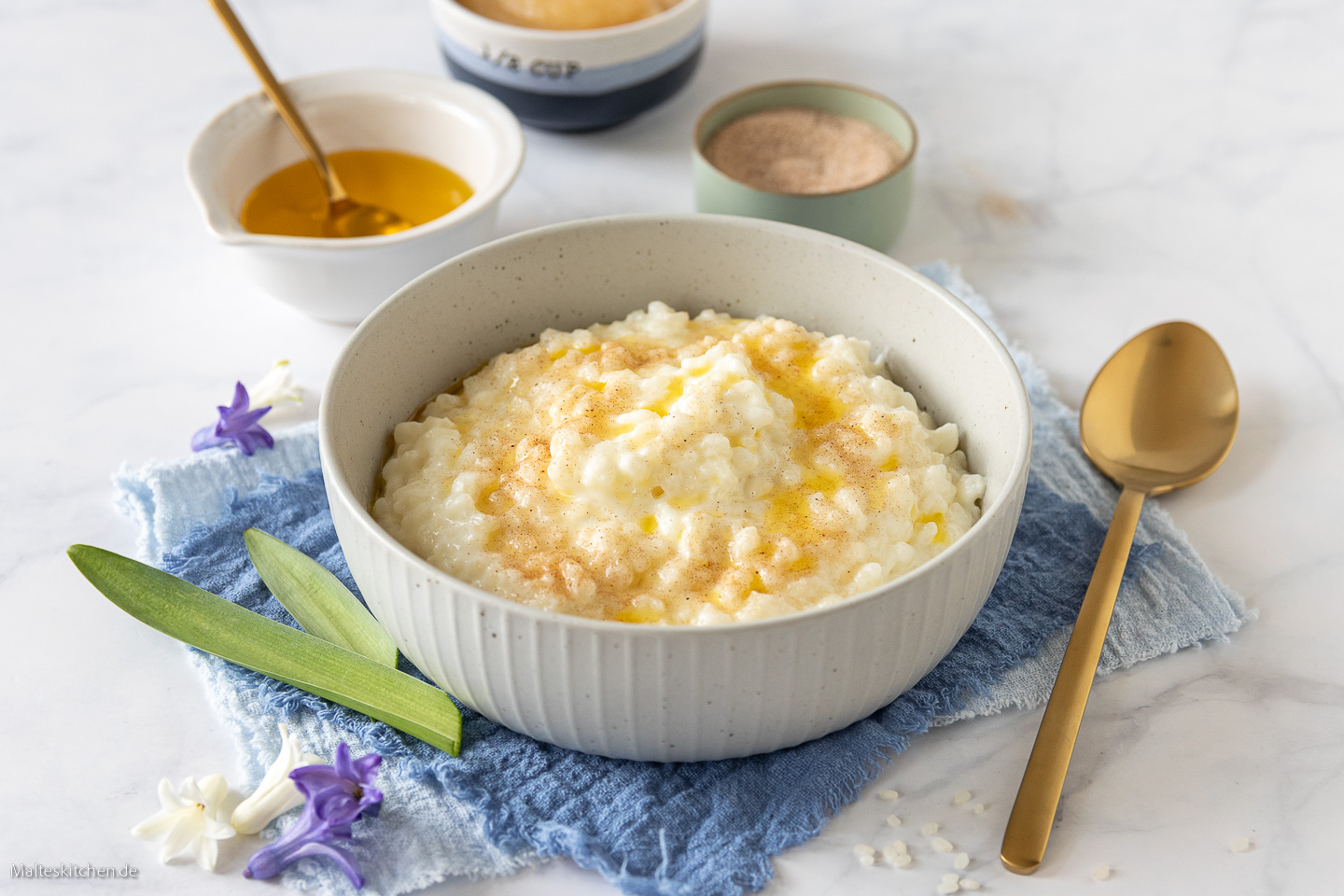
Recipe Score :
0.40
Details of the Ingredients:
- Bomba rice: Quantité: 9.1g
Allergenicity: Rice allergy seems uncommon in Europe or America but the reported symptoms have involved the skin (urticaria), respiratory symptoms (asthma), gastrointestinal symptoms (nausea) and anaphylatic shock, sometimes induced by exercise.; Rice allergy is reported as more common in Japan and has been associated with atopic ezcema.
HypoAllergenic Traitement : Yusing young cereal grains
Score: 0.17 - Cinammon stick: Quantité: 0.4g
Allergenicity: respiratory symptoms, rhinoconjunctivitis, contact dermatitis, stomatitis, delayed type allergy
HypoAllergenic Traitement : NT
Score: 0.17 - Milk: Quantité: 13g
Allergenicity: Systemic reactions: anaphylaxis, exercise induced anaphylaxis (including fatal reactions). Cutaneous symptoms: angioedema, atopic dermatitis, contact urticaria, dermatitis, eczema, erythema, exanthema, lips oedema, pruritus, redness, swelling of eyelids, urticaria, chronic urticaria. Gastrointestinal symptoms: abdominal cramps, abdominal distention, abdominal pain, colic, infantile colic syndrome, colitis, constipation, chronic constipation, diarrhoea, chronic diarrhoea, eosinophilic colitis, eosinophilic gastroenteritis, gastroenteritis, gastro- oesophageal reflux, morphologic lesion, nausea, proctitis, progressive small bowel mucosal damage, occult intestinal bleeding, oropharyngeal itching / swelling, oropharyngeal pruritus, oedema of tongue, acute pancreatitis, loose stools, vomiting as well as general gastrointestinal symptoms. Food protein-induced enterocolitis syndrome was also listed but probably does not involve specific IgE to cow's milk. Respiratory symptoms: allergic alveolitis, asthma, bronchospasm, bronchitis, conjunctivitis, coughing, dyspnoea, nasal blockade, allergic rhinitis, rhinitis, rhinoconjunctivitis, serous rhinorrea, sneezing and wheeze.
HypoAllergenic Traitement : heat, homogenization and freeze-drying
Score: 0.87
Scientifique Name of the ingredients :
- Bomba rice: Oryza sativa L.
- Cinammon stick: Cinnamomum verum J.
- Milk: Bos taurus
Molecular Allergens of Ingredients :
- Bomba rice: Ory s 17kD (UniProt: Q7X8H9) - Superfamille: Bifunctional inhibitor/lipid-transfer protein/seed storage 2S albumin
- Bomba rice: Ory s 19kD (UniProt: P29835) - Superfamille: Bifunctional inhibitor/lipid-transfer protein/seed storage 2S albumin
- Bomba rice: Ory s aA_TI (UniProt: Q01882) - Superfamille: Bifunctional inhibitor/lipid-transfer protein/seed storage 2S albumin
- Bomba rice: Ory s Glyoxalase I (UniProt: Q948T6) - Superfamille: Glyoxalase/Bleomycin resistance protein/Dihydroxybiphenyl dioxygenase
- Bomba rice: Ory s GLP63 (UniProt: Q75GX9) - Superfamille: RmlC-like cupins
- Bomba rice: Ory s NRA (UniProt: Q852L2) - Superfamille: RmlC-like cupins
- Bomba rice: Ory s 32 (UniProt: P0C5C9) - Superfamille: Thioredoxin-like
- Cinammon stick: Cin v (UniProt: Cin v - 128608)
- Milk: Bos d 4 (UniProt: A1YQB2) - Superfamille: Lysozyme-like
- Milk: Bos d 4.0101 (UniProt: P00711) - Superfamille: Lysozyme-like
- Milk: Bos d 5 (UniProt: O77777) - Superfamille: Lipocalins
- Milk: Bos d 5.0101 (UniProt: P02754) - Superfamille: Lipocalins
- Milk: Bos d 5.0102 (UniProt: B5B0D4) - Superfamille: Lipocalins
- Milk: Bos d Lactoperoxidase (UniProt: P80025) - Superfamille: Heme-dependent peroxidases
- Milk: Bos d LF (UniProt: P24627) - Superfamille: Periplasmic binding protein-like II
- Ingredients used :
- Ingredient 1 : 9.1g of Bomba rice
- Ingredient 2 : 0.4g of Cinammon stick
- Ingredient 3 : 13g of Milk
- Steps of preparation
- Step 1 : Put brown rice to 2 cups of boiling water, bring to the boil, turn the heat down to low, close the lid and cook for about 35-40 minutes, turn off the heat and let it simmer for about 10 minutes.
- Step 2 : Now pour on the milk, just enough to cover the rice, add a pinch of salt and 2 teaspoons of sugar, bring to the boil.
- Step 3 : Since this rice does not rise (thick) like rice pudding, dissolve 1 or 2 tablespoons of ground brown rice (without cornstarch) in cold milk and add to the soup while stirring, bring to the boil and set the covered pot aside.
- Step 4 : Now let the butter foam up well. Pour the brown rice into a deep dinner plate, add the amount of sugar and cinnamon to taste over the rice and pour the brown, hot butter over it.
- Step 5 : Serve hot.
Luxembourg Recipes
1 - Bouneschlupp (Green Bean Soup)
.webp)
Recipe Score :
0.17
Details of the Ingredients:
- Leek: Quantité: 10g
Allergenicity: allergic rhinitis, asthma, and atopic dermatitis.chronic diarrhea. anaphylactic reactions
HypoAllergenic Traitement : the reactivity is lowered when cooked
Score: 0.17 - Onion: Quantité: 5g
Allergenicity: contact allergy, anaphylaxis, asthma, rhinoconjunctivitis
HypoAllergenic Traitement : the reactivity is lowered when cooked
Score: 0.17 - Peas:
Allergenicity: urticaria, emesis, angioedema or rhinitis) severity, severe reactions with wheezing and dyspnoea.
HypoAllergenic Traitement : the reactivity is lowered when cooked
Score: 0.17 - Potato: Quantité: 30g
Allergenicity: Potato is considered a rarely allergenic food and is frequently used in elimination diets and as part of the placebo in challenge protocols. However, many cases of food allergy after eating cooked potato have been reported and skin prick tests suggest that sensitization to raw potato is relatively common. Cases of contact allergy to raw potatoes have also been reported. The symptoms reported include reactions of the skin such as urticaria (hives), angioedema (wheals) and eczema, respiratory symptoms such as rhinitis, cough and wheezing and gastrointestinal symptoms such as vomiting and diarrhoea. Most reactions occurred within 2 hours (immediate reactions) but delayed reactions have also been reported. Allergy to cooked potato is related to tomato allergy and to latex allergy. Sensitization to raw potato may also be related to pollen allergies.
HypoAllergenic Traitement : the reactivity is lowered when cooked
Score: 0.17
Scientifique Name of the ingredients :
- Leek: Allium ampeloprasum
- Leek: Allium porrum
- Onion: Allium cepa var. aggregatum
- Peas: Pisum sativum
- Potato: Solanum tuberosum
Molecular Allergens of Ingredients :
- Leek: All p Alliin lyase (UniProt: not given) - Superfamille: Alliinases
- Onion: All a Alliin lyase (UniProt: P31756) - Superfamille: PLP-dependent transferases
- Onion: All c Alliin lyase (UniProt: P31757) - Superfamille: PLP-dependent transferases
- Peas: Pis s Albumin (UniProt: P08688) - Superfamille: Hemopexin-like domain
- Peas: Pis s Agglutinin (UniProt: P02867) - Superfamille: Concanavalin A-like lectins/glucanases
- Peas: Pis s 6 (UniProt: P13239) - Superfamille: Bet v1-like
- Peas: Pis s 3.0101 (UniProt: A0A161AT60) - Superfamille: Bifunctional inhibitor/lipid-transfer protein/seed storage 2S albumin
- Peas: Pis s 3 (UniProt: A0A158V755) - Superfamille: Bifunctional inhibitor/lipid-transfer protein/seed storage 2S albumin
- Peas: Pis s 2 (UniProt: P13915) - Superfamille: RmlC-like cupins
- Peas: Pis s 1.0102 (UniProt: Q702P0) - Superfamille: RmlC-like cupins
- Peas: Pis s 1.0101 (UniProt: Q702P1) - Superfamille: RmlC-like cupins
- Peas: Pis s 1 (UniProt: P02854) - Superfamille: RmlC-like cupins
- Potato: Sola t 1 (UniProt: P07745)
- Potato: Sola t 1.0101 (UniProt: P15476)
- Potato: Sola t 2.0101 (UniProt: P16348) - Superfamille: STI-like
- Potato: Sola t 3 (UniProt: Q6PMR6) - Superfamille: STI-like
- Potato: Sola t 3.0101 (UniProt: O24383) - Superfamille: STI-like
- Potato: Sola t 3.0102 (UniProt: P20347) - Superfamille: STI-like
- Potato: Sola t 4.0101 (UniProt: P30941) - Superfamille: STI-like
- Potato: Sola t 7k (UniProt: M1CHX3) - Superfamille: Bifunctional inhibitor/lipid-transfer protein/seed storage 2S albumin
- Potato: Sola t 8 (UniProt: M1BLC8) - Superfamille: Profilin (actin-binding protein)
- Potato: Sola t Glucanase (UniProt: P52401) - Superfamille: (Trans)glycosidases
- Ingredients used :
- Ingredient 1 : 10g of Leek
- Ingredient 2 : 5g of Onion
- Ingredient 3 : Peas
- Ingredient 4 : 30g of Potato
- Steps of preparation
- Step 1 : Cook the green beans and the potatoes in broth until tender.
- Step 2 : In a separate pot, sauté onions and leek in butter until translucent.
- Step 3 : Add onions and leek to the green beans.
- Step 4 : Simmer until vegetables are soft.
2 - Judd mat Gaardebounen
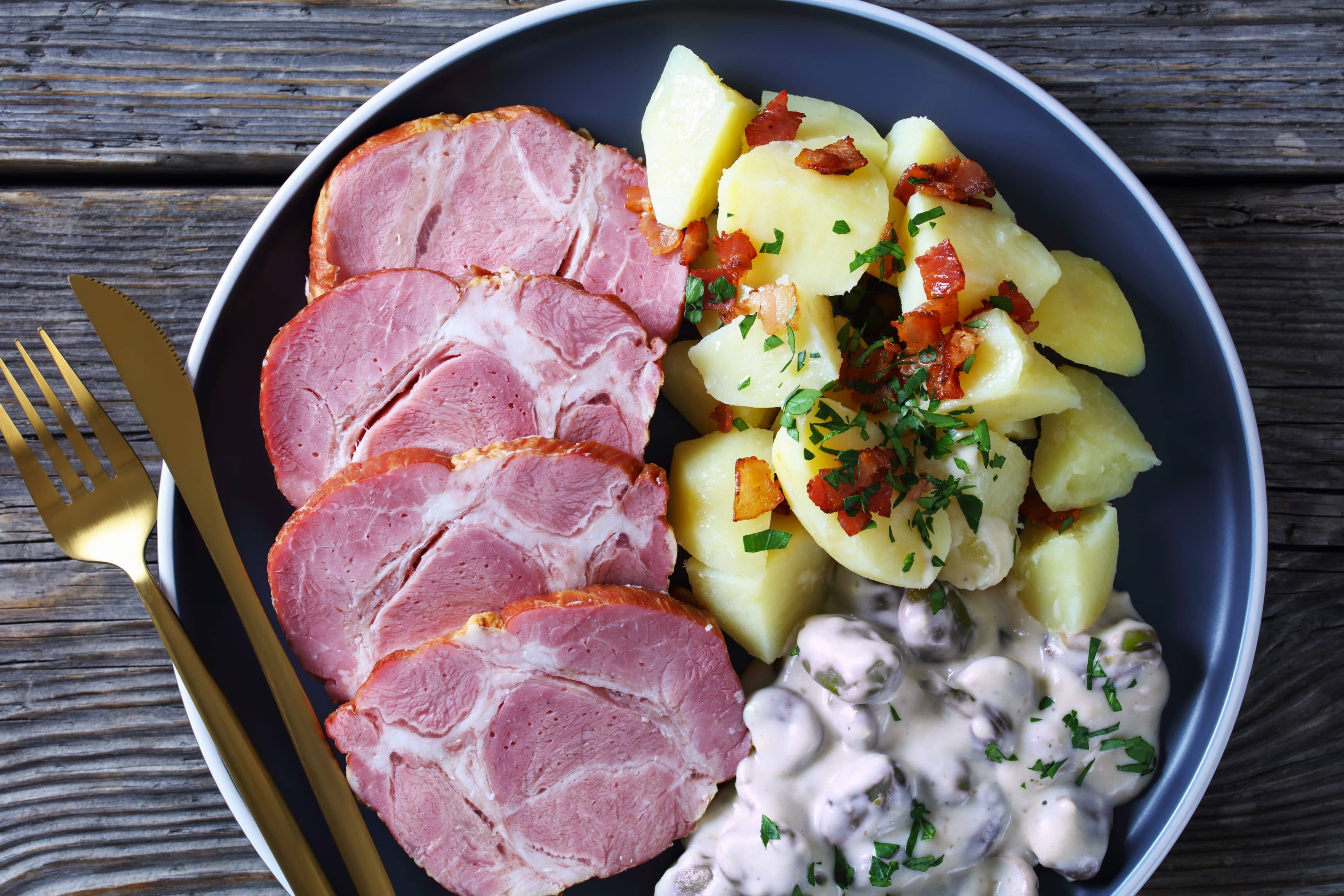
Recipe Score :
0.17
Details of the Ingredients:
- Bay Leaf: Quantité: 4.7g
Allergenicity: perioral dermatitis, contact dermatitis, asthma
HypoAllergenic Traitement : Eviction: the only way to manage allergens is by complete abstinence from the food
Score: 0.17 - Fava beans: Quantité: 14g
Allergenicity: oral allergy syndrome, to severe symptoms requiring emergency treatment such as anaphylaxis or asthma. As for most allergenic foods, urticaria (hives) and other reactions of the skin are the most common symptoms. gastro-intestinalsymptoms
HypoAllergenic Traitement : the reactivity is lowered when cooked
Score: 0.17 - Garlic:
Allergenicity: Garlic allergy is relatively rare although one case of severe symptoms has been reported after eating garlic. The individual suffered exercise induced anaphylaxis and on a subsequent occasion anaphylaxis without exercise.
HypoAllergenic Traitement : the reactivity is lowered when cooked
Score: 0.17 - Leek: Quantité: 2.3g
Allergenicity: allergic rhinitis, asthma, and atopic dermatitis.chronic diarrhea. anaphylactic reactions
HypoAllergenic Traitement : the reactivity is lowered when cooked
Score: 0.17 - Onion: Quantité: 9.3g
Allergenicity: contact allergy, anaphylaxis, asthma, rhinoconjunctivitis
HypoAllergenic Traitement : the reactivity is lowered when cooked
Score: 0.17 - Pork Belly/ Neck/Rind: Quantité: 23.3g
Allergenicity: severe allergicreactionsm.; pork-cat syndrome
HypoAllergenic Traitement : heat, homogenization and freeze-drying
Score: 0.17
Scientifique Name of the ingredients :
- Bay Leaf: Laurus nobilis
- Fava beans: Vicia faba
- Garlic: Allium sativum
- Leek: Allium ampeloprasum
- Leek: Allium porrum
- Onion: Allium cepa var. aggregatum
- Pork Belly/ Neck/Rind: Sus scrofa
Molecular Allergens of Ingredients :
- Bay Leaf: Lau no (UniProt: 85223)
- Fava beans: Vic f 6 (UniProt: H9BPH6) - Superfamille: Bet v1-like
- Garlic: All s Alliin lyase (UniProt: Q01594) - Superfamille: PLP-dependent transferases
- Leek: All p Alliin lyase (UniProt: not given) - Superfamille: Alliinases
- Onion: All a Alliin lyase (UniProt: P31756) - Superfamille: PLP-dependent transferases
- Onion: All c Alliin lyase (UniProt: P31757) - Superfamille: PLP-dependent transferases
- Pork Belly/ Neck/Rind: Sus s Laminin (UniProt: F1S663) - Superfamille: EGF/Laminin
- Pork Belly/ Neck/Rind: Sus s PRVB (UniProt: C1L369) - Superfamille: EF-hand
- Ingredients used :
- Ingredient 1 : 4.7g of Bay Leaf
- Ingredient 2 : 14g of Fava beans
- Ingredient 3 : Garlic
- Ingredient 4 : 2.3g of Leek
- Ingredient 5 : 9.3g of Onion
- Ingredient 6 : 23.3g of Pork Belly/ Neck/Rind
- Steps of preparation
- Step 1 : Brown pork cubes in a pot with the butter.
- Step 2 : Add chopped onions, garlic, celery and leek.
- Step 3 : Roast the vegetables for about 10 minutes.
- Step 4 : Add the beans, the water and the bay leaf and cook at low flame for about 20 minutes.
- Step 5 : Add salt following your taste or diet requirements.
3 - Quetschentaart (Plum Tart)
.jpg)
Recipe Score :
0.32
Details of the Ingredients:
- Plain four/ weat: Quantité: 25g
Allergenicity: Adverse reactions to wheat have been more frequently reported than to other cereal-based foods. The best defined of these are coeliac disease and IgE-dependent wheat allergy, both of which result from malfunctioning of the immune system. Allergies to other cereals such as maize, sorghum and millet, are not common and are not related to reactions triggered by wheat, rye, barley and oats. As a consequence individuals with wheat allergy, including coeliac disease, can usually eat maize-based foods such as polenta. However, allergic reactions to maize can result from the fruit allergies found in the South of Europe which often start with reactions to peach. Coeliac disease is triggered by the gluten fraction of wheat or by the gluten-like proteins found in other closely related cereals such as rye, barley. Some sensitive individuals may also react to oats. The gut reacts to the gluten and becomes smooth, loosing its ability to absorb nutrients; symptoms including diarrhoea as well as deficiencies in nutrients like vitamins. It can manifest itself in childhood, affecting childrens growth and development, or in adult hood. As there is no cure individuals with coeliac disease have to avoid eating gluten for life. However, coeliac disease does not cause the potentially fatal reaction of anaphylaxis if gluten is accidentally eaten. In contrast IgE-mediated cereal allergies can be caused by the antibody molecule IgE binding to many proteins, not just gluten. Sometimes the reactions (often severe) only develop if an individual takes exercise within a few hours of eating wheat or related cereals, in a condition called exercise-induced anaphylaxis. Individuals with wheat allergy often react to closely related cereals like barley and rye, less frequently to the more distant relative, oats. Diagnosis of cereal allergies can be complicated by the fact that some of the blood tests for cereal food allergy can accidentally detect allergy to grass pollens instead. As a consequence of these adverse reactions, cereals containing gluten, (i.e. wheat, rye, barley, oats, spelt or their hybridized strains) have been included in Annex IIIa of the food labelling directive along with derived products. Temporary exceptions to the labelling rule (derogations) have been granted for wheat based glucose syrups including dextrose, wheat based maltodextrins, glucose syrups based on barley and cereals used in distillates for spirits.
HypoAllergenic Traitement : Yusing young cereal grains
Score: 0.48
Scientifique Name of the ingredients :
- Plain four/ weat: Triticum aestivum
Molecular Allergens of Ingredients :
- Plain four/ weat: Tri a aA_SI (UniProt: P16347) - Superfamille: STI-like
- Plain four/ weat: Tri a 36.0101 (UniProt: B2Y2Q7) - Superfamille: Bifunctional inhibitor/lipid-transfer protein/seed storage 2S albumin
- Plain four/ weat: Tri a 37 (UniProt: P32032) - Superfamille: Crambin-like
- Plain four/ weat: Tri a 37.0101 (UniProt: Q9T0P1) - Superfamille: Crambin-like
- Plain four/ weat: Tri a 41.0101 (UniProt: A0A0G3F2P1) - Superfamille: RING/U-box
- Plain four/ weat: Tri a 44 (UniProt: B2C4K0) - Superfamille: Bifunctional inhibitor/lipid-transfer protein/seed storage 2S albumin
- Plain four/ weat: Tri a 44.0101 (UniProt: A0A0G3F720) - Superfamille: Bifunctional inhibitor/lipid-transfer protein/seed storage 2S albumin
- Plain four/ weat: Tri a 45 (UniProt: W5HIH8) - Superfamille: Zinc beta-ribbon
- Plain four/ weat: Tri a 45.0101 (UniProt: A0A0G3F715) - Superfamille: Zinc beta-ribbon
- Plain four/ weat: Tri a 7kLTP (UniProt: P82900) - Superfamille: Bifunctional inhibitor/lipid-transfer protein/seed storage 2S albumin
- Plain four/ weat: Tri a 36 (UniProt: P10385) - Superfamille: Bifunctional inhibitor/lipid-transfer protein/seed storage 2S albumin
- Plain four/ weat: Tri a alpha_Gliadin (UniProt: Q1WA40) - Superfamille: Bifunctional inhibitor/lipid-transfer protein/seed storage 2S albumin
- Plain four/ weat: Tri a Chitinase (UniProt: Q8W429) - Superfamille: Lysozyme-like
- Plain four/ weat: Tri a CMX (UniProt: Q43691) - Superfamille: Bifunctional inhibitor/lipid-transfer protein/seed storage 2S albumin
- Plain four/ weat: Tri a GBSS_I (UniProt: P27736) - Superfamille: UDP-Glycosyltransferase/glycogen phosphorylase
- Plain four/ weat: Tri a Peroxidase (UniProt: Q05855) - Superfamille: Heme-dependent peroxidases
- Plain four/ weat: Tri a Peroxidase 1 (UniProt: Q8LK23) - Superfamille: Heme-dependent peroxidases
- Plain four/ weat: Tri a TLP (UniProt: P27357) - Superfamille: Osmotin, thaumatin-like protein
- Plain four/ weat: Tri a Tritin (UniProt: Q07810) - Superfamille: Ribosome inactivating proteins (RIP)
- Plain four/ weat: Tri a XI (UniProt: Q8L5C6) - Superfamille: (Trans)glycosidases
- Plain four/ weat: Tri a 26 (UniProt: P08489) - Superfamille: Bifunctional inhibitor/lipid-transfer protein/seed storage 2S albumin
- Plain four/ weat: Tri a 12 (UniProt: P49233) - Superfamille: Profilin (actin-binding protein)
- Plain four/ weat: Tri a 14 (UniProt: P24296) - Superfamille: Bifunctional inhibitor/lipid-transfer protein/seed storage 2S albumin
- Plain four/ weat: Tri a 17.0101 (UniProt: P93594) - Superfamille: (Trans)glycosidases
- Plain four/ weat: Tri a 18 (UniProt: P10969) - Superfamille: Plant lectins/antimicrobial peptides
- Plain four/ weat: Tri a 18.0101 (UniProt: P10968) - Superfamille: Plant lectins/antimicrobial peptides
- Plain four/ weat: Tri a 20 (UniProt: P21292) - Superfamille: Bifunctional inhibitor/lipid-transfer protein/seed storage 2S albumin
- Plain four/ weat: Tri a 20.0101 (UniProt: A0A060N479) - Superfamille: Bifunctional inhibitor/lipid-transfer protein/seed storage 2S albumin
- Plain four/ weat: Tri a 23kD (UniProt: Q4W1G0) - Superfamille: L domain-like
- Plain four/ weat: Tri a 25.0101 (UniProt: Q9LDX4) - Superfamille: Thioredoxin-like
- Plain four/ weat: Tri a 10kD (UniProt: Q4W1F9) - Superfamille: Bifunctional inhibitor/lipid-transfer protein/seed storage 2S albumin
- Plain four/ weat: Tri a 26.0101 (UniProt: P10388) - Superfamille: Bifunctional inhibitor/lipid-transfer protein/seed storage 2S albumin
- Plain four/ weat: Tri a 26.0201 (UniProt: Q45R38) - Superfamille: Bifunctional inhibitor/lipid-transfer protein/seed storage 2S albumin
- Plain four/ weat: Tri a 28 (UniProt: P01085) - Superfamille: Bifunctional inhibitor/lipid-transfer protein/seed storage 2S albumin
- Plain four/ weat: Tri a 28.0101 (UniProt: Q4W0V7) - Superfamille: Bifunctional inhibitor/lipid-transfer protein/seed storage 2S albumin
- Plain four/ weat: Tri a 30 (UniProt: Q53YX8) - Superfamille: Bifunctional inhibitor/lipid-transfer protein/seed storage 2S albumin
- Plain four/ weat: Tri a 30.0101 (UniProt: P17314) - Superfamille: Bifunctional inhibitor/lipid-transfer protein/seed storage 2S albumin
- Plain four/ weat: Tri a 33 (UniProt: P93692) - Superfamille: Serpins
- Plain four/ weat: Tri a 33.0101 (UniProt: Q9ST57) - Superfamille: Serpins
- Ingredients used :
- Ingredient 1 : 25g of Plain four/ weat
- Steps of preparation
- Step 1 : Prepare the Homemade Pie Crust:
- Step 2 : In a bowl, whisk together the flour and the sugar.
- Step 3 : Add the butter to the flour mixture. Use your fingers to work the butter into the flour until you get a crumbly texture. Gradually add the water, one tablespoon at a time. Form the dough into a ball, wrap it in plastic wrap, and refrigerate for at least 30 minutes.
- Step 4 : Preheat your oven to 375°F (190°C).
- Step 5 : Roll out the chilled pie crust on a lightly floured surface to fit a small tart pan or individual baking dish. Arrange the plums on the crust.
- Step 6 : Mix together the sugar, the cinnamon, and the flour. Sprinkle this mixture evenly over the arranged plums.
- Step 7 : Place the tart in the oven and bake for about 25 minutes or until the plums are tender.
4 - Tarte Tatin with Vanilla Ice Cream
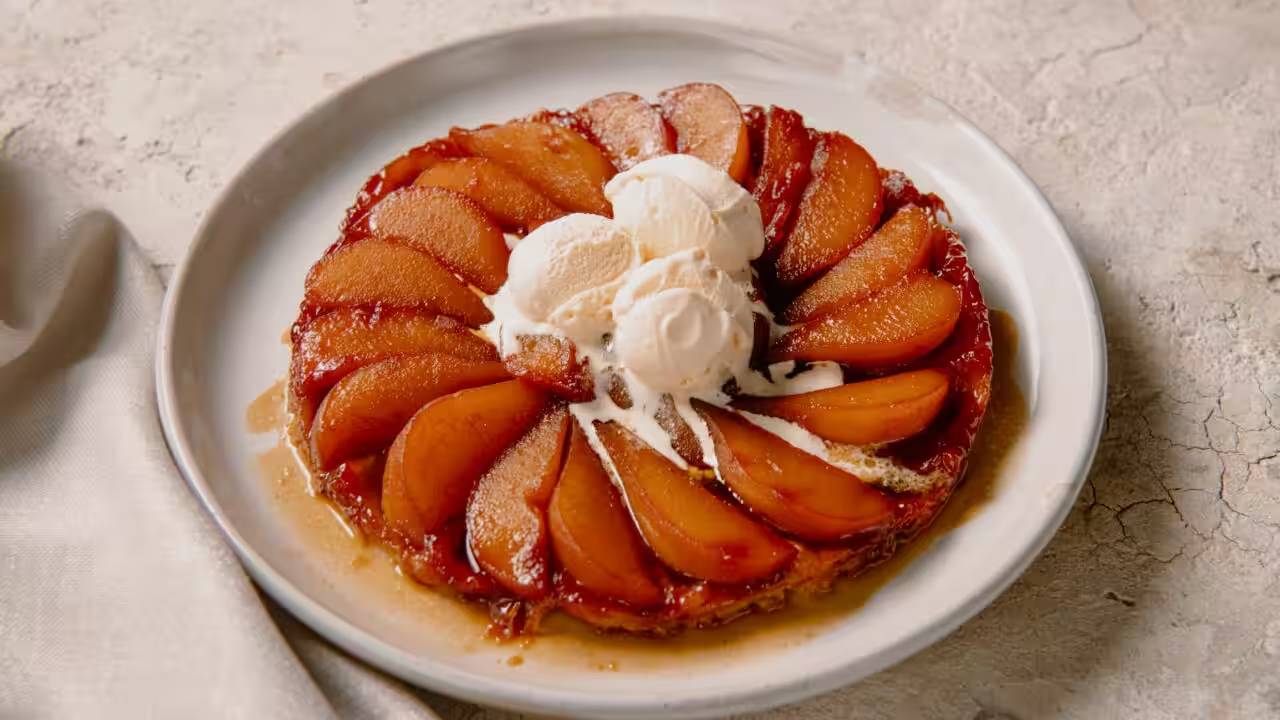
Recipe Score :
0.43
Details of the Ingredients:
- Apple: Quantité: 20g
Allergenicity: itching and inflammation (called oral allergy syndrome, OAS). The molecule, known as an allergen, involved in this kind of allergy does not survive cooking and pasteurisation. Therefore, people who react to this allergen can tolerate cooked apple and juices.
HypoAllergenic Traitement : HPP: High-PressureProcessing (>400MPa)+ TT ThermalTreatment (>90°C)+Glucose
Score: 0.17 - Cinammon stick:
Allergenicity: respiratory symptoms, rhinoconjunctivitis, contact dermatitis, stomatitis, delayed type allergy
HypoAllergenic Traitement : NT
Score: 0.17 - Plain four/ weat: Quantité: 5g
Allergenicity: Adverse reactions to wheat have been more frequently reported than to other cereal-based foods. The best defined of these are coeliac disease and IgE-dependent wheat allergy, both of which result from malfunctioning of the immune system. Allergies to other cereals such as maize, sorghum and millet, are not common and are not related to reactions triggered by wheat, rye, barley and oats. As a consequence individuals with wheat allergy, including coeliac disease, can usually eat maize-based foods such as polenta. However, allergic reactions to maize can result from the fruit allergies found in the South of Europe which often start with reactions to peach. Coeliac disease is triggered by the gluten fraction of wheat or by the gluten-like proteins found in other closely related cereals such as rye, barley. Some sensitive individuals may also react to oats. The gut reacts to the gluten and becomes smooth, loosing its ability to absorb nutrients; symptoms including diarrhoea as well as deficiencies in nutrients like vitamins. It can manifest itself in childhood, affecting childrens growth and development, or in adult hood. As there is no cure individuals with coeliac disease have to avoid eating gluten for life. However, coeliac disease does not cause the potentially fatal reaction of anaphylaxis if gluten is accidentally eaten. In contrast IgE-mediated cereal allergies can be caused by the antibody molecule IgE binding to many proteins, not just gluten. Sometimes the reactions (often severe) only develop if an individual takes exercise within a few hours of eating wheat or related cereals, in a condition called exercise-induced anaphylaxis. Individuals with wheat allergy often react to closely related cereals like barley and rye, less frequently to the more distant relative, oats. Diagnosis of cereal allergies can be complicated by the fact that some of the blood tests for cereal food allergy can accidentally detect allergy to grass pollens instead. As a consequence of these adverse reactions, cereals containing gluten, (i.e. wheat, rye, barley, oats, spelt or their hybridized strains) have been included in Annex IIIa of the food labelling directive along with derived products. Temporary exceptions to the labelling rule (derogations) have been granted for wheat based glucose syrups including dextrose, wheat based maltodextrins, glucose syrups based on barley and cereals used in distillates for spirits.
HypoAllergenic Traitement : Yusing young cereal grains
Score: 0.48 - Plums: Quantité: 31g
Allergenicity: Like many other allergies to fresh fruits and vegetables, plum allergy can take two different forms. In the North of Europe, people with birch-pollen allergy can develop a plum allergy due to the similarity between a protein in birch that causes birch-pollen allergy, and a plum protein. This is called the birch-fruit syndrome with symptoms generally appearing within 5-15 min after consuming raw plum and comprising local reactions in the mouth and throat with itching and inflammation (called oral allergy syndrome, OAS). The molecule, known as an allergen, involved in this kind of allergy does not survive cooking. Therefore, people who react to this allergen can tolerate cooked plum. Individuals often develop adverse reactions to other fruits including apple, pear, apricot, cherry, melon, banana, nuts such as hazelnut, or vegetables such as celeriac (celery tuber) and carrot. In Mediterranean countries, people with plum allergy do not have birch-pollen allergy. Instead they often have allergy to peach. Symptoms are more severe including generalised urticaria, abdominal pain, vomiting and life-threatening symptoms, sometimes in addition to the OAS. These individuals tend to have more frequent and severe reactions when fruits are eaten with the peel. They also tend to develop adverse reactions to other fruits including apple, peach, apricot, cherry and nuts (such as hazelnut and walnut). The allergen that causes this kind of allergy is tough and the allergenicity survives in processed foods such as juices. As a result, individuals with this kind of allergy cannot eat even cooked plum.
HypoAllergenic Traitement : NT
Score: 0.17 - Vainillla:
Allergenicity: atopic dermatitis, contact dermatitis
HypoAllergenic Traitement : ND
Score: 0.17
Scientifique Name of the ingredients :
- Apple: Malus domestica
- Cinammon stick: Cinnamomum verum J.
- Plain four/ weat: Triticum aestivum
- Plums: Prunus domestica
- Vainillla: Vanilla planifolia
Molecular Allergens of Ingredients :
- Apple: Mal d 4 (UniProt: Q3BCT0) - Superfamille: Profilin (actin-binding protein)
- Apple: Mal d 1.0303 (UniProt: Q941P7) - Superfamille: Bet v1-like
- Apple: Mal d 1.0304 (UniProt: Q84LA7) - Superfamille: Bet v1-like
- Apple: Mal d 1.0401 (UniProt: Q43550) - Superfamille: Bet v1-like
- Apple: Mal d 1.0402 (UniProt: Q43551) - Superfamille: Bet v1-like
- Apple: Mal d 1.0403 (UniProt: Q43552) - Superfamille: Bet v1-like
- Apple: Mal d 2 (UniProt: Q3BCT8) - Superfamille: Osmotin, thaumatin-like protein
- Apple: Mal d 2.0101 (UniProt: Q9FSG7) - Superfamille: Osmotin, thaumatin-like protein
- Apple: Mal d 3 (UniProt: Q9M5X7) - Superfamille: Bifunctional inhibitor/lipid-transfer protein/seed storage 2S albumin
- Apple: Mal d 1.0102 (UniProt: P43211) - Superfamille: Bet v1-like
- Apple: Mal d 4.0101 (UniProt: Q9XF42) - Superfamille: Profilin (actin-binding protein)
- Apple: Mal d 4.0102 (UniProt: Q84RR5) - Superfamille: Profilin (actin-binding protein)
- Apple: Mal d 4.0201 (UniProt: Q9XF41) - Superfamille: Profilin (actin-binding protein)
- Apple: Mal d 4.0202 (UniProt: Q84RR6) - Superfamille: Profilin (actin-binding protein)
- Apple: Mal d 4.0301 (UniProt: Q9XF40) - Superfamille: Profilin (actin-binding protein)
- Apple: Mal d 4.0302 (UniProt: Q84RR7) - Superfamille: Profilin (actin-binding protein)
- Apple: Mal d 1 (UniProt: Q4VPJ5) - Superfamille: Bet v1-like
- Apple: Mal d 1.0301 (UniProt: Q43549) - Superfamille: Bet v1-like
- Apple: Mal d 1.0302 (UniProt: Q941P8) - Superfamille: Bet v1-like
- Apple: Mal d 1.0103 (UniProt: Q9SYV2) - Superfamille: Bet v1-like
- Apple: Mal d 1.0104 (UniProt: Q9SYV5) - Superfamille: Bet v1-like
- Apple: Mal d 1.0105 (UniProt: Q9SYV6) - Superfamille: Bet v1-like
- Apple: Mal d 1.0106 (UniProt: Q9SYV7) - Superfamille: Bet v1-like
- Apple: Mal d 1.0107 (UniProt: Q9SYV8) - Superfamille: Bet v1-like
- Apple: Mal d 1.0108 (UniProt: Q9SYW3) - Superfamille: Bet v1-like
- Apple: Mal d 1.0109 (UniProt: Q941P6) - Superfamille: Bet v1-like
- Apple: Mal d 1.0202 (UniProt: Q9S7M5) - Superfamille: Bet v1-like
- Apple: Mal d 1.0203 (UniProt: Q9SYV3) - Superfamille: Bet v1-like
- Apple: Mal d 1.0204 (UniProt: Q9SYV4) - Superfamille: Bet v1-like
- Apple: Mal d 1.0205 (UniProt: Q9SYV9) - Superfamille: Bet v1-like
- Apple: Mal d 1.0207 (UniProt: Q941P5) - Superfamille: Bet v1-like
- Apple: Mal d 1.0208 (UniProt: Q8L6K9) - Superfamille: Bet v1-like
- Apple: Mal d 1.0201 (UniProt: Q40280) - Superfamille: Bet v1-like
- Cinammon stick: Cin v (UniProt: Cin v - 128608)
- Plain four/ weat: Tri a aA_SI (UniProt: P16347) - Superfamille: STI-like
- Plain four/ weat: Tri a 7kLTP (UniProt: P82900) - Superfamille: Bifunctional inhibitor/lipid-transfer protein/seed storage 2S albumin
- Plain four/ weat: Tri a 45.0101 (UniProt: A0A0G3F715) - Superfamille: Zinc beta-ribbon
- Plain four/ weat: Tri a 45 (UniProt: W5HIH8) - Superfamille: Zinc beta-ribbon
- Plain four/ weat: Tri a 44.0101 (UniProt: A0A0G3F720) - Superfamille: Bifunctional inhibitor/lipid-transfer protein/seed storage 2S albumin
- Plain four/ weat: Tri a 44 (UniProt: B2C4K0) - Superfamille: Bifunctional inhibitor/lipid-transfer protein/seed storage 2S albumin
- Plain four/ weat: Tri a 41.0101 (UniProt: A0A0G3F2P1) - Superfamille: RING/U-box
- Plain four/ weat: Tri a 37.0101 (UniProt: Q9T0P1) - Superfamille: Crambin-like
- Plain four/ weat: Tri a 37 (UniProt: P32032) - Superfamille: Crambin-like
- Plain four/ weat: Tri a 36.0101 (UniProt: B2Y2Q7) - Superfamille: Bifunctional inhibitor/lipid-transfer protein/seed storage 2S albumin
- Plain four/ weat: Tri a alpha_Gliadin (UniProt: Q1WA40) - Superfamille: Bifunctional inhibitor/lipid-transfer protein/seed storage 2S albumin
- Plain four/ weat: Tri a Chitinase (UniProt: Q8W429) - Superfamille: Lysozyme-like
- Plain four/ weat: Tri a CMX (UniProt: Q43691) - Superfamille: Bifunctional inhibitor/lipid-transfer protein/seed storage 2S albumin
- Plain four/ weat: Tri a GBSS_I (UniProt: P27736) - Superfamille: UDP-Glycosyltransferase/glycogen phosphorylase
- Plain four/ weat: Tri a Peroxidase (UniProt: Q05855) - Superfamille: Heme-dependent peroxidases
- Plain four/ weat: Tri a 18 (UniProt: P10969) - Superfamille: Plant lectins/antimicrobial peptides
- Plain four/ weat: Tri a Peroxidase 1 (UniProt: Q8LK23) - Superfamille: Heme-dependent peroxidases
- Plain four/ weat: Tri a TLP (UniProt: P27357) - Superfamille: Osmotin, thaumatin-like protein
- Plain four/ weat: Tri a Tritin (UniProt: Q07810) - Superfamille: Ribosome inactivating proteins (RIP)
- Plain four/ weat: Tri a XI (UniProt: Q8L5C6) - Superfamille: (Trans)glycosidases
- Plain four/ weat: Tri a 33.0101 (UniProt: Q9ST57) - Superfamille: Serpins
- Plain four/ weat: Tri a 10kD (UniProt: Q4W1F9) - Superfamille: Bifunctional inhibitor/lipid-transfer protein/seed storage 2S albumin
- Plain four/ weat: Tri a 12 (UniProt: P49233) - Superfamille: Profilin (actin-binding protein)
- Plain four/ weat: Tri a 14 (UniProt: P24296) - Superfamille: Bifunctional inhibitor/lipid-transfer protein/seed storage 2S albumin
- Plain four/ weat: Tri a 17.0101 (UniProt: P93594) - Superfamille: (Trans)glycosidases
- Plain four/ weat: Tri a 18.0101 (UniProt: P10968) - Superfamille: Plant lectins/antimicrobial peptides
- Plain four/ weat: Tri a 20 (UniProt: P21292) - Superfamille: Bifunctional inhibitor/lipid-transfer protein/seed storage 2S albumin
- Plain four/ weat: Tri a 20.0101 (UniProt: A0A060N479) - Superfamille: Bifunctional inhibitor/lipid-transfer protein/seed storage 2S albumin
- Plain four/ weat: Tri a 23kD (UniProt: Q4W1G0) - Superfamille: L domain-like
- Plain four/ weat: Tri a 25.0101 (UniProt: Q9LDX4) - Superfamille: Thioredoxin-like
- Plain four/ weat: Tri a 26 (UniProt: P08489) - Superfamille: Bifunctional inhibitor/lipid-transfer protein/seed storage 2S albumin
- Plain four/ weat: Tri a 26.0101 (UniProt: P10388) - Superfamille: Bifunctional inhibitor/lipid-transfer protein/seed storage 2S albumin
- Plain four/ weat: Tri a 26.0201 (UniProt: Q45R38) - Superfamille: Bifunctional inhibitor/lipid-transfer protein/seed storage 2S albumin
- Plain four/ weat: Tri a 28 (UniProt: P01085) - Superfamille: Bifunctional inhibitor/lipid-transfer protein/seed storage 2S albumin
- Plain four/ weat: Tri a 28.0101 (UniProt: Q4W0V7) - Superfamille: Bifunctional inhibitor/lipid-transfer protein/seed storage 2S albumin
- Plain four/ weat: Tri a 30 (UniProt: Q53YX8) - Superfamille: Bifunctional inhibitor/lipid-transfer protein/seed storage 2S albumin
- Plain four/ weat: Tri a 30.0101 (UniProt: P17314) - Superfamille: Bifunctional inhibitor/lipid-transfer protein/seed storage 2S albumin
- Plain four/ weat: Tri a 33 (UniProt: P93692) - Superfamille: Serpins
- Plain four/ weat: Tri a 36 (UniProt: P10385) - Superfamille: Bifunctional inhibitor/lipid-transfer protein/seed storage 2S albumin
- Plums: Pru d 1 (UniProt: B5KVN9) - Superfamille: Bet v1-like
- Plums: Pru d 2 (UniProt: F8RNZ5) - Superfamille: Osmotin, thaumatin-like protein
- Plums: Pru d 3.0101 (UniProt: P82534) - Superfamille: Bifunctional inhibitor/lipid-transfer protein/seed storage 2S albumin
- Ingredients used :
- Ingredient 1 : 20g of Apple
- Ingredient 2 : Cinammon stick
- Ingredient 3 : 5g of Plain four/ weat
- Ingredient 4 : 31g of Plums
- Ingredient 5 : Vainillla
- Steps of preparation
- Step 1 : Preheat your oven to 375°F (190°C).
- Step 2 : In a small ovenproof skillet, melt the butter and add the sugar. Stir until it dissolves and starts to caramelize. Add the vanilla extract and the cinnamon. Add the apples and cook about 5 minutes or until golden.
- Step 3 : Roll out a small portion of the puff pastry to cover the apples. Place the puff pastry over the caramelized apples, tucking in the edges.
- Step 4 : Transfer the skillet to the preheated oven and bake for approximately 15-20 minutes or until the pastry is golden brown and puffed.
- Step 5 : Allow the tarte to cool for a few minutes, then carefully invert it onto a serving plate. Top the Tarte with a scoop of vanilla ice cream.